
lection
539 materials found

Materials
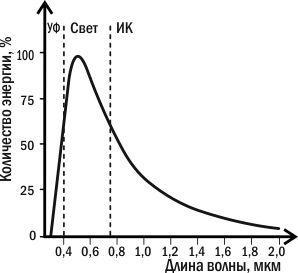
Ecology: Biology of Interaction. 5.14. Atmospheric Absorption of Solar Radiation
The atmosphere is selectively permeable to different parts of the electromagnetic spectrum. Ionizing radiation and most ultraviolet radiation are effectively absorbed by the ozone layer (atmospheric zone with high ozone …
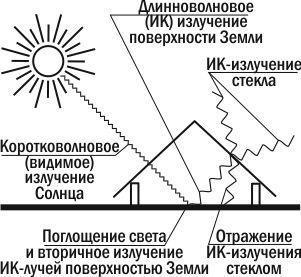
Ecology: Biology of Interaction. 5.15. Greenhouse Effect
Earth’s atmosphere transmits radiation from the Sun and Earth differently: it is almost transparent to visible light but effectively retains far-infrared radiation. As a result, energy reaches Earth’s surface more …

Ecology: biology of interactions. 5.16. Water balance of organisms
Regardless of the external environment in which an organism finds itself, the concentration of aqueous solutions in its internal milieu is vital for its survival. To preserve life, this concentration …

Ecology: Biology of Interaction. 5.17. Adaptive Biorhythms
Influence of sunlight on many biological phenomena is mediated by daily changes in illumination intensity, changes in day length, and associated seasonal alternation. Dynamics of lunar gravitation and lunar phases …
Ecology: Biology of Interaction. 5.18. Photoperiodism
Photoperiodism is regulation of the seasonal cycle depending on day length, a regulatory mechanism widespread in temperate zones. Unlike circadian rhythms, which are controlled by alternation of light and darkness, …
Ecology: The Biology of Interaction. 5.19. Thermobiological Types of Organisms
In cases where various processes affect some parameter critical to biosystems, it is customary to regard the regulation of that parameter as a balance. As noted previously, temperature is the …
Ecology: the biology of interaction. 5.20. Concept of effective temperatures
The development of many poikilothermic organisms is fairly well described using the concept of effective temperatures, which treats heat as a resource necessary for development.
Ecology: the biology of interaction. 5.21. Clinal variability and some ecological rules
{"title":"","summary":"","body":"By comparing organisms that inhabit an area with a gradient change of some factor, we can observe a regular change in certain traits of these organisms. When dealing with intraspecific …
Ecology: Biology of Interaction. 5.22. Main Habitats and Their Features
The area inhabited by living organisms (arena of life) can be divided into four major environments: aquatic, terrestrial-air, soil, and intraorganismal.
Ecology: biology of interactions. 5.23. Adaptations of organisms
Adaptations — adjustments to specific environmental conditions that manifest in accordance with the morphological, physiological, and behavioral traits of an organism and its way of life under particular environmental conditions. …
Ecology: Biology of Interaction. 5.24. Life Forms of Organisms
Life form is a stable complex of adaptations to a particular mode of life. Their study began with Theophrastus, who divided plants into trees, shrubs, and herbs; later this approach …
Ecology: Biology of Interaction. 5.25. (supplement) Exchange of Matter, Energy, and Information
For matter and energy, conservation laws apply: neither appears from nothing nor disappears, but both only transform from one form to another. Information behaves differently and can appear, disappear, and …