lection
539 materials found

Materials

Ecology: Biology of Interaction. 5.02. Classification of Environmental Factors by Origin
To describe and study environment, its properties are conventionally considered separately and called factors. An environmental factor is a specific characteristic, process, or property of surrounding environment that can potentially …
Ecology: Biology of Interaction. 5.03. Proper Ecological Classifications of Ecological Factors
One of the most important classifications is the division of ecological factors into conditions and resources. Resources are consumed by organisms and are therefore depleted and exhaustible, whereas conditions influence …
Ecology: Biology of Interaction. 5.04. Subenvironments and Adaptations to Them
By their importance for organisms, ecological factors can be divided into requisites (obligatory factors without which organisms cannot exist) and accessories (factors whose influence is not vital). Environmental context can …
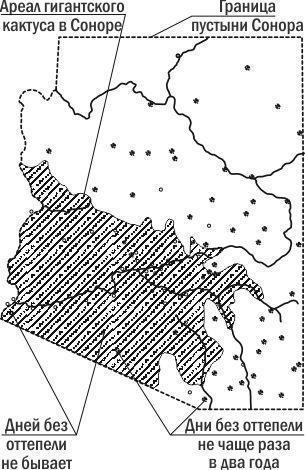
Ecology: Biology of Interaction. 5.05. Key Factors in Earth’s Biosphere
Considering Earth’s biosphere, we can identify which factors most strongly affect distribution of organisms across the planet’s surface. Factors whose variation most often coincides with species distribution boundaries are limiting …
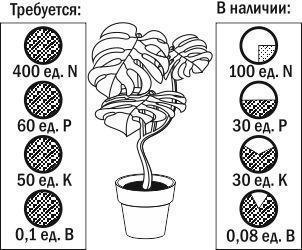
Ecology: Biology of Interaction. 5.06. Liebig’s Law of the Minimum
A factor whose small changes produce the strongest effects on the considered organisms and therefore determine limits of their development or distribution is called limiting. In resource terms, the limiting …
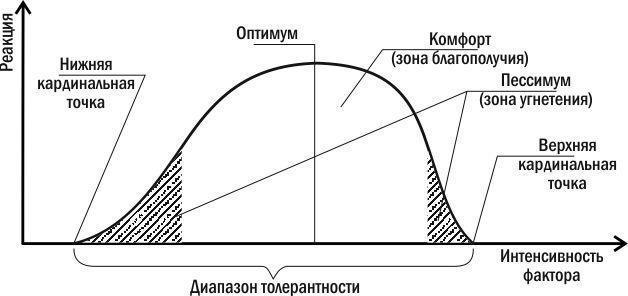
Ecology: Biology of Interaction. 5.07. Shelford’s Principle of Tolerance
Shelford’s principle can be stated as follows: among values of any condition there is a tolerance range within which the studied organism can exist. The limiting condition is the one …
Ecology: Biology of Interaction. 5.08. Terms Describing Organism Tolerance
Different organisms differ both in the width and in the position of their characteristic tolerance ranges. Range width is indicated by the prefix “eury-” (broad) versus “steno-” (narrow); adaptation to …
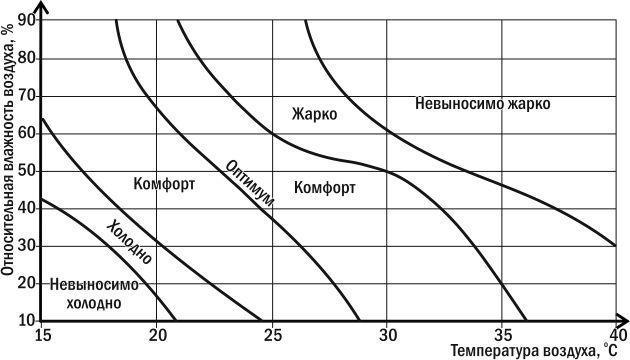
Ecology: Biology of Interaction. 5.09. “Interaction of Factors” and the Hutchinson Niche
The result of factor interaction depends on factor specifics and on mechanisms of adaptation to their adverse effects, but one general rule can still be stated: unfavorable values of one …
Ecology: Biology of Interaction. 5.10. Selye’s Concept of Stress
As established in 1936 by Canadian scientist Hans Selye, very different effects on humans and other animals can trigger a similar response associated with nervous and endocrine system activity.
Ecology: biology of interaction. 5.11. Features of organisms related to their size
{ "title": "", "summary": "", "body": "We can very conditionally divide terrestrial organisms into three groups (size classes) depending on their sizes. Microcosm includes organisms whose size is usually less …
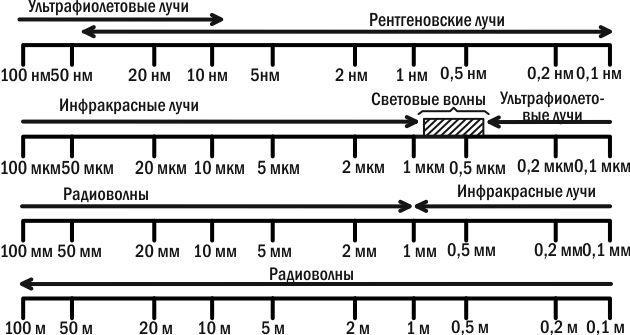
Ecology: Biology of Interaction. 5.12. Composition of Solar Radiation
Temperature of the Sun’s outer surface is about 6000 K, and maximum solar emission falls in the visible spectrum region near wavelength 550 nm. Earth is much cooler and emits …
Ecology: biology of interaction. 5.13. Biological effects of electromagnetic radiation
Terrestrial organisms live in an environment saturated with EM radiation of various wavelengths and intensities. It should be noted that humanity has added many artificial sources to the natural ones, …