
After Practice in Haidary - Photos of Anything and Everything
I had plenty of photographs of amphibians and birds - enough for two separate pages. Here I will post everything else: a little plants, a little insects, a little mammals (mostly primates).
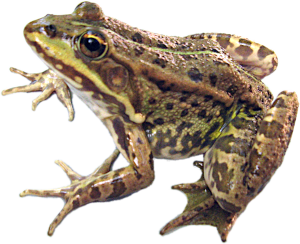
I had plenty of photographs of amphibians and birds - enough for two separate pages. Here I will post everything else: a little plants, a little insects, a little mammals (mostly primates). Black elder is blooming (Sambucus nigra): [IMG_1] Four-leaved herb-paris (Paris quadrifolia). [IMG_2] The hyphae of fungi weave around mossy logs like veins around limbs. [IMG_3] [IMG_4] Signs of the destructive activity of beavers (Castor fiber). [IMG_5] [IMG_6] I do not understand why a cinder block is hanging here. [IMG_7] And these are the remains of a natural dam that formed last autumn where the piles of the old bridge stood. [IMG_8] A photograph of the same place, but taken a couple of weeks later. The log that blocked a significant part of the channel is already gone. It was removed, probably so that it would not obstruct the passage of boats. [IMG_9] These are the boats that travel along the Siverskyi Donets. The waves they create erode the banks; along the whole riverbed the steep banks now have a special little ledge washed up by the waves. Now the boat, passing the beach, has slowed down. I saw a boat like that one (possibly this very one) piloted by a teenager who sped past at full speed right below the beach, where a crowd was swimming at the time. That nobody was run over is pure luck. [IMG_10] In this case the boat behaved a bit more decently - it picked up speed only after moving away from the beach. [IMG_11] A little man finds it very easy to meet girls. [IMG_12] But they do not allow swimming for long. [IMG_13] And the youngsters are having a great time. [IMG_14] [IMG_15] [IMG_16] [IMG_17] [IMG_18] [IMG_19] [IMG_20] [IMG_21] [IMG_22] [IMG_23] Ophelia. [IMG_24] I photographed the diving jumps from a nearby backwater. It somehow turned out odd, as if I were spying. I climbed into the aquatic vegetation, and I photographed not so much girls as frogs. [IMG_25] I thought this was some kind of pondweed, but Yu.G. corrected me, telling me that it was Najas marina (Najas maritima). This species is very treacherous: if you force your way through such thickets while swimming or wading, the patches of skin pricked by the sharp, saw-edged leaves become inflamed and itch terribly. A severe case of damage from this plant can lead to a serious rise in temperature. [IMG_26] River snails (Viviparus sp.). [IMG_27] A dragonfly larva of the genus Aeshna. [IMG_28] Mating water striders (Gerris sp.). [IMG_29] A perch (Perca fluviatilis) under a water strider. [IMG_30] There is often nothing to do at the top. [IMG_31] Everyone is busy with their own affairs. [IMG_32] The students in the laboratory are working, and one should not bother them. [IMG_33] [IMG_34] However, there are some amusements... [IMG_35] ...and sometimes they can be shared with someone. [IMG_36] All around are plenty of dangers. I do not even mean vipers (although they also live at the biological station), but, for example, hornets (Vespa crabro). [IMG_37] [IMG_38] The stag beetle (Lucanus cervus) looks formidable, but it is harmless. [IMG_39] [IMG_40] The tufts of white hairs on this caterpillar imitate ichneumonid eggs. Other parasitoid wasps see that the potential prey is "occupied" and fly off in search of another victim (at least that is the usual explanation of this trait). [IMG_41] Scorpionfly (Panorpa vulgaris), a representative of the order Mecoptera. [IMG_42] And this is a young vole, perhaps a tundra vole (Microtus oeconomus). It behaved strangely... [IMG_43] A mole tunnel crosses the path (Talpa europaea). [IMG_44] A roe deer track (Capreolus capreolus). [IMG_45] Look closely and see, in the tangles of riverside vegetation, an American mink (Neovison vison). [IMG_46] I have already grown used to cows (Bos taurus taurus) around the biological station, [IMG_47] ...but sheep (Ovis aries) are still something new. [IMG_48] I thought this was great mullein (Verbascum densiflorum), but Yu.G. corrected me: black mullein (Verbascum nigrum). It is distinguished by smooth green leaves on petioles, is more graceful, its flowers are small, and the stamens have violet pubescence. [IMG_49] [IMG_50] Oh, I think that is all... [IMG_51] [IMG_52]