
Korshunov (2010) Ecological patterns of distribution of the Pelophylax esculentus complex... (Abstract)
The first (the second belongs to M.A. Kravchenko) dissertation, defended by a member of our working group on frog topics A.V. Korshunov, examines the ecological patterns of distribution of the Pelophylax esculentus complex in habitats of the upper flow basin of the Seversky Donets River. Abstract of the dissertation on the search...
DNEPROPETROVSK NATIONAL UNIVERSITY NAMED AFTER OLES HONCHAR KORSHUNOV ALEKSEY VLADYSYLOVYCH UDC 597.851(477.54) ECOLOGICAL PATTERNS OF DISTRIBUTION OF THE PELOPHYLAX ESCULENTUS COMPLEX IN THE HABITATS OF THE UPPER REACH OF THE SEVERNY DONETS RIVER 03.00.16 — ecology AUTHOR'S ABSTRACT Dissertation for the degree of Candidate of Biological Sciences Dnipropetrovsk — 2010 The dissertation is a manuscript The work was carried out at the Research Institute of Biology of Kharkiv National University named after V. N. Kozar, Ministry of Education and Science of Ukraine Scientific supervisor Candidate of Biological Sciences, Associate Professor Shabanov Dmytro Andriyovych Kharkiv National University named after V. N. Kozar, Department of Zoology and Animal Ecology, Associate Professor Official Opponents Official opponents Doctor of Biological Sciences, Professor, Kharchenko Lyudmyla Pavlivna Kharkiv National Pedagogical University named after G. S. Skovoroda, Department of Zoology, Head Candidate of Biological Sciences, Associate Professor Gasso Viktor Yakovlevich Dnipropetrovsk National University named after Oles Honchar, Department of Zoology and Ecology, Acting Head The defense will take place on “29” December 2010 at 10:00 during the meeting of the specialized scientific council D 08.051.04 for the defense of the dissertation for the degree of Doctor of Biological Sciences at Dnipropetrovsk National University named after Oles Honchar, Ministry of Education and Science of Ukraine, at: 49010, Dnipropetrovsk, Gagarin Avenue, 72, building 17, Faculty of Biology, Ecology and Medicine, room 611. The dissertation can be consulted in the scientific library of Dnipropetrovsk National University named after Oles Honchar at: Dnipropetrovsk, Kozakova St., 8. The author’s abstract was sent on “25” November 2010. Scientific secretary of the specialized scientific council, Candidate of Biological Sciences, Associate Professor Dubyna A.A. GENERAL CHARACTERISTICS OF THE WORK Relevance of the topic. Biodiversity is a fundamental characteristic of the biosphere, a vital resource and a great value for humanity (Convention…, 1992).
Modern ecology has accumulated a large amount of data on the factors determining genetic, species and biocenotic diversity of biosystems.
Yet studies of certain groups, even those considered well known, sometimes lead to the discovery of previously unknown manifestations of biodiversity.
In such cases it becomes necessary to describe these manifestations and identify the influencing factors.
In recent decades unusual manifestations of biodiversity have been discovered in Central European green frogs (Pelophylax esculentus complex).
This complex includes two parental species: the lake frog, Pelophylax ridibundus (Pallas, 1771), and the pond frog, Pelophylax lessonae (Camerano, 1882), as well as their hybrid, commonly called the edible frog, Pelophylax esculentus (Linnaeus, 1758).
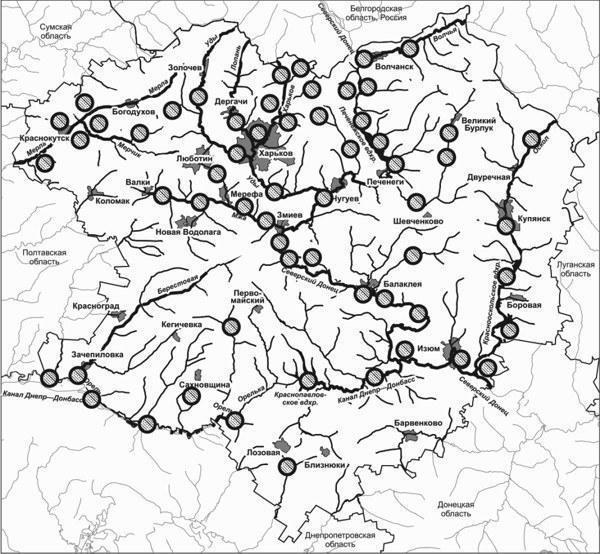
Unusual population‑ecological and evolutionary phenomena have been recorded in this complex. P. esculentus reproduces hemiclonally, transmitting only one of the parental genomes (chromosome sets) to its gametes. Representatives of the hybrid form and the parental species are capable of forming population systems in which individuals belonging to different species and forms jointly participate in population reproduction. Vigorous discussions continue regarding the taxonomic name of the hybrid frogs; at present we will not address this issue and note that the hybrid name, used here as a species‑like name, follows the existing tradition (Plötner, 2005) and is, to some extent, conventional. For ecological research on the causes of biodiversity it is important that among the hybrid frogs grouped under Pelophylax esculentus are forms differing in chromosome set number, species affiliation and mode of gametogenesis. It is well known that each species is a complex system (Vavilov, 1931). In addition to the intra‑specific complexity and order typical of most species, Pelophylax esculentus exhibits unusual biodiversity manifestations examined in this work. With the author’s participation, an area with exceptionally high diversity of the Pelophylax esculentus complex was identified in the basin of the upper reach of the Severny Donets River (Borkin, Korshunov et al., 2004). Studying the biodiversity of green frogs in this area, their connections with biogeocenoses and the composition of their population systems is of great interest both for the study of this animal group and for population ecology, evolutionary theory and conservation. The co‑occurrence of different forms of the Pelophylax esculentus complex in one territory provides an opportunity for comparative study. This work aims to fill the knowledge gap regarding the population‑ecological features and biotopic distribution of representatives of the Pelophylax esculentus complex. Relation of the work to scientific programs, plans, topics. The research was conducted in accordance with the plans of the R&D group on applied problems of animal ecology at the Institute of Biology of KhNU named after V. N. Kozar within state‑funded scientific topics: 13‑16‑03 “Structure of animal groupings and its dynamics in Northeastern Ukraine” (state registration No. 0103U004271; 2003‑2005); 13‑16‑06 “Assessment of climate and anthropogenic factors on the dynamics of animal groupings in Northeastern Ukraine” (state registration No. 0106U001580; 2006‑2008); 13‑16‑09 “Assessment of factors determining spatial, ethological and genetic structure of animal populations” (state registration No. 0109U001443; 2009‑2010); and scientific topics of the Faculty of Biology of KhNU named after V. N. Kozar 8‑16‑09 “Non‑orthodox speciation (hybridization, non‑Mendelian inheritance, polyploidy and network evolution): studies on amphibians” (state registration No. 0109U007439; 2009‑2010). Goal and objectives of the research. The goal is to determine the ecological patterns of diversity and the features of distribution of Pelophylax esculentus complex representatives in the basin of the upper reach of the Severny Donets River and adjacent territories, and to identify biogeocenosis components and ecological factors influencing their biotopic distribution. To achieve this goal the following tasks were set: — determine the diversity of the Pelophylax esculentus complex and the distribution of its population systems in the study region using reliable species identification methods; — define the ecological, morphological and cytological features of different forms of the Pelophylax esculentus complex and their distribution limits; assess whether reliable identification by morphological traits is possible; — identify biogeocenosis components and ecological factors determining the biotopic distribution of different types of population systems of the Pelophylax esculentus complex; — establish factors threatening the most valuable (from scientific and conservation perspectives) population systems of green frogs; propose conservation measures. Object of study — ecological patterns of diversity of the Pelophylax esculentus complex in the habitats of the upper reach of the Severny Donets River and adjacent territories. Subject of study — biogeocenosis components and ecological factors determining biodiversity and distribution of the Pelophylax esculentus complex. Methods — field collection of material, habitat description, population counting, field study of biotopic distribution of population systems; laboratory morphological, cytogenetic and biochemical research; biometric and statistical processing of field and laboratory results. Scientific novelty. A comprehensive ecological study of the Pelophylax esculentus complex in Eastern Ukraine was carried out. A diversity centre of green frogs associated with the upper Severny Donets River was identified. Mass occurrence of triploid Pelophylax esculentus was recorded in the studied region. Ecological and morphological comparisons of complex members were performed. New data on habitat shifts during activity periods, seasonal migrations, formation of breeding groups, and metapopulation structure of the studied group were obtained. Ecological patterns of distribution of Pelophylax esculentus complex representatives across habitats and the formation of population systems were revealed. The leading role of the type of terrestrial habitat (according to A. L. Bel’garda’s forest‑steppe typology) in the spread of Pelophylax esculentus and especially Pelophylax lessonae was demonstrated. Karyotypes of hybrid frogs, including triploids from this diversity centre, were described. Genetic heterogeneity of Pelophylax esculentus was studied; cytophotometric analyses on large samples (≈1500 individuals), including triploids, established gamete composition in different hybrid forms. The results are of interest to ecology, herpetology, population biology, biogeocenology and evolutionary theory. Practical significance. The results are important for preserving Ukraine’s biodiversity. A collection of Pelophylax esculentus complex representatives gathered during the research was transferred to the Natural History Museum of KhNU named after V. N. Kozar. Previously collected green frog collections of the museum were re‑identified. The work’s results are used in courses “Ecology”, “Evolutionary Ecology”, “Herpetology” and “Nature Conservation” at the Department of Zoology and Animal Ecology of KhNU. They have also been applied in organizing conservation work in the NPP “Homolshansky Forests”. Personal contribution of the candidate. The dissertation is an independent original study. The candidate personally collected the majority of material, performed its desk‑based morphometric processing, selected and processed literature sources, studied and described habitats. The candidate independently developed habitat description schemes, including identification of main elements of river valley relief, water bodies and terrestrial habitats, as well as climatic conditions and degree of anthropogenic transformation, defined research plans and expedition routes. Field studies of the ecology of Pelophylax esculentus complex representatives were personally conducted during spawning and other activity periods, population system types and their distribution across water bodies and relief elements were determined, patterns of mixed population system formation were established, and the leading role of terrestrial habitat for the spread and formation of population systems of the Pelophylax esculentus complex was identified. Statistical processing of morphological description results of Pelophylax esculentus complex representatives and analysis of their ecological distribution were carried out jointly with the scientific supervisor D.A. Shabanov. Several publications on the dissertation topic were prepared together with scientists from St. Petersburg and Kyiv. In these works the author performed material collection, desk processing and participated in result interpretation. Dissemination of dissertation results. Dissertation materials were presented at the Young Scientists Conference of KhNU (Kharkiv, 2003), Scientific Conference “Modern Problems of Zoology and Ecology” (Odessa, 2005), Scientific‑Practical Conference “Animal World: Protection and Rational Use” (Kharkiv, 2005), the III, IV and V International Scientific Conferences “Diversity and Role of Zoocenosis in Natural and Anthropogenic Ecosystems” (Dnipropetrovsk, 2005, 2007, 2009), IX International Scientific‑Practical Ecological Conference “Modern Problems of Population Ecology” (Belgorod, 2006), Scientific Conference of the Biological Faculty of KhNU dedicated to the 100th anniversary of E.I. Semenenko (Kharkiv, 2006), III Congress of the Herpetological Society named after A.M. Nikols’kyi (Pushchino, 2006), I, II, III and IV Congresses of the Ukrainian Herpetological Society (Kyiv, 2005; Uzhhorod, 2006; Melitopol, 2007; Kharkiv‑Haydary, 2009). Publications. Based on the dissertation, 20 scientific works have been published: 11 articles in specialized scientific journals and collections (8 of them in journals listed in the Ukrainian VAK) and 9 publications in conference proceedings and abstracts. Structure and volume. The dissertation consists of an introduction, 6 chapters, conclusion, references, 3 appendices, illustrated by 19 tables (2 in appendices) and 29 figures (7 in appendices). The material spans 184 typewritten pages, of which 140 pages constitute the main text. The reference list contains 221 sources, 48 of them in Latin script. MAIN CONTENT CURRENT STATE OF THE PROBLEM History of research on ecological features determining biodiversity of the Pelophylax esculentus complex. The history of scientific investigation of Pelophylax esculentus complex representatives in general and in the study region in particular is reviewed. Systematic approaches characteristic of different periods of study of the green frog complex are analyzed. It is shown that throughout its research history the complex has attracted significant scientific interest and has become a model object for many general biological problems. The discovery of the hybrid nature of Pelophylax esculentus (Berger, 1967), study of hemiclonality, and the complex of research on Pelophylax esculentus complex and associated taxonomic problems are described. Ecological research problems of the Pelophylax esculentus complex. Each form of the Pelophylax esculentus complex has its own ecological specificity. Their study cannot be considered complete because data on the ecology of different green frog forms are scarce, especially those based on reliable individual identification and relevant to the study region. Methods of identification of complex representatives. Various identification methods are described and their reliability assessed. It is demonstrated that in regions where many forms coexist, species identification must be performed using modern genetic and cytological methods. Ecological features of Pelophylax esculentus complex representatives and the distribution of their population systems. A literature review on the ranges of Pelophylax esculentus complex representatives is presented. Existing data on range limits in the study region are insufficient. Diversity of green frog population systems is described. PHYSICO‑GEOGRAPHIC AND BIOGEOCENOTIC FEATURES OF THE STUDY AREA The study region lies within Kharkiv Oblast from the Russian border in the north to the city of Izyum in the south. Latitudinal limits are defined by the watershed between the Dnipro and Don basins to the west and the Oskol River valley to the east. Several studies were conducted in the valleys of Dnipro basin rivers: Merla, Kolomak and Orel. Administratively the study region roughly corresponds to Kharkiv Oblast. Geomorphic, climatic and hydrological characteristics of the region, as well as data on soils, flora and fauna, are provided. Anthropogenic impact on the environment is characterized. MATERIALS AND METHODS Studied samples of the Pelophylax esculentus complex. Using modern laboratory species‑identification methods, 152 samples from 108 localities comprising more than 1500 representatives of the Pelophylax esculentus complex were examined. Sampling sites are shown in Fig. 1. Material was collected in the field season (late March — early November) 2002‑2009. Over 200 expedition trips were made. An appendix includes a table with data on each sample, its composition and number of individuals, and the laboratory methods used for identification. Standard amphibian field methods were employed (Shliakhtin, Holikova, 1986; Shcherbak, 1989; Lada, Sokolov, 1999; Measurement..., 2003). Capture was performed by hand, hydrobiological net, in hard‑to‑reach places with a fishing rod and hook with silicone bait, and at night using a lantern. In the field, species affiliation of Pelophylax esculentus complex representatives was determined by a set of morphological characters (Shabanov et al., 2006). The type of population system was identified directly during spawning. For confirming species identification, samples were formed whose individuals were identified by reliable methods. Stationary studies were conducted in all water bodies and habitats of the national nature parks “Homolshansky Forests” and “Slobozhansky”. Routes for studying biotopic distribution crossed the valleys of the Severny Donets, Mzha, Kharkiv, Merla, Kolomak, Orel rivers. Fig. 1. Sampling sites of the Pelophylax esculentus complex Methodology for describing habitats at study sites. Habitat description followed a scheme accounting for relief elements, type of terrestrial habitat, type of water body, climatic and other conditions. The classification of forest‑steppe conditions by A. L. Bel’garda was used for characterizing terrestrial habitats. Methodology for determining species affiliation and ploidy of the studied individuals.{ "translated_text": "To confirm species affiliation and ploidy (number of chromosome sets), representatives of the Pelophylax esculentus complex were examined by flow DNA cytometry (Borkin et al., 1987) at the Institute of Cytology of the Russian Academy of Sciences (St. Petersburg) by S. N. Litvynchuk and Yu. M. Rozanov, as well as by protein electrophoresis at the I. I. Shmal’gausen Institute of Zoology (Kyiv) by S. Yu. Morozov‑Leonov (Mezhzherin et al., 2007). The presence of polyploid individuals of Pelophylax esculentus has also been confirmed by karyological studies (Manilo, Radchenko, Korshunov, 2007) at the Zoological Museum of the National Academy of Sciences of Ukraine (Kyiv). Methodology of morphometric description of representatives of the Pelophylax esculentus complex. Samples of Pelophylax esculentus complex were processed according to 15 widely accepted (Tarashchuk, 1989; Lada, Sokolov, 1999) morphological characters (Table 1). Measurements were made with a caliper to an accuracy of 0.1 mm. Frog collections after morphometric processing were transferred to the Natural History Museum of V. N. Karazin Kharkiv National University. Statistical processing methodology. Statistical analysis of the material was performed using Statistica 6.5 for Windows (StatSoft). Descriptive statistical methods, graphical data visualization, correlation analysis, distribution comparison using Pearson chi‑square, discriminant analysis, canonical analysis, and correspondence analysis were applied. Table 1. Characters of Pelophylax esculentus complex used to describe their morphological diversity No. Character name Description and measurement method Abbreviation Full name 1. L. Longitudo corporis Body length (from snout to cloacal opening) 2. Lt.c. Latitudo capitis Head width (at the proximal edge of the skull) 3. L.c. Longitudo capitis Head length (snout – proximal edge of the skull) 4. Sp.n. Spatium naris Distance between nostrils 5. D.r.o. Distantia rostri oculi Snout length (from snout to eye) 6. Sp.oc. Spatium oculis Snout width (between the eyes) 7. L.o. Longitudo oculi Eye length 8. Sp.p. Spatium palpebralis Distance between eyelids 9. Lt.p. Latitudo palpebrae Eyelid width 10. L.tym. Longitudo tympani Maximum length of the tympanic membrane 11. F. Longitudo femoris Femur length 12. T. Longitudo tibae Tibia length 13.
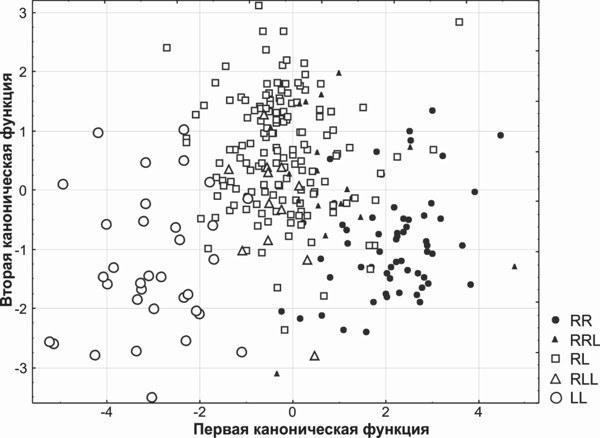
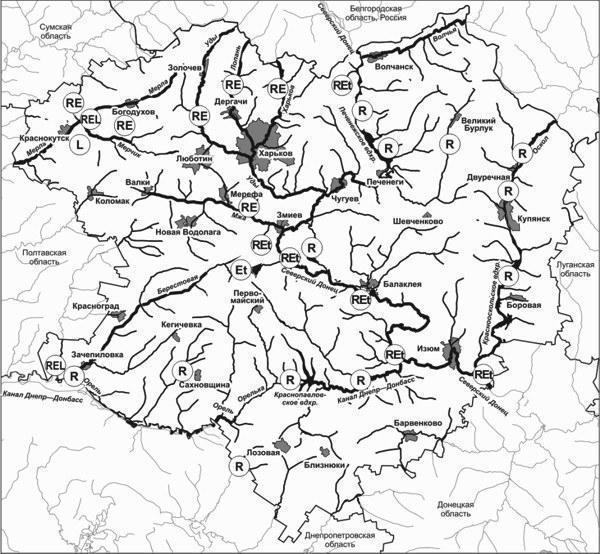
D.p. Digitus primus Length of the first (inner) toe of the hind limb 14. C.i. Callus internus Length of the internal calcaneal tuber 15. C.s. Longitudo crus secondarius Length of the supplementary shank RESULTS AND DISCUSSION ECOLOGICAL PATTERNS OF DIVERSITY OF THE PELOPHYLAX ESCULENTUS COMPLEX IN THE STUDIED REGION Species of the Pelophylax esculentus complex recorded in the study area. Using modern cytological, biochemical, and karyological identification methods in the upper Seversky Donets River basin and adjacent territories, the presence of P. ridibundus, P. lessonae, as well as di‑, tri‑ and occasional tetraploid individuals of P. esculentus—hemiclonal hybrids of the aforementioned parental species—was established. Diploid P. esculentus are represented by three forms that differ in the type of gametes produced (P. lessonae gametes, P. ridibundus gametes, and both types). Morphological diversity of Pelophylax esculentus complex representatives. Morphometric studies of Pelophylax esculentus complex members were conducted. Morphometric traits are linked to various ecological characteristics of the different forms. Both novel and classical statistical processing methods were employed. It was found that, on average, all green frog forms differ significantly, but the extreme values of characters and indices for the studied Pelophylax esculentus complex overlap considerably. Assessment of morphological discrimination methods for Pelophylax esculentus complex using discriminant analysis. Detailed examination of morphological variability of Pelophylax esculentus complex demonstrates that each form possesses its own morphological features, yet clear boundaries between these forms are absent (Fig. 2). Parental species are well distinguished by morphological methods, but hybrids—especially triploids—may exhibit combinations of parental traits. Fig. 2. Results of discriminant analysis of the Pelophylax esculentus complex based on 15 morphological characters. Designations: R — genome of P. ridibundus; L — genome of P. lessonae Cytogenetic and biochemical diversity of Pelophylax esculentus. Results of karyological investigation of green frogs are presented, with photographs and descriptions of karyotypes of diploid (Fig. 3) and triploid (Fig. 4) representatives. Fig. 3. Karyogram of Pelophylax esculentus, Seversky Donets River basin, Kharkiv region. Diploid karyotype, NF = 52 (2n = 26) Fig. 4. Karyogram of Pelophylax esculentus, Seversky Donets River basin, Kharkiv region. Triploid karyotype, NF = 76 (3n = 39) Results of protein marker analysis of Pelophylax esculentus complex members confirm DNA cytometry findings and enable analysis of genetic diversity of the studied populations. Phenological features of Pelophylax esculentus complex and other tailless amphibians. New and refined data on the phenology of Pelophylax esculentus complex and other tailless amphibians have been obtained. The relationship between green frog phenology and their seasonal cycle (presence of a feeding period before spawning) is discussed. Ecological factors determining the range limits of Pelophylax esculentus and Pelophylax lessonae. The distribution limits of P. esculentus and P. lessonae in the study region have been refined. According to new data, the southern boundary of P. esculentus has shifted markedly southward. Diversity of population systems of the Pelophylax esculentus complex. Based on sample studies and field work during frog spawning, types of population systems of the Pelophylax esculentus complex in the study area were identified (Fig. 5). In the investigated region, R‑, L‑, RE‑, REt‑, and REL‑type systems were recorded.
RL‑ and LE‑type systems were absent. The Don and Dnieper river basins differ in their prevalent population systems. For the Don basin (Seversky Donets) R‑, RE‑, REt‑, and Et‑type systems are characteristic. In the Dnieper basin (Merla, Orel) R‑, REL‑, L‑, and RE‑type systems dominate.

Fig.

5. Distribution of population systems of the Pelophylax esculentus complex COMPONENTS OF BIOGEOCENOSIS AND ECOLOGICAL FACTORS DETERMINING DIVERSITY OF THE PELOPHYLAX ESCULENTUS COMPLEX Relationship between the distribution of Pelophylax esculentus complex members and habitat characteristics: pairwise correlation analysis of variables. Pairwise analysis of habitat features and the presence or absence of different frog forms showed that green frog distribution is influenced by climate, water‑body type, terrestrial vegetation, anthropogenic impact, and belonging to the Don or Dnieper basin. Relationship between the distribution of Pelophylax esculentus complex members and habitat characteristics: canonical analysis of the data set. Canonical analysis allows investigation of how the entire suite of habitat characteristics affects the distribution of Pelophylax esculentus complex members. It was established that over 90 % of the diversity of the complex can be explained by habitat heterogeneity. The main factors identified in this analysis are presented in Table 2, showing those of the 28 habitat‑diversity variables that are linked to the canonical roots. The first root primarily influences the absence of triploid P. esculentus in habitats. It is associated with climate, river order, low anthropogenic impact, and the Don basin. The second root affects the presence of P. lessonae and is linked to the Dnieper basin, climate, terrestrial vegetation, and low anthropogenic impact. Table 2. Relationship of canonical roots influencing the distribution of Pelophylax esculentus complex members and associated habitat characteristics Population system composition Pelophylax esculentus complex Canonical roots Root 1 Root 2 Root 3 Root 4 Presence of P. ridibundus 0.18 -0.39 -0.66 0.62 Presence of P. lessonae 0.12 0.99 0.08 0.01 Presence of diploid P. esculentus -0.47 -0.04 0.57 0.67 Presence of triploid P. esculentus -0.97 -0.20 -0.13 -0.04 Habitat characteristics Canonical roots Geographic longitude -0.23 -0.71 -0.17 0.03 Geographic latitude 0.21 0.15 0.33 0.05 River order 0.28 0.04 0.34 0.18 June isotherm -0.54 -0.50 -0.15 0.13 January isotherm 0.33 0.26 0.17 0.15 Precipitation amount 0.52 0.63 -0.10 -0.27 Herbaceous riparian vegetation 0.05 0.35 0.27 -0.10 Flow rate 0.08 -0.35 -0.30 0.17 Winter frost -0.02 -0.42 -0.51 0.07 Anthropogenic transformation 0.34 -0.41 -0.10 -0.06 Anthropogenic disturbance 0.20 -0.34 0.04 -0.12 Urbanization 0.05 -0.46 -0.30 -0.16 Basin (Don or Dnieper) 0.31 0.76 -0.09 -0.13 Relief element (from plack to saline terrace) 0.33 -0.20 0.20 -0.36 Vegetation type (from oak forest to arable land) 0.26 -0.12 -0.42 -0.22" }{ "translated_text": "Ecological preferences of representatives of the Pelophylax esculentus complex: correspondence analysis. By applying correspondence analysis it is shown that overall the greatest influence on the distribution of members of the green frog complex is exerted by microclimate, vegetation type, and the presence or absence of anthropogenic activity. The factor that most integrates these parameters is the character of the terrestrial vegetation.
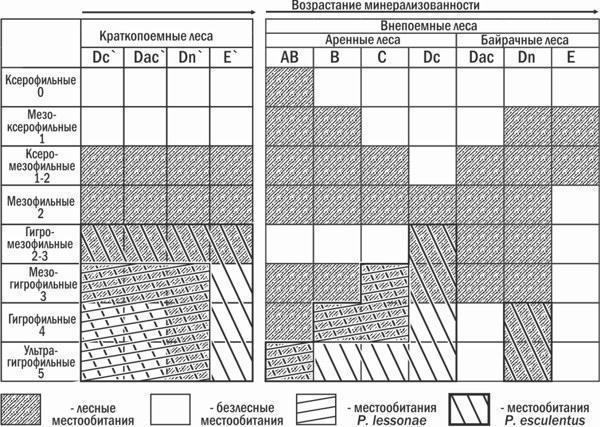
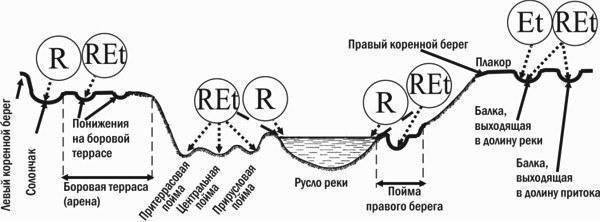
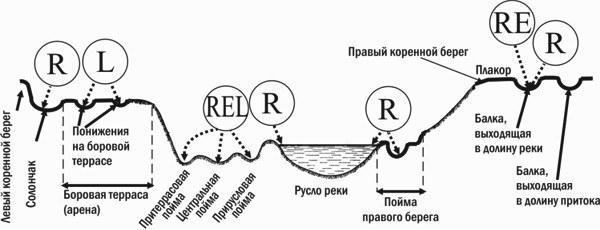
Thanks to this, the description of the ecological specificity of the studied animals can be carried out using vegetation typology. The work uses the classification of steppe forests by A. L. Bel’garda. Ecological features of representatives of the Pelophylax esculentus complex. The distribution of individual species of the green frog complex (Pelophylax esculentus complex) and their population systems in the study region has been established. It is shown that the type of terrestrial habitats significantly affects the distribution of the pond (P. lessonae) and edible (P. esculentus) frogs. The lake frog (P. ridibundus) is closely associated with water bodies, but the type of terrestrial habitat influences this species' colonisation ability. The pond frog (P. lessonae) is the most demanding regarding habitats. The edible frog (P. esculentus) uses a broader range of habitats, however it utilizes fresh and slightly moist biotopes less frequently and only under suitable humidity conditions. The lake frog (P. ridibundus) is linked to large water bodies, where it can spend its entire life under favourable conditions, but it may use surrounding water bodies for spawning migrations and colonisation of new water bodies. Terrestrial habitats used by pond and edible frogs are shown in Fig. 6. Fig. 6. Terrestrial habitats preferred by P. lessonae and P. esculentus during the transition to a terrestrial lifestyle It has been established that in floodplains the habitat spectrum of P. esculentus is wider than in other landscapes. This is probably due to the presence of various permanent water bodies in floodplain habitats that maintain humidity. During dry periods P. esculentus uses ecotones along water bodies as feeding stations. In sandy dunes and birch‑oak forests this species is more tied to water bodies located near the habitats outlined in Fig. 6. Its occurrence in drier biotopes is possible, but only in the moist period and mainly during migration toward new water bodies. P. lessonae inhabits only moist, wet and soggy habitats in floodplains and dunes, and is absent from birch‑oak biotopes because of the sharp transition from ultra‑hydrophilic shore habitats of ponds to hygromezophilic conditions in packed‑aspen oak forests with broad‑grass cover. In summer drought conditions such biotopes cannot meet the ecological needs of this hygrophilic species. Distribution by relief elements and biotopic relevance of population systems of the Pelophylax esculentus complex. It is shown that complex population systems of green frogs arise in habitats where, on a small area, contacts of different biogeocenoses occur. The distribution of population systems in various landscape types and biotopes of the valleys of the Seversky Donets River (Fig. 7), Merla River (Fig. 8), Kolomak, Orel has been studied. Fig. 7. Biotopic distribution by relief elements of the Seversky Donets River valley (Don basin) of population systems of the P. esculentus complex Fig. 8. Biotopic distribution by relief elements of the Merla River valley (Dnieper basin) of population systems of the Pelophylax esculentus complex Types of water bodies in which population systems of the Pelophylax esculentus complex are formed have been identified. The importance of the complex of water bodies and the surrounding terrestrial habitats is indicated. Possible reasons for the absence of P. lessonae in biotopes of the Seversky Donets River basin. Based on the obtained data, probable reasons for the absence of P. lessonae in the Seversky Donets River valley are discussed. An important limiting factor is unfavorable climatic conditions (insufficient summer moisture) and the lack of a large number of hygrophilic and ultra‑hydrophilic habitats. Hypotheses concerning geographic isolation and specific genetic processes in population systems of the Pelophylax esculentus complex in the Seversky Donets River valley are discussed. POPULATION STRUCTURE OF REPRESENTATIVES OF THE PELOPHYLAX ESCULENTUS COMPLEX AND CONSERVATION PROBLEMS OF THEIR DIVERSITY Local populations and metapopulations of representatives of the Pelophylax esculentus complex. Data from a multi‑year study of the metapopulation of the Pelophylax esculentus complex in the National Natural Park “Homolshansky Forests” are presented. Development of population systems in space and time has been examined.
Genetic processes in population systems of the Pelophylax esculentus complex have been identified. The relationship of genetic and ecological factors with the biotopic distribution of the complex’s representatives is characterized. Factors negatively affecting representatives of the Pelophylax esculentus complex. A study of factors that have a negative impact on the unique population systems of the Pelophylax esculentus complex has been conducted. The most threatening are habitat destruction and uncontrolled harvesting. Uniqueness of populations of the Pelophylax esculentus complex. Different approaches to defining the uniqueness of living objects are considered. Levels of diversity and the degree of uniqueness of biosystems at these levels are discussed. It is determined that not only the representatives of the Pelophylax esculentus complex are unique, but also the population systems they form. Proposals for protection and rational use of the Pelophylax esculentus complex. To preserve the unique diversity of the P. esculentus complex in the study region, it is proposed: — when developing conservation measures for regionally rare representatives of the P. esculentus complex, to consider that it is necessary to protect not only individual species but also the population systems of which they are part; — when planning protected areas, to take into account the need to preserve representatives of the Pelophylax esculentus complex and the uniqueness of their population systems; — in the valleys of the Seversky Donets, Merla, and Orel rivers, to preserve floodplain, dune and ridge sections occupied by natural vegetation types; — for scientific and other purposes, to harvest only P. ridibundus—the largest and most widespread green frog species; — to prohibit mass harvesting of representatives of the P. esculentus complex in water bodies of the Seversky Donets, Merla and Orel river valleys. Mass harvesting of the lake frog (P. ridibundus) in the study region can be carried out in all reservoirs, artificial lakes, ponds and fish‑farm canals, as well as in the Dnipro‑Donbass canal.
When mass harvesting of P. ridibundus from biotopes located in the valleys of the Seversky Donets, Merla and Orel rivers is required, consultation with a herpetology specialist is necessary to determine sites where harvesting P. ridibundus will not harm the unique population systems of the Pelophylax esculentus complex.
To preserve the unique diversity centre of the P. esculentus complex in the upper reaches of the Seversky Donets River and adjacent territories, measures must be taken to protect floodplain, dune and ridge habitats in the valleys of the Seversky Donets, Merla and Orel rivers. In addition, economic activities affecting the stable existence of population systems of the P. esculentus complex should be strictly regulated. CONCLUSIONS 1. For the Pelophylax esculentus complex in the study region, distinctive levels of biodiversity have been recorded: diversity of population systems differing in the composition of parental species and hybrids; diversity of hybrids in terms of chromosome set numbers and the species origin of gametes. The presence of Pelophylax ridibundus, as well as diploid, triploid and isolated tetraploid individuals of P. esculentus, has been established in the upper‑reach basin of the Seversky Donets River. Diploid P. esculentus belong to different forms that differ in the composition of produced gametes. 2. Representatives of the Pelophylax esculentus complex differ in morphological traits, but these differences do not allow reliable identification of these representatives by morphological methods, especially in areas where triploid P. esculentus occur. Pelophylax lessonae has been found only in adjacent rivers of the Dnieper basin. 3. Six types of population systems have been recorded in the study region: R, L, Et, RE, REt, REL. The southern and southeastern boundaries of the ranges of P. esculentus and P. lessonae have been refined. In the Seversky Donets basin, R‑, RE‑, REt‑ and Et‑type population systems are widespread; floodplain habitats of the Seversky Donets and adjacent biotopes are characterized by the presence of triploid hybrids. In the Dnieper basin, R‑, REL‑, L‑ and, occasionally, RE‑type population systems occur, without triploid individuals. 4. Species within the Pelophylax esculentus complex differ in biotopic relevance. P. ridibundus is the most water‑body‑associated species. For P. lessonae and P. esculentus, the use of terrestrial habitats is characteristic. In the study region, P. lessonae inhabits hygrophilic and ultra‑hydrophilic habitats of intrazonal complexes: river floodplains and birch thickets on dunes. 5. The biodiversity of green frogs is influenced by: differing distribution of frogs in the Don (Seversky Donets) and Dnieper basins; diversity of spawning water bodies; diversity of terrestrial habitats; anthropogenic impact. Mixed population systems form only in areas with diverse biotopes. The greatest diversity of population systems in forest and forest‑steppe zones is characteristic of floodplain and dune habitats. 6. To preserve the unusual diversity centre of the Pelophylax esculentus complex, floodplain sections and adjacent territories on the Seversky Donets, Merla and Orel rivers must be retained, and the types of economic activity that may affect the numbers and reproduction of green frogs, especially the preservation of habitats and biotope diversity, should be regulated. The author plans to continue research on the ecology of representatives of the Pelophylax esculentus complex and other amphibians. The results obtained on patterns of biotopic distribution will be used for studying amphibian ecology in Ukraine. ACKNOWLEDGEMENTS The author expresses sincere gratitude to the scientific supervisor of the dissertation D. A. Shabanov for the properly organised work and assistance at all stages of manuscript preparation. This research was initiated in close cooperation with L. Y. Borkin, S. N. Litvynchuk, Yu. M. Rosanov (St. Petersburg) and G. A. Lada (Tambov) and with their comprehensive support. In processing the results, collaboration with S. Yu. Morozov‑Leonov and V. V. Manilo was important. Valuable advice from E. M. Pisanets, S. V. Mezhzheryn, V. F. Orlova and, especially, A. P. Travleeva helped organise the study. In field work the author received invaluable assistance from A. I. Zinenko, G. A. Mazepa, V. I. Radchenko, N. N. Suryadna and many other colleagues. Special thanks are extended to T. S. Fomenko for help and support at all stages of the work. LIST OF PUBLICATIONS RELATED TO THE DISSERTATION TOPIC 1. Korshunov O. V. Diversity of green frogs (Rana esculenta complex) in Kharkiv region: morphological aspect of study / Korshunov O. V., Babinich T. V., Zinenko O. I., Shabanov D. A. // Biology and Valiology. — Issue 6. — Kharkiv: HDPU, 2004. — pp. 24–30. (The candidate collected material and performed its desk‑based processing, processed literature sources, examined scientific collections, and together with co‑authors interpreted the results). 2. Akulov O. Yu. On the reorganisation of zoning of the National Natural Park “Homolshansky Forests” / Akulov O. Yu., Atemasova T. A., Bartenyev O. F., Viter S. G., Vlashenko A. S., Zinenko O. I., Korshunov O. V., Saidakhmedova N. B., Skorobogatov E. V., Shabanov D. A., Utyevskyi A. Yu. // Protected Affairs in Ukraine. — 2006. — Vol. 12, No. 2. — pp. 73–79. (The candidate collected material on amphibians, identified the role of amphibians, particularly green frogs, in protected biogecenoses, and together with co‑authors interpreted the results and developed a new zoning scheme for NPP “Homolshansky Forests”). 3. Shabanov D. A. Study of population systems of green frogs (Rana esculenta complex) in Kharkiv region: history, current state and prospects / Shabanov D. A., Zinenko A. I., Korshunov A. V., Kravchenko M. A., Mazepa G. A. // Bulletin of Kharkiv National University named after V. N. Karazin. Series: Biology. — 2006. — Issue 3 (No. 729). — pp. 208–220. (The candidate collected part of the material, identified population systems and their biotopic distribution, processed literature sources, and together with co‑authors interpreted the results). 4. Manilo V. V. Karyotype study of the edible frog (Rana kl. esculenta) from Kharkiv region, Ukraine / Manilo V. V., Radchenko V. I., Korshunov A. V. // Scientific Bulletin of Uzhhorod University. Series Biology. — 2007. — Issue 21. — pp. 68–73. (The candidate collected material, together with co‑authors interpreted the results). 5. Mezhzheryn S. V. Evolutionary‑genetic aspects of semi‑clonal reproduction of the hybrid form Rana kl. esculenta (Amphibia, Ranidae) / Mezhzheryn S. V., Morozov‑Leonov S. Yu., Nekrasova O. D., Kurtyak F. F., Shabanov D. A., Korshunov A. V. // Scientific Bulletin of Uzhhorod University: Series Biology. — 2007. — Issue 21. — pp. 79–84. (The candidate collected part of the material on Kharkiv region, together with co‑authors interpreted the results). 6. Korshunov A. V. Ecological features of the biotopic distribution of representatives of the Pelophylax esculentus complex in Kharkiv region / A. V. Korshunov // Bulletin of Kharkiv National University named after V. N. Karazin. Series: Biology. — 2008. — Issue 8 (No. 828) — pp. 48–57. 7. Morozov‑Leonov S. Yu. Inheritance of parental genomes in the hybrid form Rana “esculenta” (Amphibia, Ranidae) / Morozov‑Leonov S. Yu., Mezhzheryn S. V., Nekrasova O. D., Shabanov D. A., Korshunov A. V., Kurtyak F. F. // Genetics. — 2009. — Vol. 45 (No. 4). — pp. 448–495. (The candidate collected part of the material on Kharkiv region, together with co‑authors interpreted the results). 8. Shabanov D. A. What green frogs inhabit Kharkiv region? Terminological and nomenclatural aspects of the problem / Shabanov D. A., Korshunov O. V., Kravchenko M. O. // Biology and Valiology. — Kharkiv: HDPU, 2009. — Issue 11. — pp. 164–125. (The candidate collected part of the material in Kharkiv region, together with co‑authors interpreted the results). 9. Borkin L. J. Mass occurrence of polyploid green frogs (Rana esculenta complex) in Eastern Ukraine / Borkin L. J., Korshunov A. V., Lada G. A., Litvinchuk S. N., Rosanov J. M., Shabanov D. A., Zinenko A. I. // Russian Journal of Herpetology. — 2004. — Vol. 11, No 3. — pp. 194–213. (The candidate collected material, processed part of the literature sources and museum collections, studied biotopes of the Pelophylax esculentus complex, and together with co‑authors interpreted the results). 10. Borkin L. Ya. Mass polyploidy in the hybridogenetic complex Rana esculenta (Ranidae, Anura, Amphibia) in Eastern Ukraine / Borkin L. Ya., Zinenko A. I., Korshunov A. V., Lada G. A., Litvinchuk S. N., Rosanov Yu. M., Shabanov D. A. // Materials of the Conference of the Ukrainian Herpetological Society. — Kyiv: Zoological Museum of the NNP of the NAS of Ukraine, 2005. — pp. 23–26. (The candidate collected part of the material on Kharkiv region, together with co‑authors interpreted the results). 11. Zinenko A. I. Annotated list of amphibians and reptiles of the NPP “Homolshansky Forests” / Zinenko A. I., Korshunov A. V. // Scientific Research on the Territories of the Natural Reserve Fund of Kharkiv Region. Collection of Scientific Articles. — Kharkiv, 2006. — Issue 2. — pp. 43–48. (The candidate collected part of the material, processed literature sources and museum collections, together with co‑author interpreted the results, prepared the work). 12. Borkin L. Ya. On the southern border of the distribution of the hybrid Rana esculenta (Ranidae, Anura, Amphibia) in Ukraine and Moldova: flow cytometry data / Borkin L. Ya., Bezman O. S., Mazepa G. A., Zinenko A. I., Korshunov A. V., Lada G. A., Shabanov D. A., Litvinchuk S. N., Rosanov Yu. M. // Proceedings of the Ukrainian Herpetological Society. — Kyiv: Zoological Museum of the NNP of the NAS of Ukraine, 2008. — No 1. — pp. 5–10. (The candidate collected part of the material on Kharkiv region, together with co‑authors interpreted the results). 13. Korshunov A. V. Anthropogenic factors of amphibian and reptile mortality in transformed habitats / Korshunov A. V., Zinenko A. I., Shabanov D. A. // Current Problems of Biology in the Research of Young Scientists of Kharkiv National University named after V. N. Karazin. — Kharkiv, 2003. — pp. 12–13. (The candidate collected part of the material on Kharkiv region, together with co‑authors interpreted the results). 14. Shabanov D. A. Uniqueness of populations of tailless amphibians as a basis for their protection / Shabanov D. A., Korshunov A. V., Kravchenko M. A. // Contemporary Problems of Zoology and Ecology — Odesa: Phoenix, 2005. — pp. 328–329. (The candidate collected part of the material on green frogs, together with co‑authors interpreted the results). 15. Korshunov A. V. Do pure population systems of Rana esculenta exist in Kharkiv region? / Korshunov A. V. // Biodiversity and the role of the zoocenosis in natural and anthropogenic ecosystems. — Dnipro: DNU Publishing, 2005. — pp. 363–365. 16. Korshunov A. V. Transformation of population systems of green frogs as a special category of natural development processes / Korshunov A. V., Kravchenko M. A., Shabanov D. A. // Modern Problems of Population Ecology. Materials of the IX International Scientific‑Practical Ecological Conference. — Belgorod: Politerra Publishing, 2006. — pp. 101–102. (The candidate collected part of the material, together with co‑authors interpreted the results). 17. Korshunov A. V. Amphibians and reptiles of the planned National Natural Park “Slobozhansky” / Korshunov A. V., Zinenko A. I. // Materials of the Regional Conference." }"Animal World: Protection and Rational Use". — Kharkiv: KhNU, 2006. — pp. 54–57. (The applicant collected a substantial part of the material, worked with museum collections and literary sources, prepared the work, and together with a co‑author interpreted the results). 18. Korshunov A.V. Biotopic distribution of population systems of green frogs (Rana esculenta complex) in the Kharkiv region /Korshunov A.V.// Biodiversity and the role of zoocenosis in natural and anthropogenic ecosystems. Abstracts of the IV International Scientific Conference. — Dnipropetrovsk: DNU Publishing, 2007. — pp. 376–378. 19. Korshunov A.V. Distribution and biotopic distribution of population systems of green frogs (Rana esculenta complex) in the Kharkiv region /Korshunov A.V.// Herpetology Issues. Materials of the III Congress of the Herpetological Society named after A.M. Nikolsky. — St. Petersburg, 2008. — pp. 198–203. 20. Korshunov A.V. Distribution and ecological features of the pond frog (Pelophylax lessonae (Camerano, 1882)) (Amphibia, Ranidae) in the Kharkiv region /Korshunov A.V.// Biodiversity and the role of animals in ecosystems: Materials of the V International Scientific Conference — Dnipropetrovsk: Lira, 2009. — pp. 271–273. ABSTRACT Korshunov O.V. Ecological patterns of the distribution of Pelophylax esculentus complex in the biotopes of the upper Seversky Donets River basin. — Manuscript. Dissertation for the degree of Candidate of Biological Sciences in the specialty 03.00.16 — ecology. — Dnipropetrovsk National University named after Oles Honchar. — Dnipropetrovsk, 2010. The presented results of multi‑annual studies of the ecological characteristics of green frogs (Pelophylax esculentus complex) in the biotopes of the upper Seversky Donets River. A centre of green‑frog biodiversity was discovered, containing both diploid and triploid Pelophylax esculentus. Species identity was determined by modern laboratory methods. Ecological patterns of the complex’s distribution across biotopes and differences in ecological preferences of its members were identified. A leading role of the type of terrestrial habitat in the spread of P. esculentus and P. lessonae was revealed. For green frogs (Pelophylax esculentus complex) in the study region characteristic levels of biodiversity are observed: diversity of population systems differing in component composition; diversity of parental species and their hybrids; cytogenetic diversity of hybrids. It is shown that the following factors affect green‑frog biodiversity in the region: differing distribution of frogs in the Don (Seversky Donets) and Dnieper (Merla, Oril) basins; diversity of spawning water bodies; diversity of terrestrial habitats; anthropogenic impact. Recommendations for conserving unique population systems of green frogs in the studied region are developed. Keywords: biodiversity, ecology, Pelophylax esculentus complex, P. ridibundus, P. lessonae, P. esculentus, population system, biogeocenosis, upper Seversky Donets River. ANNOTATION Korshunov A.V. Ecological patterns of the distribution of Pelophylax esculentus complex in the biotopes of the upper Seversky Donets River basin. — Manuscript. Dissertation for the degree of Candidate of Biological Sciences in the specialty 03.00.16 — ecology. — Dnipropetrovsk National University named after Oles Honchar. — Dnipropetrovsk, 2010. The dissertation presents results of long‑term research on the diversity and biotopic distribution of green frogs (Pelophylax esculentus complex) in the upper reaches of the Seversky Donets River. Adjacent valleys of the Dnieper basin rivers were also examined for comparison. A unique centre of Pelophylax esculentus complex diversity was discovered. In the study region the occurrence of Pelophylax ridibundus, P. lessonae, as well as diploid, triploid and occasional tetraploid individuals of P. esculentus was established. To confirm species identity and ploidy, 152 samples from 108 localities, comprising more than 1500 representatives of the Pelophylax esculentus complex, were examined by flow cytometry and protein electrophoresis. The presence of polyploid Pelophylax esculentus individuals was also confirmed by karyological studies. Results of morphometric analysis of green frogs using standard indices and discriminant analysis are presented. It is shown that the morphometric method of species identification does not reliably determine the species affiliation of Pelophylax esculentus complex members. An original field identification table based on a set of characters was developed for green frogs. Geographic distribution of Pelophylax esculentus complex representatives and of their population systems was studied. Populations of R‑, L‑, RE‑, REt‑, Et‑ and REL‑type were found. The distribution of population systems in the Dnieper and Don basins shows significant differences. In the Seversky Donets basin, R‑, RE‑, REt‑ and Et‑type systems are common; diploid and triploid P. esculentus individuals are included in the valley’s population systems. In the Dnieper basin, R‑, REL‑, L‑ and RE‑type systems occur, without polyploid P. esculentus. Southern and southeastern limits of the ranges of P. esculentus and P. lessonae were refined. It is shown that for Pelophylax esculentus complex representatives in the study region distinctive levels of biodiversity exist: diversity of population systems differing in component composition; diversity of hybridizing parental species and various hybrid forms. Factors influencing green‑frog biodiversity in the region include: different distribution of the complex in the Don (Seversky Donets) and Dnieper (Merla, Oril) basins; variety of spawning water bodies; variety of terrestrial habitats (feeding, overwintering stations and migration routes); anthropogenic impact. Patterns of biotopic distribution of Pelophylax esculentus complex were identified. For characterising terrestrial habitats, A.L. Bel’garda’s steppe‑forest classification was used. Ecological preferences of different Pelophylax esculentus complex species were determined. During spawning, all complex members are closely associated with water bodies, but after spawning, terrestrial habitats become very important for P. lessonae and P. esculentus. P. lessonae shows the strongest habitat specificity—it inhabits only moist, wet, and soggy floodplain and river‑bank habitats and is absent from dry, upland habitats due to a sharp transition from ultra‑hydrophilic pond‑shore habitats to hygromezophilic oak‑ash forests with abundant grasses. In summer droughts, this habitat type cannot meet the ecological needs of this moisture‑loving species. P. esculentus uses a broader range of habitats, although fresh and slightly moist habitats are used less frequently than hygrophilic ones. P. ridibundus is associated with large water bodies where the full life cycle can be completed under favorable conditions, but it can also use surrounding habitats for feeding and spawning migrations and for colonising new water bodies. It was found that various ecological features of Pelophylax esculentus complex members influence the formation of common breeding groups. Population systems can develop only in areas where, on a relatively small scale, contacts between different types of water bodies and terrestrial habitats are recorded. In forest‑steppe and steppe zones, such conditions are met in valley landscapes—floodplains and moist low‑lying parts of the forest terrace. To preserve the unusual centre of Pelophylax esculentus complex diversity in the Kharkiv region, it is necessary to protect natural floodplain, river‑bank and terrace habitats in the valleys of the Seversky Donets, Merla and Oril rivers. In these areas, management activities affecting the stability of Pelophylax esculentus complex population systems and the diversity of terrestrial habitats should be regulated. Keywords: biodiversity, ecology, Pelophylax esculentus complex, P. ridibundus, P. lessonae, P. esculentus, population system, biogeocenosis, upper Seversky Donets River drainage. ANNOTATION Korshunov O.V. Ecological patterns in biotopic distribution of Pelophylax esculentus complex within the upper Seversky Donets drainage. — Manuscript. Dissertation for the degree of Candidate of Biological Sciences, specialty 03.00.16 — ecology. — Oles’ Gonchar Dnipropetrovsk National University. — Dnipropetrovsk, 2010. The results of long‑term research on ecological specifics of waterfrogs (Pelophylax esculentus complex) within the Upper Seversky Donets drainage are shown. The centre of waterfrog diversity has been discovered, in which simultaneously di‑ and triploids of Pelophylax esculentus co‑occur. Species belonging was determined by modern laboratory techniques. Ecological pattern in biotopic distribution of the complex members was discovered and their ecological preferences were detected. The crucial role of terrestrial site appearance was revealed in pattern of P. esculentus and P. lessonae distribution. In the region of interest certain levels of diversity characterize water frogs (Pelophylax esculentus complex): differentiation in population systems composition; variety of parental species and their hybrids; cytogenetic diversity of hybrids. That has been demonstrated that further driving forces shape the water frogs biodiversity pattern in the given region: the distribution difference within the Dnieper and the Seversky Donets drainages, that conditioned by historical events; variety of spawning sites; variety of terrestrial sites (feeding, hibernating sites as well as migration routes); anthropogenic influence. The recommendations concerning conservation activities of certain unique water frogs population systems in the region of study have been proposed. Key words: biodiversity, ecology, Pelophylax esculentus complex, P. ridibundus, P. lessonae, P. esculentus, population system, biogeocenosis, the upper Seversky Donets drainage. Signed for printing 17.11.2010. Format 60×90 1/16. Offset paper. Risographic printing. Conditional print. Sheet 0.9. Print run 100 copies. Order No 928. Printed at SPD FO Tarasenko V.P. Printing House. Certificate No 24800170000043751 dated 21.01.2002. 61124, Kharkiv, Zernova St., 6/267. Tel./fax: (0572) 52‑82‑11