
lection
539 materials found

Materials

Ecology: Biology of Interactions. 6.24. Ecoconversion
Apparently, a condition for human survival is a comprehensive restructuring of public consciousness linked to changing relations with the environment—ecoconversion.
Ecology: Biology of Interaction. Appendix I. Ecology Course Program (= 'Bioecology')
{ "title": "", "summary": "", "body": "The exam or credit test tickets for the ecology course adopted at V.N. Karazin KhNU feature formulations that correspond to the main part of …
Ecology: Biology of Interactions. Appendix III. Tentative Seminar Program
Each listed seminar topic can be covered either within one class session (two academic hours) or over a full seminar block. The structure is indicative and may be adapted to …
Ecology: Biology of Interactions. Appendix IV. Recommended Literature
Core textbooks. Textbooks for individual sections of the course.
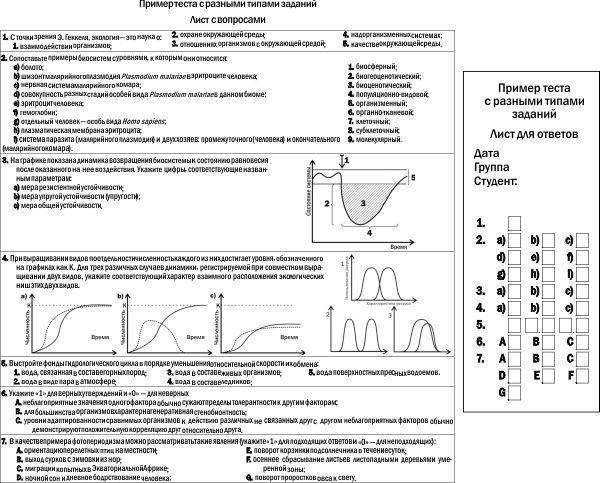
Ecology: the biology of interaction. Appendix V. Testing in the ecology course
An overview of the testing system used in the ecology course at the Faculty of Biology, including the template that defines test item types, notation styles, and methods.
Ecology: The Biology of Interactions. Appendix VI. Biographical Notes
Brief biographical data on scientists who contributed to the development of ecology and related branches of biology, as well as other outstanding individuals mentioned in the textbook.
Ecology: biology of interaction. Appendix VII. Glossary
Key terms of the course.
Educational Model: Development of Life on Earth
Key events in the history of Earth's biosphere and some stages of its prehistory
Educational Model: Levels of Biosystems
The model presents examples of biosystems belonging to different levels of organization
Educational Model: Ecological Factors
The model demonstrates basic patterns of the influence of one or several ecological factors on organisms.
Educational Model: Interaction of Factors (Controlling Photosynthesis in a Greenhouse)
The model makes it possible to determine the nature of the joint influence of two factors (using temperature and illumination as an example) on organisms
Educational Model: Hydrological Cycle
The model demonstrates the main stages of the water cycle (hydrological cycle).