Ecology: The Biology of Interactions. Appendix VI. Biographical Notes
Brief biographical data on scientists who contributed to the development of ecology and related branches of biology, as well as other outstanding individuals mentioned in the textbook.
Personalities D. Shabanov, M. Kravchenko. Ecology: biology of interaction D. Shabanov, M. Kravchenko. Ecology: biology of interaction Appendices
Appendix VII. Glossary
Appendix VI. Personalities
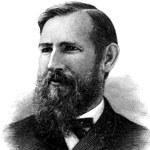
Allen, Joel Asaph (Allen J. A.) (1838–1921) — American zoologist, mammologist, and ornithologist. He studied ecogeographical patterns, one of which was subsequently named after him (Allen's Rule). He proposed a zonal scheme for the regionalization of land. By observing intraspecific variability, he advanced the idea of the existence of subspecies.
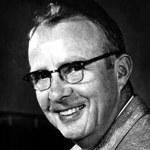
Alvarez, Luis Walter (Alvarez L. W.) (1911–1988) — American physicist. He participated in the development of radar systems and the atomic bomb. He proposed that the extinction of the dinosaurs at the end of the Cretaceous Period was a consequence of the collision of the Earth with an asteroid.
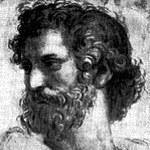
Aristotle (384–322 BC) — ancient Greek scholar, tutor to Alexander the Great. He laid the foundations of the principal sciences, including biology. He described more than 500 species of animals and created the first classification of animals. He formulated the problem of explaining the purposiveness of organisms — the central problem of biology.
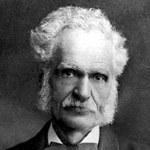
Bates, Henry Walter (Bates H. W.) (1825–1892) — English entomologist and explorer. He discovered the phenomenon of mimicry and provided an explanation for it (1862). He was among the first to introduce the concept of "biological diversity" into science.
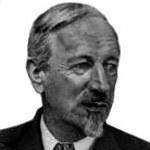
Beklemishev Volodymyr Mykolayovych (1890–1962) – Soviet zoologist. Engaged in invertebrate zoology, ecology, comparative anatomy of invertebrates, parasitology, and epidemiology. Showed the significance of bilateral symmetry in animals. Founder of the school of medical parasitologists and entomologists.
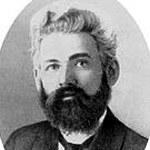
Berg, Lev Semyonovich (1876–1950) — Soviet geographer and biologist. His principal research interests were ichthyology, limnology, hydrobiology, geography, and the theory of evolution. He developed the science of landscapes; elaborated V. V. Dokuchaev's doctrine of natural zones; provided a classification of modern and fossil fishes. A critic of classical Darwinism, he was the creator of the theory of nomogenesis — evolution based on inherent regularities.
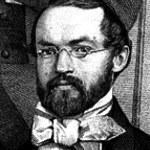
Bergmann, Karl Georg Lucas Christian (Bergmann C. G. L. Ch.) (1814–1865) — German histologist, physiologist, and embryologist. He formulated the ecogeographical regularity named after him (Bergmann's Rule).
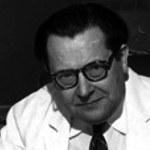
Bertalanffy, Ludwig von (Bertalanffy L. von) (1901–1972) — Austrian theoretical biologist. From 1949 he worked in the United States and Canada. He put forward the first generalized systems concept in modern science, whose objectives were the development of a mathematical apparatus for describing different types of systems and the establishment of isomorphism among laws in various fields of knowledge ("General System Theory", 1968).
Boyle, Robert (Boyle R.) (1627–1691) — English physicist, chemist, and encyclopaedist, one of the greatest scientists and theologians of his time. He worked on problems in biology, medicine, physics, and chemistry, and showed interest in philosophy, theology, and linguistics. He distinguished chemistry as an independent science and initiated analytical chemistry.
Brundtland (Brundtland G. H.) Gro Harlem (b. 1939) – former Prime Minister of Norway, international figure. Headed the World Commission on Environment and Development (WCED) of the UN General Assembly, which presented a report in 1987 dedicated to the prospects for civilization's development at the end of the 20th and 21st centuries.
Baer, Karl Ernst von (1792–1876) — Estonian naturalist and embryologist. He studied the embryonic development of many animal species. He was the first to describe the ovum of mammals. Author of the law of embryonic similarity (Baer's Law). On account of his ichthyological work he is considered one of the founders of population ecology.
Buffon, Georges-Louis Leclerc, Comte de (Buffon G. L. L.) (1707–1788) — French naturalist, author of the 44-volume "Natural History" — an encyclopaedia of zoology and botany of his era, in which he advanced ideas about the mutability of species over time.
Volterra, Vito (Volterra V.) (1860–1940) — Italian mathematician. His principal fields of work concerned differential and integral equations, elasticity theory, functional analysis, and set theory. He worked on improving airships. He proposed models for describing interspecific interactions that were essentially similar to the Lotka model. Vorontsov, Nikolai Nikolaevich (1934–2000) — Russian zoologist, evolutionist, ecologist, and geneticist. He proposed the theory of chromosomal speciation and widely applied chromosomal, genetic, and various molecular-biological methods in mammalian systematics. He formulated the principle of unequal rates of evolution of organs within a single system and the principle of functional compensation.
Weismann (Weismann A.) August (1834–1914) – German zoologist, evolutionist. Main research areas: heredity and individual development. Author of the concept of the continuity of the "germ plasm." Experimentally demonstrated the non-inheritance of the consequences of injuries, denied the inheritance of acquired characteristics. Founder of neo-Darwinism.
Vernadsky, Vladimir Ivanovich (1863–1945) — Russian and Soviet biogeochemist and mineralogist. Founder of geochemistry, within which he studied the regularities of the structure and composition of the Earth and the cycling of elements in the Earth's crust. He substantiated the planetary significance of the activity of living organisms (1923). Creator of the doctrine of the biosphere. One of the co-creators (notably together with Teilhard de Chardin) of the doctrine of the noosphere.
Volterra (Volterra V.) Vito (1860–1940) – Italian mathematician. Main areas of work dedicated to differential and integral equations, theory of elasticity, functional analysis, and set theory. Worked on improving airships. Proposed models for describing intraspecific interactions, essentially similar to the Lotka model.
Vorontsov Mykola Mykolayovych (1934–2000) – Russian zoologist, evolutionist, ecologist, and geneticist. Proposed the theory of chromosomal speciation, widely applied chromosomal, genetic, and various molecular-biological methods in the systematics of mammals. Formulated the principle of uneven rates of evolution of organs within the same system and the principle of functional compensation.
Gause, Georgii Frantsevich (1910–1986) — Soviet microbiologist. His principal research directions were the discovery of antibiotics and the mechanisms of their action at the molecular level. He worked on the classification of actinomycetes. As a result of experiments on the laboratory cultivation of protozoans in 1931–1935, he confirmed the conclusions derived from mathematical models by V. Volterra, which were named the law of competitive exclusion.
Haeckel (Haeckel E. H.) Ernst Heinrich (1834–1919) – German zoologist, evolutionist, anthropologist, and philosopher. An active supporter of Darwinism, creator of the first (often poorly substantiated) phylogenetic "trees." Developed the theory of the origin of multicellular organisms (gastrula theory, 1866) and formulated the biogenetic law, which establishes connections between ontogeny and phylogeny. Proposed the term "ecology" (1866).
Huxley, Thomas Henry (Huxley Th. H.) (1825–1895) — English zoologist, palaeontologist, and evolutionist. A supporter of Charles Darwin who did more than anyone else to promote Darwinism. He developed the foundations for the classification of vertebrates and elaborated the principle of the structural unity of their skulls. He demonstrated the morphological affinity of birds and reptiles and described the relationship between medusae and polyps.
Goethe, Johann Wolfgang von (Goethe J. W.) (1749–1832) — the great German poet, as well as the author of works in many branches of biology, medicine, physics, and geology. A supporter of transformism and one of the founders of morphology.
Clements, Frederic Edward (Clements F. E.) (1874–1945) — American plant ecologist. He developed the organismic concept of the plant community. He proposed the term "biome" for the totality of vegetation and animal life (1916). He substantiated the dynamic concept of plant successions (1916). He introduced the concept of "ecotone" (1936), denoting the relatively sharp transitional zone between communities.
Gloger (Gloger C. W. L.) Constantin (1803–1863) – Polish and German ornithologist. Established an eco-geographic regularity, later named "Gloger's rule."
Goldschmidt, Richard (Goldshmidt R.) (1878–1958) — German geneticist and zoologist, in the United States from 1936. His principal research interests were the cytology and histology of protozoans and sex genetics. He proposed the concept of macromutations that alter the course of organismal development and lead to the emergence of "hopeful monsters," which became one of the foundations of neo-saltationism (the view that evolution proceeds by leaps).
Grinnell (Grinnell J.) Joseph (1877–1939) – American zoologist, ecologist, biogeographer. First used the concept of "ecological niche," meaning the spatial place characteristic of a species in an ecosystem (1917).
Gould, Stephen Jay (Gould St. J.) (1941–2002) — American palaeontologist and evolutionist. Author of encyclopaedic surveys on evolutionary theory. He critiqued the synthetic theory of evolution and was one of the authors of the concept of punctuated equilibrium.
Humboldt (Humboldt F. W. H. A. von) Friedrich Wilhelm Heinrich Alexander von (1769–1859) – Great German naturalist, geographer, and traveler. Founder of plant geography and ecological plant geography. Substantiated the idea of the regular zonal distribution of vegetation on the Earth's surface (latitudinal and vertical zonation), described "physiognomic types" (life forms) of plants. The final work of his life was the multi-volume monograph "Cosmos," which synthesized the achievements of natural science of that time into a holistic picture of the world.
Дарвін (Darwin Ch. R.) Чарльз Роберт (1809–1882) — англійський природознавець. У 1831–1935 році здійснив навколосвітню подорож. У 1858 році повідомив про свою теорію еволюції (одночасно з повідомленням про схожі висновки А. Уоллеса), а у 1859 році опублікував книгу «Походження видів». У книзі «Походження людини і статевого добору» (1971) поширив висновки своєї теорії на людину. Ймовірно, крім Аристотеля, ніхто не мав такого впливу на розвиток біології, як Дарвін.
De Vries, Hugo (De Vries H.) (1848–1935) — Dutch botanist and geneticist. He studied the phenomena of osmosis, plasmolysis, and deplasmolysis in plant cells. Simultaneously with Karl Correns and Erich Tschermak, he rediscovered the laws of G. Mendel (1900). Creator of the mutation theory of evolution.
Dokuchaev, Vasily Vasilyevich (1846–1903) — Russian soil scientist and agronomist. He led the work on compiling a soil map of the European part of Russia and on the study, classification, origin, and distribution of chernozem soils. He provided a scientific classification of soils based on the genetic principle.
Zherikhin, Vladimir Vasilyevich (1945–2001) — Russian biologist and palaeontologist. His principal research interests were biocenotic factors of evolution, the nature and origin of the principal terrestrial biomes, biotic crises and their mechanisms and phases, and the problem of faunal complex replacement at the Mesozoic-Cenozoic boundary.
Suess (Suess E.) Eduard (1831–1914) – Austrian geologist. First substantiated the concept of the "biosphere" as the Earth's geographic shell occupied by life. Introduced a significant number of concepts in geology and historical biogeography.
Johannsen, Wilhelm Ludwig (Johannsen W. L.) (1857–1927) — Danish geneticist. His experiments, in which the ineffectiveness of selection within pure lines was demonstrated, became one of the causes of the crisis of classical Darwinism. Author of the concepts "gene," "genotype," and "phenotype"; he was the first to use the concept "population" in a sense close to its modern meaning.
Kapitsa, Sergei Petrovich (1928–2012) — Russian and Soviet scientist and television presenter. Doctor of Physical and Mathematical Sciences, professor. Creator of a phenomenological mathematical model of the hyperbolic growth of the world's human population.
Clements, Frederic Edward (Clements F. E.) (1874–1945) — American plant ecologist. He developed the organismic concept of the plant community. He proposed the term "biome" for the totality of vegetation and animal life (1916). He substantiated the dynamic concept of plant successions (1916). He introduced the concept of "ecotone" (1936), denoting the relatively sharp transitional zone between communities.
Pallas, Peter Simon (1741–1811) — Russian naturalist. His research was devoted to geology, botany, zoology, and palaeontology. He described new species of plants and animals. He proposed the idea (1766) of a genealogical tree. He studied the seasonal variability of birds, mammals, and fishes, and their zoogeography. Author of "Zoographia Rosso-Asiatica" — the first comprehensive survey of the vertebrates of Russia.
Pianka (sometimes Pyanka; Pianka E.) Eric (b. 1939) – American ecologist and zoologist, herpetologist. Studied factors determining the distribution of terrestrial vertebrates, the evolution of ecological relationships in communities, and the ecological strategies of organisms.
Ramensky, Leontii Grigorievich (1884–1953) — Soviet botanist, geographer, and meadow scientist. He substantiated the doctrine of the continuum of vegetation, based on the ecological individuality of species. He advanced the concept of ecotopology as the study of the external determination of various habitats and living environments. He developed quantitative methods in geobotany.
Rasnitsyn Aleksandr Pavlovich (b. 1936) – Soviet, Russian paleontologist, specialist in Hymenoptera insects. Main research areas: historical biogeography, paleogeography. Formulated the concept of adaptive compromise.
Raunkiaer (Raunkiaer Ch.) Christen (1860–1938) – Danish botanist. Author of the system of plant life forms.
Ray, John (Ray J.) (1627–1705) — English systematist. He proposed original classification systems for plants and animals. He defined the concept of "species" and used binomial nomenclature.
Roulier Karl Frantsevich (1814–1858) – Russian naturalist, evolutionary biologist, founder of domestic ecology and evolutionary paleontology. Main research areas: animal biology and ecology, paleontology, geology. Developed ideas about the unity of the organism and its living conditions. Anticipated some ideas of Darwinism in his theory of the change of the organic world, where heredity was determined by the conditions of historical development, and variability by the conditions of existence.
Sagan, Carl Edward (Sagan C. E.) (1934–1996) — American astronomer and science communicator. One of the founders of exobiology; he gave impetus to the development of the SETI (Search for Extraterrestrial Intelligence) project. He gained worldwide recognition for his popular-science books and the television series "Cosmos: A Personal Voyage." A commemorative marker in honour of Sagan has been placed on Mars.
Selye, Hans (Selye H.) (1907–1982) — Canadian biologist, physiologist, and pathologist. He studied the reactions of animals to various extreme stimuli. He formulated the concept of stress (Selye's stress concept).
Semenov-Tyan-Shansky Andriy Petrovych (1866–1942) – Russian entomologist, biogeographer. Developed principles of biogeographic regionalization of the Palearctic, elucidated the origin of high-mountain faunas. Author of the concept of a polytypic species with geographic subspecies.
Sechenov Ivan Mikhailovich (1829–1905) – Russian naturalist and physiologist. Studied the physiology of the central nervous system, psychophysiology, electrophysiology, the respiratory function of blood, and the laws of gas dissolution in solutions depending on the concentration of salts dissolved in them (Sechenov's principle). Formulated the concept of the unity of the organism and its environment.
Simpson, George Gaylord (Simpson G. G.) (1902–1984) — American palaeontologist and evolutionist. One of the founders of the modern synthetic theory of evolution (his work helped link the data of palaeontology and genetics); creator of the doctrine of the rates and modes of the evolutionary process.
Stanchinsky Volodymyr Volodymyrovych (1882–1942) – Soviet ecologist and zoologist, ornithologist. Developed the theory of nature conservation and protected areas. One of the founders of the ecological-faunistic direction in ornithology. Proposed classifications of bird migration routes and biogeographic boundaries. Approached the concept of ecosystem integrity. Repressed, died in prison.
Sukachev Volodymyr Mykolayovych (1880–1967) – Russian, Soviet geobotanist, forester, geographer. Main areas of work: phytocenology, forest typology, bog science, meadow science, paleobotany. Founder of biogeocenology and one of the founders of the theory of phytocenosis. Introduced the concept of "biogeocenosis" (1940).
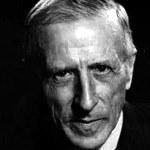
Teilhard de Chardin, Pierre (1881–1955) was a French priest (a member of the Society of Jesus) and scientist. He was the creator of a comprehensive evolutionary concept and one of the discoverers of Sinanthropus (Chinese Homo erectus). He proposed (with the participation of É. Leroy and V. I. Vernadsky) the concept of the noosphere.
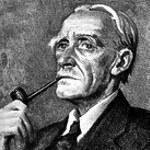
Tansley (Tansley A. G.) Arthur George (1871–1955) – English botanist, plant ecologist. Proposed the concept of "ecosystem" (1935).
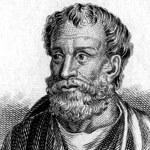
Theophrastus (Theophrastos) (c. 372 – c. 287 BC) — ancient Greek scholar, pupil and successor of Aristotle. He wrote several books on plants and proposed the first classification of plants. He is considered the "father of botany."
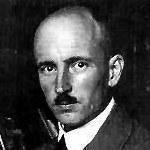
Thienemann, August (Thienemann A. F.) (1882–1960) — German ecologist and limnologist. His principal research interests were the historical zoogeography of the European freshwater fauna.
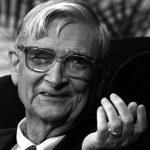
Wilson (sometimes Wilsson; Wilson E. O.) Edward Osborne (b. 1929) – American biologist. A specialist in myrmecology. Considered the father of sociobiology – the science that studies the evolution of behavior at the genetic level. Together with R. MacArthur (1967), described r- and K- selection strategies.
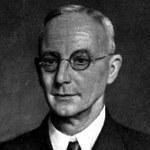
Whittaker, Robert Harding (Whittaker R. H.) (1920–1981) — American ecologist and phytocoenologist. He worked on the classification and ordination of plant communities. He defended the position of proponents of the continuum of vegetation. He was the first to substantiate the division of organisms into five kingdoms: prokaryotes, protists, fungi, plants, and animals. He rejected the monoclimax theory, holding that the climax is mosaic in character (his concept is closest to the polyclimax theory).
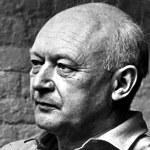
Waddington (Waddington C. H.) Conrad Hal (1905–1975) – English embryologist, evolutionist. Studied the development of birds and mammals, evolutionary genetics. Author of the term "epigenetics" and the concept of the epigenetic landscape.
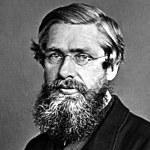
Wallace, Alfred Russel (Wallace A. R.) (1823–1913) — English biologist and explorer. One of the founders of zoogeography. He created a scheme for the zoogeographic regionalization of the land surface of the Earth (1876). Independently of Charles Darwin, he developed the theory of evolution through natural selection. Author of the term "Darwinism."
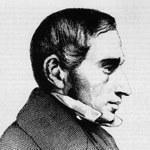
Verhulst, Pierre François (Verhulst P. F.) (1804–1849) — Belgian mathematician who addressed questions of demography. Author of the logistic equation, also known as the Verhulst equation.
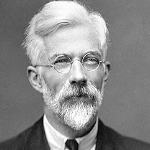
Fisher (Fisher R. A.) Ronald Aylmer (1890–1962) – English scientist, one of the founders of modern biometrics. Author of works on genetics, evolutionary theory, and mathematical statistics. One of the creators of the synthetic theory of evolution.
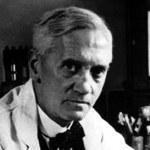
Fleming (Fleming A.) Alexander (1881–1955) – English physician, microbiologist, biochemist. Scientific research dedicated to bacteriology, chemotherapy, and immunology. In 1929, he obtained penicillin – the first antibiotic, which found wide application. Studied the effect of chemical antiseptics on pathogenic microorganisms.
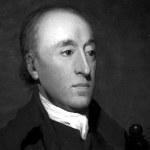
Hutton, James (Hutton J.) (1726–1797) — Scottish geologist, considered one of the founders of geology as a science. He was the first to point out the similarity between modern and ancient geological processes and regarded the Earth as an integrated "organism."
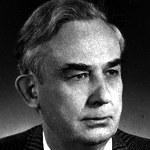
[IMG_20] Hutton, James (Hutton J.) (1726–1797) — Scottish geologist, considered one of the founders of geology as a science. He was the first to point out the similarity between modern and ancient geological processes and regarded the Earth as an integrated "organism." [IMG_21] Hennig, Willi (Hennig W.) (1913–1976) — German entomologist. He formalised the reasoning by which inferences about the phylogeny of species can be drawn from their similarities and differences. He concluded that in phylogenetic analysis it is necessary to consider only cladogenesis (the splitting of evolutionary lineages) and that it is impossible to correctly account for anagenesis (the transformation of one lineage without splitting). He named the scientific direction he founded "phylogenetic systematics"; it is now better known under the name "cladistics," a term originally proposed by opponents of these views.
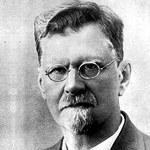
[IMG_22] Chetverikov, Sergei Sergeevich (1880–1959) — Soviet geneticist, one of the founders of population genetics. He formulated the law of equilibrium under free crossing. He demonstrated the role of isolation (geographical, ecological, and temporal) in species differentiation. His discovery of the diversity of individuals in natural populations gave impetus to the creation of the synthetic theory of evolution.
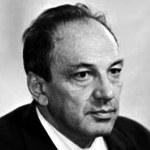
[IMG_23] Schwartz, Stanislav Semyonovich (1919–1976) — Soviet zoologist and ecologist. His principal works were devoted to the study of populations. He developed methods for assessing the physiological state of natural animal populations and studied the manifestations of the group effect in various organisms.
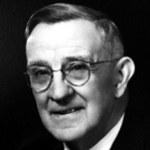
[IMG_24] Shelford, Victor Ernest (Shelford V. E.) (1877–1968) — American zoologist and ecologist. His principal works were devoted to biocoenology. He studied organism interactions in terrestrial ecosystems and successions. He formulated an extension of Liebig's law of the minimum that was named after him (1913).
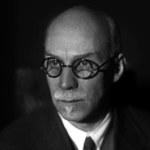
[IMG_25] Schmalhausen, Ivan Ivanovich (1884–1963) — Soviet zoologist, morphologist, and evolutionist. Creator of the theory of stabilising selection (1938–1946), author of embryological, comparative-anatomical, palaeontological, and biocybernetical works.
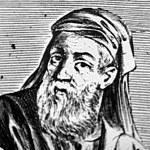
[IMG_26] Empedocles (c. 490 – c. 430 BC) — ancient Greek philosopher. He held that organisms arose through random combinations of organs, and that only the successful combinations survived to the present day. This may be regarded as the first analogy of the idea of natural selection.
Appendix V. Testing in the General Ecology Course
D. Shabanov, M. Kravchenko. Ecology: The Biology of Interaction Appendices
Appendix VII. Glossary