

Model of Extraterrestrial Life in Permafrost
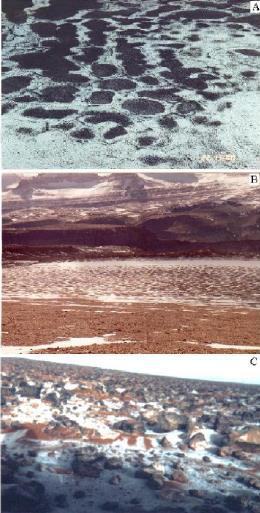
Permafrost is common in space: 7 of 9 planets in the Solar System, their satellites, asteroids, and comets are ice-covered. Bacteria inhabiting terrestrial permafrost may serve as potential models of life on cryogenic celestial bodies. Permafrost is a thickness of rocks and soils whose temperature does not rise above 0°C throughout the year. On Earth, such conditions formed in northern Eurasia and North America, and on ice-free areas of Antarctica and Greenland. In the coldest zones, this frozen layer reaches 700–1000 m and thins away from the poles. Using aseptic drilling, sampling, storage, and transport procedures, viable bacteria were demonstrated in permafrost. The age of microorganisms corresponds to the age of the frozen strata: the oldest viable cells are 2–3 million years old (northeastern Siberia) and 5–8 million years old (Antarctica). These are the only known life forms that retain viability for such times and restore physiological activity after thawing. This is possible due to unique properties of permafrost as a habitat. It can create physicochemical conditions that preserve viability far longer than other environments. Not only biochemical and physiological adaptation occurs; the organism itself may remain largely unchanged over millions of years. It is plausible that similar adaptive mechanisms could operate beyond Earth. Consider factors affecting paleomicroorganisms in Earth permafrost and on Mars. Temperature regime is the primary regulator of physicochemical reactions and biological processes, ensuring long-term survival.
In this context it acts not as an extreme factor but as a stabilizing one.
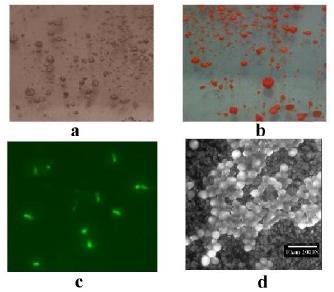
The lowest permafrost temperatures on Earth reach about −27°C, higher than on Mars. But at depth, where temperature oscillations are weaker, and where Martian dust near the equator and polar ice caps reduce penetration of those oscillations, likely temperatures near −30°C approach terrestrial cryo-conditions. Permafrost contains both ice (pure ice) and liquid water (3–8%).
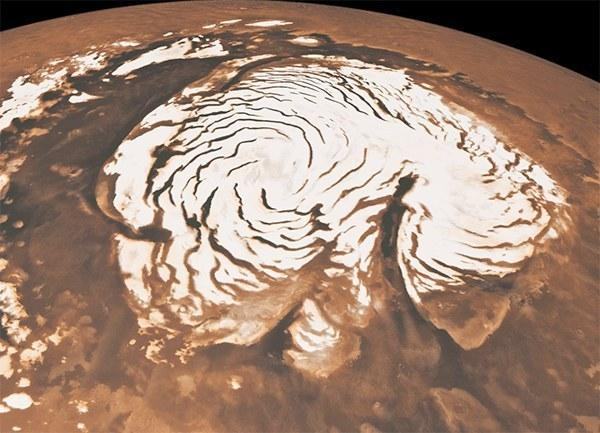
The latter often occurs as thin films or in cavities of saline rocks. Each phase contributes to preservation of viable cells: ice functions as a cryoconservant, and liquid water as a cryoprotectant. Water surrounds organic structures, reduces mechanical damage, and supports minimal physicochemical interactions necessary for long-term persistence. Thus, Earth permafrost can be considered a natural analog for possible microbial habitats on Mars and other icy bodies, making cryobiological studies central to astrobiology.