

Four messages about music and rhythms
Mozart at the molecular level. Listening to Mozart’s melodies led to increased expression of certain genes in the hippocampus of rats and to an increase in the synthesis of synaptic growth factors. Song of the left leg. The “voices” of cells are in the audible range (around 1 kHz), but they are very quiet (amplitude of oscillations…
Mozart at the molecular level It has long been known that classical music has a beneficial effect on well-being. Classical music, in particular the works of Mozart, is successfully used by doctors to ease the condition of psychiatric and neurological patients. The classics are harmonious and stabilize the emotional sphere. It would seem that their beneficial influence requires no special proof. However, as it turns out, classical music acts on the psyche at a very deep level too. About ten years ago experimenters from the University of Wisconsin showed that students who listened to Mozart's sonata for two pianos in C major coped with complex tasks better than those who listened to other (in particular, modern) music. Investigating the causes of such results, researchers from Harvard recently recorded the "Mozart effect" even in rats! Listening to Mozart's melodies led to an increase in the expression of some genes in the hippocampus (a regulatory region of the brain) of rats and to an increase in the synthesis of synapse growth factors (the contacts of nerve cells). As a result, new connections between neurons were established more easily in the rats, and the test subjects coped more successfully with various trials! It remains unclear, however, how Mozart knew how to act on the hippocampus? The song of the left leg The importance of the interaction of neighbouring cells in a tissue is hard to overestimate. The cells of a multicellular organism effectively exchange information with their neighbours.
The main channel of communication here is chemical, based on the use of various signalling molecules. Depending on the signals received, the functioning of cells changes substantially. Suppose we have cut a finger. The skin cells that ended up at the edge of the cut now no longer receive inhibitory influences from their neighbours, but, on the contrary, are activated by the products of their destruction. This will cause cell division, as a result of which poorly specialized cells will appear. As the "breach" is filled, they will specialize depending on the signals received from their neighbours. When all the cells establish contacts with one another, their activity will decrease. A breakdown of such a mechanism is extraordinarily dangerous. For example, if cells surrounded by neighbours do not stop multiplying, this leads to the formation of a tumour. Besides chemical ones, various physical interactions play an important role — in particular, electrical phenomena and the maintenance of the membrane potential. Not long ago it was established that cells emit photons and react to their absorption. For example, a cell infected with a virus can inform its neighbours of its trouble by means of electromagnetic radiation, and they can respond to this by synthesizing antiviral proteins. Experiments performed at the University of California in Los Angeles indicate that cells also generate sound waves. They were caught with the help of a microscopic needle touching the cell membrane. The research was carried out mainly on yeast cells (single-celled fungi), but the sounds of mammalian cells were also recorded. The "voices" of the cells are in the audible range (about 1 kHz), but very quiet (the amplitude of the oscillations is about 15 diameters of a carbon atom). The sounding of yeast cells depends on their state, differs in normal and mutant individuals, and changes under the action of damaging substances. Probably, since these sounds are emitted, they may somehow influence neighbouring cells too and be yet another channel of cellular communication. The discovery is also of practical interest: the recording of cellular sounds may help in the early diagnosis of cellular pathology. A symphonic microbe Over many centuries of human history the notion of what can be considered music changed in one direction — a successive lowering of the bar. For Pythagoras and Confucius music was a manifestation of the transcendent in the sublunary world. In the 19th century people argued whether the waltzes and operettas of Strauss, catering to undeveloped tastes, could be considered music.
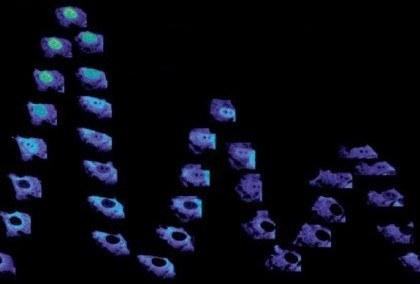
In the 20th century rapid rhythmic speech began to be assigned to the category of "music" if it was pronounced in a sufficiently rough voice, while Strauss's works turned into classics. The 21st century must inevitably bring something new. At the University of Western Australia a project called GeneMusiK has been launched. It envisages the implementation of the following technology. A certain musical text is converted into sequences of DNA nucleotides. This DNA is built into bacteria by genetic engineering. In the course of the bacteria's life activity the DNA changes. These changes have no particular direction — the fragment of DNA built into the bacterium (so to speak, the gene of musical harmony) is not needed by it. So its integrity is not controlled by selection, and chaotic changes accumulate in it. When the original musical text has degraded sufficiently strongly, it is read and again transformed into notes. The resulting product is to become an object of sale. It is not easy to imagine a person deriving aesthetic pleasure from such music — which means the consumer is meant to derive pleasure from his own originality. This is to be ensured by certificates confirming the product's authenticity and capsules containing the modified bacterial cultures. It is frightening to imagine what will be declared music in the 22nd century… Monsieur, you're throwing the whole block off rhythm! A team of English researchers recorded a phenomenon connected with the transmission of information from the cytoplasm of cells to their nuclei, which is compared to the use of Morse code. In this work the influence of a certain regulator substance on the activity of the corresponding gene in tumour cells (neuroblastoma) was studied. A periodic change in the difference of the regulator's concentration between the cytoplasm and the nucleus was recorded.
Oddly enough, the factor regulating gene activity was precisely the frequency of the oscillations, not the concentration of the regulator. The recorded changes, lasting six hours, are shown in the diagram, where the height of the cell's photograph reflects the relative concentration of the regulator substance in the nucleus. The discovered phenomenon is not a direct analogue of the use of Morse code (a set of unique patterns of changes in the tracked parameter). The analogy is connected with the fact that the signals of Morse code were chosen for their resistance to interference. The frequency of the oscillations of some quantity is easier to determine than its absolute level. The result obtained is undoubtedly interesting and requires further reflection.
Oscillation is the natural state of all living systems. A non-living system preserves its parameters thanks to its own stability, while a living one — thanks to the continuous regulation of parameters connected with their periodic oscillations. The regulated quantity deviates, this deviation is registered by specific receptors, their signal is processed by neural networks that switch on the corresponding regulators. Usually these regulators switch off when the controlled quantity passes its normal value and must be returned back. The frequency (and amplitude) of the oscillations are important characteristics of the system. Thus, the maintenance of a standing posture is connected with periodic oscillations in both a sober and a drunk person. Disturbances of the nervous system's work manifest in a drunk person in low-frequency, and hence high-amplitude, "swayings", while special equipment is needed to record the relatively high-frequency oscillations of a sober person. The biochemical parameters that influence gene activity also undergo periodic oscillations. Perhaps the frequency of these oscillations is not just a signal, but an important diagnostic indicator? By the way, it is known that changes in small doses of drugs (and medium doses of toxins) can cause an alternation of inhibition and stimulation effects. Perhaps the cause of such an effect lies in the change of the frequency of the regulatory oscillations caused by these substances. The oscillations of regulator concentrations are superimposed on the oscillations of the processes they control, since in order to register the frequency of one periodic process one must compare it with another periodic process. These combinations can be harmonious or not, cancel each other out or cause beats… Perhaps it is time to apply the Pythagorean notions of musical harmony to the study of cellular activity? D. Shabanov. Mozart at the molecular level // Computerra, Moscow, 2004. — No. 31–32 (555–556). — p. 14 D. Shabanov. The song of the left leg // Computerra, Moscow, 2004. — No. 26–27 (550–551). — pp. 11–12 D. Shabanov. A symphonic microbe // Computerra, Moscow, 2005. — No.
1–2 (573–574). — pp. 14–15 D. Shabanov. Monsieur, you're throwing the whole block off rhythm! // Computerra, Moscow, 2005. — No. 3 (575)