
Ecology: the Biology of Interactions. 1.14. (Supplement) Where Should We Seek the Causes of the Characteristics of Biosystems?
It is precisely the ecological-evolutionary approach to the study of biosystems that makes it possible to understand why they are as we observe them. The key to explaining the properties of any biosystem lies in considering the peculiarities of its relationships with the environment throughout its history.
Ukrainian language (latest version) / Russian language (updates stopped)
1.13. (addendum) Models, their limitations and dangers
D. Shabanov, M. Kravchenko. Ecology: Biology of Interaction Section 1. Ecology and the Biosystems it Studies
2.01. Biosphere
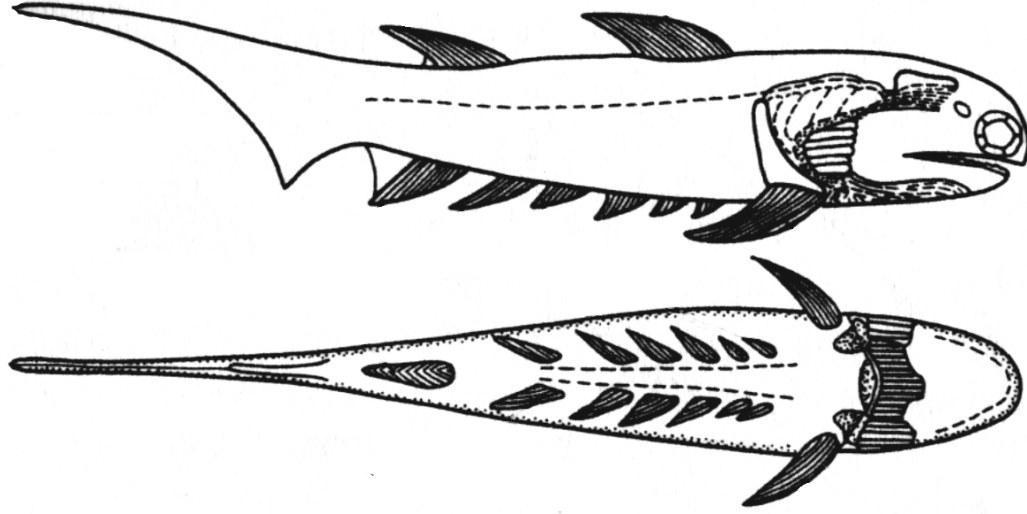
1.14. (addendum) Where to look for the causes of the peculiarities of biosystems? Tyger Tyger, burning bright, In the forests of the night; What immortal hand or eye, Could frame thy fearful symmetry? In what distant deeps or skies. Burnt the fire of thine eyes? On what wings dare he aspire? What the hand, dare seize the fire? And what shoulder, & what art, Could twist the sinews of thy heart? And when thy heart began to beat, What dread hand? & what dread feet? What the hammer? what the chain, In what furnace was thy brain? What the anvil? what dread grasp, Dare its deadly terrors clasp! Tyger Tyger burning bright, In the forests of the night: What immortal hand or eye, Dare frame thy fearful symmetry? William Blake (translated by S. Marshak) It is precisely the eco-evolutionary approach (Fig. 1.06.1) that allows us to understand why organisms are the way we observe them. The key to explaining the properties of any biosystem lies in considering the peculiarities of its relationship with the environment throughout its history. Can we answer the question of why terrestrial vertebrates turned out to be tetrapods, and not hexapods, as in the Menshutkin-Mednikov model described in the previous point? A detailed answer to this question would require a lot of space, but its logic can be briefly outlined here. In the era when the body plans of animal types were being established (during the Cambrian period), the ancestors of vertebrates transitioned to filtering seawater through active swimming. The bottom layers of water at that time (as now) were filtered by representatives of many other animal groups. Rising into the water column, not yet filtered by anyone, was an effective way for filter feeders to avoid competition. A lifestyle is successful if the organism obtains more energy than it expends to obtain it. The energy expenditure for swimming had to be less than the gain that could be obtained from digesting suspended food particles in the water. The most economical way to swim is when the entire body is used as a smoothly bending oar. A flexible string running along the entire body allowed some of the energy expended on bending the body to be stored, making swimming even more economical. A wave of contractions running along the body was provided by segmented muscles. Improving one's lifestyle can be achieved not only by saving energy during swimming but also by increasing feeding efficiency. This can be increased by consuming not only suspended particles in the water but also by selectively eating aquatic animals (first small ones, then increasingly larger ones...). This is why some actively swimming filter feeders switched to predatory feeding. To catch evasive prey, they had to make their swimming faster and more maneuverable. To provide resistance to the muscles, cartilage or bones – vertebrae – developed around the notochord in each body segment. Prey hunted by a predator larger than itself tries to escape pursuit by making sharp sideways jerks. Therefore, the predator needs rudders for swimming. Their role was played by a skin fold that ran along the body and was divided into separate sections – paired fins (Fig. 1.14.1). The most effective rudders turned out to be those sections of the fold (fins) located at the front and rear of the body – pectoral and pelvic fins (Fig. 1.14.2). When the distant descendants of these animals transitioned to a terrestrial lifestyle, the spine became the support of the body – something like a horizontal beam between two bridges, the limb girdles, and the paired fins became the limbs. When the descendants of these descendants transitioned from climbing trees to a bipedal lifestyle on the ground, the spine became the vertical support of their bodies. Fig. 1.14.1. This Devonian acanthodian (Climatius) retained several pairs of paired fins. Fig. 1.14.2. Development of paired fins from a lateral fold. Note the arguments used in answering the question. They concerned the lifestyle, evolutionary history of the group under consideration, and its morphofunctional features. The peculiarities of the structure and functions of organisms and other biosystems can only be explained by considering the history of the action of ecological causes related to the specifics of interaction with the environment. Additional materials: Column: The Credo of a Zoologist, or What Can We Learn from Our Own Animal Nature? Ukrainian / Russian
1.12. (addendum) Models, their limitations and dangers
D. Shabanov, M. Kravchenko. Ecology: Biology of Interaction Section 1. Ecology and the Biosystems it Studies
2.01. Biosphere