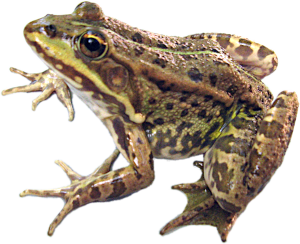

Bobrova et al. (2014) Fertility Disorders in Interspecific Hybrids of Green Frogs from the Seversky Donets Centre of Diversity of Pelophylax esculentus Complex...
Bobrova A. A., Makaryan R. M., Sheiko V. P., Shabanov D. A. Fertility disorders in interspecific hybrids of green frogs from the Seversky Donets centre of diversity of Pelophylax esculentus complex // Biology and Valeology. — 2014. — Issue 16. — P. ...
UDC: 567.828: 612.663
https://orcid.org/0000-0003-3247-6882
FERTILITY DISORDERS IN INTERSPECIFIC HYBRIDS OF GREEN FROGS FROM THE SEVERSKY DONETS CENTRE OF DIVERSITY OF PELOPHYLAX ESCULENTUS COMPLEX
Bobrova A.A., Makaryan R.M., Sheiko V.P., Shabanov D.A.
V. N. Karazin Kharkiv National University
46 diploid males of P. esculentus and 14 males of P. ridibundus from the Seversky Donets centre of diversity of Pelophylax esculentus complex were studied. The ability to produce active spermatozoa in response to hormonal stimulation with surfagon, the presence of active spermatozoa in suspension from dissected testes, and testis size were determined. Among the individuals examined, 85% of P. esculentus and 29% of P. ridibundus exhibited fertility disorders. P. esculentus individuals with fertility disorders had testes smaller in size compared to normal individuals.
Key words: Pelophylax esculentus complex, Pelophylax ridibundus, Seversky Donets centre of green frog diversity, testes, fertility.
Impaired fertility in interspecific hybrids of green frogs from Seversko-Donetskiy center of Pelophylax esculentus complex diversity. Bobrova A. A., Makaryan R. M., Sheiko V. P., Shabanov D. A. – 46 diploid males P. esculentus and 14 males P. ridibundus from Seversko-Donetskiy center of green frogs diversity were investigated. An ability to produce active sperm in response to hormonal stimulation by surfagon, the presence of active sperm in homogenized testes suspension, as well as the size of the testes were determined. Among studied individuals, 85% of P. esculentus specimens and 29% of P. ridibundus specimens had an impaired fertility. The size of testes of P. esculentus individuals with impaired fertility was smaller than normal.
Key words: Pelophylax esculentus complex, Pelophylax ridibundus, Seversko-Donetskiy center of green frogs diversity, fertility.
INTRODUCTION
In the typical scenario, reproduction of diploid hybrids is made possible by the elimination of one parental genome in germ-line cells followed by endoreduplication (cell doubling without division) of the other. Such hybrids produce sex cells containing one parental genome, which is transmitted without recombination, clonally. When these hybrids mate with representatives of the other parental species, all offspring consist of hybrid individuals. It should be emphasised that the scheme described is only one of several cases (though typical according to current understanding). In many regions, triploid hybrids are widespread alongside diploid ones, and tetraploid individuals are also encountered; some diploid hybrids produce diploid gametes, gametes with partially recombined genomes, or even mixtures of sex cells belonging to both parental species (6; 8). The hybridogenetic complex of green frogs, Pelophylax esculentus complex (or, under the former name, Rana esculenta complex), has become a model for studying hemiclonal (semi-clonal) interspecific hybridisation (8). The interspecific hybrids arise from crosses between two parental species, the pool frog, Pelophylax lessonae (Camerano, 1882), and the marsh frog, Pelophylax ridibundus (Pallas, 1771), and are designated by a name analogous to a species name, Pelophylax esculentus (Linnaeus, 1758).
A region located in eastern Ukraine where a high diversity of green frog forms co-occur has been named the Seversky Donets centre of diversity of Pelophylax esculentus complex (5; 6). Sexually mature representatives of P. lessonae are absent from this region. As a result, all P. lessonae genomes incorporated into the genotypes of diploid and triploid P. esculentus have a long history of transmission through a series of hybrid individuals. Another distinctive feature of this centre is that a certain proportion of P. esculentus individuals are triploid.
It is known that gametogenesis in F1 hybrids, i.e. individuals produced by crossing P. lessonae and P. ridibundus, may encounter considerable difficulties. This was first discovered by Leszek Berger, who revealed hybridogenesis in green frogs (7). Berger established that among F1 hybrids there occur individuals in whose testes spermatozoa are either absent or present in quantities far below the norm.
The study of spermatogenesis in amphibians has not only theoretical significance. In recent years, technologies have been developed allowing the in vivo collection of sperm from male anurans. This sperm can be used both for egg fertilisation and for long-term cryopreservation. Such capabilities are valuable for preserving the gene pool of rare and endangered species and intraspecific forms, as well as for broadening research possibilities in artificial crossing experiments. The pioneer of such investigations is V. K. Uteshev, who contributed to the development of technologies for in vivo sperm collection from one of the parental species of the hybridogenetic complex of green frogs, P. lessonae (9 and earlier works). Following appropriately chosen hormonal stimulation, urinal sperm containing a sufficient number of spermatozoa for artificial egg fertilisation can be collected from the cloaca of male anurans.
The need to determine the proportion of males that are fully or nearly fully sterile arose from our work on adapting the in vivo sperm collection technology to males of P. esculentus and P. ridibundus (detailed results of this work will be published elsewhere). During this task, we encountered the situation in which hormonal stimulation that elicited active spermatozoa in the urinal sperm of some individuals did not produce the desired effect in others.
MATERIALS AND METHODS
43 diploid males of P. esculentus and 8 males of P. ridibundus were used to study hormonal stimulation. Of the individuals for which the response to hormonal stimulation was established, 11 P. esculentus and 2 P. ridibundus were dissected to determine testis size and the presence of active spermatozoa within them. Other individuals used in the hormonal stimulation studies were released at their collection sites. In addition, 3 P. esculentus and 6 P. ridibundus collected incidentally from their natural habitat were dissected. Thus, we examined the ability to produce active spermatozoa in 60 individuals. The relatively small number of frogs that were dissected is explained by our effort to minimise the removal of frogs from natural habitats; we restricted ourselves to the number of individuals sufficient to compare two methods of determining the presence of active spermatozoa.
Frogs were collected in June–July 2014 in the vicinity of the biological station of V. N. Karazin Kharkiv National University (village of Haidary, Zmiiiv district, Kharkiv region) by dazzling them with a torch in darkness.
Identification of frogs. In the Seversky Donets centre of green frog diversity, diploid P. esculentus and P. ridibundus, which are readily distinguished by external characters, as well as triploid P. esculentus, whose external identification is highly unreliable, all occur (1; 5). Accordingly, frogs were identified as follows: ploidy was determined by erythrocyte size using a previously published methodology (2). Since all examined individuals were diploid, their assignment to P. esculentus or P. ridibundus was made on the basis of a complex of external characters (1).
Hormonal stimulation procedure. Sexually mature male green frogs were injected with surfagon, a synthetic analogue of luliberin, the gonadotropin-releasing hormone (9). During injection, the syringe needle was introduced through the skin into the femoral subcutaneous lymph sac, from which it was advanced into the abdominal subcutaneous lymph sac. Various doses of the hormone were applied, most commonly 1 μg of surfagon per 1 g of body weight of the frog.
Two hours after hormone injection, urinal sperm was collected by gentle massage of the abdominal region (9). The fluid exuding from the cloaca during massage was collected into Petri dishes. Samples of this fluid were examined under a microscope in a Goryaev counting chamber, in which the number of active spermatozoa was counted. Spermatozoa were considered active if they were motile and had a morphology normal for frogs.
In cases where a given individual showed a response to hormonal stimulation, differences in response to various surfagon doses pertained only to the quantity of active spermatozoa in the urinal sperm, not to their presence or absence. Individuals in which spermatozoa did not appear after a dose of 1 μg hormone per 1 g body weight did not respond to other doses, including higher ones.
Dissection procedure and determination of the presence of active spermatozoa. Frogs were anaesthetised with ether vapour, after which the brain and spinal cord were destroyed by inserting a dissecting needle through the foramen magnum. The abdominal cavity of the killed animals was opened and the testes were removed. The frog (ventral side down) and its excised testes were placed on the glass of an A4-format office scanner and scanned at a resolution of 600 dpi. Measurements of body length and testis length were made from photographs using PDF XChange VIEWER software. Measurement results were converted to millimetres using a scanned image of a calliper as a scale bar. Data were entered into a database created in Statistica 8 (StatSoft Inc.); in this database, the relative mean testis length and testis asymmetry (the ratio of the difference in length between the right and left testis to their mean length) were calculated and statistical analyses were performed.
To determine the presence of active spermatozoa in the testes, one testis was cut into several pieces with scissors and placed in clean river water. After a few minutes, required for spermatozoa activation (3), a sample of the resulting suspension was examined by microscopy and the presence or absence of active spermatozoa was recorded.
RESULTS AND DISCUSSION
The proportions of male green frogs in which active spermatozoa were recorded as present or absent are shown in Table 1. It should be noted that the first investigation (determination of the presence of active spermatozoa in urinal sperm collected after hormonal stimulation) and the third (determination of the presence of active spermatozoa in suspension obtained from testes of individuals randomly selected from natural habitat) are independent. The second investigation, results of which are shown in Table 1, serves as confirmation of the correspondence between the two methods employed.
The observed fertility disorders in P. esculentus are associated with underdevelopment of their testes. Figure 1 shows the results of a two-way analysis of variance in which the relationship between, on the one hand, the male's assignment to P. esculentus or P. ridibundus and the presence or absence of active spermatozoa, and, on the other hand, the relative testis size was established. The difference in the ability to produce active spermatozoa between P. esculentus individuals with different gonad sizes, and between P. esculentus and P. ridibundus, is significant.
Table 1
Proportion of individuals in which the presence or absence of active spermatozoa was recorded according to different investigations
|
№ |
Type of investigation |
Interspecific hybrids, P. esculentus |
Representatives of the parental species, P. ridibundus |
|
1. |
Presence of active spermatozoa in urinal sperm collected after hormonal stimulation |
present: 7 (16%) absent: 36 (84%) total: 43 |
present: 6 (75%) absent: 2 (25%) total: 8 |
|
2. |
Presence of active spermatozoa in suspension obtained from testes of individuals for which response to hormonal stimulation was established |
present: 4 absent: 7 total: 11 (method concordance — 100%) |
present: 2 absent: 0 total: 2 (method concordance — 100%) |
|
3. |
Presence of active spermatozoa in suspension obtained from testes of individuals randomly selected from natural habitats |
present: 0 absent: 3 total: 3 |
present: 4 absent: 2 total: 6 |
|
4. |
Total for investigations 1 and 3 |
present: 7 (15%) absent: 39 (85%) total: 46 |
present: 10 (71%) absent: 4 (29%) total: 14 |
Fig. 1. The relationship between the ability of male frogs to produce active spermatozoa and the relative size of the testes, and their belonging to a parental species or to interspecific hybrids. Fig. 2 shows the testis size of those males that did or did not produce active sperm. It can be seen that among P. esculentus, active spermatozoa were produced by individuals that had larger gonads. Among P. ridibundus, fertility disorders were observed in individuals that had the largest and smallest testes. Fig. 2. The dependence of the ability to produce active spermatozoa in male frogs belonging to a parental species or to interspecific hybrids on the relative size of the testes. No significant relationship between the presence of active spermatozoa and testis asymmetry was registered (Fig. 3). Fig. 3. The relationship between the ability of male frogs to produce active spermatozoa and testis asymmetry, as well as their belonging to a parental species or to interspecific hybrids. The extremely low proportion of P. esculentus males that produce active spermatozoa (15%) is surprising. It should be emphasized that we do not consider that individuals in which active spermatozoa were not registered are completely infertile. However, there is every reason to believe that the fertility (that is, the ability to reproduce) of such individuals is either largely impaired or completely lost. The result we obtained is to a certain extent paradoxical. The studied frogs were collected in an area where approximately half of the individuals belong to P. esculentus. If the reproduction of P. esculentus encounters significant difficulties, it remains unclear how they reproduce. As we noted, representatives of one of the parental species are absent in the study region, which is precisely why we can be sure that we studied not F1 hybrids, but individuals carrying genomes of P. lessonae that were transmitted through hybrid individuals over many generations. An unexpected result was also the registration of a fairly large proportion (29%) of individuals with fertility disorders among representatives of the parental species. Probably, the fertility disorders of P. esculentus, registered as far back as Berger (7), are a consequence of the fact that the coordinated elimination of all 13 chromosomes of one set is a complex process. Its error-free operation must be ensured by a fairly perfect cytogenetic mechanism. It can be assumed that this mechanism, in its complete form, cannot be a consequence of selection that occurred in the parental species, because elimination of one of the genomes does not occur in their representatives. Probably, the stabilization of gametogenesis over successive generations of hemiclonal hybrids may be a consequence of selection at the level of cell lines during gametogenesis (4). Only those hybrids that form full-fledged germ cells can leave offspring; only those cell lines in which the elimination of one genome and the endoreduplication of the other occurs will be continued. But, as our study showed, in the Siverskyi-Donets center of green-frog diversity the gametogenesis of hybrid males remains largely destabilized. The authors hope that further studies will provide answers to the questions posed. CONCLUSIONS. The majority of diploid P. esculentus males (85% of the studied sample) and a significant part of P. ridibundus (29% of the sample) from the Siverskyi-Donets center of green-frog diversity have fertility disorders manifested in the absence of a sufficient quantity of active spermatozoa in the urinal sperm collected after hormonal stimulation by V. K. Uteshev's method, as well as in the suspension obtained from cut testes. The ability to produce active spermatozoa is related to testis size; P. esculentus individuals with fertility disorders have testes that are smaller in size than normal ones. Acknowledgements. The authors sincerely thank V. K. Uteshev (Institute of Theoretical and Experimental Biophysics RAS, Pushchino, Russian Federation), who initiated the development of methods for obtaining urinal sperm in representatives of the Pelophylax esculentus complex of the Siverskyi-Donets center of green-frog diversity and provided valuable consultations on this matter. References. Atemasova T. A., Vlashchenko A. S., Zinenko A. I., Tokarsky V. A., Shabanov D. A., Shandikov G. A. Field practicum in vertebrate zoology. – Kharkiv: V. N. Karazin KhNU, 2008. – 180 pp. Bondareva A. A., Bibik Yu. S., Samilo S. M., Shabanov D. A. Cytogenetic features of erythrocytes of green frogs from the Siverskyi-Donets center of diversity of the Pelophylax esculentus complex // Bulletin of V. N. Karazin Kharkiv National University. Series: biology. – 2012. – Iss. 15 (No. 1008) – pp. 116–123. Dabagyan N. V., Sleptsova L. A. The common frog Rana temporaria L. // Objects of developmental biology. – Moscow: Nauka, 1975. – pp. 442–462. Shabanov D. A. The hybridogenic complex of green frogs as a model for studying multilevel selection // Bulletin of Vasyl Stefanyk Precarpathian National University. Series – Biology. – Ivano-Frankivsk, 2012. – Iss. XVII. – pp. 90–94. Shabanov D. A., Korshunov O. V., Kravchenko M. O. Which green frogs inhabit the Kharkiv region? Terminological and nomenclatural aspects of the problem // Biology and Valeology. – Iss. 11. – Kharkiv: KhDPU, 2009. – pp. 124–125. Shabanov D. A., Litvinchuk S. N. Green frogs: life without rules or a special mode of evolution? // Priroda. – 2010. – No. 3 (1135). – pp. 29–36. Berger L. Viability, sex and morphology of F2 generation within forms of Rana esculenta complex. Zool. Poloniae, 1971. – V. 21. – P. 345–393. Plötner J. Die Westpaläarktischen Wasserfrösche. – Bielefeld, 2005. – 161 s. Uteshev V., Shishova N., Kaurova S., Manokhin A., Gakhova E. Collection and Cryopreservation of Hormonally Induced Sperm of Pool Frog (Pelophylax lessonae) // Russian Journal of Herpetology, 2013. – Vol 20, No 2. – P. 105–109. Fertility disorders in interspecific hybrids of green frogs from the Siverskyi-Donets center of diversity of the Pelophylax esculentus complex. Bobrova A. A., Makaryan R. M., Sheiko V. P., Shabanov D. A. – 46 diploid P. esculentus males and 14 P. ridibundus males from the Siverskyi-Donets center of diversity of the Pelophylax esculentus complex were studied. The ability to produce active spermatozoa in response to hormonal stimulation with surfagon, the presence of active spermatozoa in a suspension from cut testes, and the size of the testes were determined. 85% of P. esculentus and 29% of P. ridibundus among the studied individuals have fertility disorders. P. esculentus individuals with fertility disorders have testes smaller in size compared with normal individuals. Keywords: Pelophylax esculentus complex, Pelophylax ridibundus, Siverskyi-Donets center of green-frog diversity, testes, fertility.