
The queen of evolutionary biology problems: Jenkin's nightmare returns. Column for Kompyuterra #132
But what do we see? The winner in natural selection among most highly organized species, instead of carefully passing on to its offspring its genotype that ensured its environmentally approved individual development, finds nothing better than to violate the integrity of its genotype by mixing it...
←
Dmytro Shabanov
→
The Enigma of Sex. Cui prodest: gene, individual, group? The Queen of Evolutionary Biology Problems: Jenkins' Nightmare Returns Are Eight Indirect Hypotheses Describing the Advantages of Sexual Reproduction Enough to Explain the Origin of Sex?
Column for Kompyutera #131 Column for Kompyutera #132 Column for Kompyutera #133
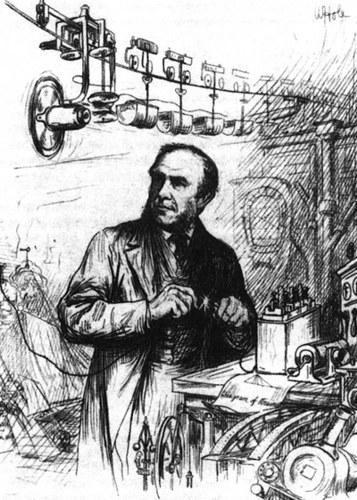
"Sex is the major challenge to modern evolutionary theory... the queen of evolutionary biology problems." Graeme Bell, "The Masterpiece of Nature" In the previous column, I concluded by asking at which level of biological system organization selection operates that could explain the origin and maintenance of sexual reproduction. I don't yet have my own version of the answer here, but I hope this column will help you realize the full paradoxicality of the sex phenomenon. Let me begin with rather general reasoning. Why do organisms pass their genes on to their offspring? The set of genes, the genotype, is an important part of the system governing organismal development. This development can proceed in various ways. Some of its outcomes will be suited to the environment, others will not. Natural selection consists in the fact that individuals suited to the environment (the results of development) have a greater chance of surviving and leaving offspring. One could formulate a rule, following which leads to success in adapting to a stable environment: "When leaving offspring, make them similar to yourself, for if you managed to reproduce — you are a winner in natural selection"! But what do we see? The winner in natural selection in most highly organized species, instead of carefully passing on to offspring his genotype that ensured his environment-approved individual development, finds nothing better than to violate the integrity of his genotype by mixing its fragments with fragments of another version that worked successfully in another individual! This paradox revives a semi-forgotten problem, known as "Jenkin's nightmare." This is an argument against Darwinism (which became a nightmare for Darwin) that engineer Fleming Jenkin advanced several years after the publication of "On the Origin of Species." Once (terrible to think: almost eight years ago!) I had to write about this for "Kompyutera." Alas, in the overwhelming majority of modern sources that mention Jenkin's argument, they distort it. Let me give as an example an excerpt from a biography of N. I. Vavilov, published in Soviet times in the series "ZhZL" [Remarkable Lives]. "The main content of Timiryazev's heated speeches is that he was the first to show: Mendelism not only does not contradict the theory of selection, but, on the contrary, explains the main difficulty of evolutionary teaching, the difficulty (first pointed out by engineer Jenkins) before which Darwin was helpless, and which he frankly admitted with his characteristic straightforwardness. Jenkins drew approximately the following picture. Imagine a field of red poppies, among which several plants with white flowers have appeared. It can be assumed that white color is favorable for the poppy under these conditions. But there are several white flowers, and red ones — a whole field! Plants with white flowers will most likely cross with red-flowered ones. Thus, already in the first generation there will be no white flowers, and their offspring will produce pink flowers. But there will also be few plants with pink flowers! They will also cross with red ones, and thus after two or three generations the trait needed by the plants will disappear, evolution will not proceed. Charles Darwin could not cope with this difficulty. And he couldn't cope with it: he was not familiar with Mendel's laws. Clement Arkadievich Timiryazev took these laws into account. He showed that in light of Mendel's laws, the picture painted by Jenkins would look completely different" (Reznik S. Nikolai Vavilov. — M.: Molodaya Gvardiya, 1968. — P. 59–60). Well, and further Semen Reznik tells us that if poppy color is determined by a single gene, the white allele will be supported by selection and will not disappear. Firstly, Jenkin's surname is distorted in this text and turned into "Jenkins." This error is still repeated in many different sources. Secondly, what is much more significant, Jenkin's original argument has been falsified. In the original text (quoted, among other places, in my old article), it was not about poppies but about racial superiority. And, what is much more essential, Jenkin was talking about traits that unambiguously cannot be viewed as dependent on a single gene! [IMG_1] Fleming Jenkin (Henry Charles Fleeming Jenkin), 1833–1885 "...Can anyone believe that... the islanders will acquire the energy, bravery, inventiveness, perseverance, self-control, endurance, by virtue of which our hero killed so many of their ancestors and begot so many children, that is, those qualities which actually selects the struggle for existence, if it can select anything?" (Jenkin F. The origin of species. Art. I // North Brit. Rev. 1867, June. Vol. 46. P. 277–318). Of course, you can say that by replacing human self-control and inventiveness with poppy flower coloration, Reznik and his followers spared readers the shock caused by Jenkin's racism. But the point is that they replaced a polygenic trait with a monogenic one. The paradox thus seems to disappear, but only thanks to sleight of hand. May I quote again (it just so happens that there are many of them in this column)? "...As soon as the sexual process assembles a successful combination of genes, it immediately scatters it. The creators of the notorious, though mostly harmless organization called the 'Sperm Bank' overlooked just this. When biochemist George Wald was asked to contribute his earned sperm to this bank, he refused, noting that the applicants would need not so much his sperm as the sperm of people like his father, a poor immigrant tailor, whose loins, strangely enough, proved to be a source of genius. 'What has my sperm given the world?' — the Nobel laureate lamented. — 'Two guitarists!'" (Lane Nick. The Ladder of Life. — M.: AST, 2013. — P. 187). Yes, it should also be added that hunters for "success genes" actually don't need all the immigrant tailor's sperm, but just one single sperm of his, desirable for fertilizing that very egg of his wife from which his son developed. From the other sex cells of this couple, people with very different abilities could have resulted. This is Jenkin's argument in its pure form! Now, I think you understand what an extremely difficult task explaining sexual reproduction is. Before moving on to discussing the hypotheses that explain it, I will express a thought that many will not like. In modern biology, views have spread of the organism as a secondary realization of the paramount — the genotype. They can be denoted by the word "genocentrism." From these positions, sexual reproduction is inexplicable. There is no need to invent a way to explain sex from the standpoint of genocentrism; the spread of sex indicates that genocentrism is inadequate. Ontogenesis is not an installation of a genetic program, but an unpredictable-to-the-end process of self-organization, which, as we have already said, is influenced by the genotype and epigenetic information (including that transmitted through as yet unknown mechanisms), environmental influences, the organization of the egg, and simply chance. Well, but how do they explain the widespread occurrence of sexual reproduction? One of its advantages was recognized as early as the 19th century. August Weismann concluded that sexual reproduction is "the source of individual variability, supplying material for the process of natural selection." In Weismann's time, genes were not known. In the 20th century, with the discovery of genes and their recombination (recombination) during sexual processes, the role of sex as a source of diversity became obvious. These ideas were developed (independently of each other) by two classics of genetics — Ronald Fisher and Hermann Muller. Here, examine the diagram from Muller's work, explaining the idea that sexual reproduction makes any mutation in the gene pool of a population potentially accessible to the offspring of any organism. [IMG_2] This diagram illustrates the advantage of sexual reproduction for which Hermann Muller dared to claim that the riddle of sex has been solved Before explaining this diagram, I must remind you of one important circumstance. The reasoning I am reproducing lies entirely in genocentric logic. Beneficial traits are considered here as something arising by itself as a result of one or more favorable mutations. I am ready to agree that in some cases such a scheme works, but I urge you not to forget that its universality is... hmm... let's say, debatable. So, let us suppose that there exist three mutations — A, B, and C, which, when they come together in one organism, will ensure a significant increase in its fitness. In an asexual population, one would have to wait until all three mutations occur sequentially in the same clone. This will be probable only if these mutations are beneficial even individually. In a population with sexual reproduction, these mutations can arise in different individuals, and this will not prevent them from coming together quite soon. Even if mutations A, B, and C are individually useless, being present in a population at low frequency, they will eventually come together in one individual. For further reasoning (not so much in this as in the next column), this explanation of the advantages of sexual reproduction needs a name. Canadian biologist Graeme Bell, author of the epigraph to this column, named it after a fictional character, a vicar from the 16th century, who at each change of power (from Catholics to Protestants and back) managed to change his denomination, adapting to the environment. The Bray vicar hypothesis (Fisher-Muller hypothesis) consists in the fact that sexual reproduction increases the diversity of offspring and thereby increases the rate of evolution. What level of system is compared with the vicar? Of course, the population, the group. The rate of producing adaptations as a result of combining mutations characterizes the population, not the individual. When environmental conditions change, suitable individuals will most likely be found in it — but there will certainly also be unsuitable ones. Thus, the "Bray vicar" hypothesis presupposes group selection. However, for some time now, the very possibility of group selection has become debatable. It began with Vern Wynne-Edwards popularizing this idea and predetermining the pendulum to swing in the opposite direction. Read how elevated Matt Ridley, author of "The Red Queen," titled in Russian translation "Sex and the Evolution of Human Nature," writes about this. I don't have the published Russian book at hand, so I will use a collective translation from the "Notabenoid" website. "If you visited a convention of evolutionary biologists somewhere in America, you might be fortunate to notice a tall, gray-bearded, smiling man having a striking resemblance to Abraham Lincoln, standing rather modestly behind the crowd. He will probably be surrounded by a group of fans, catching every word of his... The man in question is George Williams... He conducted no unforgettable experiments and made no stunning discovery. And yet he is the founder of a revolution in evolutionary biology, almost as fundamental as Darwin's. In 1966, irritated by Wynne-Edwards and other proponents of group selection, he spent his summer vacation writing a book about how, in his view, evolution worked. Titled "Adaptation and Natural Selection," this book still towers over biology like a Himalayan peak. <...> In his book, Williams exposed the logical flaws of group selection with undeniable simplicity. <...> Within a few years after Williams's book, Wynne-Edwards was essentially refuted, and almost all biologists agreed that no creature could ever have evolved the ability to help its species at its own expense. Only when these two interests coincide will it act selflessly" (Matt Ridley, "The Red Queen"). In a typical case, selection will support such behavior of an individual that will promote an increase in the number of its offspring, not the prosperity of the population. If this is not entirely convincing for you, read the columns about the "species preservation instinct" and the Invisible Foot. And what mode of action should be beneficial for individuals? At first glance — asexual reproduction. This is connected not only with the preservation of the unique parental genotype (Jenkin's argument is usually not remembered in such cases), but also with a twofold reproductive advantage of asexual lineages! All offspring of a clonally reproducing female are also females, which produce new females without distracting themselves with foolishness. Half the offspring of a female producing a sexual generation are males... Now you will understand Williams's balance argument. It consists in the fact that in species practicing both sexual and clonal reproduction, one can expect sexual lineages to be displaced by clonal ones. If this does not happen — then something is preventing it. What? Do you remember, in the column before last, I described the reproduction of daphnia — planktonic freshwater crustaceans? In summer, many generations of parthenogenetic females are replaced in them. By autumn, a sexual generation appears, which produces wintering eggs. [IMG_3] This drawing repeats the diagram from the column before last with one significant change. The autumnal sexual generation is made semi-transparent, while an arrow (magenta) appears showing the ability of some females to produce wintering eggs parthenogenetically However, lines of daphnia are known in which females can produce resting eggs parthenogenetically, without the participation of males. Some of these lines in autumn still produce now-useless males, some do without them. The reproductive rate of male-less lines increases significantly, but they do not displace other daphnia that periodically practice sexual reproduction. Why — is not easy to understand. Thus, the "Bray vicar" hypothesis could explain the long-term evolutionary advantages of sexual reproduction. But to understand why sexual reproduction does not disappear in the short term, one needs to find an answer to Williams's balance argument.
←
Dmytro Shabanov
→
The Enigma of Sex. Cui prodest: gene, individual, group? The Queen of Evolutionary Biology Problems: Jenkins' Nightmare Returns Are Eight Indirect Hypotheses Describing the Advantages of Sexual Reproduction Enough to Explain the Origin of Sex?
Column for Kompyutera #131 Column for Kompyutera #132 Column for Kompyutera #133