Do Humans Have Photoperiodic Responses? Column in KomputerraOnline #32
Photoperiodic responses do exist in humans. They manifest as an increase in sex hormone levels in response to increasing day length. And when are children conceived in February born? In November — amid hunger and cold.
I have had occasion before to write about how the underestimation of our biological nature troubles me. The biological foundation upon which both our culture and our sense of self are built is routinely perceived as something inert, immovably reliable, and without influence on the “superstructure.” People diligently erect terminological barriers, zoo fences, and walls of irony to distance themselves from our closest relatives...
I wish to discuss here one peculiarity of our biology that cannot be understood without taking our evolutionary history into account. The facts I rely upon are well known. The conclusions I draw from them I have not encountered in the literature, but I make no claim whatsoever to priority in their interpretation. This is perhaps an example of knowledge that is widespread yet insufficiently articulated.
I want to determine whether humans possess photoperiodic responses; to do so it is necessary to discuss what photoperiodism is. Let us clarify the concepts. Photoperiodism is the regulation of the annual cycle in dependence on the photoperiod — the length of the daylight period. It differs from photoreactions — responses to the level of illumination.
It must be said that this concept is frequently misunderstood. I checked Wikipedia and read: “The response to day length regulates the onset of the mating season, moulting, hibernation, etc. It also manifests in the fact that almost all animals sleep at night.” Is that logical? Of course not. Over the course of a single day the length of the daylight period does not change; what changes is the level of illumination. I removed that last sentence from the quoted passage. How long will it be before some well-meaning editor restores it?
Photoreactions in humans are well documented. For example, workers in the Far North frequently develop dark-phase depression during the polar night. Treatment involves either hormones or simply exposure to brightly lit environments. Since the decisive factor for successful treatment is not the duration of light exposure but its intensity, it is clear that we are not dealing with photoperiodism. Thus, nocturnal sleep — and indeed any circadian dynamic — is not a manifestation of photoperiodism.
Why do organisms respond to the photoperiod at all? Their lives are governed primarily by temperature, humidity, food availability, and other resources. It is evident that in a temperate climate the dynamics of these factors depend on season; these are secondarily periodic factors. There are very few primarily periodic factors: the alternation of day and night, the progression of seasons, the phases of the moon, and the succession of tides. Primarily periodic factors are determined by the motion of three celestial bodies — Earth, Sun, and Moon. The celestial clock neither gains nor loses time, and that is precisely why organisms use it for orientation.
Consider, as an example, the life of the stoat — a small, elegant predatory mammal. In summer its dorsal fur is brown; in winter it is white. A white stoat is harder to detect against snow. When should the stoat begin its autumn moult? After snow falls? By then it would be running over snow with a brown back for some time. At the onset of the cool but still mild autumn chill, so as to finish just as snow arrives? But one year is not like another; judging a variable factor (the date of snowfall) by another variable factor (temperature) inevitably produces large errors. The optimal solution is as follows. Each stoat population calibrates the onset of moulting to the specific day length that, on average, ensures completion precisely when permanent snow cover is established in its habitat. Errors — a white stoat running over bare ground, or a brown one over snow — are inevitable even with this strategy, but summed over many years they will be minimal.
In analysing photoperiodic responses one must distinguish between the causes of certain changes and the signals that trigger them. For example, the cause of the autumn departure of many of our migratory birds is food scarcity (a secondarily periodic factor), while the triggering signal is the shortening of the daylight period. Day length is not a convenient regulatory factor for the annual cycle everywhere. At the equator day and night are always equal. At the poles there are six months of polar day and six months of polar night. It is clear that photoperiodic responses are characteristic of organisms of the temperate latitudes.
Of course, there are other constraints. When exactly a marmot enters hibernation depends primarily on photoperiodic regulation. A warm or cold autumn day may influence its emergence from the burrow, but the physiological restructuring of its organism for winter has already been initiated by the shortening of the day. Emergence from hibernation, however, cannot be linked to day length — it is dark inside the burrow. The animal must use soil temperature as its cue. Fortunately, soil both warms and cools slowly, and the temperature dynamics at burrow depth are more regular and gradual than those at the surface.
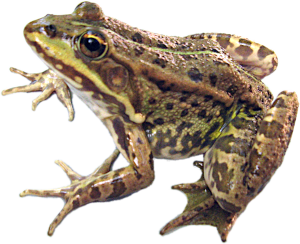
Different populations of the same species may orient by different factors. Near Kharkiv, green toads emerge from hibernation when the soil warms, while their spawning is determined by either temperature or day length. In Crimea, on the arid Cape Tarkhankut, spawning is triggered by spring rains.
In summary, the timing of events in the natural world around us depends on two paramount factors — day length and the thermal regime. A third factor — humidity — is sometimes added. For example, many plants flower or shed their leaves in accordance with day length, while germination of their seeds is triggered by humidity and temperature (and often only after a cold period, for instance). As long as the climate is stable, species that regulate their annual cycle by day length have an advantage. But what happens when the climate changes? Photoperiodic regulation becomes disadvantageous due to desynchronisation between processes regulated by different factors.
The pied flycatcher is a common European insectivorous bird. It overwinters near the equator, at approximately ten degrees north latitude. Although the change in day length there is small, it is precisely that change that triggers the return migration to the breeding grounds. This response is calibrated so that by the time the birds reach their breeding areas, build nests, lay eggs, and fledge their young, the peak abundance of leaf-eating insects has arrived.
A consequence of current climatic shifts has been an earlier arrival of spring. In Western Europe, over half a century, spring has advanced by as much as two weeks! The abundance of caterpillars depends on temperature dynamics, and the peak of their abundance has also shifted forward — to a time when the chicks of the pied flycatcher and many other bird species have simply not yet hatched. The result is a decline in the populations of species that have placed their bet on the astronomical clock. The situation is not hopeless. Selection is gradually shifting the population norm in favour of earlier-migrating individuals. If climate change does not proceed too rapidly, and if declining populations are not burdened by additional adversities, the situation will correct itself in time. Whether contemporary species will manage to adapt or will go extinct remains to be seen.
The time has come to address the question posed in the title. Humans are known to have photoreactions — but do they have photoperiodic responses?
Our annual cycle is diffuse and regulated primarily by secondarily periodic factors. Incidentally, our species is African in origin and evolved near the equator, where photoperiodic responses are less prevalent. However, the majority of people (with the exception of indigenous Africans) carry an admixture of genes from the indigenous European species — the Neanderthals. Photoperiodic responses may have been more advantageous for Neanderthals.
Be that as it may, photoperiodic responses do exist in humans. They manifest as an increase in sex hormone levels in response to increasing day length. Are you familiar with the commonplace notion that people fall in love more often in spring? Precisely. Romantic attraction is a complex process, but sex hormone levels provide the motivational substrate necessary for it.
In recent years, on the post-Soviet space, “Valentine’s Day” has been promoted. The transplantation of this foreign holiday onto local soil serves the interests of merchants of unattractive red-and-pink objects in the shape of hearts. Year after year in February, journalists feed the public stories about events supposedly commemorated by this occasion — events that have no connection to the actual origins of the “tradition” or to the timing of its observance. The origins are clear; but is the timing accidental or not? It is highly regular. Day length begins to increase after 22 December, but at first the increment is very small. It becomes perceptible by mid-February. It is precisely to this surge in circulating sex hormone concentrations that the souvenir industry attaches its promotional efforts...
Many species living alongside us exhibit similar responses. The stoat itself mates in March and, some six weeks later, produces its young. April–May is a bountiful time...
And when are human children conceived in February born? In November — amid food scarcity and cold (not for us today, but for our quite recent ancestors). And their critical periods of embryonic development will coincide with the spring vitamin deficiency. Something does not add up...
Yet our distinction from the stoat and the vast majority of other mammals is not only this. Human reproduction is non-seasonal, and pregnancy may occur at any time of year. In the course of our species’ formation, the very character of the female reproductive cycle changed. The greatest distinction between human physiology and that of other primates is probably the menstrual, as opposed to the oestrous, cycle (I have mentioned this before). Ovulation in the menstrual cycle is concealed. Sexual life — and the family relationships associated with it — is extended across the entire year in humans, rather than being confined to the brief oestrus period.
So what is the significance of the photoperiodically regulated spring peak in sex hormones? Most probably, it no longer retains any significance (although it once did). It is a physiological vestige — a trait preserved from earlier stages of our evolution. From which stages?
From the African stage? Not necessarily, and not only because of our near-equatorial origins. Selection during the formation of Homo sapiens was directed toward the establishment of the menstrual cycle under conditions of non-seasonal reproduction — since transitioning to a menstrual cycle makes no sense under seasonal reproduction. Human photoperiodism is probably an inheritance from far more ancient times. It was likely acquired from our remote Asian primate ancestors — small-bodied apes with a short gestation period. How could they have known that their descendants would colonise Africa, increase in body size, transition — after many evolutionary experiments — to new forms of family relationships and a new reproductive cycle, extend the gestation period, and disperse from Africa across the entire globe...
Selection acting against the photoperiodic responses established in a preceding evolutionary stage operates not only in songbirds. It also acted upon our ancestors, and it has already nearly effaced the ancient reproductive regulatory mechanism that was honed in our remote predecessors.
Can we understand ourselves without reflecting on our prehistory? Hardly.