

Gekkonidae (Geckos)
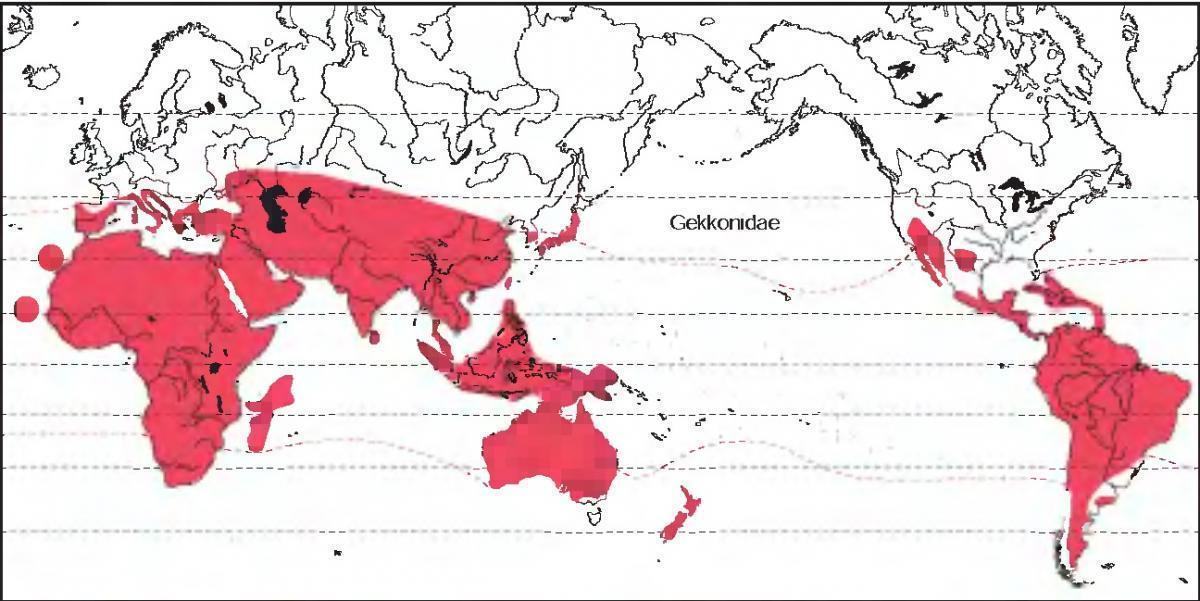
The family Gekkonidae (Geckos) comprises 946 species in 53 genera. Distribution: the majority of geckos inhabit tropical and subtropical regions. Some representatives range far north, reaching the southern United States, southern Europe, and Serbia. And southward from New Zealand to South America. Some live on remote oceanic islands and coral reefs. The Crimean gecko (Mediodactylus kotschyi danilewskii) inhabits the southern coast of Crimea from Cape Chersonesus to Alushta, as well as the Bulgarian coast. Many geckos are tied to their habitat by a limited substrate of soil, rocks, or trees. Great diversity of geckos is found in the semi-arid regions of Africa, Australia, and South Asia. On Madagascar, for instance, species occur that are found nowhere else. The family Gekkonidae, or pad-footed geckos, is a large family of small and distinctive lizards. The distinguishing features of this family are amphicoelous vertebrae, loss of temporal arches, paired parietal bones, absence of a parietal foramen, and a broadened clavicle with small foramina on its inner edges. In most cases geckos do not exceed 10–15 cm, and only the largest reach 35 cm or more in length.
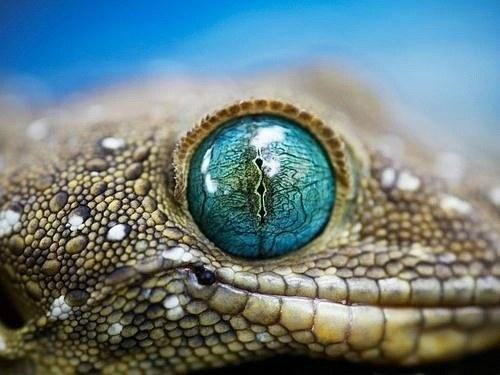
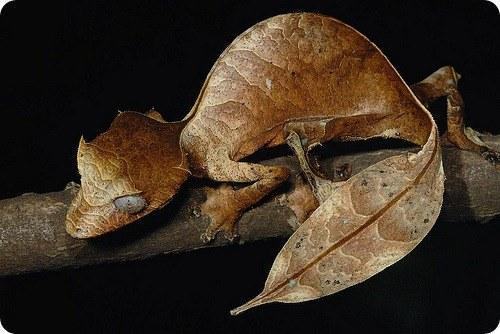
The head bears numerous small granular scales. Eyes are lidless. The tongue is broad, in some species forked. The vast majority of geckos are crepuscular or nocturnal. They have greatly enlarged eyes lacking movable eyelids, with a vertical pupil that dilates in the dark. This allows a wider field of vision when the eye is maximally dilated at night and more complete constriction of the pupil in daylight. In many cases one or both edges of the slit-shaped pupil are serrated in such a way that when the denticles of opposite sides of the pupil meet, the pupil breaks up into a series of small pinhole apertures, each of which focuses an independent sharp image onto the retina. Overlapping each other in low light, these images create the brightness required for visual perception while ensuring image sharpness. Eye of a female green gecko Eye of a tokay gecko Almost all are capable of producing distinctive sounds. Most geckos have a compact, somewhat flattened body with a relatively large head, short limbs, and a tail of moderate length. In some, predominantly arboreal, species there are more or less well-developed skin folds along the sides of the body and tail, often with fringed or serrated edges, which camouflage the lizard well against tree bark, whose colour they often match. The delicate, easily damaged skin of geckos is usually covered with small granular scales, among which, in random or regular rows, larger smooth, keeled, or warty scales may be arranged, often in the form of conical tubercles or spines. In most species the toes are modified to varying degrees and bear expanded adhesive pads on the underside, on which special brushes of microscopic multi-tipped hairs are arranged in transverse rows. Due to their small size, these hook-like outgrowths can grip the tiniest irregularities of the substrate, which, combined with claws, allows geckos to move easily over smooth inclined and vertical surfaces, including ordinary glass, and even upside down along ceilings. The adhesive force is so considerable that, holding on with a single toe, the animal can hang on a vertically positioned pane of glass. In some geckos, similar structures are located on the underside of the tail. Gecko foot The tail of geckos is also extremely varied in structure and appearance. Round or oval in cross-section in some species, it is strongly flattened in others, and spatula-shaped or bearing a beet-root-shaped expansion at the tip in yet others. In almost all species the tail is fragile, and only in some, including the desert species Crossobamon eversmanni widespread in Central Asia, is the tail prehensile and does not break off.
Uroplatus fimbriatus (Malagasy flat-tailed gecko) Uroplatus lineatus The majority of species are oviparous.
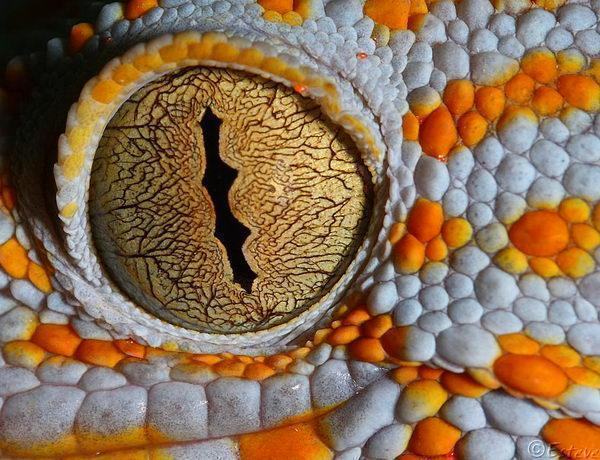
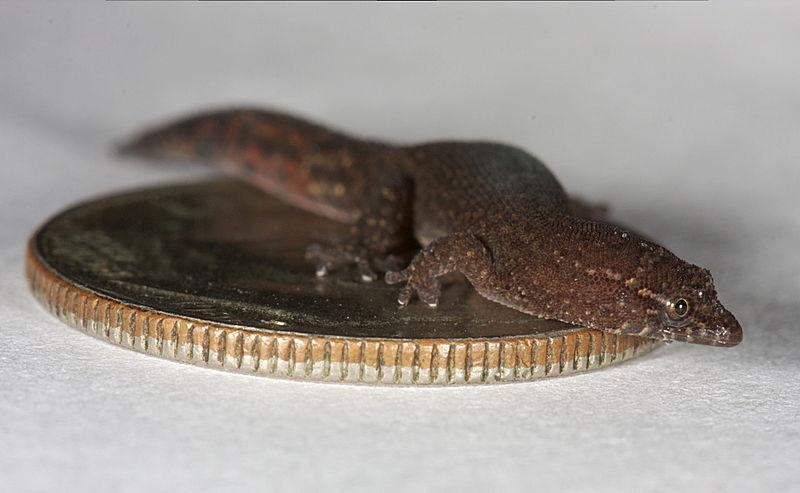
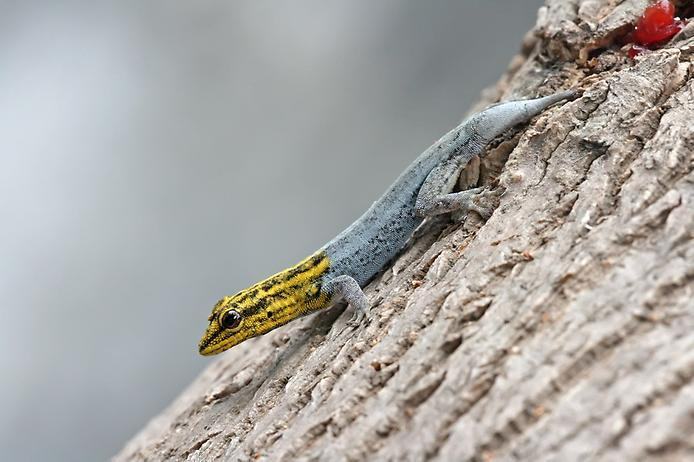
Females typically lay 2 eggs at a time, and several females often deposit their eggs in the same location. The eggs have a nearly perfect spherical shape and, unlike those of other lizards, are enclosed in a firm, brittle calcareous shell that hardens some time after laying by absorbing carbon dioxide from the air. They therefore often retain the irregular shape they first assumed, determined, for example, by the configuration of the crack or crevice where laying occurred. For the same reason, eggs glued by some geckos to trees have the shape of a hemisphere. Ovoviviparity is very rare in geckos and is known only in representatives of the New Zealand genera Naultinus, Hoplodactylus, and Heteropholis. Gecko eggs Sphaerodactylus parthenopion (Virgin Islands dwarf gecko) Lygodactylus luteopicturatus (Yellow-headed dwarf gecko) Rhacodactylus leachianus (New Caledonian giant gecko) Aeluroscakabotes felinis (Cat gecko) Sources: 1. Vitt L.J., Caldwell J.P. Herpetology. An Introductory Biology of Amphibians and Reptiles. — Academic Press, 2009. 2. Higher Taxa in Extant Reptiles 3. Family Gekkonidae The family Gekkonidae, or pad-footed geckos, is a large family of small and distinctive lizards. The distinguishing features of this family are amphicoelous vertebrae, loss of temporal arches, paired parietal bones, absence of a parietal foramen, and a broadened clavicle with small foramina on its inner edges. In most cases geckos do not exceed 10–15 cm, and only the largest reach 35 cm or more in length. The head bears numerous small granular scales. Eyes are lidless. The tongue is broad, in some species forked. The vast majority of geckos are crepuscular or nocturnal. They have greatly enlarged eyes lacking movable eyelids, with a vertical pupil that dilates in the dark. This allows a wider field of vision when the eye is maximally dilated at night and more complete constriction of the pupil in daylight. In many cases one or both edges of the slit-shaped pupil are serrated in such a way that when the denticles of opposite sides of the pupil meet, the pupil breaks up into a series of small pinhole apertures, each of which focuses an independent sharp image onto the retina.
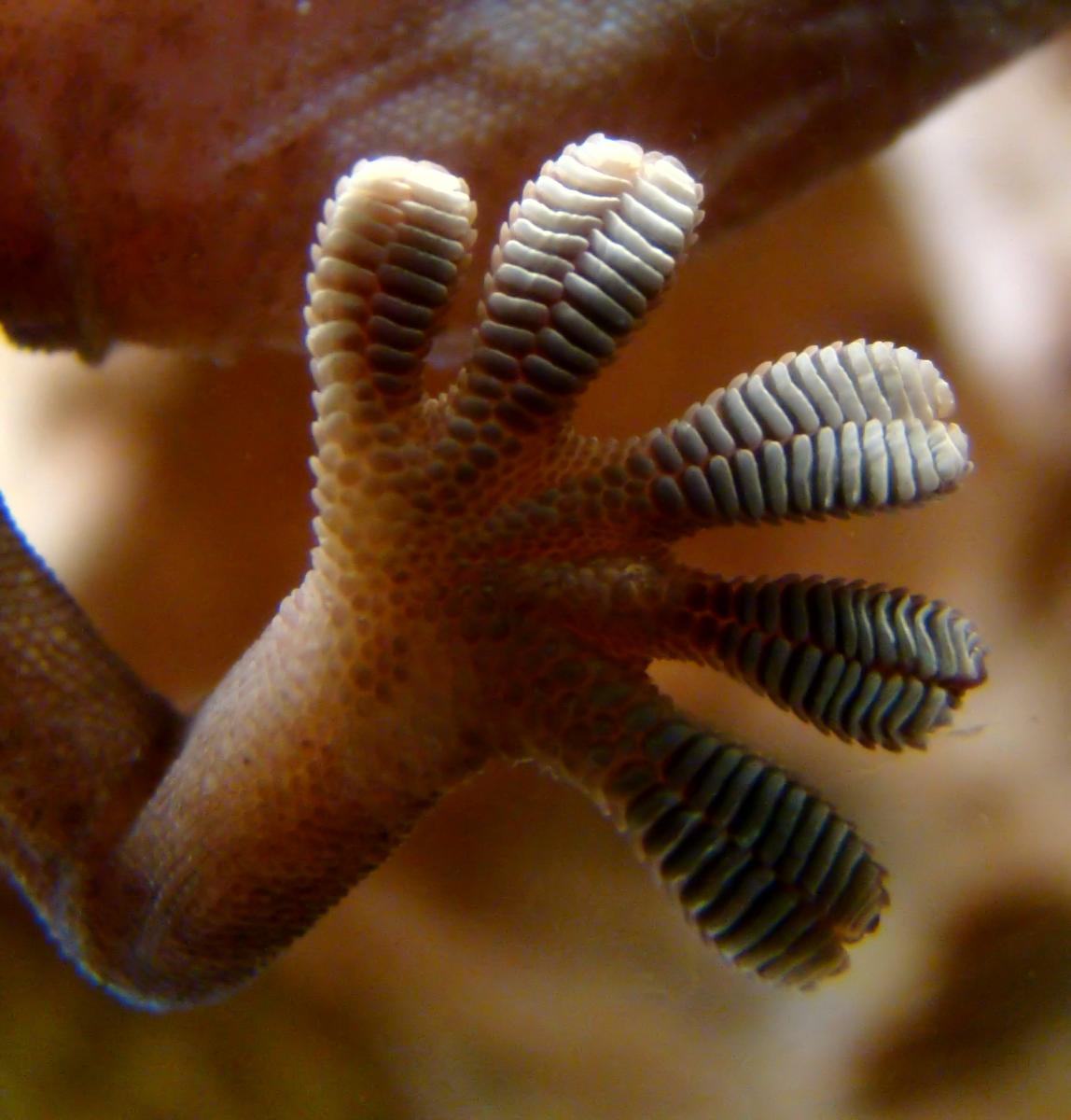
Overlapping each other in low light, these images create the brightness required for visual perception while ensuring image sharpness. Eye of a female green gecko Eye of a tokay gecko Almost all are capable of producing distinctive sounds. Most geckos have a compact, somewhat flattened body with a relatively large head, short limbs, and a tail of moderate length. In some, predominantly arboreal, species there are more or less well-developed skin folds along the sides of the body and tail, often with fringed or serrated edges, which camouflage the lizard well against tree bark, whose colour they often match. The delicate, easily damaged skin of geckos is usually covered with small granular scales, among which, in random or regular rows, larger smooth, keeled, or warty scales may be arranged, often in the form of conical tubercles or spines. In most species the toes are modified to varying degrees and bear expanded adhesive pads on the underside, on which special brushes of microscopic multi-tipped hairs are arranged in transverse rows.
Due to their small size, these hook-like outgrowths can grip the tiniest irregularities of the substrate, which, combined with claws, allows geckos to move easily over smooth inclined and vertical surfaces, including ordinary glass, and even upside down along ceilings.
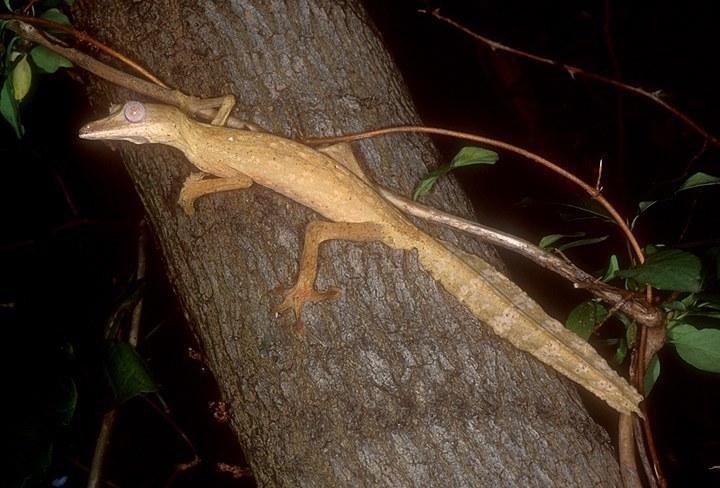
The adhesive force is so considerable that, holding on with a single toe, the animal can hang on a vertically positioned pane of glass. In some geckos, similar structures are located on the underside of the tail. Gecko foot The tail of geckos is also extremely varied in structure and appearance. Round or oval in cross-section in some species, it is strongly flattened in others, and spatula-shaped or bearing a beet-root-shaped expansion at the tip in yet others. In almost all species the tail is fragile, and only in some, including the desert species Crossobamon eversmanni widespread in Central Asia, is the tail prehensile and does not break off. Uroplatus fimbriatus (Malagasy flat-tailed gecko) Uroplatus lineatus The majority of species are oviparous. Females typically lay 2 eggs at a time, and several females often deposit their eggs in the same location. The eggs have a nearly perfect spherical shape and, unlike those of other lizards, are enclosed in a firm, brittle calcareous shell that hardens some time after laying by absorbing carbon dioxide from the air. They therefore often retain the irregular shape they first assumed, determined, for example, by the configuration of the crack or crevice where laying occurred. For the same reason, eggs glued by some geckos to trees have the shape of a hemisphere. Ovoviviparity is very rare in geckos and is known only in representatives of the New Zealand genera Naultinus, Hoplodactylus, and Heteropholis.

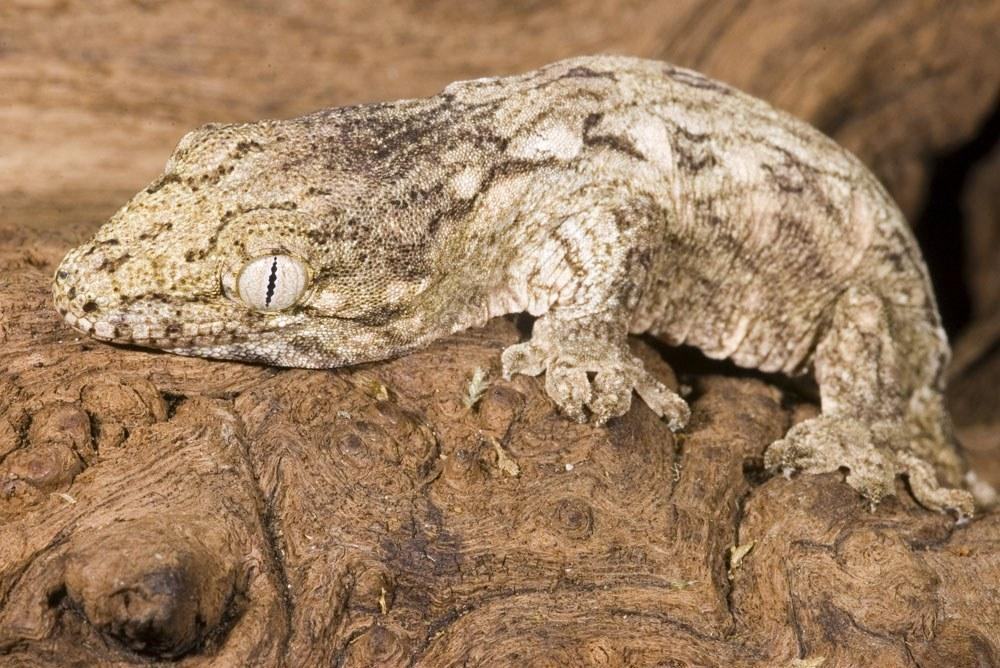
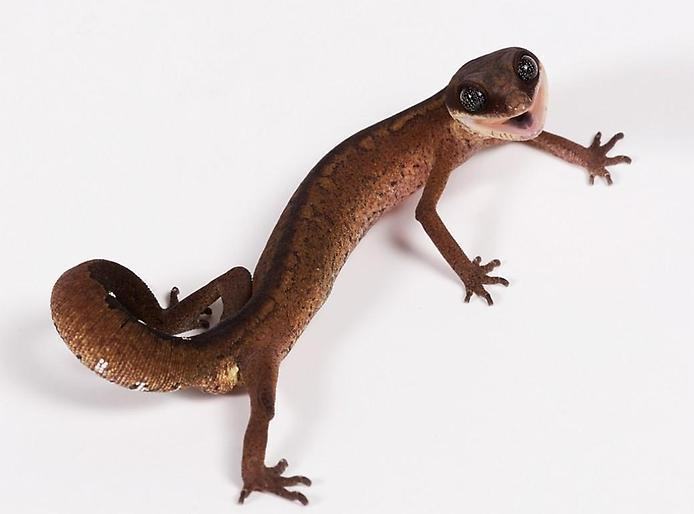
Gecko eggs Sphaerodactylus parthenopion (Virgin Islands dwarf gecko) Lygodactylus luteopicturatus (Yellow-headed dwarf gecko) Rhacodactylus leachianus (New Caledonian giant gecko) Aeluroscakabotes felinis (Cat gecko) Sources: 1.
Vitt L.J., Caldwell J.P. Herpetology.
An Introductory Biology of Amphibians and Reptiles. — Academic Press, 2009.
2.
Higher Taxa in Extant Reptiles 3. Family Gekkonidae