Coffee and Chthonic Forces. Column in KompyuterraOnline #17
What forces return the elements necessary for organisms back into the biological cycle? The ancient Greeks would have called them chthonic – connected to the primordial energy of the Earth.
←
Dmytro Shabanov
→
What is reflected in a cup of coffee? Coffee and chthonic forces Planetary coffee
Column in KompyuterraOnline #16 Column in KompyuterraOnline #17 Column in KompyuterraOnline #18
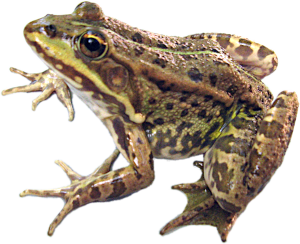
In two consecutive columns, I ponder what can be seen in a cup of coffee (Ooh, coffee "kings"! I am ready to humbly accept thanks for advertising your products!). Despite all efforts, the cup has not emptied, and much interesting can be seen at its bottom (enough for a couple of columns). In the first column, we discussed where the biochemical and thermal energy in a cup of coffee comes from. In the second, we confirmed that the condition for coffee to end up in a cup is the energy flows that organize its cultivation, processing, and transportation. Today, I want to think about where the chemical elements contained in coffee came from. Imagine the Earth's surface as a patchwork quilt of relatively intact units – biogeocenoses. For now, the definition of a biogeocenosis as an ecosystem within a phytocenosis is sufficient for us, in other words, a plot of land distinguished by a characteristic type of vegetation. A significant part of the "patches" on modern Earth are agrocenoses, artificial agricultural biogeocenoses. Coffee, like sugar beet or sugarcane, is their product. Do you remember that agrocenoses are extremely unstable and are maintained only through continuous energy subsidies? As soon as we stop energy inputs, other plants, more "concerned" about their competitiveness but less productive, will replace the cultivated plants that accumulate maximum energy in the harvest. Where do fields come from? They are altered natural cenoses, for example, former steppes. The conditions for the decomposition of dead grasses in the steppe are not the best – it's dry. Undecayed organic matter accumulates in the soil, forming chernozem. The organic matter of chernozem is not needed by grasses, but the biogens and water accumulated in it are extremely important. Chernozem in the steppe gradually degrades (oxidizes, weathers, erodes), but is continuously replenished due to the death and decomposition of grasses. When the steppe turns into a field, the replenishment of chernozem stops, as a significant part of the biomass is removed with the harvest and not returned to the soil. Degradation continues and only intensifies. Thus, the fertility of fields is largely based on the gradually depleting soils left from destroyed natural biogeocenoses. In most agrocenoses, soils degrade faster or slower... Before discussing how we combat the decline in fertility of agrocenoses, let's think about what elements are contained in the flow of matter that we remove from the fields. The main elements in the composition of organic compounds are carbon, oxygen, and hydrogen, which enter the products of photosynthesis from carbon dioxide and water. Nitrogen is also very important, without which it is impossible to synthesize proteins or various compounds like caffeine (remember, we are talking about coffee?). There is a lot of nitrogen in the atmosphere, but it is not easy to use. Plants get it from the soil, where nitrogen enters either as a result of the action of bacteria capable of fixing it, or during its oxidation during lightning strikes. Plants cannot significantly influence the number of lightning strikes, but the necessary bacteria can be purposefully cultivated: legumes do this in special nodules on their roots. The composition of the harvest is not limited to the mentioned elements. Practically the entire pre-uranium part of the periodic table is present in various concentrations. To denote all elements necessary for organisms, we use the term "biogens." The flow of production from agrocenoses is a flow of biogens. If water flows out of a basin through one pipe, its level will remain constant only if it leaks through another. What "pipes" introduce biogens into agrocenoses? Carbon, oxygen, hydrogen, and nitrogen, to some extent, come from the atmosphere. What about phosphorus, sulfur, potassium, calcium, iron, magnesium, and many other elements? This is a serious problem, important not only for agrocenoses, as the removal of matter from biogeocenoses is not a human invention. Imagine a river flowing into the sea. What do its muddy waters carry? A mass of inorganic matter (sand, clay, salts), organic matter in various stages of decomposition, and simply living organisms. This "soup" contains a significant amount of biogens washed into the river from the entire catchment basin. Some of them, upon reaching the ocean, will return to land (with caught fish, droppings of fish-eating birds, and even just spray carried by the wind). However, the predominant part of these biogens will be removed from the cycle and end up at the bottom, in marine sediments. What energy ensures the burial of biogens? Solar energy, because it is thanks to it that winds blow and rivers flow. If the process of substance migration to the ocean floor were not compensated in any way, the Earth would face a sad end. Air and water would lift continents and level the seabed. The planet would be covered by an ocean over a kilometer deep. Substances denser than water would sink, carrying away a lot of biogens. In the sunlit waters, a chemical "desert" would form, and biogens would accumulate at the bottom, where darkness reigns. Under such conditions, life on Earth would barely exist. What forces keep the biosphere from such a sad fate? Those that ensure volcanic eruptions and mountain-building processes. They lift new and new rocks upwards, into the zone of water-air weathering. Biogens are released from rocks and enter the cycle as part of living matter. These forces make Earth a planet of life! Where is their source? The Earth's core, heated (primarily due to gravitational differentiation of the interior in the early stages of its existence), slowly releases its energy through the viscous, semi-liquid mantle. Mantle circulation causes the plates forming the Earth's crust to slowly float on the planet's surface. When continental parts of plates pile up, mountains rise to the sky; when oceanic parts of plates sink into the depths, water-rich sedimentary rocks erupt to the surface as superheated magma through volcanic vents. What to call the forces that perform this colossal work? The ancient Greeks would call them chthonic – related to the primordial energy of the Earth. Previously, chthonic forces were considered titans, whose struggle causes earthquakes. Now we can talk about the chthonic energy of the Earth, which ensures the elemental diversity of processes occurring on its surface. It can be said that chthonic forces, to some extent, oppose solar forces, preventing them from "hiding" biogens from organisms. Can living organisms influence the input of biogens to the planet's surface? Only to a small extent, by accelerating the weathering of rocks. However, they can bind missing elements in the biotic cycle of substances, minimizing their loss as much as possible. At the Hubbard Brook Experimental Forest in America, a brutal experiment was conducted. A stream flowing from a small catchment basin, bounded by mountain ridges, was chosen. The amount of water flowing out and the content of various biogens in it were measured. All vegetation in this basin was destroyed using defoliants. The amount of water flowing from the practically lifeless basin and the amount of elements carried out with it were measured. Thus, the destruction of vegetation not only increased water runoff but also significantly increased the runoff of biogens. The elements that were previously retained by local plants were carried away downstream by water in the new conditions... Chthonic forces can maintain the elemental diversity of natural biogeocenoses. Agrocenoses lose in three important aspects. Firstly, a large amount of biogens is removed from them. Secondly, high yields require constant biogenic richness. Thirdly, agrocenoses lack many of the biogen retention mechanisms characteristic of natural biosystems. The only solution is fertilizers. The artificiality, and often the excessive application, of fertilizers leads to them not being sufficiently bound by the soil and being quickly washed away by water, entering reservoirs. Biogenic pollution of reservoirs leads to their eutrophication and disruption of the water regime of adjacent territories. A whole tangle of problems! Modern mythology claims that "organic" fertilizers (manure, plant biomass) are more "ecological" than chemical ones. I won't prove it in detail now, but I will say that organic fertilizers have their serious drawbacks (e.g., poorly controlled composition), and besides, there won't be enough of them for all the fields. The conversation about coffee was started to show the fundamental peculiarities of our species. Are they manifested in our activities, which we discussed? Biogeocenoses are changed not only by humans. Beavers, for example, turn forest areas into factories. Agrosystems are created not only by humans but also by ants. Leaf-cutter ants create fungal gardens, and common forest ants protect and breed aphids. Products are removed and transported not only by humans. Locusts flew and flew, and landed. Sat and sat, ate everything, and flew away again. A. S. Pushkin Territories are not only depleted by humans. The emergence of mosquitoes from freshwater bodies and the exit of young frogs carry biogens to the vicinity of terrestrial habitats. So, are all differences quantitative, not qualitative? One can consider so. But, in my opinion, no species combines the removal of products from artificial biogeocenoses with the delivery of biogens from other sources to them. We accelerate the influx of biogens into ecosystems many times compared to what chthonic forces provide. Therefore, the elemental diversity of morning coffee is both a result of the Earth's maternal forces and a consequence of our activity. What an aroma...
←
Dmytro Shabanov
→
What is reflected in a cup of coffee? Coffee and chthonic forces Planetary coffee
Column in KompyuterraOnline #16 Column in KompyuterraOnline #17 Column in KompyuterraOnline #18