

Kravchenko (2013) Ecological Sustainability of Population Systems ... (Abstract)
On June 19, the defense of the candidate dissertation of M. A. Kravchenko took place in Dnipropetrovsk. Here we present an extended translation of her author's abstract into Russian and provide a link to the Ukrainian author's abstract in PDF format. Kravchenko M. A. Ecological sustainability of population systems of hybridogenic complex...
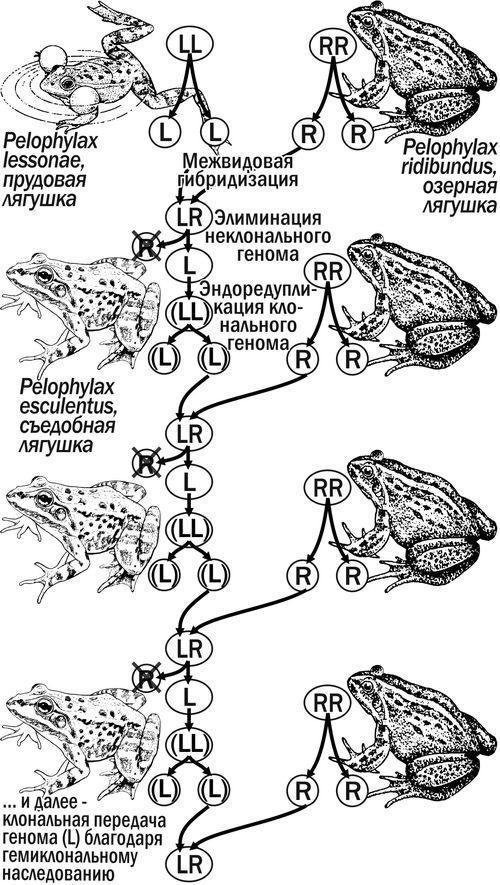
The Ukrainian abstract (in pdf format) can be downloaded here. Below is its Russian translation. MINISTRY OF EDUCATION AND SCIENCE OF UKRAINE DNIPROPETROVSK NATIONAL UNIVERSITY NAMED AFTER OLES HONCHAR KRAVCHENKO MARYNA OLEKSANDRIVNA UDC (597.841::574.4):[477.5+292.485] ECOLOGICAL STABILITY OF POPULATION SYSTEMS OF THE HYBRIDOGENETIC COMPLEX OF GREEN FROGS (PELOPHYLAX ESCULENTUS COMPLEX) 03.00.16 — Ecology ABSTRACT of the dissertation for the degree of Candidate of Biological Sciences Dnipropetrovsk — 2013 The dissertation is a manuscript The work was carried out at the Department of Zoology and Animal Ecology of the Faculty of Biology, V. N. Karazin Kharkiv National University of the Ministry of Education and Science of Ukraine Scientific Supervisor Candidate of Biological Sciences, Associate Professor Shabanov Dmytro Andriiovych V. N. Karazin Kharkiv National University, Department of Zoology and Animal Ecology, Associate Professor Official Opponents Doctor of Biological Sciences, Professor Tsvetkova Nina Mykolaivna Oles Honchar Dnipropetrovsk National University, Department of Geobotany, Soil Science and Ecology, Professor Candidate of Biological Sciences Reshetylo Ostap Stepanovych I. I. Schmalhausen Institute of Zoology of the National Academy of Sciences of Ukraine, Department of Population Ecology, Senior Researcher The defense will take place on "_19_" _June_ 2013 at _14.00_ at a meeting of the specialized academic council D 08.051.04 for the defense of dissertations for the degree of Doctor of Biological Sciences at Oles’ Honchar Dnipropetrovsk National University of the Ministry of Education and Science of Ukraine at the address: 72, Prospect Gagarina, building 17, Faculty of Biology, Ecology and Medicine, aud. 611. The dissertation can be reviewed at the scientific library of Oles’ Honchar Dnipropetrovsk National University at the address: 8, Kazakova Street, Dnipropetrovsk. The abstract was sent on "_15_" _May_ 2013. Academic Secretary of the Specialized Academic Council Candidate of Biological Sciences, Associate Professor Dubyna A. A. GENERAL CHARACTERISTICS OF THE WORK Relevance of the topic. A significant problem in modern ecology is the study of the patterns of change in biosystems over time. Relatively recently, unusual biosystems arising in hybridogenetic species complexes, such as the green frog group, Pelophylax esculentus complex (review: Plötner, 2005), became known to modern biology. These are population systems where individuals of different parental species and their hybrids, differing in the genomic composition of diploid and triploid individuals, as well as in the genomic composition they transmit to gametes clonally, are united by common reproduction. The patterns of dynamics of such biosystems remain practically unexplored. This work is dedicated to the study of changes in such population systems of the hybridogenetic complex of green frogs. Interspecific hybridization of green frogs was discovered almost half a century ago (Berger, 1964), but many peculiarities of inheritance in hybrids and the reproduction of population systems were described only at the beginning of the 21st century. In 2004, frog populations (Borkin et al, 2004) were discovered in Eastern Ukraine, which are among the most complex described to date in terms of their composition (Shabanov, Lytvynchuk, 2010; Korshunov, 2010).
Researchers in this center encountered a lack of even the necessary conceptual framework to describe the population systems characteristic of it (Shabanov et al., 2009). Population systems of hybridogenetic species complexes are systems whose direct study faces significant difficulties. Integrating existing knowledge about population systems can be achieved through simulation modeling. Modeling also helps in solving one of the least studied problems to date: understanding how such complex population systems as those registered in green frogs can maintain stability. The study of these issues is important not only for understanding the peculiarities of the population systems of the Pelophylax esculentus complex but also for developing our understanding of the general properties of other biosystems that are objects of ecology – populations, biocenoses, and ecosystems. Connection of the work with scientific programs, plans, and topics.
The work was carried out in accordance with the research topics of the Department of Zoology and Animal Ecology of the Faculty of Biology of V. N. Karazin Kharkiv National University: — “Assessment of the impact of climatic and anthropogenic factors on the dynamics of animal communities in Northeastern Ukraine” (0106U001580; 2006-2008), — “Assessment of factors determining the spatial, ethological, and genetic structure of animal populations” (0109U001443; 2009-2010); — “Non-Mendelian speciation (hybridization, non-Mendelian inheritance, polyploidy, and reticulate evolution): a study using amphibians as an example” (0109U007439; 2009-2010); — “Development of technologies for obtaining clonal offspring of vertebrate animals by crossing semi-clonal interspecific hybrids (using green frogs as an example)” (0112U001026; 2012-2014). Aim and objectives of the research. The aim of the work is to determine the mechanisms of ecological stability and changes in the composition of population systems of hybridogenetic species complexes using green frogs (Pelophylax esculentus complex) as an example.
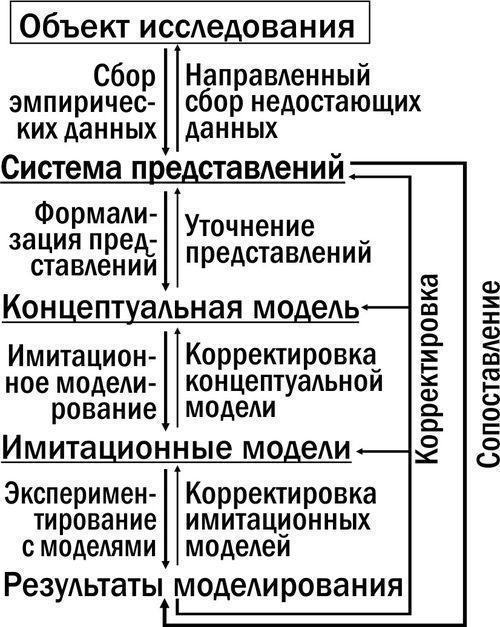
To achieve this aim, the following objectives were set in the work: — to establish the position of green frog population systems (Pelophylax esculentus complex) in the hierarchy of biosystems; to study the specifics of such systems and the processes of changes in their composition; — to determine the factors influencing the composition of green frog population systems; to develop a conceptual model of the dynamics of such systems, taking into account the action of these factors; to create a simulation model of the transformations of green frog population systems; — during experiments with the simulation model, to determine the possible states of green frog population systems and the patterns of transitions between them; to compare these results with empirical data; — to classify the states of the studied systems from the perspective of their typology and ecological stability.
Object of research — population systems of the hybridogenetic complex of green frogs (Pelophylax esculentus complex). Subject of research — transformations of green frog population systems, their causes and mechanisms, as well as the diversity of states of such systems.
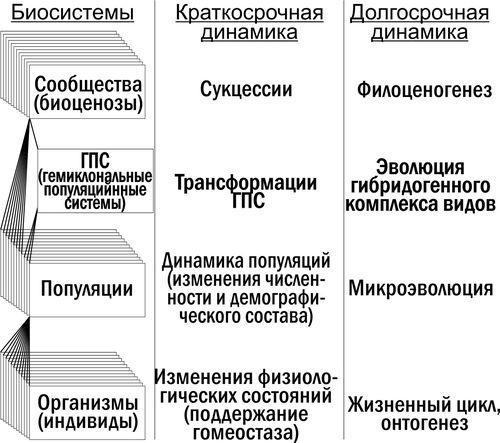
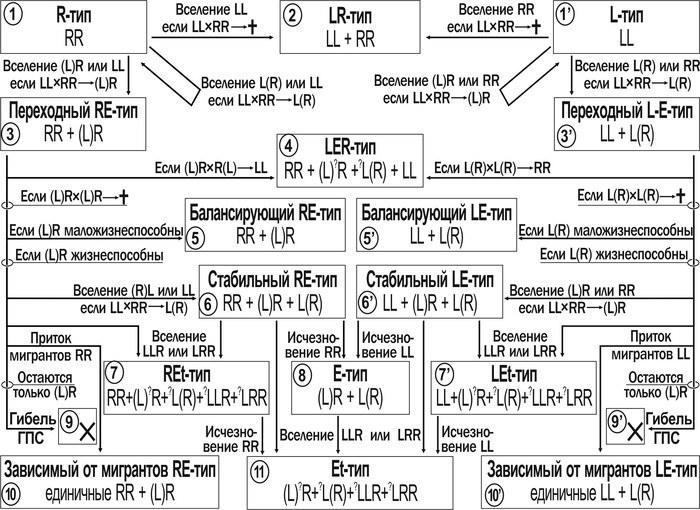
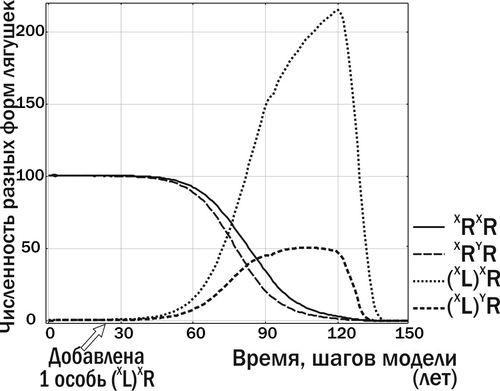
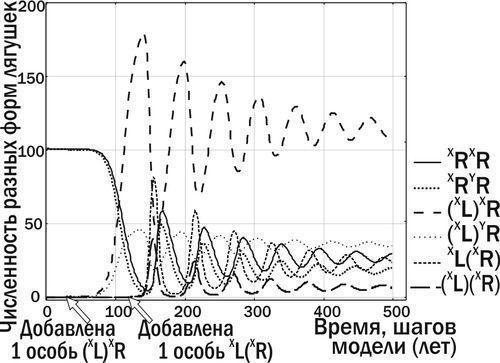
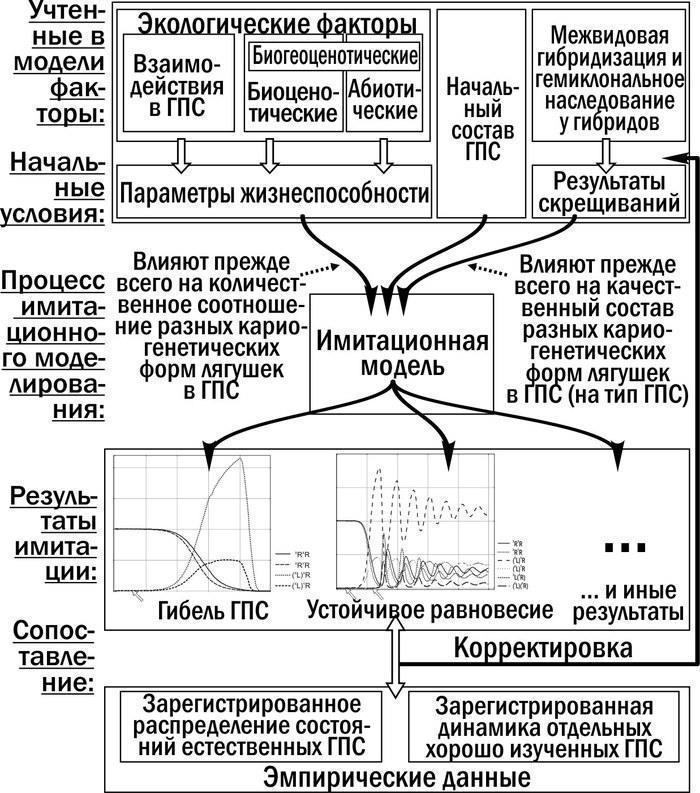
Methods of research — field surveys of green frogs, population system size estimation using marking and recapture, initial determination of species and ploidy, formalization of empirical and literature data, simulation modeling, experiments with the simulation model, comparison of modeling results with empirical data. Scientific novelty of the obtained results. The results reflecting the scientific novelty are as follows: for the first time: — the concept of “hemiclonal population system” (HPS) was proposed; — it was substantiated that HPS of hybridogenetic species complexes are a special level of biosystem organization; — a conceptual model of HPS dynamics was created, taking into account internal and external factors of their dynamics; — it was shown that hemiclonal inheritance, characteristic of interspecific hybrids, can lead to changes in the composition of HPS, their achievement of a stable state, or their demise; — a simulation model of transformations of green frog HPS was developed based on difference equations using Microsoft Excel; — possible pathways of green frog HPS transformations were considered during experiments with the model; — a dynamic typology of green frog HPS states was developed and substantiated from the perspective of ecological stability as the ability to maintain or change their type over time; improved: — understanding of the hierarchy of biosystem organization levels; — the conceptual framework related to hybridogenetic species complexes with hemiclonal reproduction of hybrids; — understanding of the causes of changes in HPS types over time; — understanding of the diversity of ecological stability states of biosystems. Practical significance of the obtained results. The conceptual model of transformations of population systems of hybridogenetic species complexes (using green frogs as an example) can be used to create other simulation models describing not only green frogs but also other hybridogenetic species complexes. In particular, it is used in the implementation of an initiative project by V. N. Karazin Kharkiv National University and the University of Glasgow (UK). The results of the work are important for studying the mechanisms of ecological stability of biosystems; they can be used for monitoring the state of natural objects, organizing their conservation, and identifying HPS that require preservation.
The HPS transformation model is a way to integrate existing data on the population ecology of green frogs, as well as to identify which data are insufficient, thereby contributing to their acquisition.
The results of the work are used in teaching general and special courses “Ecology,” “Modeling in Ecology,” and “Batrachology and Herpetology,” as well as in conducting practical training in vertebrate zoology at the Faculty of Biology of V. N. Karazin Kharkiv National University.
Personal contribution of the applicant.
The dissertation is an independent and original study.
The applicant independently developed the research program and chose the methodologies.
The research directions were determined jointly with the scientific supervisor.
Field research, data processing, development of a conceptual model of transformations of green frog population systems, creation of a simulation model and a series of experiments with it, generalization and interpretation of the obtained results were carried out by the applicant independently or with her direct participation.
A number of publications reflecting the topics discussed in the dissertation were prepared as part of the working group on amphibian population ecology at V. N. Karazin Kharkiv National University. In these works, the author participated in developing the research plan, setting tasks for modeling, creating models, experimenting with them, and interpreting the results. Approbation of the dissertation results. Materials of the dissertation were presented at the III and IV International Scientific Conferences Zoocenosis-2005 and Zoocenosis-2007 (Dnipropetrovsk); scientific conference “Modern Problems of Zoology and Ecology” (Odesa, 2005); IX and XI International Scientific and Practical Ecological Conferences dedicated to population ecology (Belgorod, 2006 and 2010); III and V Congresses of the A. M. Nikolsky Herpetological Society (Pushchino, 2006; Minsk, 2012); scientific conference of the Faculty of Biology of V. N. Karazin Kharkiv National University dedicated to the 100th anniversary of E. I. Semenenko's birth (Kharkiv, 2006); International Conference “Modern Problems of Biological Evolution” (Moscow, 2007); III, IV, and VI Congresses of the Ukrainian Herpetological Society (Melitopol, 2007; Dnipropetrovsk, 2008; Kyiv, 2011); III International Conference of Young Scientists “Biology: From Molecule to Biosphere” (Kharkiv, 2008); Congress of the Ecological League (Kyiv, 2008), International Scientific and Practical Conference “Biodiversity and Sustainable Development” (Simferopol, 2010); I All-Ukrainian Scientific and Practical Conference “Modern Problems and Methodology of Bioecological Research: Population Approach” (Ivano-Frankivsk, 2012). Publications. Based on the dissertation materials, 20 scientific publications have been published, including 11 articles in specialized scientific journals and collections of scientific works (10 of which are in specialized journals of Ukraine) and 1 article in a foreign publication, as well as 9 scientific publications in conference proceedings and abstracts. In addition, materials from the dissertation have been used in three educational and methodological publications prepared with the participation of the applicant. Structure and scope of the dissertation. The dissertation consists of a list of abbreviations, an introduction, 6 chapters, conclusions, a list of references, 2 appendices, illustrated with 7 tables and 26 figures. The dissertation materials are presented on 159 pages of computer typesetting, of which 127 pages are the main text. The bibliography contains 165 sources, including 44 in Latin script. MAIN CONTENT OF THE WORK CURRENT STATE OF THE PROBLEM Hydrogenesis of the Pelophylax esculentus complex. The European green frogs, Pelophylax esculentus complex, include the parental species: pool frogs, Pelophylax lessonae (Camerano, 1882), and lake frogs, Pelophylax ridibundus (Pallas, 1771), as well as their hemiclonal interspecific hybrids — edible frogs, Pelophylax esculentus (Linnaeus, 1758). During gametogenesis in P. esculentus, typically one of the parental genomes is transmitted clonally to the gametes, without recombination (Fig. 1). Fig. 1. Origin of P. esculentus through interspecific hybridization and its reproduction when crossed with individuals of the parental species (after Plötner, 2005). L denotes the genome of P. lessonae, R denotes the genome of P. ridibundus; genome clonality is shown by placing its symbol in parentheses. P. esculentus are most often reproduced in population systems consisting of both hybrids and individuals of the parental species that reproduce together. Different caryogenetic forms of P. esculentus differ in the number and composition of genomes and in the nature of gametogenesis (Plötner, 2005). Nomenclature and terminological issues in the study of the Pelophylax esculentus complex. The use of the genus name Pelophylax, the application of a species-like name for hybrid frogs, the classification of triploids as P. esculentus, and the concepts of