

On the origin of terrestrial life and its insignificant (but distant) prospects
Life of comets. So, before natural selection set evolution of life in motion, it facilitated the evolution of “pre‑life” – geochemical autocatalytic processes. Earth: existence after death. Currently, the Sun is roughly at the midpoint of its life trajectory (in its present status...
{ "translation": "The Life of Comets\nA hurricane sweeping through a graveyard of old airplanes would sooner assemble a brand‑new superliner from scrap than life would arise from its components as a result of random processes.\nChandra Vikramasinghe (1982)\nDo you remember the bombardment of comet Tempel in 2005? In recent years we have learned much about the composition of comets. A consequence of this has been the hypothesis of the origin of life on comets, put forward by a team led by Chandra Vikramasinghe. The discussion concerns the well‑known astronomer and astrobiologist, student and co‑author of Fred Hoyle¹, born in Sri Lanka. He now heads the astrobiology centre at Cardiff University in England. Vikramasinghe does not shy away from “slippery” topics on the edge of official science, studying so‑called nanobacteria², the phenomenon of red rain in Kerala³, or the spread of viruses by comets.\nThus, Vikramasinghe relies on data on the presence of water ice, diverse organics, and clay‑like layered silicates in comets, which can act as catalysts and sources of elements essential for life. Vikramasinghe considers that, thanks to radiogenic heating inside comets, water could have existed in liquid form for many millions of years. The total mass of clay‑like minerals in comets in our galaxy exceeds the mass of clays on Earth⁴, and therefore the emergence of life on comets is more probable than on Earth…\nTo evaluate the new hypothesis, the words of Vikramasinghe himself, placed in the epigraph, are useful. Twenty‑five years ago this scientist opposed the random origin of life. There is no reason to doubt the incredible improbability of the most primitive version of the abiogenesis hypothesis: the assumption that organic molecules accidentally assembled themselves into a living cell. As an alternative to the miracle of creation of life by a benevolent Creator, propose creation of life by the miracle of blind chance? Such a solution would satisfy only one who truly religiously believes in the absence of God.\nBut is another origin of life based on randomness possible? Natural selection is a mechanism that allows the accumulation of consequences of random (and lawful) favourable changes in self‑reproducing systems. Imagine a ball (say, a football) bouncing in place thanks to energy from some source. Can it, as a result of small jumps in random directions, end up on the roof of a multi‑storey building? The answer “no” is incorrect. If a staircase of many small steps leads to the roof, such an ascent becomes possible. But, having entered the entrance or climbed the first step, the ball can immediately roll back! Hence a mechanism is needed that “filters” changes leading in a certain direction. That filtering mechanism is natural selection.\nThus, under certain conditions, small undirected changes can ensure a radical transformation of the whole system. In accordance with the analogy considered, three conditions are necessary for the origin of life:\n— possibility of a full spectrum of transitions between non‑living and living systems;\n— possibility of passing from one state to another, close state, due to random or lawful causes;\n— action of natural selection, predominantly preserving and reproducing “more living” systems.\nAs far as can be judged from modern data, all three of these conditions were fulfilled on the young Earth and are fulfilled on many other planets.\nPlanets lie in the flow of energy scattered by the central star. If planets rotate, this leads to cyclic changes in the amount of energy falling on their areas. If they have an atmosphere and hydrosphere, uneven heating leads to circulation of these envelopes, involving the surface of the lithosphere as well.\nOn the surfaces of such planets chemical reactions proceed, including with various organic compounds⁵. Depending on the cyclic change of conditions, reversible reactions will pass from one equilibrium state to another and back. The same substance transformations can be provided by various competing reactions. From the standpoint of the origin of life, those among them that are characterized by autocatalysis are especially interesting. In general form such reactions can be represented as R + A → 2A, where A is an autocatalyst, a molecule promoting the synthesis of similar molecules, and R is the resource (resources) needed for this.\nOne of the most topical examples of autocatalytic reactions is the so‑called Butlerov formose reaction, which is intensively studied at the Institute of Catalysis of the Siberian Branch of the Russian Academy of Sciences. In this reaction, formaldehyde (CH₂O) in aqueous solution in the presence of lime undergoes oligomerization, forming monosaccharides: nCH₂O → (CH₂O)ₙ. This is an autocatalytic reaction: the presence of monosaccharides in the medium substantially increases the yield of the final product. Different monosaccharides possess different autocatalytic activity; depending on the conditions of the reaction, the composition of products formed in the course of the reaction changes. For example, in the presence of apatite (calcium phosphate, a common mineral) the formose reaction yields mainly ribose—a monosaccharide entering into the composition of RNA, DNA (with a small modification) and ATP⁶.\nThe most important consequence of autocatalysis is that it allows natural selection to become involved. The most efficient and stable autocatalytic reactions transform the greater part of available resources and will crowd out their analogues.\nThus, before natural selection launched the evolution of life, it ensured the evolution of “pre‑life”—geochemical autocatalytic processes. How could this “pre‑life” evolve? We do not yet know the specifics, but we can already guess much. Thus, apparently, between the levels corresponding to ribose synthesis and RNA synthesis there is a set of intermediate steps (according to the first of the conditions we formulated).\nRNA is a remarkable polymer. In modern organisms catalytic functions are performed by proteins, and information carriers are DNA molecules. However, the interaction of these compounds almost always occurs through RNA. RNA possesses catalytic activity (RNA catalysts are called ribozymes) and is capable of matrix self‑copying even in the absence of enzymes. Presumably, our biosphere passed through a stage called the “RNA world.” At that stage the stability and speed of cyclic geochemical processes were ensured by RNA molecules. As pre‑living systems of the “RNA world” improved, catalytic functions could pass to proteins, and functions of genetic information storage—to DNA, a more stable polymer.\nBut how do self‑reproducing living beings arise? What we call reproduction is a consequence of replication processes, and those processes trace their lineage to the phenomenon of autocatalysis⁷.\nDo not believe fairy tales about the “first organism” that arose by chance in the “primordial soup” and gave rise to all other living beings. Such a scenario is thermodynamically impossible. Life arises not in the form of separate organisms, but in the form of ecosystems ensuring the circulation of matter, as geochemical circulation of matter is transformed into biogeochemical circulation. Various “innovations” (ways of storing energy, matrix synthesis of polymers, cellular organization) that arise at one stage of geochemical circulation are transferred to other stages. Do you think it is chance that the Earth is populated by two groups of organisms (autotrophs and heterotrophs), for each of which the resources are the waste products of the other group? Their division of roles predates life itself and reflects the oscillating equilibrium between synthesis and decay with the change of day and night, ebb and flow, summer and winter…\nAnother argument: thermodynamically, life is a dissipative, entropy‑scattering process⁸. For its formation a stable flow of energy through the medium is needed. Can it be ensured on comets, given their small size and eccentric orbits? Hardly. The flow of radiogenic heat is directed from the comet nucleus into space and does not undergo fluctuations. Heating by the star changes cyclically, but its fluctuations are extreme. It is not excluded that comets and meteorites can transfer life (or “pre‑life”) from planet to planet, but abiogenesis itself must be linked to planets—with Earth or with some other planet about which it is easiest to judge by comparison with Earth.\nThus, Vikramasinghe has changed his point of view. His current views correspond to the conception of abiogenesis that he himself once ridiculed: the emergence of life as a result of the random combination of molecules. What caused such a turn? One assumption can be put forward.\nVikramasinghe insists that global epidemics are caused by viruses brought to Earth by comets. Thus, in his opinion, the Spanish flu (influenza of 1917–19) came to us, as did atypical pneumonia and avian influenza. Some arguments confirming this hypothesis have been collected, but there is also one circumstance that seems fatal to it. The genomes of potential cosmic visitors are in a certain kinship with other viruses clearly resident in hosts, and bear traces of evolution in their hosts. For avian influenza to infect both birds and mammals, it must undergo evolution in both. There are no birds or animals on comets. Where does such a virus come from? Vikramasinghe has to assert that such viruses arise by chance. If so, then one can believe that life itself arose by itself…\nLooking into the sky in search of causes and sources of life, one must not lose the ground under one’s feet. The Earth that sustains us is no less worthy of our attention.\n\n1 Sir Fred Hoyle—outstanding English astronomer, cosmologist and writer, proponent of the theory of the eternal Universe and author of the term “Big Bang.” Back to text\n\n2 A poorly studied form of life whose very existence is disputed by many authorities. Back to text\n\n3 A widely publicized case of the fall with rain of some particles supposedly resembling extraterrestrial organisms, which occurred in the Indian state of Kerala in 2001. Back to text\n\n4 I do not want to spend many words, but note: comets of the entire galaxy are compared not with planets of the same galaxy, but for some reason only with one! Back to text\n\n5 Formed easily enough (and destroyed) both under planetary conditions and in space. Back to text\n\n6 And here the phosphate groups needed for the synthesis of RNA, DNA and ATP are right next to each other! Back to text\n\n7 And at the other end of this series, at its highest level, is what we call love. Back to text\n\n8 As, for example, Benard cells or the Belousov–Zhabotinsky reaction. Back to text\n\nEarth: Being After Death\nWhether we like it or not, our existence is one of the many consequences of solar activity. The energy scattered in space, generated by thermonuclear reactions in the star, is partially captured by our planet. One of the effects of scattering this flow, a kind of “vortex” in it (or, more precisely, a dissipative structure), is terrestrial life. For now, the Sun shines thanks to the fusion of hydrogen nuclei into helium nuclei. The present size of the Sun is the result of a balance between the forces of gravity compressing stellar matter and the radiation pressure of thermonuclear synthesis energy pushing it outward.\nCurrently the Sun is approximately in the middle of its life path (in its present status as a yellow dwarf). According to existing estimates, in 1.1billion years the luminosity of our star will increase by 10%, and in 2.4billion years—by 40%. At that time the temperature on Earth will approach the Venusian temperature. In about 5.3billion years the Sun, having considerably exhausted its hydrogen fuel, will turn from a yellow dwarf into a red giant. Its size will reach the present Earth orbit, and its luminosity will increase 5200‑fold. Because the mass of the Sun will decrease by that time (the star constantly scatters its substance into space), the Earth will move slightly away from the luminary and will be approximately at the present orbit of Mars. After some more time the Sun will shed its envelope (which will turn into a planetary nebula), and its core will become a white dwarf.\n[IMG_1]\nThe fate of our planet in this scenario remained unclear. Would it survive the expansion of its luminary? Many considered this impossible. But now Italian scientists report that they have found a planet that survived such a cataclysm.\nThe star V391Pegasi studied by astronomers once very much resembled the present Sun. However, possibly under the influence of a neighboring gas‑dust cloud, its “individual development” became somewhat atypical, and this star shed its outer envelope even before switching to helium fuel. In any case, a planet now revolves around V391Pegasi which was once located at about the same distance from it as Earth is from the Sun. True, the size of this planet is very large—three times that of Jupiter.\nFor some reason commentators perceive this news as encouraging—Earth, it seems, has a chance to survive after the rebirth of the Sun. What is good about this is hard to understand—long before the described time Earth will become a place completely unfit for life. Usually, speaking of these prospects, they point out that humanity will by that time be living on other planets. Wonderful optimism! We should first solve all the preceding problems—and then we can admire the exploding Sun from afar.\n\nD.Shabanov. Life of Comets // Computerra, Moscow, 2007. – No.31 (699).\nD.Shabanov. Earth: Being After Death // Computerra, Moscow, 2007. – No.35 (703).\n" }
{ "translation": "The Life of Comets\nA hurricane sweeping through a graveyard of old airplanes would sooner assemble a brand‑new superliner from scrap than life would arise from its components as a result of random processes.\nChandra Vikramasinghe (1982)\nDo you remember the bombardment of comet Tempel in 2005? In recent years we have learned much about the composition of comets. A consequence of this has been the hypothesis of the origin of life on comets, put forward by a team led by Chandra Vikramasinghe. The discussion concerns the well‑known astronomer and astrobiologist, student and co‑author of Fred Hoyle¹, born in Sri Lanka. He now heads the astrobiology centre at Cardiff University in England. Vikramasinghe does not shy away from “slippery” topics on the edge of official science, studying so‑called nanobacteria², the phenomenon of red rain in Kerala³, or the spread of viruses by comets.\nThus, Vikramasinghe relies on data on the presence of water ice, diverse organics, and clay‑like layered silicates in comets, which can act as catalysts and sources of elements essential for life. Vikramasinghe considers that, thanks to radiogenic heating inside comets, water could have existed in liquid form for many millions of years. The total mass of clay‑like minerals in comets in our galaxy exceeds the mass of clays on Earth⁴, and therefore the emergence of life on comets is more probable than on Earth…\nTo evaluate the new hypothesis, the words of Vikramasinghe himself, placed in the epigraph, are useful. Twenty‑five years ago this scientist opposed the random origin of life. There is no reason to doubt the incredible improbability of the most primitive version of the abiogenesis hypothesis: the assumption that organic molecules accidentally assembled themselves into a living cell. As an alternative to the miracle of creation of life by a benevolent Creator, propose creation of life by the miracle of blind chance? Such a solution would satisfy only one who truly religiously believes in the absence of God.\nBut is another origin of life based on randomness possible? Natural selection is a mechanism that allows the accumulation of consequences of random (and lawful) favourable changes in self‑reproducing systems. Imagine a ball (say, a football) bouncing in place thanks to energy from some source. Can it, as a result of small jumps in random directions, end up on the roof of a multi‑storey building? The answer “no” is incorrect. If a staircase of many small steps leads to the roof, such an ascent becomes possible. But, having entered the entrance or climbed the first step, the ball can immediately roll back! Hence a mechanism is needed that “filters” changes leading in a certain direction. That filtering mechanism is natural selection.\nThus, under certain conditions, small undirected changes can ensure a radical transformation of the whole system. In accordance with the analogy considered, three conditions are necessary for the origin of life:\n— possibility of a full spectrum of transitions between non‑living and living systems;\n— possibility of passing from one state to another, close state, due to random or lawful causes;\n— action of natural selection, predominantly preserving and reproducing “more living” systems.\nAs far as can be judged from modern data, all three of these conditions were fulfilled on the young Earth and are fulfilled on many other planets.\nPlanets lie in the flow of energy scattered by the central star. If planets rotate, this leads to cyclic changes in the amount of energy falling on their areas. If they have an atmosphere and hydrosphere, uneven heating leads to circulation of these envelopes, involving the surface of the lithosphere as well.\nOn the surfaces of such planets chemical reactions proceed, including with various organic compounds⁵. Depending on the cyclic change of conditions, reversible reactions will pass from one equilibrium state to another and back. The same substance transformations can be provided by various competing reactions. From the standpoint of the origin of life, those among them that are characterized by autocatalysis are especially interesting. In general form such reactions can be represented as R + A → 2A, where A is an autocatalyst, a molecule promoting the synthesis of similar molecules, and R is the resource (resources) needed for this.\nOne of the most topical examples of autocatalytic reactions is the so‑called Butlerov formose reaction, which is intensively studied at the Institute of Catalysis of the Siberian Branch of the Russian Academy of Sciences. In this reaction, formaldehyde (CH₂O) in aqueous solution in the presence of lime undergoes oligomerization, forming monosaccharides: nCH₂O → (CH₂O)ₙ. This is an autocatalytic reaction: the presence of monosaccharides in the medium substantially increases the yield of the final product. Different monosaccharides possess different autocatalytic activity; depending on the conditions of the reaction, the composition of products formed in the course of the reaction changes. For example, in the presence of apatite (calcium phosphate, a common mineral) the formose reaction yields mainly ribose—a monosaccharide entering into the composition of RNA, DNA (with a small modification) and ATP⁶.\nThe most important consequence of autocatalysis is that it allows natural selection to become involved. The most efficient and stable autocatalytic reactions transform the greater part of available resources and will crowd out their analogues.\nThus, before natural selection launched the evolution of life, it ensured the evolution of “pre‑life”—geochemical autocatalytic processes. How could this “pre‑life” evolve? We do not yet know the specifics, but we can already guess much. Thus, apparently, between the levels corresponding to ribose synthesis and RNA synthesis there is a set of intermediate steps (according to the first of the conditions we formulated).\nRNA is a remarkable polymer. In modern organisms catalytic functions are performed by proteins, and information carriers are DNA molecules. However, the interaction of these compounds almost always occurs through RNA. RNA possesses catalytic activity (RNA catalysts are called ribozymes) and is capable of matrix self‑copying even in the absence of enzymes. Presumably, our biosphere passed through a stage called the “RNA world.” At that stage the stability and speed of cyclic geochemical processes were ensured by RNA molecules. As pre‑living systems of the “RNA world” improved, catalytic functions could pass to proteins, and functions of genetic information storage—to DNA, a more stable polymer.\nBut how do self‑reproducing living beings arise? What we call reproduction is a consequence of replication processes, and those processes trace their lineage to the phenomenon of autocatalysis⁷.\nDo not believe fairy tales about the “first organism” that arose by chance in the “primordial soup” and gave rise to all other living beings. Such a scenario is thermodynamically impossible. Life arises not in the form of separate organisms, but in the form of ecosystems ensuring the circulation of matter, as geochemical circulation of matter is transformed into biogeochemical circulation. Various “innovations” (ways of storing energy, matrix synthesis of polymers, cellular organization) that arise at one stage of geochemical circulation are transferred to other stages. Do you think it is chance that the Earth is populated by two groups of organisms (autotrophs and heterotrophs), for each of which the resources are the waste products of the other group? Their division of roles predates life itself and reflects the oscillating equilibrium between synthesis and decay with the change of day and night, ebb and flow, summer and winter…\nAnother argument: thermodynamically, life is a dissipative, entropy‑scattering process⁸. For its formation a stable flow of energy through the medium is needed. Can it be ensured on comets, given their small size and eccentric orbits? Hardly. The flow of radiogenic heat is directed from the comet nucleus into space and does not undergo fluctuations. Heating by the star changes cyclically, but its fluctuations are extreme. It is not excluded that comets and meteorites can transfer life (or “pre‑life”) from planet to planet, but abiogenesis itself must be linked to planets—with Earth or with some other planet about which it is easiest to judge by comparison with Earth.\nThus, Vikramasinghe has changed his point of view. His current views correspond to the conception of abiogenesis that he himself once ridiculed: the emergence of life as a result of the random combination of molecules. What caused such a turn? One assumption can be put forward.\nVikramasinghe insists that global epidemics are caused by viruses brought to Earth by comets. Thus, in his opinion, the Spanish flu (influenza of 1917–19) came to us, as did atypical pneumonia and avian influenza. Some arguments confirming this hypothesis have been collected, but there is also one circumstance that seems fatal to it. The genomes of potential cosmic visitors are in a certain kinship with other viruses clearly resident in hosts, and bear traces of evolution in their hosts. For avian influenza to infect both birds and mammals, it must undergo evolution in both. There are no birds or animals on comets. Where does such a virus come from? Vikramasinghe has to assert that such viruses arise by chance. If so, then one can believe that life itself arose by itself…\nLooking into the sky in search of causes and sources of life, one must not lose the ground under one’s feet. The Earth that sustains us is no less worthy of our attention.\n\n1 Sir Fred Hoyle—outstanding English astronomer, cosmologist and writer, proponent of the theory of the eternal Universe and author of the term “Big Bang.” Back to text\n\n2 A poorly studied form of life whose very existence is disputed by many authorities. Back to text\n\n3 A widely publicized case of the fall with rain of some particles supposedly resembling extraterrestrial organisms, which occurred in the Indian state of Kerala in 2001. Back to text\n\n4 I do not want to spend many words, but note: comets of the entire galaxy are compared not with planets of the same galaxy, but for some reason only with one! Back to text\n\n5 Formed easily enough (and destroyed) both under planetary conditions and in space. Back to text\n\n6 And here the phosphate groups needed for the synthesis of RNA, DNA and ATP are right next to each other! Back to text\n\n7 And at the other end of this series, at its highest level, is what we call love. Back to text\n\n8 As, for example, Benard cells or the Belousov–Zhabotinsky reaction. Back to text\n\nEarth: Being After Death\nWhether we like it or not, our existence is one of the many consequences of solar activity. The energy scattered in space, generated by thermonuclear reactions in the star, is partially captured by our planet. One of the effects of scattering this flow, a kind of “vortex” in it (or, more precisely, a dissipative structure), is terrestrial life. For now, the Sun shines thanks to the fusion of hydrogen nuclei into helium nuclei. The present size of the Sun is the result of a balance between the forces of gravity compressing stellar matter and the radiation pressure of thermonuclear synthesis energy pushing it outward.\nCurrently the Sun is approximately in the middle of its life path (in its present status as a yellow dwarf). According to existing estimates, in 1.1billion years the luminosity of our star will increase by 10%, and in 2.4billion years—by 40%. At that time the temperature on Earth will approach the Venusian temperature. In about 5.3billion years the Sun, having considerably exhausted its hydrogen fuel, will turn from a yellow dwarf into a red giant. Its size will reach the present Earth orbit, and its luminosity will increase 5200‑fold. Because the mass of the Sun will decrease by that time (the star constantly scatters its substance into space), the Earth will move slightly away from the luminary and will be approximately at the present orbit of Mars. After some more time the Sun will shed its envelope (which will turn into a planetary nebula), and its core will become a white dwarf.\n[IMG_1]\nThe fate of our planet in this scenario remained unclear. Would it survive the expansion of its luminary? Many considered this impossible. But now Italian scientists report that they have found a planet that survived such a cataclysm.\nThe star V391Pegasi studied by astronomers once very much resembled the present Sun. However, possibly under the influence of a neighboring gas‑dust cloud, its “individual development” became somewhat atypical, and this star shed its outer envelope even before switching to helium fuel. In any case, a planet now revolves around V391Pegasi which was once located at about the same distance from it as Earth is from the Sun. True, the size of this planet is very large—three times that of Jupiter.\nFor some reason commentators perceive this news as encouraging—Earth, it seems, has a chance to survive after the rebirth of the Sun. What is good about this is hard to understand—long before the described time Earth will become a place completely unfit for life. Usually, speaking of these prospects, they point out that humanity will by that time be living on other planets. Wonderful optimism! We should first solve all the preceding problems—and then we can admire the exploding Sun from afar.\n\nD.Shabanov. Life of Comets // Computerra, Moscow, 2007. – No.31 (699).\nD.Shabanov. Earth: Being After Death // Computerra, Moscow, 2007. – No.35 (703).\n" }
Thus, Wickramasinghe relies on data about the presence of water ice, various organic matter, and clay-like layered silicates in comets, which can act as catalysts and sources of elements necessary for life. Wickramasinghe believes that due to radioactive heating within comets, water could have remained in a liquid state for many millions of years. The total mass of clay-like minerals in the composition of comets in our galaxy exceeds the mass of clays on Earth⁴, and therefore, the origin of life on comets is more likely than on Earth...
To evaluate the new hypothesis, Wickramasinghe's own words, presented in the epigraph, are useful. 25 years ago, this scientist was an opponent of the spontaneous origin of life. There is no reason to doubt the improbability of the most primitive version of the abiogenesis hypothesis: the assumption that organic molecules accidentally assembled themselves into a living cell. Is the creation of life by a blind chance miracle offered as an alternative to the miracle of life's creation by a benevolent Creator? Such a solution will only satisfy someone who truly religiously believes in the absence of God.
But is another origin of life based on chance possible? Natural selection is a mechanism that allows for the accumulation of consequences of random (and lawful) favorable changes in self-reproducing systems. Imagine a ball (e.g., a football) bouncing in place due to energy from some source. Can it, as a result of small random jumps, end up on the roof of a multi-story building? The answer "no" is incorrect. If there is a staircase with many small steps leading to the roof, such a climb becomes possible. But, having entered the entrance hall or climbed the first step, the ball can immediately return! Therefore, a mechanism is needed that "filters" changes that lead in a certain direction. Such a filtering mechanism is natural selection.
Thus, under certain conditions, small undirected changes can ensure a radical transformation of the entire system. According to the analogy considered, three conditions are necessary for the origin of life: — the possibility of a full spectrum of transitions between non-living and living systems; — the possibility of transitioning from one state to another, close one, as a result of random or lawful causes; — the action of natural selection, which predominantly preserves and reproduces "more living" systems.
As far as can be judged from current data, all three of these conditions were met on the young Earth and are met on many other planets.
Planets are in a flow of energy dispersed by the central star. If planets rotate, this leads to cyclical changes in the amount of energy falling on their areas. If they have an atmosphere and hydrosphere, the uneven heating leads to the circulation of these shells, which also involves the lithosphere surface.
Chemical reactions occur on the surface of such planets, including with various organic compounds⁵. Depending on the cyclical change in conditions, reversible reactions will shift from one equilibrium state to another and vice versa. The same transformations of substances can be provided by different competing reactions. From the perspective of the origin of life, those characterized by autocatalysis are particularly interesting. In general, such reactions can be represented as R + A > 2A, where A is an autocatalyst, a molecule that promotes the synthesis of molecules similar to itself, and R is the necessary resource.
One of the most relevant examples of autocatalytic reactions is the so-called Butlerov's formose reaction, which is intensively studied at the Institute of Catalysis of the Siberian Branch of the Russian Academy of Sciences. In this reaction, formaldehyde (CH₂O) in aqueous solution in the presence of lime oligomerizes to form monosaccharides: nCH₂O → (CH₂O)n. This is an autocatalytic reaction: the presence of monosaccharides in the medium significantly increases the yield of the final product. Different monosaccharides have different autocatalytic activity; depending on the reaction conditions, the composition of the products formed changes. For example, in the presence of apatite (calcium phosphate, a common mineral), the formose reaction predominantly produces ribose – a monosaccharide that is part of RNA, DNA (with a slight modification), and ATP⁶.
The most important consequence of autocatalysis is that it allows natural selection to engage. The most efficient and stable autocatalytic reactions will convert most of the available resources and displace their analogues.
Thus, before natural selection initiated the evolution of life, it ensured the evolution of "pre-life" – geochemical autocatalytic processes. How could this "pre-life" evolve? We don't know the specifics yet, but we can already guess a lot. Yes, it is likely that there is a set of intermediate steps between the levels corresponding to the synthesis of ribose and the synthesis of RNA (according to the first condition we formulated).
RNA is a wonderful polymer. In modern organisms, proteins perform catalytic functions, and DNA molecules are carriers of information. However, the interaction of these compounds almost always occurs through the mediation of RNA. RNA has catalytic activity (RNA catalysts are called ribozymes) and is capable of template self-replication even in the absence of enzymes. It is likely that our biosphere went through a stage called the "RNA World." At this stage, the stability and speed of cyclic geochemical processes were ensured by RNA molecules. As the survival systems of the "RNA World" improved, catalytic functions could be transferred to proteins, and genetic information storage functions to DNA, a more stable polymer.
But how do self-reproducing living beings arise? What we call reproduction is a consequence of replication processes, and these processes themselves trace their lineage back to the phenomenon of autocatalysis⁷.
Do not believe fairy tales about the "first organism" that accidentally appeared in the "primordial soup" and gave rise to other living beings. Such a scenario is thermodynamically impossible. Life arises not in the form of individual organisms, but in the form of ecosystems that ensure the circulation of matter, as geochemical cycles of matter are transformed into biogeochemical ones. Various "innovations" (ways of storing energy, template synthesis of polymers, cellular organization) that arose at one stage of the geochemical cycle are transferred to other stages. Do you think it's a coincidence that the Earth is inhabited by two groups of organisms (autotrophs and heterotrophs), for each of which the waste products of the other group are resources? Their division of roles predates life itself and reflects the oscillating equilibrium between synthesis and decomposition with the change of day and night, tide and ebb, summer and winter...
Another argument: thermodynamically, life is a dissipative process⁸. Its formation requires a stable flow of energy through the environment. Can this be provided on comets, given their small size and eccentric orbits? Unlikely. The flow of radioactive heat is directed from the comet's core into space and does not fluctuate. Heating from a star changes cyclically, but its fluctuations exceed limits. It is not impossible that comets and meteorites can transport life (or "pre-life") from planet to planet, but abiogenesis itself must be linked to planets - to Earth or to some other planet, which is easiest to judge by comparing it with Earth.
Thus, Wickramasinghe has changed his point of view. His modern views correspond to the idea of abiogenesis that he himself once ridiculed: the origin of life as a result of the random fusion of molecules. What caused such a turn? One assumption can be made.
{ "translation": "The Life of Comets\nA hurricane sweeping through a graveyard of old airplanes would sooner assemble a brand‑new superliner from scrap than life would arise from its components as a result of random processes.\nChandra Vikramasinghe (1982)\nDo you remember the bombardment of comet Tempel in 2005? In recent years we have learned much about the composition of comets. A consequence of this has been the hypothesis of the origin of life on comets, put forward by a team led by Chandra Vikramasinghe. The discussion concerns the well‑known astronomer and astrobiologist, student and co‑author of Fred Hoyle¹, born in Sri Lanka. He now heads the astrobiology centre at Cardiff University in England. Vikramasinghe does not shy away from “slippery” topics on the edge of official science, studying so‑called nanobacteria², the phenomenon of red rain in Kerala³, or the spread of viruses by comets.\nThus, Vikramasinghe relies on data on the presence of water ice, diverse organics, and clay‑like layered silicates in comets, which can act as catalysts and sources of elements essential for life. Vikramasinghe considers that, thanks to radiogenic heating inside comets, water could have existed in liquid form for many millions of years. The total mass of clay‑like minerals in comets in our galaxy exceeds the mass of clays on Earth⁴, and therefore the emergence of life on comets is more probable than on Earth…\nTo evaluate the new hypothesis, the words of Vikramasinghe himself, placed in the epigraph, are useful. Twenty‑five years ago this scientist opposed the random origin of life. There is no reason to doubt the incredible improbability of the most primitive version of the abiogenesis hypothesis: the assumption that organic molecules accidentally assembled themselves into a living cell. As an alternative to the miracle of creation of life by a benevolent Creator, propose creation of life by the miracle of blind chance? Such a solution would satisfy only one who truly religiously believes in the absence of God.\nBut is another origin of life based on randomness possible? Natural selection is a mechanism that allows the accumulation of consequences of random (and lawful) favourable changes in self‑reproducing systems. Imagine a ball (say, a football) bouncing in place thanks to energy from some source. Can it, as a result of small jumps in random directions, end up on the roof of a multi‑storey building? The answer “no” is incorrect. If a staircase of many small steps leads to the roof, such an ascent becomes possible. But, having entered the entrance or climbed the first step, the ball can immediately roll back! Hence a mechanism is needed that “filters” changes leading in a certain direction. That filtering mechanism is natural selection.\nThus, under certain conditions, small undirected changes can ensure a radical transformation of the whole system. In accordance with the analogy considered, three conditions are necessary for the origin of life:\n— possibility of a full spectrum of transitions between non‑living and living systems;\n— possibility of passing from one state to another, close state, due to random or lawful causes;\n— action of natural selection, predominantly preserving and reproducing “more living” systems.\nAs far as can be judged from modern data, all three of these conditions were fulfilled on the young Earth and are fulfilled on many other planets.\nPlanets lie in the flow of energy scattered by the central star. If planets rotate, this leads to cyclic changes in the amount of energy falling on their areas. If they have an atmosphere and hydrosphere, uneven heating leads to circulation of these envelopes, involving the surface of the lithosphere as well.\nOn the surfaces of such planets chemical reactions proceed, including with various organic compounds⁵. Depending on the cyclic change of conditions, reversible reactions will pass from one equilibrium state to another and back. The same substance transformations can be provided by various competing reactions. From the standpoint of the origin of life, those among them that are characterized by autocatalysis are especially interesting. In general form such reactions can be represented as R + A → 2A, where A is an autocatalyst, a molecule promoting the synthesis of similar molecules, and R is the resource (resources) needed for this.\nOne of the most topical examples of autocatalytic reactions is the so‑called Butlerov formose reaction, which is intensively studied at the Institute of Catalysis of the Siberian Branch of the Russian Academy of Sciences. In this reaction, formaldehyde (CH₂O) in aqueous solution in the presence of lime undergoes oligomerization, forming monosaccharides: nCH₂O → (CH₂O)ₙ. This is an autocatalytic reaction: the presence of monosaccharides in the medium substantially increases the yield of the final product. Different monosaccharides possess different autocatalytic activity; depending on the conditions of the reaction, the composition of products formed in the course of the reaction changes. For example, in the presence of apatite (calcium phosphate, a common mineral) the formose reaction yields mainly ribose—a monosaccharide entering into the composition of RNA, DNA (with a small modification) and ATP⁶.\nThe most important consequence of autocatalysis is that it allows natural selection to become involved. The most efficient and stable autocatalytic reactions transform the greater part of available resources and will crowd out their analogues.\nThus, before natural selection launched the evolution of life, it ensured the evolution of “pre‑life”—geochemical autocatalytic processes. How could this “pre‑life” evolve? We do not yet know the specifics, but we can already guess much. Thus, apparently, between the levels corresponding to ribose synthesis and RNA synthesis there is a set of intermediate steps (according to the first of the conditions we formulated).\nRNA is a remarkable polymer. In modern organisms catalytic functions are performed by proteins, and information carriers are DNA molecules. However, the interaction of these compounds almost always occurs through RNA. RNA possesses catalytic activity (RNA catalysts are called ribozymes) and is capable of matrix self‑copying even in the absence of enzymes. Presumably, our biosphere passed through a stage called the “RNA world.” At that stage the stability and speed of cyclic geochemical processes were ensured by RNA molecules. As pre‑living systems of the “RNA world” improved, catalytic functions could pass to proteins, and functions of genetic information storage—to DNA, a more stable polymer.\nBut how do self‑reproducing living beings arise? What we call reproduction is a consequence of replication processes, and those processes trace their lineage to the phenomenon of autocatalysis⁷.\nDo not believe fairy tales about the “first organism” that arose by chance in the “primordial soup” and gave rise to all other living beings. Such a scenario is thermodynamically impossible. Life arises not in the form of separate organisms, but in the form of ecosystems ensuring the circulation of matter, as geochemical circulation of matter is transformed into biogeochemical circulation. Various “innovations” (ways of storing energy, matrix synthesis of polymers, cellular organization) that arise at one stage of geochemical circulation are transferred to other stages. Do you think it is chance that the Earth is populated by two groups of organisms (autotrophs and heterotrophs), for each of which the resources are the waste products of the other group? Their division of roles predates life itself and reflects the oscillating equilibrium between synthesis and decay with the change of day and night, ebb and flow, summer and winter…\nAnother argument: thermodynamically, life is a dissipative, entropy‑scattering process⁸. For its formation a stable flow of energy through the medium is needed. Can it be ensured on comets, given their small size and eccentric orbits? Hardly. The flow of radiogenic heat is directed from the comet nucleus into space and does not undergo fluctuations. Heating by the star changes cyclically, but its fluctuations are extreme. It is not excluded that comets and meteorites can transfer life (or “pre‑life”) from planet to planet, but abiogenesis itself must be linked to planets—with Earth or with some other planet about which it is easiest to judge by comparison with Earth.\nThus, Vikramasinghe has changed his point of view. His current views correspond to the conception of abiogenesis that he himself once ridiculed: the emergence of life as a result of the random combination of molecules. What caused such a turn? One assumption can be put forward.\nVikramasinghe insists that global epidemics are caused by viruses brought to Earth by comets. Thus, in his opinion, the Spanish flu (influenza of 1917–19) came to us, as did atypical pneumonia and avian influenza. Some arguments confirming this hypothesis have been collected, but there is also one circumstance that seems fatal to it. The genomes of potential cosmic visitors are in a certain kinship with other viruses clearly resident in hosts, and bear traces of evolution in their hosts. For avian influenza to infect both birds and mammals, it must undergo evolution in both. There are no birds or animals on comets. Where does such a virus come from? Vikramasinghe has to assert that such viruses arise by chance. If so, then one can believe that life itself arose by itself…\nLooking into the sky in search of causes and sources of life, one must not lose the ground under one’s feet. The Earth that sustains us is no less worthy of our attention.\n\n1 Sir Fred Hoyle—outstanding English astronomer, cosmologist and writer, proponent of the theory of the eternal Universe and author of the term “Big Bang.” Back to text\n\n2 A poorly studied form of life whose very existence is disputed by many authorities. Back to text\n\n3 A widely publicized case of the fall with rain of some particles supposedly resembling extraterrestrial organisms, which occurred in the Indian state of Kerala in 2001. Back to text\n\n4 I do not want to spend many words, but note: comets of the entire galaxy are compared not with planets of the same galaxy, but for some reason only with one! Back to text\n\n5 Formed easily enough (and destroyed) both under planetary conditions and in space. Back to text\n\n6 And here the phosphate groups needed for the synthesis of RNA, DNA and ATP are right next to each other! Back to text\n\n7 And at the other end of this series, at its highest level, is what we call love. Back to text\n\n8 As, for example, Benard cells or the Belousov–Zhabotinsky reaction. Back to text\n\nEarth: Being After Death\nWhether we like it or not, our existence is one of the many consequences of solar activity. The energy scattered in space, generated by thermonuclear reactions in the star, is partially captured by our planet. One of the effects of scattering this flow, a kind of “vortex” in it (or, more precisely, a dissipative structure), is terrestrial life. For now, the Sun shines thanks to the fusion of hydrogen nuclei into helium nuclei. The present size of the Sun is the result of a balance between the forces of gravity compressing stellar matter and the radiation pressure of thermonuclear synthesis energy pushing it outward.\nCurrently the Sun is approximately in the middle of its life path (in its present status as a yellow dwarf). According to existing estimates, in 1.1billion years the luminosity of our star will increase by 10%, and in 2.4billion years—by 40%. At that time the temperature on Earth will approach the Venusian temperature. In about 5.3billion years the Sun, having considerably exhausted its hydrogen fuel, will turn from a yellow dwarf into a red giant. Its size will reach the present Earth orbit, and its luminosity will increase 5200‑fold. Because the mass of the Sun will decrease by that time (the star constantly scatters its substance into space), the Earth will move slightly away from the luminary and will be approximately at the present orbit of Mars. After some more time the Sun will shed its envelope (which will turn into a planetary nebula), and its core will become a white dwarf.\n[IMG_1]\nThe fate of our planet in this scenario remained unclear. Would it survive the expansion of its luminary? Many considered this impossible. But now Italian scientists report that they have found a planet that survived such a cataclysm.\nThe star V391Pegasi studied by astronomers once very much resembled the present Sun. However, possibly under the influence of a neighboring gas‑dust cloud, its “individual development” became somewhat atypical, and this star shed its outer envelope even before switching to helium fuel. In any case, a planet now revolves around V391Pegasi which was once located at about the same distance from it as Earth is from the Sun. True, the size of this planet is very large—three times that of Jupiter.\nFor some reason commentators perceive this news as encouraging—Earth, it seems, has a chance to survive after the rebirth of the Sun. What is good about this is hard to understand—long before the described time Earth will become a place completely unfit for life. Usually, speaking of these prospects, they point out that humanity will by that time be living on other planets. Wonderful optimism! We should first solve all the preceding problems—and then we can admire the exploding Sun from afar.\n\nD.Shabanov. Life of Comets // Computerra, Moscow, 2007. – No.31 (699).\nD.Shabanov. Earth: Being After Death // Computerra, Moscow, 2007. – No.35 (703).\n" }
Looking at the sky in search of the causes and sources of life, we must not lose the ground beneath our feet. The Earth that supports us is no less worthy of our attention.
¹ Sir Hoyle, Fred – a prominent English astronomer, cosmologist, and writer, a proponent of the eternal universe theory and the originator of the term "Big Bang." Back to text
² A poorly studied form of life, whose existence is disputed by many authorities. Back to text
{ "translation": "The Life of Comets\nA hurricane sweeping through a graveyard of old airplanes would sooner assemble a brand‑new superliner from scrap than life would arise from its components as a result of random processes.\nChandra Vikramasinghe (1982)\nDo you remember the bombardment of comet Tempel in 2005? In recent years we have learned much about the composition of comets. A consequence of this has been the hypothesis of the origin of life on comets, put forward by a team led by Chandra Vikramasinghe. The discussion concerns the well‑known astronomer and astrobiologist, student and co‑author of Fred Hoyle¹, born in Sri Lanka. He now heads the astrobiology centre at Cardiff University in England. Vikramasinghe does not shy away from “slippery” topics on the edge of official science, studying so‑called nanobacteria², the phenomenon of red rain in Kerala³, or the spread of viruses by comets.\nThus, Vikramasinghe relies on data on the presence of water ice, diverse organics, and clay‑like layered silicates in comets, which can act as catalysts and sources of elements essential for life. Vikramasinghe considers that, thanks to radiogenic heating inside comets, water could have existed in liquid form for many millions of years. The total mass of clay‑like minerals in comets in our galaxy exceeds the mass of clays on Earth⁴, and therefore the emergence of life on comets is more probable than on Earth…\nTo evaluate the new hypothesis, the words of Vikramasinghe himself, placed in the epigraph, are useful. Twenty‑five years ago this scientist opposed the random origin of life. There is no reason to doubt the incredible improbability of the most primitive version of the abiogenesis hypothesis: the assumption that organic molecules accidentally assembled themselves into a living cell. As an alternative to the miracle of creation of life by a benevolent Creator, propose creation of life by the miracle of blind chance? Such a solution would satisfy only one who truly religiously believes in the absence of God.\nBut is another origin of life based on randomness possible? Natural selection is a mechanism that allows the accumulation of consequences of random (and lawful) favourable changes in self‑reproducing systems. Imagine a ball (say, a football) bouncing in place thanks to energy from some source. Can it, as a result of small jumps in random directions, end up on the roof of a multi‑storey building? The answer “no” is incorrect. If a staircase of many small steps leads to the roof, such an ascent becomes possible. But, having entered the entrance or climbed the first step, the ball can immediately roll back! Hence a mechanism is needed that “filters” changes leading in a certain direction. That filtering mechanism is natural selection.\nThus, under certain conditions, small undirected changes can ensure a radical transformation of the whole system. In accordance with the analogy considered, three conditions are necessary for the origin of life:\n— possibility of a full spectrum of transitions between non‑living and living systems;\n— possibility of passing from one state to another, close state, due to random or lawful causes;\n— action of natural selection, predominantly preserving and reproducing “more living” systems.\nAs far as can be judged from modern data, all three of these conditions were fulfilled on the young Earth and are fulfilled on many other planets.\nPlanets lie in the flow of energy scattered by the central star. If planets rotate, this leads to cyclic changes in the amount of energy falling on their areas. If they have an atmosphere and hydrosphere, uneven heating leads to circulation of these envelopes, involving the surface of the lithosphere as well.\nOn the surfaces of such planets chemical reactions proceed, including with various organic compounds⁵. Depending on the cyclic change of conditions, reversible reactions will pass from one equilibrium state to another and back. The same substance transformations can be provided by various competing reactions. From the standpoint of the origin of life, those among them that are characterized by autocatalysis are especially interesting. In general form such reactions can be represented as R + A → 2A, where A is an autocatalyst, a molecule promoting the synthesis of similar molecules, and R is the resource (resources) needed for this.\nOne of the most topical examples of autocatalytic reactions is the so‑called Butlerov formose reaction, which is intensively studied at the Institute of Catalysis of the Siberian Branch of the Russian Academy of Sciences. In this reaction, formaldehyde (CH₂O) in aqueous solution in the presence of lime undergoes oligomerization, forming monosaccharides: nCH₂O → (CH₂O)ₙ. This is an autocatalytic reaction: the presence of monosaccharides in the medium substantially increases the yield of the final product. Different monosaccharides possess different autocatalytic activity; depending on the conditions of the reaction, the composition of products formed in the course of the reaction changes. For example, in the presence of apatite (calcium phosphate, a common mineral) the formose reaction yields mainly ribose—a monosaccharide entering into the composition of RNA, DNA (with a small modification) and ATP⁶.\nThe most important consequence of autocatalysis is that it allows natural selection to become involved. The most efficient and stable autocatalytic reactions transform the greater part of available resources and will crowd out their analogues.\nThus, before natural selection launched the evolution of life, it ensured the evolution of “pre‑life”—geochemical autocatalytic processes. How could this “pre‑life” evolve? We do not yet know the specifics, but we can already guess much. Thus, apparently, between the levels corresponding to ribose synthesis and RNA synthesis there is a set of intermediate steps (according to the first of the conditions we formulated).\nRNA is a remarkable polymer. In modern organisms catalytic functions are performed by proteins, and information carriers are DNA molecules. However, the interaction of these compounds almost always occurs through RNA. RNA possesses catalytic activity (RNA catalysts are called ribozymes) and is capable of matrix self‑copying even in the absence of enzymes. Presumably, our biosphere passed through a stage called the “RNA world.” At that stage the stability and speed of cyclic geochemical processes were ensured by RNA molecules. As pre‑living systems of the “RNA world” improved, catalytic functions could pass to proteins, and functions of genetic information storage—to DNA, a more stable polymer.\nBut how do self‑reproducing living beings arise? What we call reproduction is a consequence of replication processes, and those processes trace their lineage to the phenomenon of autocatalysis⁷.\nDo not believe fairy tales about the “first organism” that arose by chance in the “primordial soup” and gave rise to all other living beings. Such a scenario is thermodynamically impossible. Life arises not in the form of separate organisms, but in the form of ecosystems ensuring the circulation of matter, as geochemical circulation of matter is transformed into biogeochemical circulation. Various “innovations” (ways of storing energy, matrix synthesis of polymers, cellular organization) that arise at one stage of geochemical circulation are transferred to other stages. Do you think it is chance that the Earth is populated by two groups of organisms (autotrophs and heterotrophs), for each of which the resources are the waste products of the other group? Their division of roles predates life itself and reflects the oscillating equilibrium between synthesis and decay with the change of day and night, ebb and flow, summer and winter…\nAnother argument: thermodynamically, life is a dissipative, entropy‑scattering process⁸. For its formation a stable flow of energy through the medium is needed. Can it be ensured on comets, given their small size and eccentric orbits? Hardly. The flow of radiogenic heat is directed from the comet nucleus into space and does not undergo fluctuations. Heating by the star changes cyclically, but its fluctuations are extreme. It is not excluded that comets and meteorites can transfer life (or “pre‑life”) from planet to planet, but abiogenesis itself must be linked to planets—with Earth or with some other planet about which it is easiest to judge by comparison with Earth.\nThus, Vikramasinghe has changed his point of view. His current views correspond to the conception of abiogenesis that he himself once ridiculed: the emergence of life as a result of the random combination of molecules. What caused such a turn? One assumption can be put forward.\nVikramasinghe insists that global epidemics are caused by viruses brought to Earth by comets. Thus, in his opinion, the Spanish flu (influenza of 1917–19) came to us, as did atypical pneumonia and avian influenza. Some arguments confirming this hypothesis have been collected, but there is also one circumstance that seems fatal to it. The genomes of potential cosmic visitors are in a certain kinship with other viruses clearly resident in hosts, and bear traces of evolution in their hosts. For avian influenza to infect both birds and mammals, it must undergo evolution in both. There are no birds or animals on comets. Where does such a virus come from? Vikramasinghe has to assert that such viruses arise by chance. If so, then one can believe that life itself arose by itself…\nLooking into the sky in search of causes and sources of life, one must not lose the ground under one’s feet. The Earth that sustains us is no less worthy of our attention.\n\n1 Sir Fred Hoyle—outstanding English astronomer, cosmologist and writer, proponent of the theory of the eternal Universe and author of the term “Big Bang.” Back to text\n\n2 A poorly studied form of life whose very existence is disputed by many authorities. Back to text\n\n3 A widely publicized case of the fall with rain of some particles supposedly resembling extraterrestrial organisms, which occurred in the Indian state of Kerala in 2001. Back to text\n\n4 I do not want to spend many words, but note: comets of the entire galaxy are compared not with planets of the same galaxy, but for some reason only with one! Back to text\n\n5 Formed easily enough (and destroyed) both under planetary conditions and in space. Back to text\n\n6 And here the phosphate groups needed for the synthesis of RNA, DNA and ATP are right next to each other! Back to text\n\n7 And at the other end of this series, at its highest level, is what we call love. Back to text\n\n8 As, for example, Benard cells or the Belousov–Zhabotinsky reaction. Back to text\n\nEarth: Being After Death\nWhether we like it or not, our existence is one of the many consequences of solar activity. The energy scattered in space, generated by thermonuclear reactions in the star, is partially captured by our planet. One of the effects of scattering this flow, a kind of “vortex” in it (or, more precisely, a dissipative structure), is terrestrial life. For now, the Sun shines thanks to the fusion of hydrogen nuclei into helium nuclei. The present size of the Sun is the result of a balance between the forces of gravity compressing stellar matter and the radiation pressure of thermonuclear synthesis energy pushing it outward.\nCurrently the Sun is approximately in the middle of its life path (in its present status as a yellow dwarf). According to existing estimates, in 1.1billion years the luminosity of our star will increase by 10%, and in 2.4billion years—by 40%. At that time the temperature on Earth will approach the Venusian temperature. In about 5.3billion years the Sun, having considerably exhausted its hydrogen fuel, will turn from a yellow dwarf into a red giant. Its size will reach the present Earth orbit, and its luminosity will increase 5200‑fold. Because the mass of the Sun will decrease by that time (the star constantly scatters its substance into space), the Earth will move slightly away from the luminary and will be approximately at the present orbit of Mars. After some more time the Sun will shed its envelope (which will turn into a planetary nebula), and its core will become a white dwarf.\n[IMG_1]\nThe fate of our planet in this scenario remained unclear. Would it survive the expansion of its luminary? Many considered this impossible. But now Italian scientists report that they have found a planet that survived such a cataclysm.\nThe star V391Pegasi studied by astronomers once very much resembled the present Sun. However, possibly under the influence of a neighboring gas‑dust cloud, its “individual development” became somewhat atypical, and this star shed its outer envelope even before switching to helium fuel. In any case, a planet now revolves around V391Pegasi which was once located at about the same distance from it as Earth is from the Sun. True, the size of this planet is very large—three times that of Jupiter.\nFor some reason commentators perceive this news as encouraging—Earth, it seems, has a chance to survive after the rebirth of the Sun. What is good about this is hard to understand—long before the described time Earth will become a place completely unfit for life. Usually, speaking of these prospects, they point out that humanity will by that time be living on other planets. Wonderful optimism! We should first solve all the preceding problems—and then we can admire the exploding Sun from afar.\n\nD.Shabanov. Life of Comets // Computerra, Moscow, 2007. – No.31 (699).\nD.Shabanov. Earth: Being After Death // Computerra, Moscow, 2007. – No.35 (703).\n" }
⁴ It is not worth spending many words, but pay attention: comets of the entire galaxy are compared not with planets of the same galaxy, but for some reason only with one! Back to text
⁵ Easily formed (and destructive) both in planetary conditions and in space. Back to text
⁶ And here, phosphate groups, necessary for the synthesis of RNA, DNA, and ATP, are found nearby! Back to text
⁷ And at the other end of this series, at its highest level, is what we call love. Back to text
⁸ As, for example, are Bénard cells or the Belousov-Zhabotinsky reaction. Back to text
Earth: Being After Death Whether anyone likes it or not, our existence is one of the many consequences of the Sun's activity. The energy dispersed into space, generated by thermonuclear reactions in the star, is partially retained by our planet. One of the effects of the dissipation of this flow, such a "whirlpool" in it (more precisely, a dissipative structure), is terrestrial life. For now, the Sun shines due to the fusion of hydrogen nuclei to form helium nuclei. The current size of the Sun is the result of a balance between the gravitational forces compressing the stellar matter and the outward pressure of thermonuclear fusion energy.
{ "translation": "The Life of Comets\nA hurricane sweeping through a graveyard of old airplanes would sooner assemble a brand‑new superliner from scrap than life would arise from its components as a result of random processes.\nChandra Vikramasinghe (1982)\nDo you remember the bombardment of comet Tempel in 2005? In recent years we have learned much about the composition of comets. A consequence of this has been the hypothesis of the origin of life on comets, put forward by a team led by Chandra Vikramasinghe. The discussion concerns the well‑known astronomer and astrobiologist, student and co‑author of Fred Hoyle¹, born in Sri Lanka. He now heads the astrobiology centre at Cardiff University in England. Vikramasinghe does not shy away from “slippery” topics on the edge of official science, studying so‑called nanobacteria², the phenomenon of red rain in Kerala³, or the spread of viruses by comets.\nThus, Vikramasinghe relies on data on the presence of water ice, diverse organics, and clay‑like layered silicates in comets, which can act as catalysts and sources of elements essential for life. Vikramasinghe considers that, thanks to radiogenic heating inside comets, water could have existed in liquid form for many millions of years. The total mass of clay‑like minerals in comets in our galaxy exceeds the mass of clays on Earth⁴, and therefore the emergence of life on comets is more probable than on Earth…\nTo evaluate the new hypothesis, the words of Vikramasinghe himself, placed in the epigraph, are useful. Twenty‑five years ago this scientist opposed the random origin of life. There is no reason to doubt the incredible improbability of the most primitive version of the abiogenesis hypothesis: the assumption that organic molecules accidentally assembled themselves into a living cell. As an alternative to the miracle of creation of life by a benevolent Creator, propose creation of life by the miracle of blind chance? Such a solution would satisfy only one who truly religiously believes in the absence of God.\nBut is another origin of life based on randomness possible? Natural selection is a mechanism that allows the accumulation of consequences of random (and lawful) favourable changes in self‑reproducing systems. Imagine a ball (say, a football) bouncing in place thanks to energy from some source. Can it, as a result of small jumps in random directions, end up on the roof of a multi‑storey building? The answer “no” is incorrect. If a staircase of many small steps leads to the roof, such an ascent becomes possible. But, having entered the entrance or climbed the first step, the ball can immediately roll back! Hence a mechanism is needed that “filters” changes leading in a certain direction. That filtering mechanism is natural selection.\nThus, under certain conditions, small undirected changes can ensure a radical transformation of the whole system. In accordance with the analogy considered, three conditions are necessary for the origin of life:\n— possibility of a full spectrum of transitions between non‑living and living systems;\n— possibility of passing from one state to another, close state, due to random or lawful causes;\n— action of natural selection, predominantly preserving and reproducing “more living” systems.\nAs far as can be judged from modern data, all three of these conditions were fulfilled on the young Earth and are fulfilled on many other planets.\nPlanets lie in the flow of energy scattered by the central star. If planets rotate, this leads to cyclic changes in the amount of energy falling on their areas. If they have an atmosphere and hydrosphere, uneven heating leads to circulation of these envelopes, involving the surface of the lithosphere as well.\nOn the surfaces of such planets chemical reactions proceed, including with various organic compounds⁵. Depending on the cyclic change of conditions, reversible reactions will pass from one equilibrium state to another and back. The same substance transformations can be provided by various competing reactions. From the standpoint of the origin of life, those among them that are characterized by autocatalysis are especially interesting. In general form such reactions can be represented as R + A → 2A, where A is an autocatalyst, a molecule promoting the synthesis of similar molecules, and R is the resource (resources) needed for this.\nOne of the most topical examples of autocatalytic reactions is the so‑called Butlerov formose reaction, which is intensively studied at the Institute of Catalysis of the Siberian Branch of the Russian Academy of Sciences. In this reaction, formaldehyde (CH₂O) in aqueous solution in the presence of lime undergoes oligomerization, forming monosaccharides: nCH₂O → (CH₂O)ₙ. This is an autocatalytic reaction: the presence of monosaccharides in the medium substantially increases the yield of the final product. Different monosaccharides possess different autocatalytic activity; depending on the conditions of the reaction, the composition of products formed in the course of the reaction changes. For example, in the presence of apatite (calcium phosphate, a common mineral) the formose reaction yields mainly ribose—a monosaccharide entering into the composition of RNA, DNA (with a small modification) and ATP⁶.\nThe most important consequence of autocatalysis is that it allows natural selection to become involved. The most efficient and stable autocatalytic reactions transform the greater part of available resources and will crowd out their analogues.\nThus, before natural selection launched the evolution of life, it ensured the evolution of “pre‑life”—geochemical autocatalytic processes. How could this “pre‑life” evolve? We do not yet know the specifics, but we can already guess much. Thus, apparently, between the levels corresponding to ribose synthesis and RNA synthesis there is a set of intermediate steps (according to the first of the conditions we formulated).\nRNA is a remarkable polymer. In modern organisms catalytic functions are performed by proteins, and information carriers are DNA molecules. However, the interaction of these compounds almost always occurs through RNA. RNA possesses catalytic activity (RNA catalysts are called ribozymes) and is capable of matrix self‑copying even in the absence of enzymes. Presumably, our biosphere passed through a stage called the “RNA world.” At that stage the stability and speed of cyclic geochemical processes were ensured by RNA molecules. As pre‑living systems of the “RNA world” improved, catalytic functions could pass to proteins, and functions of genetic information storage—to DNA, a more stable polymer.\nBut how do self‑reproducing living beings arise? What we call reproduction is a consequence of replication processes, and those processes trace their lineage to the phenomenon of autocatalysis⁷.\nDo not believe fairy tales about the “first organism” that arose by chance in the “primordial soup” and gave rise to all other living beings. Such a scenario is thermodynamically impossible. Life arises not in the form of separate organisms, but in the form of ecosystems ensuring the circulation of matter, as geochemical circulation of matter is transformed into biogeochemical circulation. Various “innovations” (ways of storing energy, matrix synthesis of polymers, cellular organization) that arise at one stage of geochemical circulation are transferred to other stages. Do you think it is chance that the Earth is populated by two groups of organisms (autotrophs and heterotrophs), for each of which the resources are the waste products of the other group? Their division of roles predates life itself and reflects the oscillating equilibrium between synthesis and decay with the change of day and night, ebb and flow, summer and winter…\nAnother argument: thermodynamically, life is a dissipative, entropy‑scattering process⁸. For its formation a stable flow of energy through the medium is needed. Can it be ensured on comets, given their small size and eccentric orbits? Hardly. The flow of radiogenic heat is directed from the comet nucleus into space and does not undergo fluctuations. Heating by the star changes cyclically, but its fluctuations are extreme. It is not excluded that comets and meteorites can transfer life (or “pre‑life”) from planet to planet, but abiogenesis itself must be linked to planets—with Earth or with some other planet about which it is easiest to judge by comparison with Earth.\nThus, Vikramasinghe has changed his point of view. His current views correspond to the conception of abiogenesis that he himself once ridiculed: the emergence of life as a result of the random combination of molecules. What caused such a turn? One assumption can be put forward.\nVikramasinghe insists that global epidemics are caused by viruses brought to Earth by comets. Thus, in his opinion, the Spanish flu (influenza of 1917–19) came to us, as did atypical pneumonia and avian influenza. Some arguments confirming this hypothesis have been collected, but there is also one circumstance that seems fatal to it. The genomes of potential cosmic visitors are in a certain kinship with other viruses clearly resident in hosts, and bear traces of evolution in their hosts. For avian influenza to infect both birds and mammals, it must undergo evolution in both. There are no birds or animals on comets. Where does such a virus come from? Vikramasinghe has to assert that such viruses arise by chance. If so, then one can believe that life itself arose by itself…\nLooking into the sky in search of causes and sources of life, one must not lose the ground under one’s feet. The Earth that sustains us is no less worthy of our attention.\n\n1 Sir Fred Hoyle—outstanding English astronomer, cosmologist and writer, proponent of the theory of the eternal Universe and author of the term “Big Bang.” Back to text\n\n2 A poorly studied form of life whose very existence is disputed by many authorities. Back to text\n\n3 A widely publicized case of the fall with rain of some particles supposedly resembling extraterrestrial organisms, which occurred in the Indian state of Kerala in 2001. Back to text\n\n4 I do not want to spend many words, but note: comets of the entire galaxy are compared not with planets of the same galaxy, but for some reason only with one! Back to text\n\n5 Formed easily enough (and destroyed) both under planetary conditions and in space. Back to text\n\n6 And here the phosphate groups needed for the synthesis of RNA, DNA and ATP are right next to each other! Back to text\n\n7 And at the other end of this series, at its highest level, is what we call love. Back to text\n\n8 As, for example, Benard cells or the Belousov–Zhabotinsky reaction. Back to text\n\nEarth: Being After Death\nWhether we like it or not, our existence is one of the many consequences of solar activity. The energy scattered in space, generated by thermonuclear reactions in the star, is partially captured by our planet. One of the effects of scattering this flow, a kind of “vortex” in it (or, more precisely, a dissipative structure), is terrestrial life. For now, the Sun shines thanks to the fusion of hydrogen nuclei into helium nuclei. The present size of the Sun is the result of a balance between the forces of gravity compressing stellar matter and the radiation pressure of thermonuclear synthesis energy pushing it outward.\nCurrently the Sun is approximately in the middle of its life path (in its present status as a yellow dwarf). According to existing estimates, in 1.1billion years the luminosity of our star will increase by 10%, and in 2.4billion years—by 40%. At that time the temperature on Earth will approach the Venusian temperature. In about 5.3billion years the Sun, having considerably exhausted its hydrogen fuel, will turn from a yellow dwarf into a red giant. Its size will reach the present Earth orbit, and its luminosity will increase 5200‑fold. Because the mass of the Sun will decrease by that time (the star constantly scatters its substance into space), the Earth will move slightly away from the luminary and will be approximately at the present orbit of Mars. After some more time the Sun will shed its envelope (which will turn into a planetary nebula), and its core will become a white dwarf.\n[IMG_1]\nThe fate of our planet in this scenario remained unclear. Would it survive the expansion of its luminary? Many considered this impossible. But now Italian scientists report that they have found a planet that survived such a cataclysm.\nThe star V391Pegasi studied by astronomers once very much resembled the present Sun. However, possibly under the influence of a neighboring gas‑dust cloud, its “individual development” became somewhat atypical, and this star shed its outer envelope even before switching to helium fuel. In any case, a planet now revolves around V391Pegasi which was once located at about the same distance from it as Earth is from the Sun. True, the size of this planet is very large—three times that of Jupiter.\nFor some reason commentators perceive this news as encouraging—Earth, it seems, has a chance to survive after the rebirth of the Sun. What is good about this is hard to understand—long before the described time Earth will become a place completely unfit for life. Usually, speaking of these prospects, they point out that humanity will by that time be living on other planets. Wonderful optimism! We should first solve all the preceding problems—and then we can admire the exploding Sun from afar.\n\nD.Shabanov. Life of Comets // Computerra, Moscow, 2007. – No.31 (699).\nD.Shabanov. Earth: Being After Death // Computerra, Moscow, 2007. – No.35 (703).\n" }
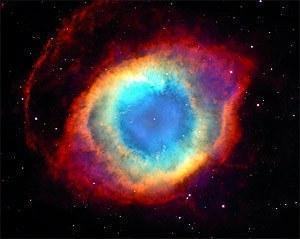
The fate of our planet in this scenario remained uncertain. Will it survive the expansion of its star? Many thought this impossible. But now Italian scientists have reported finding a planet that has survived a similar cataclysm.
The star V 391 Pegasi, studied by astronomers, once strongly resembled the modern Sun. However, it is possible that the influence of the gas-and-dust cloud located near this star made its "individual development" somewhat atypical, and it shed its outer envelope even before transitioning to helium fuel. Be that as it may, a planet now orbits V 391 Pegasi, which was once at approximately the same distance from it as Earth is from the Sun. True, the size of this planet is very large - three times larger than Jupiter.
Comments inexplicably perceive this news as encouraging – that Earth has a chance to survive even after the Sun's rebirth. It's hard to see the good in this – long before the time described, Earth will become an absolutely uninhabitable place. Usually, when discussing these prospects, it's mentioned that humanity will be living on other planets by then. Wonderful optimism! It would be better to solve all the preceding problems first – and then we can admire the exploding Sun from afar.
{ "translation": "The Life of Comets\nA hurricane sweeping through a graveyard of old airplanes would sooner assemble a brand‑new superliner from scrap than life would arise from its components as a result of random processes.\nChandra Vikramasinghe (1982)\nDo you remember the bombardment of comet Tempel in 2005? In recent years we have learned much about the composition of comets. A consequence of this has been the hypothesis of the origin of life on comets, put forward by a team led by Chandra Vikramasinghe. The discussion concerns the well‑known astronomer and astrobiologist, student and co‑author of Fred Hoyle¹, born in Sri Lanka. He now heads the astrobiology centre at Cardiff University in England. Vikramasinghe does not shy away from “slippery” topics on the edge of official science, studying so‑called nanobacteria², the phenomenon of red rain in Kerala³, or the spread of viruses by comets.\nThus, Vikramasinghe relies on data on the presence of water ice, diverse organics, and clay‑like layered silicates in comets, which can act as catalysts and sources of elements essential for life. Vikramasinghe considers that, thanks to radiogenic heating inside comets, water could have existed in liquid form for many millions of years. The total mass of clay‑like minerals in comets in our galaxy exceeds the mass of clays on Earth⁴, and therefore the emergence of life on comets is more probable than on Earth…\nTo evaluate the new hypothesis, the words of Vikramasinghe himself, placed in the epigraph, are useful. Twenty‑five years ago this scientist opposed the random origin of life. There is no reason to doubt the incredible improbability of the most primitive version of the abiogenesis hypothesis: the assumption that organic molecules accidentally assembled themselves into a living cell. As an alternative to the miracle of creation of life by a benevolent Creator, propose creation of life by the miracle of blind chance? Such a solution would satisfy only one who truly religiously believes in the absence of God.\nBut is another origin of life based on randomness possible? Natural selection is a mechanism that allows the accumulation of consequences of random (and lawful) favourable changes in self‑reproducing systems. Imagine a ball (say, a football) bouncing in place thanks to energy from some source. Can it, as a result of small jumps in random directions, end up on the roof of a multi‑storey building? The answer “no” is incorrect. If a staircase of many small steps leads to the roof, such an ascent becomes possible. But, having entered the entrance or climbed the first step, the ball can immediately roll back! Hence a mechanism is needed that “filters” changes leading in a certain direction. That filtering mechanism is natural selection.\nThus, under certain conditions, small undirected changes can ensure a radical transformation of the whole system. In accordance with the analogy considered, three conditions are necessary for the origin of life:\n— possibility of a full spectrum of transitions between non‑living and living systems;\n— possibility of passing from one state to another, close state, due to random or lawful causes;\n— action of natural selection, predominantly preserving and reproducing “more living” systems.\nAs far as can be judged from modern data, all three of these conditions were fulfilled on the young Earth and are fulfilled on many other planets.\nPlanets lie in the flow of energy scattered by the central star. If planets rotate, this leads to cyclic changes in the amount of energy falling on their areas. If they have an atmosphere and hydrosphere, uneven heating leads to circulation of these envelopes, involving the surface of the lithosphere as well.\nOn the surfaces of such planets chemical reactions proceed, including with various organic compounds⁵. Depending on the cyclic change of conditions, reversible reactions will pass from one equilibrium state to another and back. The same substance transformations can be provided by various competing reactions. From the standpoint of the origin of life, those among them that are characterized by autocatalysis are especially interesting. In general form such reactions can be represented as R + A → 2A, where A is an autocatalyst, a molecule promoting the synthesis of similar molecules, and R is the resource (resources) needed for this.\nOne of the most topical examples of autocatalytic reactions is the so‑called Butlerov formose reaction, which is intensively studied at the Institute of Catalysis of the Siberian Branch of the Russian Academy of Sciences. In this reaction, formaldehyde (CH₂O) in aqueous solution in the presence of lime undergoes oligomerization, forming monosaccharides: nCH₂O → (CH₂O)ₙ. This is an autocatalytic reaction: the presence of monosaccharides in the medium substantially increases the yield of the final product. Different monosaccharides possess different autocatalytic activity; depending on the conditions of the reaction, the composition of products formed in the course of the reaction changes. For example, in the presence of apatite (calcium phosphate, a common mineral) the formose reaction yields mainly ribose—a monosaccharide entering into the composition of RNA, DNA (with a small modification) and ATP⁶.\nThe most important consequence of autocatalysis is that it allows natural selection to become involved. The most efficient and stable autocatalytic reactions transform the greater part of available resources and will crowd out their analogues.\nThus, before natural selection launched the evolution of life, it ensured the evolution of “pre‑life”—geochemical autocatalytic processes. How could this “pre‑life” evolve? We do not yet know the specifics, but we can already guess much. Thus, apparently, between the levels corresponding to ribose synthesis and RNA synthesis there is a set of intermediate steps (according to the first of the conditions we formulated).\nRNA is a remarkable polymer. In modern organisms catalytic functions are performed by proteins, and information carriers are DNA molecules. However, the interaction of these compounds almost always occurs through RNA. RNA possesses catalytic activity (RNA catalysts are called ribozymes) and is capable of matrix self‑copying even in the absence of enzymes. Presumably, our biosphere passed through a stage called the “RNA world.” At that stage the stability and speed of cyclic geochemical processes were ensured by RNA molecules. As pre‑living systems of the “RNA world” improved, catalytic functions could pass to proteins, and functions of genetic information storage—to DNA, a more stable polymer.\nBut how do self‑reproducing living beings arise? What we call reproduction is a consequence of replication processes, and those processes trace their lineage to the phenomenon of autocatalysis⁷.\nDo not believe fairy tales about the “first organism” that arose by chance in the “primordial soup” and gave rise to all other living beings. Such a scenario is thermodynamically impossible. Life arises not in the form of separate organisms, but in the form of ecosystems ensuring the circulation of matter, as geochemical circulation of matter is transformed into biogeochemical circulation. Various “innovations” (ways of storing energy, matrix synthesis of polymers, cellular organization) that arise at one stage of geochemical circulation are transferred to other stages. Do you think it is chance that the Earth is populated by two groups of organisms (autotrophs and heterotrophs), for each of which the resources are the waste products of the other group? Their division of roles predates life itself and reflects the oscillating equilibrium between synthesis and decay with the change of day and night, ebb and flow, summer and winter…\nAnother argument: thermodynamically, life is a dissipative, entropy‑scattering process⁸. For its formation a stable flow of energy through the medium is needed. Can it be ensured on comets, given their small size and eccentric orbits? Hardly. The flow of radiogenic heat is directed from the comet nucleus into space and does not undergo fluctuations. Heating by the star changes cyclically, but its fluctuations are extreme. It is not excluded that comets and meteorites can transfer life (or “pre‑life”) from planet to planet, but abiogenesis itself must be linked to planets—with Earth or with some other planet about which it is easiest to judge by comparison with Earth.\nThus, Vikramasinghe has changed his point of view. His current views correspond to the conception of abiogenesis that he himself once ridiculed: the emergence of life as a result of the random combination of molecules. What caused such a turn? One assumption can be put forward.\nVikramasinghe insists that global epidemics are caused by viruses brought to Earth by comets. Thus, in his opinion, the Spanish flu (influenza of 1917–19) came to us, as did atypical pneumonia and avian influenza. Some arguments confirming this hypothesis have been collected, but there is also one circumstance that seems fatal to it. The genomes of potential cosmic visitors are in a certain kinship with other viruses clearly resident in hosts, and bear traces of evolution in their hosts. For avian influenza to infect both birds and mammals, it must undergo evolution in both. There are no birds or animals on comets. Where does such a virus come from? Vikramasinghe has to assert that such viruses arise by chance. If so, then one can believe that life itself arose by itself…\nLooking into the sky in search of causes and sources of life, one must not lose the ground under one’s feet. The Earth that sustains us is no less worthy of our attention.\n\n1 Sir Fred Hoyle—outstanding English astronomer, cosmologist and writer, proponent of the theory of the eternal Universe and author of the term “Big Bang.” Back to text\n\n2 A poorly studied form of life whose very existence is disputed by many authorities. Back to text\n\n3 A widely publicized case of the fall with rain of some particles supposedly resembling extraterrestrial organisms, which occurred in the Indian state of Kerala in 2001. Back to text\n\n4 I do not want to spend many words, but note: comets of the entire galaxy are compared not with planets of the same galaxy, but for some reason only with one! Back to text\n\n5 Formed easily enough (and destroyed) both under planetary conditions and in space. Back to text\n\n6 And here the phosphate groups needed for the synthesis of RNA, DNA and ATP are right next to each other! Back to text\n\n7 And at the other end of this series, at its highest level, is what we call love. Back to text\n\n8 As, for example, Benard cells or the Belousov–Zhabotinsky reaction. Back to text\n\nEarth: Being After Death\nWhether we like it or not, our existence is one of the many consequences of solar activity. The energy scattered in space, generated by thermonuclear reactions in the star, is partially captured by our planet. One of the effects of scattering this flow, a kind of “vortex” in it (or, more precisely, a dissipative structure), is terrestrial life. For now, the Sun shines thanks to the fusion of hydrogen nuclei into helium nuclei. The present size of the Sun is the result of a balance between the forces of gravity compressing stellar matter and the radiation pressure of thermonuclear synthesis energy pushing it outward.\nCurrently the Sun is approximately in the middle of its life path (in its present status as a yellow dwarf). According to existing estimates, in 1.1billion years the luminosity of our star will increase by 10%, and in 2.4billion years—by 40%. At that time the temperature on Earth will approach the Venusian temperature. In about 5.3billion years the Sun, having considerably exhausted its hydrogen fuel, will turn from a yellow dwarf into a red giant. Its size will reach the present Earth orbit, and its luminosity will increase 5200‑fold. Because the mass of the Sun will decrease by that time (the star constantly scatters its substance into space), the Earth will move slightly away from the luminary and will be approximately at the present orbit of Mars. After some more time the Sun will shed its envelope (which will turn into a planetary nebula), and its core will become a white dwarf.\n[IMG_1]\nThe fate of our planet in this scenario remained unclear. Would it survive the expansion of its luminary? Many considered this impossible. But now Italian scientists report that they have found a planet that survived such a cataclysm.\nThe star V391Pegasi studied by astronomers once very much resembled the present Sun. However, possibly under the influence of a neighboring gas‑dust cloud, its “individual development” became somewhat atypical, and this star shed its outer envelope even before switching to helium fuel. In any case, a planet now revolves around V391Pegasi which was once located at about the same distance from it as Earth is from the Sun. True, the size of this planet is very large—three times that of Jupiter.\nFor some reason commentators perceive this news as encouraging—Earth, it seems, has a chance to survive after the rebirth of the Sun. What is good about this is hard to understand—long before the described time Earth will become a place completely unfit for life. Usually, speaking of these prospects, they point out that humanity will by that time be living on other planets. Wonderful optimism! We should first solve all the preceding problems—and then we can admire the exploding Sun from afar.\n\nD.Shabanov. Life of Comets // Computerra, Moscow, 2007. – No.31 (699).\nD.Shabanov. Earth: Being After Death // Computerra, Moscow, 2007. – No.35 (703).\n" }