
Once More on the Nature of Ethnos, and on the Diversity of Supersystems. Column for Kompyuterra No. 126
For describing the diversity of supersystems, two of their characteristics are very significant. First: is the supersystem constructed from similar components — or from functionally different ones? Second: are there specific control structures in the supersystem — or are all its properties the result of&...
{ "title": "Does an ethnos have an independent existence? Reflections on disagreement with Lev Gumilyov", "summary": "Reflections on the nature of the ethnos, as well as on the diversity of supersystems", "body": " Does an ethnos have an independent existence? Reflections on disagreement with Lev Gumilyov Once again about the nature of the ethnos, as well as about the diversity of supersystems How do adaptive traits arise during evolution, or Which theory of evolution is supported by modern genetic data?"}
Column for Computerra #125 Column for Computerra #126 Column for Computerra #127
"Having realized the need to clarify the concept. Epiphenomenon for me is when 'they' behave the same simply because they are the same..." A.P. Rasnitsky Nevertheless, the discussion of my previous column, the one dedicated to criticizing Lev Gumilev's views on the nature of ethnos, showed that debates with reader-commentators can be useful. Some agreed with my logic, others vehemently rejected it. I came to the conclusion that the dichotomy "phenomenon - epiphenomenon" I used should have been discussed (and justified) in more detail. In this column, I want to take my time to reflect on what kinds of supersystems (systems composed of systems of interest to us) exist, and to which category ethnos should be attributed. Do you know what synchronicity is? A word introduced into circulation by Jung... Meaningful coincidences of our thoughts and external events that seem meaningful to us. Thinking about how systems built on horizontal connections function, I recalled the movement of starling flocks and, by the way, the tadpoles of common frogs. Oleksandr Pavlovych Rasnitsky wrote to me about starling flocks, explaining what he disagreed with in my previous column. I was just starting to write about it (not exactly what you are reading now, because the final text was influenced by the manifestation of synchronicity). Here, my wife, while switching channels on TV after the news, lands on the end of "Genesis." I am talking about the film by Claude Nuridsany and Marie Pérennou, where an African sorcerer (Sotigui Kouyaté) reflects on life, accompanying his reflections with magnificent documentary footage of wildlife. Not all the pronouncements of the life-wise sorcerer should be taken literally (there are many excessive simplifications and formally incorrect statements), but the overall feeling left by the film is magnificent. So, at the end of this film, starling flocks fly and schools of fish swim. If you haven't seen "Genesis," I recommend watching it, and I will risk posting a link to this excerpt (related to the premonition of death) here. Is the phenomenon of starling flocks or an epiphenomenon? A difficult question. Let's discuss it. Let's start with the fact that a starling flock is a system composed of individual birds. Look at the video carefully - and you will see that there are no leaders in the flocks shown. The complexity of their movements is not a result of commands from a single center, but a result of "horizontal" interactions between individuals. Two and a half years ago, I explained under what circumstances a separate level should be distinguished in the hierarchy of systems we adopt. I am genuinely surprised by authors of scientific and educational texts who discuss which set of biosystem levels should be considered "correct." What is an important problem: should only the cellular and organismal levels be distinguished as primary levels - or should the tissue level, the organ level, and the functional system level be located between them? The answer to this question can be given by referring to Aristotle's aphorism: "The whole is greater than the sum of its parts." The additive properties of systems are the sum of the corresponding properties of their components, and their emergent properties arise at the system level as a whole. The cause of emergent properties of a system lies in the interaction of its components. If we are interested in processes where we see several "floors," levels, at which new properties arise as a result of the interaction of adjacent components, we need to consider several levels of system hierarchy. Studying other processes, we will not see anything similar. Let me explain with examples. We are studying human reproduction. We are interested in the organismal level and the cellular level (at least germ cells). Tissues, organs, and organ systems are not important to us. From the perspective from which we view the studied process, nothing interesting happens at this level. However, if we see that the normal process is affected by some disruptions in the trophic (nutrition; metabolism) processes of the involved cells, emergent properties of the tissue and organ levels (and, accordingly, these levels of biosystem organization themselves) will immediately appear in our field of vision. Perhaps, when studying the cause of the detected anomalies, we will see that at the level of regulation of the organism as a whole, there is a shift towards increased activity of one of the physiological systems (for example, the musculoskeletal system in a professional athlete), and this affects other systems and their functions (for example, the reproductive system). In this case, it will be important for us to also consider the level of physiological systems. Having dealt with this, we focus on studying genealogies. If so, we are only interested in organisms... So what is the correct, privileged list of systems? It does not exist, just as there is no privileged frame of reference in Einsteinian physics: it all depends on how the observer interacts with the reality they observe. Let's not get bogged down in arguments about whether the systems we just talked about "exist," or whether a starling flock "exists" as a separate system. The argument about their "existence" is not an argument about the properties of systems, but an argument about the semantics of the word "exist." Discussing whether we can say anything definite about the "objective" world, independent of our cognition, will lead us away from the topic of today's discussion. I will remind you that we discussed it in sufficient detail earlier (both in this brief overview, and in these three columns, and even earlier). For me, it is enough that it is convenient for us to consider a starling flock as a system. Does it move as a coordinated whole? Then the flock possesses a certain quality that arises at its level, as a result of the unification of its parts. But, returning to the previous column, I recall that a system can be both a phenomenon and an epiphenomenon—a certain secondary, non-independent entity. To clarify this distinction, let's break down what kinds of systems (or supersystems, if we look at them from the previous "floor") can exist. Reflecting on this issue, I came to the conclusion that two characteristics are very important for describing the diversity of supersystems. First: is the supersystem built from similar components or from functionally different ones? Second: does the supersystem have specific controlling structures, or are all its properties the result of "horizontal" interaction of its components? Thus, a simple 2x2 matrix arises. Let's denote the types of supersystems by letters (from A to D) and characterize them using typical examples. The result is before you.
Differentiation of components
Management
Result of component interaction, only horizontal control signals
Presence of specialized control structures, descending control signals
Similar
Type A "Population"
Type C "State"
Functionally different
Type B "Biocenosis"
Type D "Organism"
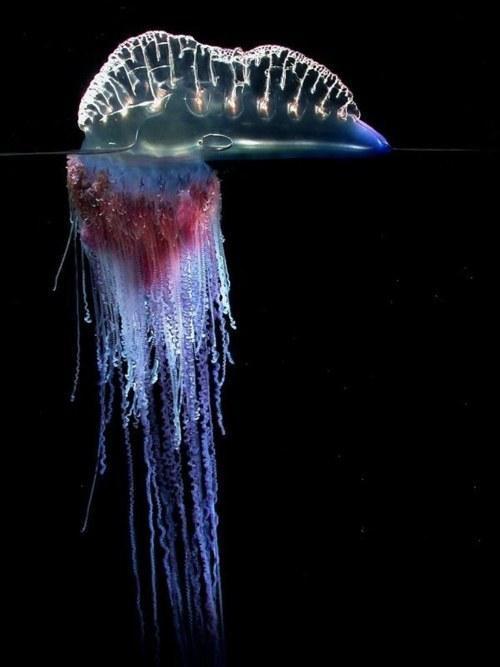
On the one hand, I drew a 2x2 matrix. On the other hand, the four types of supersystems characterized form a sequential series with increasing levels of differentiation of parts and integration of wholeness. Look. Homogeneous elements interacting with each other form a system of type A, a "population." If these elements are fundamentally different in functional terms, we will be dealing with a supersystem of type B. An example could be a biological community, a biocenosis. It includes plants that create organic matter, animals that eat other living organisms and their remains in pieces, and fungi and bacteria that break down organic compounds, consuming them in dissolved form. A biocenosis is a complex system that can often maintain its existence quite successfully under changing conditions. But it has no "main," controlling components. Controlling components can function, again, in systems with homogeneous and heterogeneous components. In human society, which consists of approximately identical components (people) as a whole, some begin to engage in management. Therefore, a system resembling a state (not a modern, high-tech one, but, for example, corresponding to its early examples in human history) we assign to the next type, C. Finally, the most complex type of supersystems known to us (type D) is realized in complex organisms. Here there are fundamentally different components and highly specialized control systems. For example, our body has three seriously different types of control systems: nervous, humoral, and immune. Are the four types I described separated by insurmountable gaps? No. For example, even individuals within a population can differ. The most homogeneous individuals are found in populations of asexual organisms, especially if they are represented by individuals of the same generation. Many populations are characterized by specific sex and age structures, "moving" towards supersystems of type B. Animal populations with complex behavior can be characterized by a hierarchical structure important for them, resembling systems of type C. Finally, even organisms, systems of type D, arose from populations of cells. Some modern colonies, such as siphonophore colonies, undergo a similar transformation process. I will not discuss the latter example due to space limitations, but if you don't know what entity is depicted in the photograph below, try to figure it out: it will be interesting for you. Portuguese man o' war (Physalia physalis) as an example of a Type D supersystem (photo source; unfortunately, the author of this page does not fully understand the nature of the photographed object) It's time to return to supersystems composed of humans. Demographic systems composed of humans belong to type A. Let's not forget that humans belong to two sexes and have different ages, but overall, this does not make them fundamentally different. A self-regulating market economy is a system of type B (the roles of sellers and buyers are fundamentally different, and there are generally no specialized management bodies). A planned economy and a state are closest to type C. But highly integrated systems belonging to type D cannot be formed from humans. Their formation would require too profound a loss of independence (including physiological independence) of each individual human. Yes, yes, for some reasons (which would be worth discussing separately), highly integrated levels of organization alternate with poorly integrated ones. I will draw attention to another interesting distinction between systems of types A and D. Systems of type A (and generally type B) usually do not have clear boundaries. Systems of type D (and, to some extent, type C) are delimited from their surroundings (sometimes by a state border, sometimes by membranes separating the internal and external environment). Relatively constant composition is characteristic only of systems of type D. Systems of type D can be unique, while systems of type A are always merely situational. Let's return to the difference between phenomena and epiphenomena. It seems to me that organisms and other highly integrated systems have independent physical and biological existence. They can be considered phenomena. Populations - as "loose" supersystems, lacking clear internal structure, constant boundaries, specific control mechanisms, and much else - are, it seems to me, epiphenomena. How to correctly consider systems of types B and C from this perspective, I do not know for sure. Where in the discussed scheme are ethnos located? Obviously, in the first cell, corresponding to type A. Humans form more integrated systems (economy, society, state), but these supersystems are associated with different interactions between elements than those that form an ethnos. Yes, and one more detail. One of the readers reproached me that, by considering humans as phenomena and ethnos as epiphenomena, I am pouring water on the mill of liberals. So, a reproach is a reproach - especially for a person who confidently chooses liberalism. (Disclaimer: liberalism is something fundamentally different from the views of a liberal-democratic party leader and/or criminal thugs.) Even more interesting was the reflection of another reader. He said: because "superhuman," ethnos-oriented values can contribute to the survival of the population (and individual people), they should have greater value than individual people. From my point of view, this is analogous to stating that since seat belts can save the lives of the driver and passengers, then in a moving car, the most valuable, most needed to be preserved is the seat belts, not the people. However, the conversation about values is a different conversation. I will only say here that it is not the person who is valuable for belonging to an ethnos or population, but the ethnos and population are valuable because they consist of people. A fundamental difference in integration, you see...
← Dmytro
←
Dmytro Shabanov
→
Does an ethnos possess independent existence? Reflections on disagreement with Lev Gumilev. Once more about the nature of ethnos, and about the diversity of supersystems. How do adaptive traits arise during evolution, or which evolutionary theory is supported by modern genetic data?
Column for KompyuTerr #125 Column for KompyuTerr #126 Column for KompyuTerr #127