Ecology: the biology of interaction. 4.01. Populations and their properties
Chapter 4. Population Ecology The concept «population» — one of the most important in biology. As often happens with key terms, it is used in various senses. To the definition of the concept «population» formal, concrete and theoretical approaches are possible. Formal...
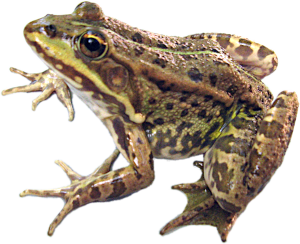
Ukrainian language (latest version) / Russian language (update discontinued) 3.16. (supplement) Biomes and Human Culture D. Shabanov, M. Kravchenko. Ecology: the Biology of Interaction Chapter 4. Population Ecology 4.02. Characteristics of Populations Chapter 4. Population Ecology 4.01. Populations and Their Properties As mentioned earlier (Table 1.5.1), the most important property that emerges at the population level is their potential immortality. We, humans, like all creatures that share the Earth with us, belong to populations whose histories stretch across the entire history of life on our planet. These populations have changed, adapting to shifting conditions, have split into parts and sometimes re‑merged. A huge number of such branches have died out, clearing the way for those that survived. Moving backward along this path, from the present to the past, would show how evolving populations become increasingly similar and coalesce, tracing back to the organisms that inhabited the first ecosystems on Earth. The concept “population” is one of the most important in biology. As with key terms, it is often used in various senses. According to Troian, formal, concrete, and theoretical approaches are possible for defining “population”. Formal: “a population is a group of living individuals delineated within a given space and time” (R. Pearl, 1937). Concrete – roughly the same, but applied to the field of study. Theoretical (genetic‑evolutionary). A population as a reproductive community. A set of individuals of one species reproducing over successive generations, occupying a defined habitat and relatively isolated from other similar assemblages. When discussing populations, one may also mention the concept of a Mendelian population – an isolated panmictic (freely interbreeding) group. Population – “the minimal self‑reproducing group of individuals of one species, inhabiting a defined space over an evolutionarily long period, forming an autonomous genetic system and creating its own ecological space” (A.V. Yablokov). From a systems‑theory perspective, the basis for distinguishing a system at any given level should be the presence of properties absent in its disparate parts – emergent properties. From this viewpoint, the approach offered (though not endorsed) by A.V. Yablokov can be considered most successful for defining a population: a population is “a spatially unified group of individuals of one species, as a whole responding to various factors, the form of the species’ existence under specific conditions.” A consequence of this property is the similarity of adaptations among its constituent individuals. Among the criteria that unite a population one can name the co‑existence of individuals, uniformity of their adaptations to the environment, unity of seasonal cycles and population dynamics, functional unity, and genetic distinctiveness. Another interesting feature of a population as a level of organization of biosystems is that it possesses its own evolutionary destiny. “Several years ago, in spring, the author of these lines found himself during the spawning of sharp‑snouted frogs near a small spawning pond – a pond among oak‑covered hills. It was twilight – ‘the hour between the wolf and the dog.’ Several thousand male frogs had gathered in the shallows. At that time they were transformed by a bright‑blue breeding coloration. The male’s song of the sharp‑snouted frog resembled the bubbling of water boiling with large bubbles. A polyphonic chorus of several thousand males merged into an incredible roar. This combined voice of thousands of individuals spread over the surrounding hills, summoning the unhurried, egg‑laden females… Approaching the spawning cauldron, a female finds a male and together they deposit her portion of eggs. Females that arrive later are forced to spawn on a continuous field of egg masses. Some of their eggs are fertilized by the milt (sperm) of males that are not “their” mates, but other males – those that fathered neighboring egg masses. After a short time, tadpoles emerge from the eggs, and the enzymes of hatching turn the gelatinous egg envelopes into liquid. Even if, during their development, the water level in the spring pond drops, the liquefied eggs will flow down the slope toward the receding water. And let tens of thousands of individuals (both tadpoles and eggs are individuals!) dry out on the pond’s margins – hundreds of thousands will fall into the water and continue to develop. As they grow they will exchange a variety of chemical and physical signals. When necessary, those tadpoles that get ahead will slow the growth of laggards to reduce competition for scarce resources. In other cases, conversely, the growth of differently aged and unrelated larvae will become synchronized – the population will itself choose the strategy of its optimal development. Thus, twilight, the frogs’ song, and fatigue shifted the perception of the person who approached the spawning cauldron. He felt that he was not standing before a certain number of organisms, but before an entity of a higher order – a population. A potentially immortal living object was at one of the key stages of its annual cycle. The production of new individuals justifies the loss of existing ones, because only through their flow and replacement does the existence of the population occur. One might think that a person cannot be noticed by this entity – he is at a lower level of being than it. Nevertheless, when the mesmerized person approached one of the spawning cauldrons, the singing frogs became frightened, fell silent, and hurriedly hid at the bottom. The voice of the population changed: it noticed the intruder and responded to his presence… You may say that such an experience of contact with a higher‑order entity belongs to the realm of psychiatry rather than biology. You are, of course, right. But, would you believe that this experience greatly helps to imagine a population as a single whole rather than a collection of separate individuals…” (D.A. Shabanov, 2007). When examining how individuals of a certain species inhabit a particular territory, one often sees that there is an entire hierarchy of population levels, with lower‑level populations forming parts of larger ones. For example, salmonid fish enter the spawning grounds of rivers in the Russian Far East. Studying their biochemical traits allows the identification of specific markers characteristic of spawning stocks in unnamed tributaries of mountain streams where they release their eggs. A smolt that has grown up in this place, if lucky, will eventually return to spawn here. The local spawning stock is a low‑level population. Moreover, it can be shown that individuals belonging to all spawning stocks reproducing in a given river are more closely related to each other than fish from different rivers. Salmonids of this species from the basin of a single river form a higher‑level population. Some Pacific salmon species spawn both in Asian rivers within Russia and in American rivers within Canada and the USA. Asian and American stocks of such fish are also populations. Finally, the highest‑level population is the species itself – return to the genetic‑evolutionary definition of population given at the beginning of this paragraph and see that the species fully fits it. Thus, in the hierarchy of biosystems, several “floors” may correspond to the population level of organization. Their number depends on the specifics of the population biology of the given species: their mode of reproduction, migration, and pair formation. For many organisms inhabiting a fragmented environment, the formation of metapopulations is characteristic. A metapopulation is a long‑lasting assemblage of subpopulations, each of which may exist only for a short time. Unity of metapopulations is maintained by the exchange of migrant individuals among subpopulations. Imagine a valley in which temporary water bodies appear and disappear. In each such water body, for a period of time, a subpopulation of frogs exists. When the water body disappears, the individuals that lived there become part of other groups. Although each local group exists only briefly, the encompassing metapopulation can persist indefinitely. If the considered population system inhabits a particular biogeocoenosis (i.e., “an ecosystem within the limits of a phytocoenosis”), the term “cenopopulation” can be used to denote it, especially frequently in studies of plant distribution. If a population consists of groups of individuals occupying different niches (e.g., terrestrial adults and aquatic larvae, etc.), the concept of “hemipopulation” introduced by V.N. Beklemishev is applicable to its parts. 3.16. (supplement) Biomes and Human Culture D. Shabanov, M. Kravchenko. Ecology: the Biology of Interaction Chapter 4. Population Ecology 4.02. Characteristics of Populations