
Congratulations to Olya Mikhailova and Nastya Kechedzhi on winning the competition!
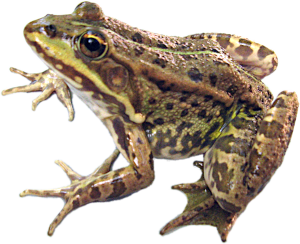
At the All-Ukrainian competition of student research papers in Zaporizhzhia, the work by Olga Mikhailova and Anastasia Kechedzhi on the study of gametogenesis in green frogs took III place. Notably, our works on frogs have been winning places at this competition for the third year in a row, and it is not so much about the frogs themselves as about those st...
At the All-Ukrainian competition of student research papers in Zaporizhzhia, the work by Olga Mikhailova and Anastasia Kechedzhi on the study of gametogenesis in green frogs took III place. In addition, another work from our university — by Irina Golovina on plant physiology — also took the same place. I am proud that works on frogs by members of our research group have been winning places at this competition for the third year in a row, and I know the reason lies not so much in the frogs themselves as in the students who work with them. Perhaps the collaborative style of work in our group also plays a role. Last year, in 2011, Anastasia Bondareva took II place at the same competition in Melitopol with her work on studying the size and shape of erythrocytes of hybrid green frogs of different ploidy. In 2010, Dmitry Dedukh took II place at the same All-Ukrainian competition in Melitopol with his work on studying lampbrush chromosomes in green frogs. One could, of course, investigate whether Olya and Nastya could have achieved a better result, but this is obviously unnecessary. I do not think that the difference between, say, II and III place is of fundamental significance. What matters is that they were able to show that their work, like Golovina's, is strong and belongs among the best works currently being carried out by students across all of Ukraine. By the way, I want to point out that the success of all the "frog" competition winners was based primarily on their own hard work. Alas, serious expenditures of labor and time were required for the analysis of lampbrush chromosome preparations, for the measurement of countless erythrocytes, and, of course, for the preparation and microscopy of squash preparations of frog tissues. Olya and Nastya spent more than a year of persistent attempts to develop the karyoanalysis technique. But once the technique started working reliably, results followed. To date, Olya has three papers (one in press), and Nastya has two. Here is the first of them; I hope to post something else on this site soon. The one paper by Olya in which Nastya did not participate is the result of work in Gaidary in the summer of 2011, during field practice. Olya had the willpower to spend almost all her time at the microscope (I wouldn't have managed that!). On the other hand, persistence alone does not bring success. It is important not simply to apply immeasurable effort to drilling a tunnel through rock. You need to drill the tunnel in a direction where you can actually reach something worthwhile. We are fortunate to be able to work with a remarkable natural phenomenon — the Siverskyi Donets center of green frog diversity. The more closely we study it, the more new and unexpected things we learn. I hope our group's work does not stop here... Congratulations! [IMG_1]