
Student Works after 2nd-Year Field Practice - 2012 (Part II)
Continued. Beginning here. Temnikov A.V., Vegerina A.O., Meleshko E.V., Mikhailova O.V. Study of ploidy and erythrocyte size in immature representatives of the Pelophylax esculentus complex. Klempert O.V., Us A.A. In an unusual population system of green frogs, erythrocyte size in Pelophylax esculentus is associated with sex...
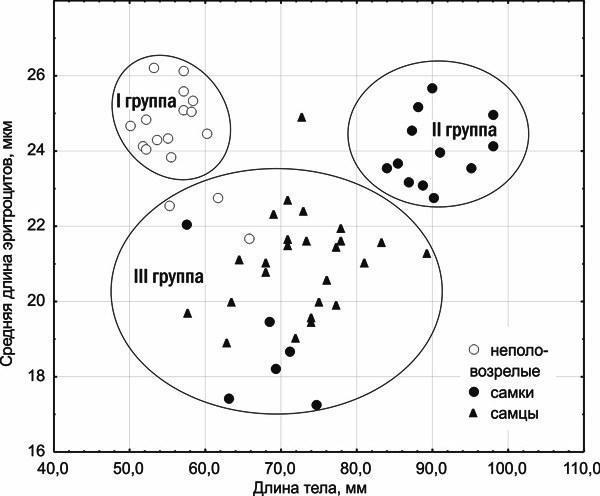
Student Works after 2nd-Year Field Practice - 2008 Student Works after 2nd-Year Field Practice - 2009 Student Works after 2nd-Year Field Practice - 2010 Student Works after 2nd-Year Field Practice - 2011 Student Works after 2nd-Year Field Practice - 2012 (Part I) Student Works after 2nd-Year Field Practice - 2013 Student Works after 2nd-Year Field Practice - 2014 Student Works after 2nd-Year Field Practice - 2015 Student Works after 2nd-Year Field Practice - 2016 Student Works after 2nd-Year Field Practice - 2017 Continued. Beginning here. Study of Ploidy and Erythrocyte Size in Immature Representatives of the Pelophylax esculentus Complex A.V. Temnikov, A.O. Vegerina, E.V. Meleshko, O.V. Mikhailova Kharkiv National University named after V.N. Karazin, Faculty of Biology, Department of Zoology, Freedom Square 4, Kharkiv, Ukraine. e-mail:anastasia.vegerina@gmail.com The hybridogenetic complex of green frogs (Pelophylax esculentus complex) includes two parental species: pool frogs Pelophylax lessonae (Camerano, 1882) and marsh frogs Pelophylax ridibundus (Pallas, 1771), which form hemiclonal hybrids - edible frogs Pelophylax esculentus (Linnaeus, 1758). In the Seversky Donets diversity center of green frogs, where our work was conducted, hybrids are represented by both diploid and triploid individuals. In studies examining samples of frogs with a high proportion of immature individuals, the recorded proportion of triploids among hybrids was higher, exceeding 30% (Bork et al., 2004), than in samples consisting exclusively of sexually mature frogs, approximately 11% (Gladkova et al., in this collection). One may hypothesize that, since triploidy is a cytogenetic anomaly, natural selection reduces their proportion in older age classes compared to younger ones. Ploidy can be approximately determined by erythrocyte size (Plotner, 2005). The boundary between erythrocyte sizes of diploids and triploids in sexually mature individuals is 26 micrometers (Bondareva, Shabanov, 2010). In immature frogs, erythrocyte size may depend on body length and may not reach this boundary (Iskenderova, Chebukina, in this collection). In this connection, we hypothesized that in samples of immature frogs the proportion of triploids may be higher than among adults, and erythrocytes of young triploids are smaller than those of adults. We examined endothelial samples and blood smears from 17 immature Pelophylax esculentus caught in late June 2012 in the floodplain of the Seversky Donets River near the KhNU biological station named after V.N. Karazin. We measured their erythrocytes and determined karyotypes in squash preparations using the method of V.V. Klymenko (Klymenko, 2001). One day prior to sacrifice, the frogs received an injection of colchicine solution (2.0 mg/ml) at 0.3 ml per individual. Body length of the studied frogs ranged from 3.92 to 5.44 cm; no relationship between body size and erythrocyte size was established. Karyological analysis revealed 16 diploids and 1 triploid. Mean erythrocyte sizes of diploids ranged from 19.02 to 23.20 micrometers; the triploid's erythrocyte size was the largest at 23.83 micrometers, corresponding to erythrocyte sizes of diploid sexually mature individuals. In other words, the hypothesis that the proportion of triploids among juveniles is higher than among adult individuals was not confirmed by this sample. The hypothesis that the boundary between diploid and triploid erythrocyte sizes in small immature individuals is shifted toward smaller values was confirmed. Summary. It was hypothesized that in samples of immature green frogs the percentage of triploids may be higher than in samples of adults, and young triploids red blood cells are smaller than adults. As the result it wasn't shown that the share of triploids is bigger in sample of subadult frogs, but it was confirmed that boundary between sizes of diploid and triploid red blood cells is moved to decrease. This work was carried out as a student research project by 2nd-year students (the first two authors) during field practice in vertebrate zoology. The authors thank Associate Professor D.A. Shabanov for scientific supervision. Temnikov A.V., Vegerina A.O., Meleshko E.V., Mikhailova O.V. Study of ploidy and erythrocyte size in immature representatives of the Pelophylax esculentus complex // "Biology: from molecule to biosphere". Proc. VII Internat. Conf. Young Scientists. - Kharkiv: FOP Shapovalova T.M., 2012. - P. 276-277. In an Unusual Population System of Green Frogs, Erythrocyte Size of Pelophylax esculentus Is Associated with Sex O.V. Klempert, A.A. Us Kharkiv National University named after V.N. Karazin, Faculty of Biology, Freedom Square 4, Kharkiv, Ukraine e-mail: alena-us@yandex.ru; vklempert@yandex.ru Measurement of erythrocyte size is a widely used method for rapid ploidy diagnosis of Pelophylax esculentus (Linnaeus, 1758), hybrids of Pelophylax lessonae (Camerano, 1882) and Pelophylax ridibundus (Pallas, 1771). Together the named parental forms and their hybrids constitute the Pelophylax esculentus complex - the group of green frogs. In triploid P. esculentus, erythrocytes are larger than in diploid individuals; however, in different population systems the boundary between diploid and triploid erythrocytes may differ (Plotner, 2005). For the vicinity of the KhNU biological station (Zmiyiv district, Kharkiv region) the boundary size corresponds to 26 micrometers (Bondareva, Shabanov, 2010). In our study we investigated erythrocyte size in P. esculentus from a pond in the vicinity of the settlement of Zhovtnevoe (Vovchansk district, Kharkiv region). In this pond, a population system was previously described in which triploids (determined by flow cytometry, a more precise method than erythrocyte size measurement) constitute a substantial proportion. In June 2012 we obtained a sample of frogs from the named population system (60 individuals, 17 of which were immature, 25 males and 18 females). For each frog we prepared a blood smear using standard methods. The smears were photographed and erythrocyte sizes were determined from digital photographs and processed in Statistica 8.0. Results are shown in Fig. 1. [IMG_1] Fig. 1. Dependence of erythrocyte length in green frogs on body length. Three groups of individuals are visible. Group I consists of immature individuals having erythrocyte sizes similar to Group II, which consists of females. Erythrocyte sizes of these groups are smaller than those of triploid P. esculentus from other habitats in Kharkiv region. Group III consists predominantly of males and has erythrocytes of smaller size. Obviously, some unidentified factor closely associated with sex affects erythrocyte size in the studied system. It may be hypothesized that each group shown in Fig. 1 includes both diploids and triploids, but the available data are insufficient to identify triploids. The characteristics of frogs in the population system of the settlement of Zhovtnevoe require further investigation. Summary. In this work the size of erythrocytes of Pelophylax esculentus was investigated. It was determined that some unidentified factor, closely associated with sex affects the size of the red blood cells in the studied system. It is assumed that the sample includes both the diploids and the triploids, but available data for the identification of triploids is not enough. This work was carried out during field practice in vertebrate zoology. The authors thank Associate Professor of the Department of Zoology and Animal Ecology D.A. Shabanov for scientific supervision and E.V. Meleshko for assistance in conducting the work. Klempert O.V., Us A.A. In an unusual population system of green frogs, erythrocyte size of Pelophylax esculentus is associated with sex // "Biology: from molecule to biosphere". Proc. VII Internat. Conf. Young Scientists. - Kharkiv: FOP Shapovalova T.M., 2012. - P. 260-261.
In an Unusual Population System of Green Frogs, Erythrocyte Size of Pelophylax esculentus Is Associated with Sex O.V. Klempert, A.A. Us Kharkiv National University named after V.N. Karazin, Faculty of Biology, Freedom Square 4, Kharkiv, Ukraine e-mail: alena-us@yandex.ru; vklempert@yandex.ru Measurement of erythrocyte size is a widely used method for rapid ploidy diagnosis of Pelophylax esculentus (Linnaeus, 1758), hybrids of Pelophylax lessonae (Camerano, 1882) and Pelophylax ridibundus (Pallas, 1771). Together the named parental forms and their hybrids constitute the Pelophylax esculentus complex - the group of green frogs. In triploid P. esculentus, erythrocytes are larger than in diploid individuals; however, in different population systems the boundary between diploid and triploid erythrocytes may differ (Plotner, 2005). For the vicinity of the KhNU biological station (Zmiyiv district, Kharkiv region) the boundary size corresponds to 26 micrometers (Bondareva, Shabanov, 2010). In our study we investigated erythrocyte size in P. esculentus from a pond in the vicinity of the settlement of Zhovtnevoe (Vovchansk district, Kharkiv region). In this pond, a population system was previously described in which triploids (determined by flow cytometry, a more precise method than erythrocyte size measurement) constitute a substantial proportion. In June 2012 we obtained a sample of frogs from the named population system (60 individuals, 17 of which were immature, 25 males and 18 females). For each frog we prepared a blood smear using standard methods. The smears were photographed and erythrocyte sizes were determined from digital photographs and processed in Statistica 8.0. Results are shown in Fig. 1. [IMG_1] Fig. 1. Dependence of erythrocyte length in green frogs on body length. Three groups of individuals are visible. Group I consists of immature individuals having erythrocyte sizes similar to Group II, which consists of females. Erythrocyte sizes of these groups are smaller than those of triploid P. esculentus from other habitats in Kharkiv region. Group III consists predominantly of males and has erythrocytes of smaller size. Obviously, some unidentified factor closely associated with sex affects erythrocyte size in the studied system. It may be hypothesized that each group shown in Fig. 1 includes both diploids and triploids, but the available data are insufficient to identify triploids. The characteristics of frogs in the population system of the settlement of Zhovtnevoe require further investigation. Summary. In this work the size of erythrocytes of Pelophylax esculentus was investigated. It was determined that some unidentified factor, closely associated with sex affects the size of the red blood cells in the studied system. It is assumed that the sample includes both the diploids and the triploids, but available data for the identification of triploids is not enough. This work was carried out during field practice in vertebrate zoology. The authors thank Associate Professor of the Department of Zoology and Animal Ecology D.A. Shabanov for scientific supervision and E.V. Meleshko for assistance in conducting the work. Klempert O.V., Us A.A. In an unusual population system of green frogs, erythrocyte size of Pelophylax esculentus is associated with sex // "Biology: from molecule to biosphere". Proc. VII Internat. Conf. Young Scientists. - Kharkiv: FOP Shapovalova T.M., 2012. - P. 260-261.
Tsyklauri O.Yu., Gryaznova A.V. Dependence of female green frog fecundity on body size // "Biology: from molecule to biosphere". Proc. VII Internat. Conf. Young Scientists. - Kharkiv: FOP Shapovalova T.M., 2012. - P. 285. Study of Fluctuating Asymmetry in River Perch K.P. Vinogradova, E.N. Belousova, Yu.V. Sakun Kharkiv National University named after V.N. Karazin, Faculty of Biology, Department of Human and Animal Physiology, Freedom Square 4, Kharkiv, Ukraine e-mail: julija.sakun@gmail.com In this work we assessed the fluctuating asymmetry of river perch (Perca fluviatilis L., 1758) from the Seversky Donets River. Fluctuating asymmetry (FA) represents minor non-directional deviations from strict bilateral symmetry. FA is a consequence of developmental instability. We studied a sample of 257 river perch caught by seine net on June 12, 13, and 23, 2012 at three sandy shallows of the Seversky Donets River near the KhNU biological station (village of Gaidary, Zmiyiv district, Kharkiv region). For each individual, body length L (in mm), number of scales (S) along the lateral line on the right and left sides, and number of rays in the pectoral (P) and pelvic (V) fins on the right and left sides were determined. Scale and ray counts were performed under a binocular microscope. Fish were divided into three size classes; from each class a representative subsample was taken in which age was determined by counting annuli on scales. It was established that size classes correspond to age classes. Data were processed in Statistica. Size class I (age 0+) consisted of 196 individuals with mean body length 39.5, min-max 30-57 mm. II (1+): 51 individuals, mean 89.6 (74-116). III (2+): 10 individuals, mean 137.2 (123-160). For all three studied traits (S, P, and V) we recorded variation consistent with FA distribution (the majority of individuals are symmetric, no directional asymmetry, and more pronounced deviations from symmetry occur less frequently). Manifestations of FA for all these traits are positively correlated by Spearman (0.30) with each other (p<0.05). This provides grounds to use symmetry/asymmetry in the studied traits as a measure of developmental stability/instability. Individuals of age 0+ and 1+ were divided by size into slow-growing and fast-growing. Fast-growing individuals are significantly (p=0.02) more symmetric than slow-growing ones. Overall, perch of age 1+ show a non-significant tendency (p=0.11) to be more symmetric than perch of age 0+. Both of these observations are likely explained by the fact that relatively more asymmetric individuals are more likely to be eliminated by natural selection. In other words, selection favors individuals whose development proved more stable. This study was carried out as a student research project by 2nd-year students during field practice in vertebrate zoology. The authors thank Associate Professor D.A. Shabanov for supervising this work, G.L. Goncharov for methodological guidance, and A.N. Khomenko for assistance in collecting material. Summary: In our investigation, we described the fluctuating asymmetry of Perca fluviatilis. We found, that the fluctuating asymmetry can be used as a measure of stability or instability of development. We analyzed the Perca fluviatilis by the number of rays in the pectoral and pelvic fins, and the number of scales along the lateral line. Having been reported manifestations of selection against asymmetric individuals. Vinogradova K.P., Belousova E.N., Sakun Yu.V. Study of fluctuating asymmetry in river perch // "Biology: from molecule to biosphere". Proc. VII Internat. Conf. Young Scientists. - Kharkiv: FOP Shapovalova T.M., 2012. - P. 248-249.
Comparison of Weight and Size of Green Frog Tadpoles from Iskov Pond and the Seversky Donets River V.A. Gubenko, A.V. Mikhailova Kharkiv National University named after V.N. Karazin, Faculty of Biology, Department of Genetics and Cytology, Freedom Square 4, Kharkiv, Ukraine. e-mail: valya1707@mail.ru The hybridogenetic complex of green frogs (Pelophylax esculentus complex) is a group of great interest to researchers. This is related to their capacity for interspecific hemiclonal hybridization, the possibility of using them for bioindication, and other reasons. For their further study, data on the growth and development of all frog life stages that can be considered normal are necessary. In our work we compared the development of green frog tadpoles from two different habitats - Iskov Pond (village of Gaidary, Zmiyiv district, Kharkiv region) and the Seversky Donets River downstream of the city of Zmiyiv. From Iskov Pond, 50 tadpoles caught on 01.07.2011 and 120 tadpoles caught on 07.07.2011 were studied. In the Seversky Donets River, 56 tadpoles were caught on 08.07.2011. Tadpoles were kept in clean water for 24 hours and fixed in 3% formalin. In fixed tadpoles, hind limb developmental stages (Vinogradskaya et al., 2010), total body length (TL), body length (BL), and hind limb length (LL) (McDiarmid, Altig, 1999), as well as weight (W) were determined. Results were processed in Statistica. We established that tadpoles collected in Iskov Pond on 07.07.2011 are at later developmental stages than tadpoles collected on 01.07.2011. In the second sample, early developmental stages had disappeared and the number of late stages had increased. Development of tadpoles from the river lags behind that of pond tadpoles. For tadpoles from Iskov Pond and the river, early developmental stages are similar in body length, while late stages differ. The difference in length at stage 10 is significant, p=0.04 (tadpoles from Iskov Pond are longer than tadpoles from the floodplain). Furthermore, tadpoles from the floodplain are heavier than tadpoles from Iskov Pond. This difference is maintained both when comparing tadpoles of the same body length and when comparing tadpoles at the same developmental stage. For tadpoles from Iskov Pond the dependence of weight on body length has the form W = 12.7 - 0.068 x TL + 0.0001 x TL2, from the river: W = 14 - 0.086 x TL + 0.0002 x TL2. Summary. Hybridogeneous complex of green frogs is a group, are of great interest for researchers. For further study, data on the growth and development of all stages of frogs, which can be considered normal. In our study, we compared the development of tadpoles of green frogs from two different habitats - Iskov pond and Seversky Donets River downstream, the Zmiyov. For tadpoles from the pond Iskov dependence on the length of the body weight of the form W = 12,7 - 0,068 x TL + 0,0001 x TL2, from the river: W = 14 - 0,086 x TL + 0,0002 x TL2. This work was carried out as a student research project by 2nd-year students during field practice in vertebrate zoology. The authors sincerely thank Associate Professor D.A. Shabanov for scientific supervision. Gubenko V.A., Mikhailova A.V. Comparison of weight and size of green frog tadpoles from Iskov Pond and the Seversky Donets River // "Biology: from molecule to biosphere". Proc. VII Internat. Conf. Young Scientists. - Kharkiv: FOP Shapovalova T.M., 2012. - P. 253-254.
Comparison of the Number of Photoreceptors per Unit Area of the Retina in Diploid and Triploid Edible Frogs (Pelophylax esculentus) A.V. Petryk, A.N. Litvin Kharkiv National University named after V.N. Karazin, Department of Zoology and Animal Ecology, Freedom Square 4, Kharkiv, 61077, Ukraine e-mail: arseniypetrik@gmail.com Pelophylax esculentus (Linnaeus, 1758) is a hybrid formed by crossing two parental species of green frogs: Pelophylax lessonae (Camerano, 1882) and Pelophylax ridibundus (Pallas, 1771). P. esculentus are represented by both diploid and triploid individuals, which have identical body sizes (Shabanov, Litvinchuk, 2010). It is known (Plotner, 2005) that triploidy in frogs leads to enlargement of their erythrocytes; whether the sizes of their other cells change remains unstudied. Among the tissues whose functioning should be substantially influenced by cell size is the retina. The aim of our work is comparison of the size of photoreceptor cells and their density in the retina of diploid and triploid P. esculentus. We used an adapted method for retinal fixation and dissociation developed for studying primate retinas (Jonas et al., 1990). From sacrificed frogs the eyeball was removed and fixed for 24 hours in a solution of 0.5% glutaraldehyde and 4% paraformaldehyde. The eyeball was then dissected and a section of the retina isolated, which was placed in an ultrasonic sonicator with buffer solution. The retinal layer was separated from the pigment layer and photographed using a USB camera. The size and area of photoreceptors were measured on the resulting images using the Axio Vision software. Statistical data processing was performed using standard methods with the Student t-test. The study showed that photoreceptors in the retina are distributed in a radial-elliptical pattern, in accordance with the shape of the frog's pupil. Measurements revealed differences in the area of triploid and diploid receptors in analogous retinal regions. Differences in area range from 4 to 21 square micrometers, and in size from 2 to 8 micrometers. Mean area and size of a diploid photoreceptor are 2.5 square micrometers and 1.8 micrometers; of a triploid photoreceptor 4.2 square micrometers and 2.5 micrometers. Thus, the mean number of receptors per 1000 square micrometers is: 408 in diploid individuals and 367 in triploid individuals. This indicates that photoreceptor density in triploids is lower than in diploids by an average of 11.1%. The differences are statistically significant. Conclusion: triploid Pelophylax esculentus have lower visual acuity than diploids. Given the small size of the studied sample, the precision of the demonstrated difference in photoreceptor density should be confirmed by further studies on enlarged Pelophylax esculentus samples. Summary. Work to assess the significance of the influence of ploidy frog Pelophylax esculentus on the size and density of photoreceptors in the retina layer using the method of fixation and separation of the retina. Obtained significant differences in the size, area and density of red blood cells in diploid and triploid frogs. Thus, the average number of receptors on 1000 mkm2 of a diploid 408 pcs., the triploids 367 pcs. This indicates that the density of photoreceptors triploids lower than diploid, an average of 11.1%. From this we can conclude that the triploid Pelophylax esculentus have the quality of lower than diploids, but to clarify the percentage difference makes sense to increase the sample. This work was carried out during field practice in vertebrate zoology. The authors thank Associate Professor D.A. Shabanov for scientific supervision of this work, as well as M.S. Girich, E. Meleshko, E.A. Shumeiko, and M.Yu. Kolesnikova for assistance in conducting the work. Petryk A.V., Litvin A.N. Comparison of the number of photoreceptors per unit area of the retina in diploid and triploid edible frogs (Pelophylax esculentus) // "Biology: from molecule to biosphere". Proc. VII Internat. Conf. Young Scientists. - Kharkiv: FOP Shapovalova T.M., 2012. - P. 273-274.