
Tropiduridae
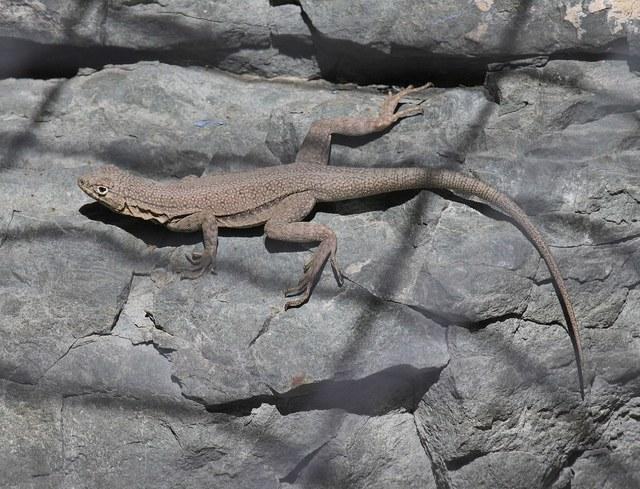
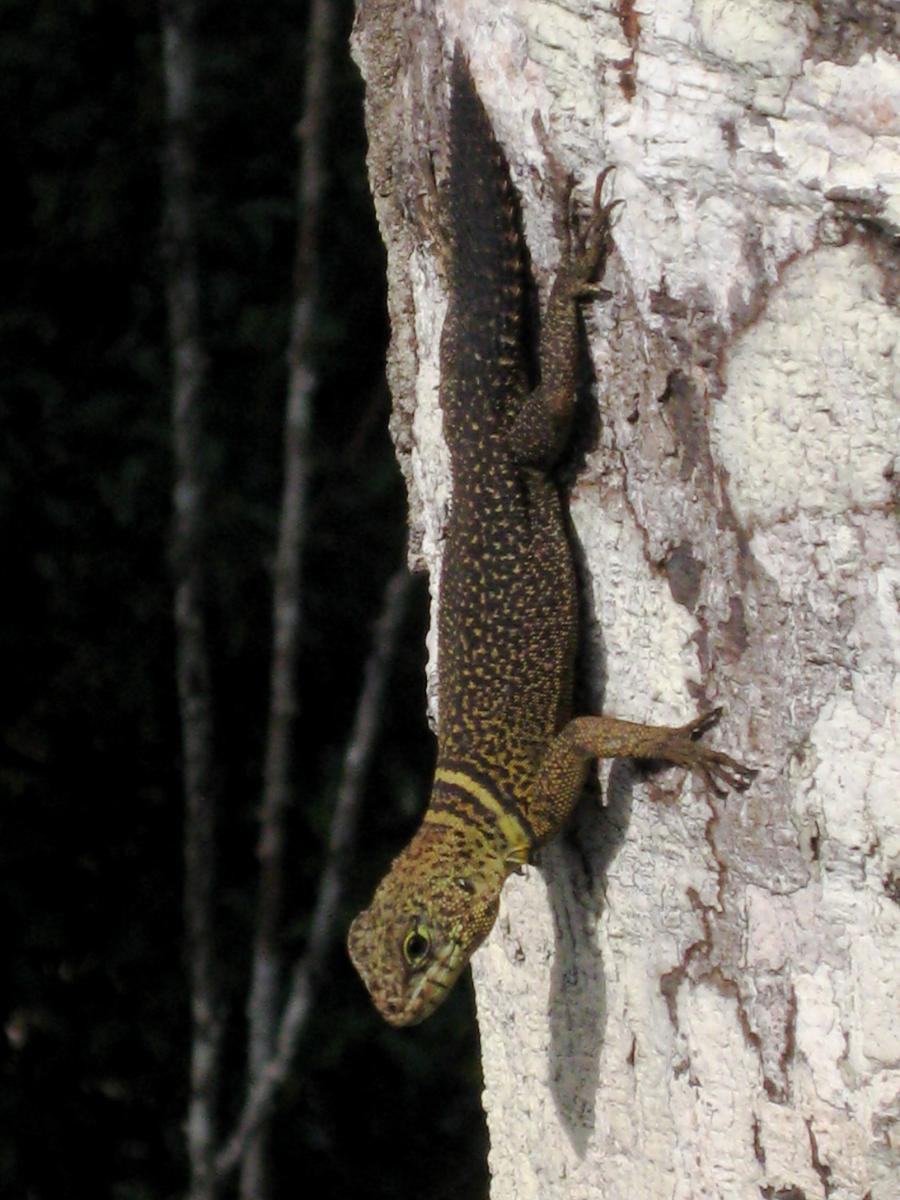
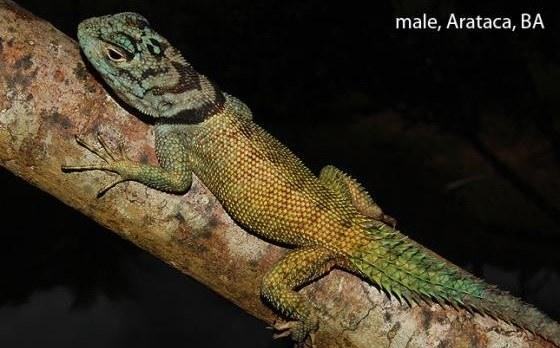
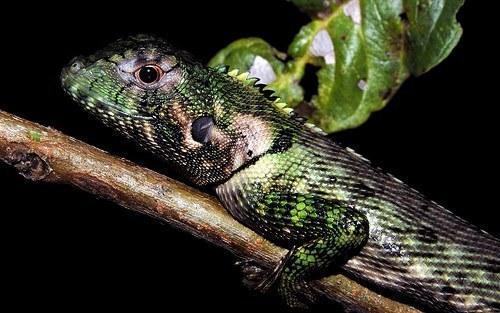
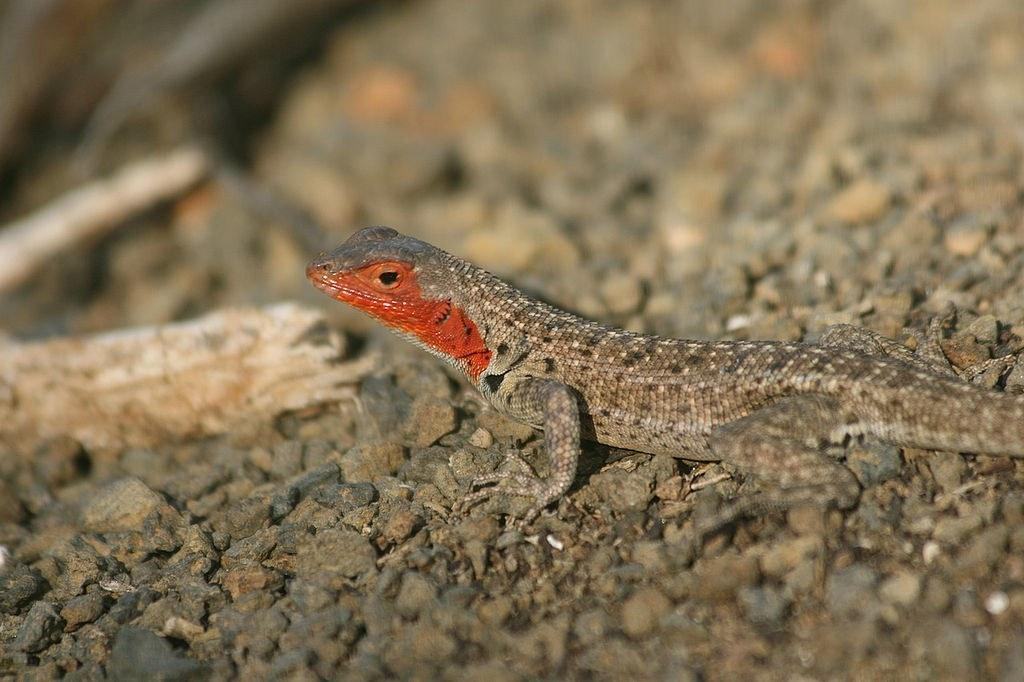
The family Tropiduridae includes 8 genera: Eurolophosaurus, Microlophus (Pacific iguanas), Plica (Plicas), Stenocercus (Slender-tailed iguanas), Strobilurus (Strobilurans), Tropidurus (Keeled-tailed iguanas or Tropidurans), Uracentron (Spiny-tailed iguanas), Uranoscodon (Uranoscodons). . Distribution: all of South America, the West Indies islands, the Galápagos Islands. They live across a wide range of habitats: lowland tropical forests, savannas, deserts, grasslands, and high-altitude regions. Some prefer rocky surfaces, others sand, and others can readily be called arboreal. They are diurnal and terrestrial in their habits. A small number of species have adapted to the cold climates of the Andes and Tierra del Fuego. Most are oviparous, although ovoviviparous species also occur within the family. They feed on insects, small invertebrates and vertebrates; some species consume flowers, fruit and other vegetation. The size of lizards in this family ranges from 4 to 15 centimetres. A distinguishing feature from chameleons and agamas is the presence of teeth. The snout is short and not elongated. The eyes, positioned on the sides of the head, are clearly visible from above. There is a small dorsal crest, most commonly beginning at the back of the head and running to the middle of the back. In some lizards the tail can be almost twice as long as the body (Microlophus theresioides). Some also have specific colouration that differs greatly between the anterior and posterior parts of the body (Uracentron flaviceps). Another characteristic of the family is that females have brighter colouration than males, which is especially pronounced during pregnancy. Males, for their part, are highly territorial. Microlophus theresioides Uracentron flaviceps Strobilurus torquatus Plica umbra Microlophus grayii Until recently, the family Tropiduridae was not included in the infraorder Iguania until 1989. Previously, Leiocephalidae and Liolaemidae were part of this family. Sources: 1.
Vitt L.J., Caldwell J.P. Herpetology.
An Introductory Biology of Amphibians and Reptiles. — Academic Press, 2009.
2.
Higher Taxa in Extant Reptiles 3.
Arkive