
Mysterious Microorganisms from Loki’s Castle
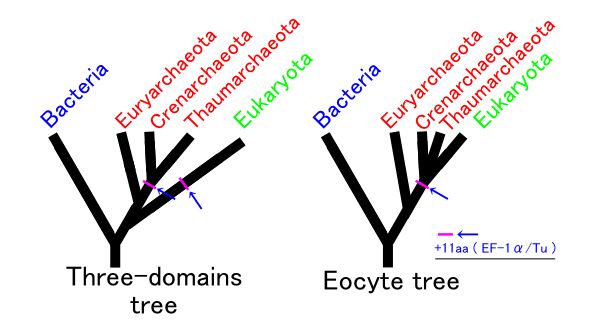
The origin of eukaryotes is one of the most difficult problems in evolutionary biology. How did complex eukaryotic cells appear in evolution? The key to this question, still without a final answer, may be hidden on the ocean floor. Traditionally, the classical three-domain system divides all cellular organisms into bacteria, archaea, and eukaryotes. However, the recent discovery of a new archaeal group forced researchers to reconsider this system and view evolution differently. After genomic analysis of the discovered archaea, a hypothesis was proposed that archaea are the ancestors (or closest stem relatives) of eukaryotes. Metagenomic analyses supported this view, showing that in phylogenetic trees the closest relatives of eukaryotes are recently described archaea belonging to Lokiarchaeota. [IMG_1] Fig. 1. Three-domain (left) and two-domain variants of the tree of life. In the classic three-domain version, eukaryotes split from a common ancestor with archaea before divergence of modern archaeal groups. In the two-domain version, eukaryotes are one branch within Archaea. Lokiarchaeota: discovery history. In bottom sediments at 3283 m depth in the Atlantic Ocean near the hydrothermal vent “Loki’s Castle,” microorganisms of the archaeal superkingdom were detected. The Loki’s Castle area hosts a unique ecosystem inhabited by microorganisms and animals. A sediment sample taken there for genomic study was used to determine which organisms may live in that environment. [IMG_2] Fig. 2. Loki’s Castle. [IMG_3] The microbial world is extremely diverse, and microorganisms currently known likely represent only a small fraction of those that exist. Most known forms are organisms that can be cultivated, including many associated with host microbiomes. But the majority of microbes are not readily cultivable, which limits direct physiological study. Metagenomics has therefore become crucial. Metagenomic approaches allow reconstruction of genomes directly from environmental DNA. These data revealed archaeal lineages with genes previously considered characteristic of eukaryotes, including proteins involved in cytoskeletal dynamics and membrane remodeling. This finding suggests that key components of eukaryotic cellular complexity may have evolved in archaeal ancestors before full eukaryotic cells emerged. Thus, Lokiarchaeota and related lineages represent an important model for understanding eukaryogenesis and support a two-domain interpretation of life’s deep phylogeny. [IMG_4]