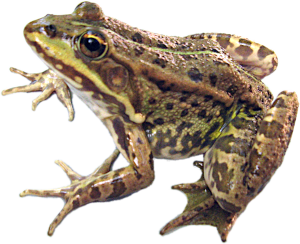
Anomalous Frogs and Environmental Health: Searching for New Approaches at the Europe-Asia Border. Column for Компьютерры #120
Let us hope that researchers of amphibian anomalies will navigate between Scylla of science that works on the principle of «What would you like?» and Charybdis of immersion in a problem which is interesting only to them.
← Dmytro Shabanov → A philosophical primer: what we know, what we will never find out, and in which cases we are forced to make do with adopting presumptions Anomalous frogs and the health of the environment: the search for new approaches at the boundary of Europe and Asia On skin colour: an attempt to discuss one human adaptation, with the grounding of far-reaching conclusions about the specifics of the action of ecological factors Column for Computerra #119 Column for Computerra #120 Column for Computerra #121 September turned out to be a completely crazy month for me.
Among other things, I dropped out of writing columns entirely. In a month I wrote only one, and a philosophical one at that (which, however, captivated many readers).
At the end of September, however, I took part in the work of a school-conference held in Yekaterinburg, at the Ural Federal University.
In telling you about the problems of our professional community, I hope I will also be able to touch on some questions interesting to thoughtful people far from our narrowly specialized activity. Why were developmental anomalies discussed precisely at the Ural University? In Sverdlovsk-Yekaterinburg the strongest team of zoologists and ecologists worked and works. It is here that the school of one of the most authoritative Soviet ecologists, Stanislav Semyonovich Schwartz, has been preserved. Several local scientists are serious authorities for me. When I was beginning to study the population ecology of amphibians, one of the sources of my inspiration was the work of Vladimir Georgievich Ishchenko (good health to him!). If you have read my previous columns, you know of my high regard for the epigenetic theory of evolution; Alexey Gennadyevich Vasiliev is a leader in applying this theory to population-ecological research. And the "owner" of this conference (thanks to him and all his staff!) was Vladimir Leonidovich Vershinin, head of a group that seriously studies amphibian anomalies. Herpetology (the science of "reptiles" in the old broad sense, that is, of amphibians and reptiles), like most other sciences, is going through hard times in the post-Soviet space. To describe the current state of the herpetofauna and track its changes, constant painstaking work is needed. To those who call the tune — defining promising topics and distributing grants — its necessity is incomprehensible. It brings no profit, and to make it profitable is very difficult. To engage in science a high intellectual level and a lively interest in obtaining new knowledge are required. Unfortunately, people who possess these qualities often turn out to be unprepared to survive on a beginning scientist's salary. How is the unity of scientific communities maintained? With the help of conferences. Young and mature representatives of some science gather, exchange reports, embrace, take photographs, drink alcoholic beverages and discuss pressing problems. Such meetings help one understand one's place in the general process and enrich one with ideas. The previous conference of the Russian Herpetological Society, which bears the name of the Petersburg-Kharkiv classic of herpetology Alexander Mikhailovich Nikolsky, took place a year ago in Minsk. It was there that the idea was born of holding schools that would unite the efforts of scattered specialists in solving carefully selected problems. This idea belongs to Lev Yakovlevich Borkin — the most authoritative researcher of amphibians in the post-Soviet space, a historian of science and public figure. The idea consisted of gathering specialists from different countries and jointly developing an optimal approach to solving a certain category of tasks. One may hope that such a united scientific group will be able to survive in our complex world, attract funding, and ultimately preserve and develop key scientific schools. It was decided to begin precisely with the problem of developmental anomalies. It is theoretically interesting, opens possibilities for practical application, and is the "warhorse" of Vershinin's group in Yekaterinburg. …Sometimes among the young froglets bred in some water body, anomalous individuals appear: with extra legs, without eyes, with a twisted spine, or with internal organs not transformed during metamorphosis. Most of them quickly die; some live a long time, frightening chance observers. Anomalous individuals are often clumsy and prove more noticeable than their correctly formed kin. What will the typical reader say on seeing the many-legged skeleton in the image below? "A Chernobyl frog." This is merely a prejudice. In the Chernobyl zone there is much that is incomprehensible and interesting, but, contrary to the widespread mythology, there are no deformed frogs (or other animals). A cleared specimen of an anomalous frog; the bones are stained red and the cartilage green (photo source) And it also happens like this: in some environment so many anomalies appear that normal frogs end up in the minority. Such cases attract the attention of the public and the media. The standard course of events is this. Before the television cameras an "expert" appears who pathetically conveys the following idea: humanity has turned away from the covenants of Mother Nature, defiled her womb with chemistry/GMOs/radiation, made our smaller brethren suffer. Anomalous amphibians are the consequence of our destructive activity. They vividly show what will happen to people if they do not immediately drop their affairs and begin to implement the recommendations of the "Greens". Reflect on this, brothers! Is it clear to you why the thought set in italics is nonsense? No, no, I do not doubt that adherents of "ecological" propaganda will not fail to explain to me that the judgment I have cited is simply a way of conveying important thoughts intelligibly to the simple reader. I have already had occasion to write about two fundamentally different approaches to presenting conservation information. To many it seems that if a certain message calls for the protection of nature, then it is already good, and it does not matter how truthful and constructive it is. I hold a different point of view, according to which deception, the imposition of false goals, is a way of letting off into a whistle the energy that could have ensured constructive change. One can understand which actions will prove most effective at a given moment and concentrate on them. One can support the decorative production of "organic" food and support the campaigns of pesticide manufacturers aimed at fighting GMOs. Which option do you choose? For me and my colleagues the solution lies in expanding the understanding both of the causes of amphibian anomalies and of the character of the interconnections in our reality in general. The better we understand, the better we will plan both further research and conservation efforts. It is for this, among other things, that events of the kind I am describing are held. So, the conference-school "Anomalies and pathologies of amphibians and reptiles: methodology, evolutionary significance, the possibility of assessing environmental health" took place from 23 to 26 September. Four days of work, 28 in-person and 15 correspondence participants from 7 countries (including France, Germany, Hungary and the USA), 19 cities. 27 reports were submitted, 6 posters were presented and 5 open lectures for students were given. The conference took place at the Ural Federal University in Yekaterinburg (that is, in Asia). On the last day its participants travelled to Europe, to a nature park in the Middle Urals. The beauty there is extraordinary! If you are interested — the photographs that help me recall the trip to the park are here, the presentation of my report on the connection of developmental stability with anomalies and fluctuating asymmetry is here, and that of my lecture on the hybridization of green frogs is here. In the "Olenyi Ruchyi" nature park: the autumn beauty of the Middle Urals. The very edge of Europe The three main themes of the school-conference are indicated in its title: the methodology of study, evolutionary significance, and the possibility of assessing environmental health. With methodology it is relatively simple: I sincerely hope that, as a result of our work, it will be possible to significantly increase the comparability of different studies. The thing is that when each specialist designates anomalies by his own classification, collects and counts them by his own methods, and interprets the results in the way that seems most appropriate to him, the results of different works prove fundamentally incomparable. The result of the conference will be yet another attempt to unify such studies. I hope to take part in this work too; what will come of it, we shall see. If we accomplish what is planned, work on the study of anomalies will become more effective and its results will be comparable with one another. The conversation about the evolutionary significance of anomalies did not lead (and could not lead) to final clarity. Of course, the evolutionary role of a frog like the one in the photograph is clear. Its death will be an inconspicuous episode of the work of stabilizing selection, which increases the stability of normal development. However, as it seems both to me and to many specialists who seriously study this topic, some anomalies may play a certain role in evolution. But that is the subject of a separate conversation… The most important thing is to work out when and how anomalies can be used to assess the "health" of the environment (its quality, its ability to create conditions for normal development). How is one to avoid sliding into the "pop" that resembles the conditional example given above, and at the same time obtain support for conscientious research? At the conference reports were presented describing anomalies that cannot be explained by one and the same mechanisms. I describe two polar cases. As a result of the accident at the Siberian Chemical Combine (Tomsk-7), which occurred on 6 April 1993, a powerful release of radionuclides covered the adjacent territories. Into the water bodies where frogs spawned a complex radiation and chemical cocktail got. At the first stage this led to radiation sickness of the producer individuals; at subsequent stages — to mass developmental anomalies (though not as spectacular as in the photo). The opposite example. In Transnistria amphibians were studied from water bodies practically not subject to human influence. On the territory of the unrecognized Transnistrian Moldavian Republic, Russian troops could not prevent the destruction of industry and the disintegration of agriculture on this long-suffering land. The water bodies in question are far not only from industrial centres but even from cultivated fields. Strange as it may be, in green frogs (and only in them) in these ponds mass developmental anomalies are recorded, sometimes encompassing more than half of the individuals. By other indicators the environment should be considered quite healthy, but something incomprehensible is happening to the frogs… The most well-grounded version seems to me to be this. Anomalies are a consequence of developmental instability, which can be caused both by harmful factors of the external environment and by other causes internal to the population under study. What is spreading in the long-suffering Transnistrian ponds — unfavourable genetic factors, intragenomic viruses, unknown parasites — cannot be said without careful research. The search for the causes of such anomalies is an independent scientific task, and they must be studied independently of the problem of bioindication. Here a complex problem manifests itself. If money is given for the study of developmental anomalies, it will be given first of all for the indication of environmental pollution. If we, the conference participants, want our work to be supported, we need to emphasize its practical usefulness. Unfortunately, the deeper you immerse yourself in the topic, the better you see how much in it is incomprehensible… The solution I like is this. There is a certain connection between the study of anomalies and the problem of bioindication, but this connection is insufficiently studied. The approach in which the find of a deformed frog is immediately regarded as a signal of environmental trouble must remain in the past. At the same time, one cannot blanketly deny the connection of anomalies (as consequences of developmental instability) with the harmful influence of the environment. If the frequency of anomalies can be a tool for assessing environmental health, then this tool requires verification and calibration in each specific case. It is precisely here that a niche appears for systematic research conducted by comparable methods, which should be performed by professionals. The mass introduction of such bioindication methods will become possible only after we understand much better the work of the mechanisms that ensure developmental stability. Developmental stability is a far more important problem than the relatively particular question of bioindication. What if the study of mass amphibian anomalies helps in understanding the work of key general-biological mechanisms? There you have, if you please, the applied and the fundamental aspects of our work! Will we be able to obtain support for such work — both at the Ural University and at institutions of other cities and countries that will cooperate with it? I do not know. The system of funding and supporting science, implemented both in our countries and in the West, does not facilitate the solution of such tasks. The basis of funding modern science is grant-based, connected with concluding contracts for the support of individual studies that must be carried out within set deadlines and lead to obtaining results planned in advance. One of the classics of the study of amphibian anomalies, Alain Dubois, head of the laboratory of amphibians and reptiles of the Natural History Museum of France, took part in the work of the conference. Alain expressed regret for the era of his teacher, the French academician Jean Rostand, who conducted long-term research aimed at understanding the causes of the enigmatic disruption of the development of green frogs — the "Pi anomaly". Rostand was a well-to-do man and conducted his work at his own expense. Now, even in the West, it is impossible to obtain funding for such research. In the post-Soviet space the situation is even more complex. The point is not only that in the West there is more grant money and with us less.
Our countries are characterized by a specific legal culture in which money is distributed mainly to "one's own" (from the standpoint of those who distribute it).
How, then, is one to conduct work aimed at a gradual growth of understanding in a society where no one is prepared to engage in long-term planning? We hope that researchers of amphibian anomalies will pass between the Scylla of science that works by the principle "What would you like?" and the Charybdis of immersion in a problem interesting only to themselves.
We hope. ← Dmytro Shabanov → A philosophical primer: what we know, what we will never find out, and in which cases we are forced to make do with adopting presumptions Anomalous frogs and the health of the environment: the search for new approaches at the boundary of Europe and Asia On skin colour: an attempt to discuss one human adaptation, with the grounding of far-reaching conclusions about the specifics of the action of ecological factors Column for Computerra #119 Column for Computerra #120 Column for Computerra #121