HistBio — 03. The Anthropic Principle
Fragments of presentations under construction
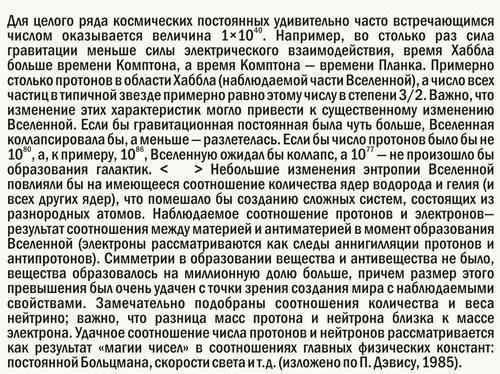
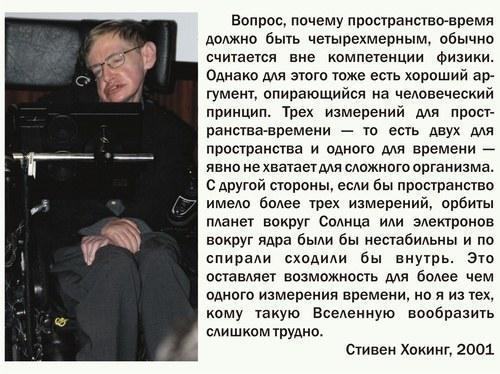
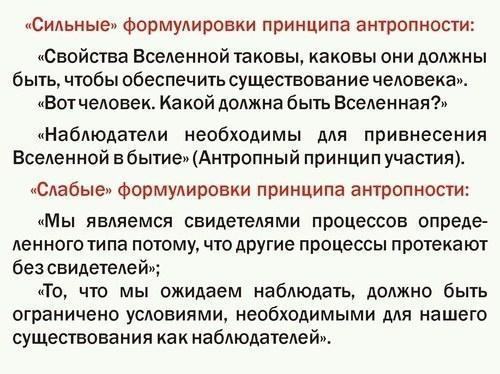
The paradox of "cosmic coincidences" itself is connected with the cognitive model in which different properties of the Universe or the Earth–Moon system are treated as independently varying quantities, each of which can change within wide limits. Strictly speaking, this is far from the only possible approach. How different various versions of a scientific understanding of the history of the Universe can be from one another is most easily illustrated by an example. One should not assume that the version presented here is "more true" than the traditional views. Its interest lies in the fact that it was obtained within the scientific picture of the world, yet it differs from it in striking originality. The example given here follows the book: Michael Talbot. The Holographic Universe / Transl. from English. – Moscow: Publishing House «Sofia», 2004. – 368 p. The Einstein–Podolsky–Rosen paradox was a thought experiment by which Albert Einstein, in his dispute with Niels Bohr, sought to demonstrate the incompleteness of quantum mechanics. At the time the paradox was proposed, no means of testing it existed. The diagram shows the "optical" version of the paradox, proposed later by David Bohm. Its essence is explained in more detail on the next slide.
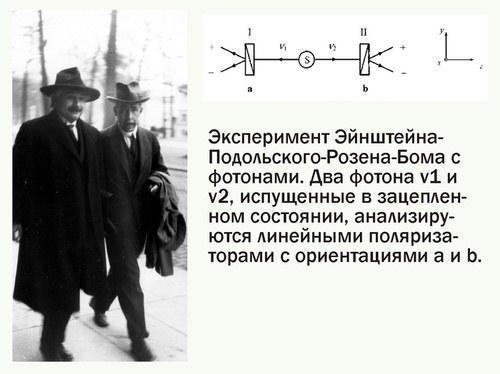
The possibility of experimental verification appeared much later.
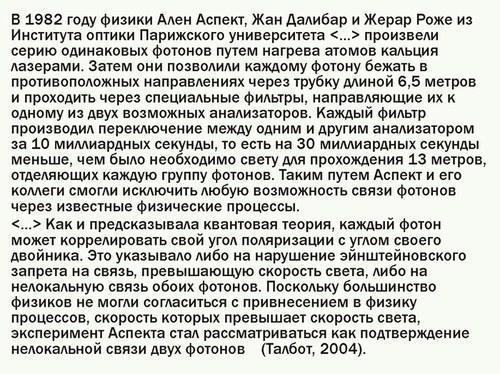
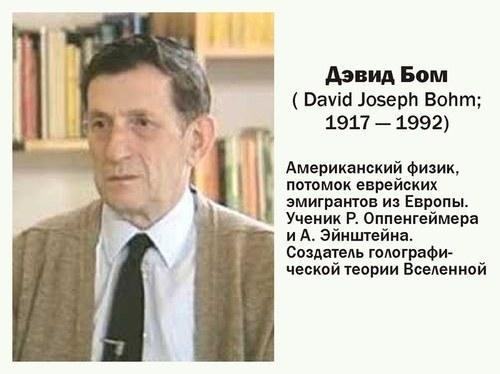
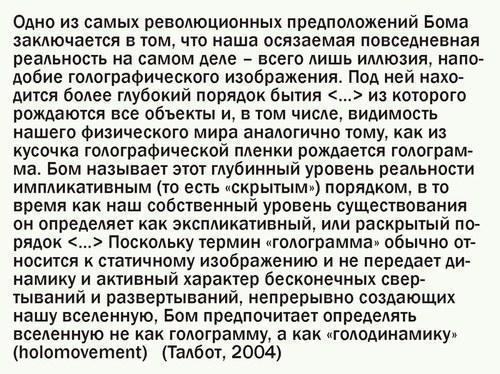
An alternative interpretation was developed by David Bohm.
Bohm's "aquarium" metaphor. Two differently positioned cameras observe a single fish.
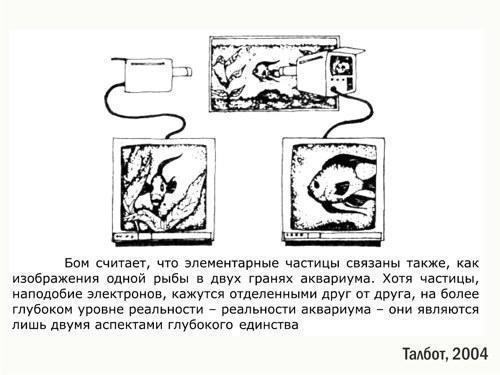
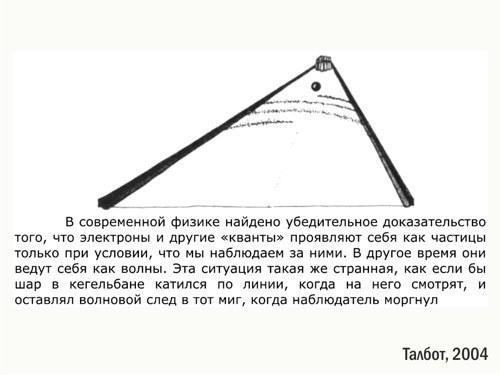
An observer who sees two screens does not know that they show the same fish, but notices with surprise a correlation between the behaviour of what appear to be two independent objects. It is significant that in modern physics (and not only physics) the connection between the observer and the observed object turns out to be very deep — truly fundamental.
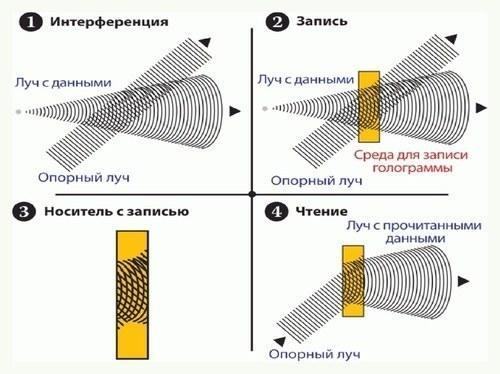
This slide explains the principle of holographic recording. A hologram records the interference pattern produced by the interaction of light beams travelling in different directions. When illuminated by a laser beam it reproduces that interference pattern, as if offering the ability to view the object from different directions.
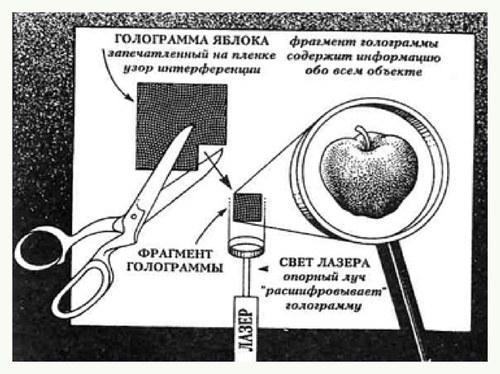
Each fragment of a hologram contains an image (of lower resolution than the hologram as a whole) of the entire interference pattern recorded on it, and the image recorded on the hologram can be reproduced (with a loss of quality) from any of its fragments. The hologram has become one of the metaphors characteristic of modern science.
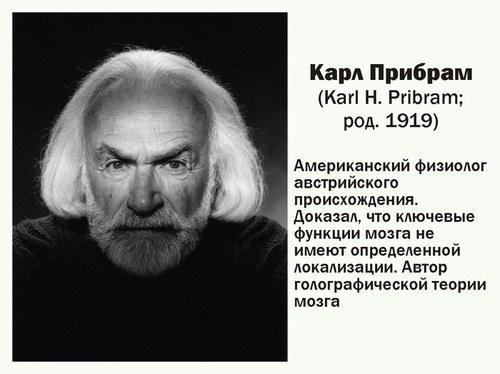
An example is the views of Karl Pribram, who draws on the observation that the absence of a clear localisation of psychic functions gives a holographic character to the workings of our brain. Note that Bohm's central idea is truly Platonic in character.
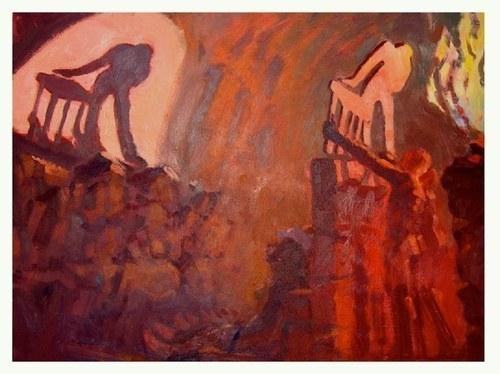
The following illustration explains the cave metaphor devised by Plato. What we see is only reflections of the "real" world — the world of ideas.
Are you sure that the next generation of scientific ideas will seem less crazy to us?