
Exhaustion? Prosperity? — 05 Lecture#4 Prerequisites for the Existence of Complex Life on Earth
Our existence is a consequence of the existence of stars. It is stars that make the Universe complex. They are «devices» for the creation of elements; they fill space with streams of energy. Sometimes during star formation, planets form alongside them. Yes, our Earth is part of the Solar System and formed...
Dear listeners!
I (D. Sh.) recently made an attempt in the vertebrate zoology course not to record a voice lecture as I have been doing lately, but simply to translate and somewhat adjust the lectures on fish diversity that were presented in text form. I did this largely because I couldn't keep up with recording the lectures. During the online meeting, I asked what format would be more acceptable for second-year biology students. The answer surprised me: text.
In any case, I will try to present this lecture in text form, although using the presentation intended for video recording. Among other things, I would like to know your thoughts about the optimal format. Perhaps I will record a video eventually, perhaps not. In any case, text format has two enormous advantages. It is much easier to correct (found a mistake — fixed it, found something interesting — inserted it, and this doesn't require major restructuring), and it is much more resistant to video fragments that YouTube has complaints about. Thus, today the lecture looks like this...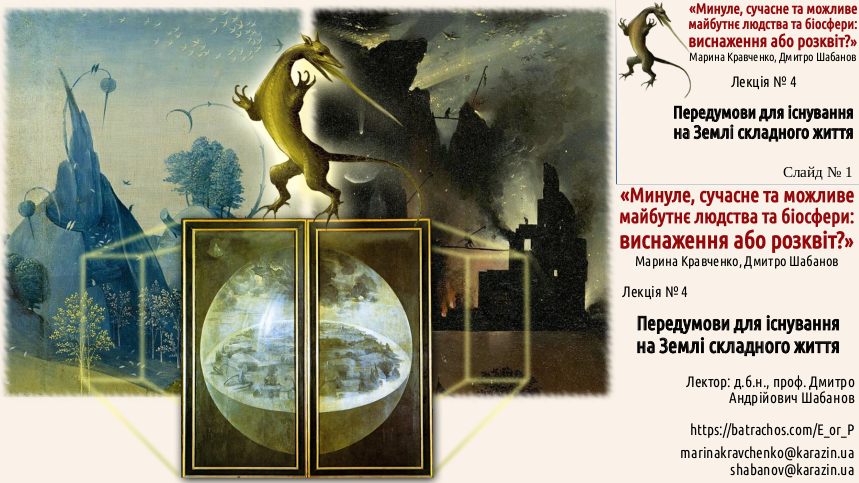
Slide #2 shows a photo taken by the author in Haidary on Groundhog Day in 2021. There, beneath the mountain, the Siverskyi Donets winds... Does this scene seem warm and native only to the author? Many biologists feel a special connection to Haidar, where the Kharkiv University biological station is located, but it's not just about that. Even the comparison with "The Hunters on the Snow," from which the second lecture began, is insufficient, although it does give a push in the right direction. This is how our world looks...
Naturally, we feel warm towards Earth. It would be interesting to understand which specific characteristics make it a successful place for life.
Earth's surface is filled with an extremely complex mixture of chemical substances. The diversity of these substances is a consequence of both the diversity of atoms from which they are composed and the diversity of ways they can combine (when it comes to organic chemistry). To maintain this diversity, it is necessary that the environment on the planet's surface be dynamic, in motion, supporting cycles of substances. To ensure this dynamics, it is necessary that powerful energy flows pass through the surface. There are two such flows through Earth's surface. Solar energy comes from space, is transformed on the planet's surface, and again dissipates into space. Additionally, from Earth's interior comes, although less powerful, but also vital flow of energy from the planet's depths. This is the chthonic (primary, maternal) energy of Earth.
Earth is in a temperature range in which water can exist (in different areas) in all three states simultaneously. Because transitions of water from one state to another require a lot of energy, this very stabilizes the temperature on the planet. Another rare circumstance is that Earth has been in this close temperature range for billions of years.
What causes made Earth such a favorable arena for the unfolding of the miracle of life? We will have to consider the processes that are the cause of star existence, the formation of the Solar System, Earth, and the Moon.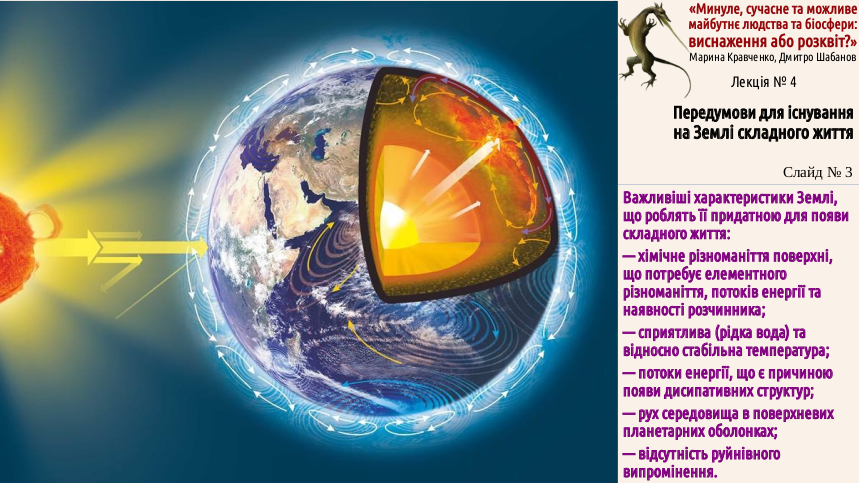
In general, the properties of the Universe are consequences of the process that created it. Analyzing the features of the Big Bang — the "Great Babakh" — we can be sure that the characteristics of the Universe's current state were determined during that fantastic event. The following slides show the timeline of the "Great Babakh." Slide #4 shows what happened in the first 1-230 seconds.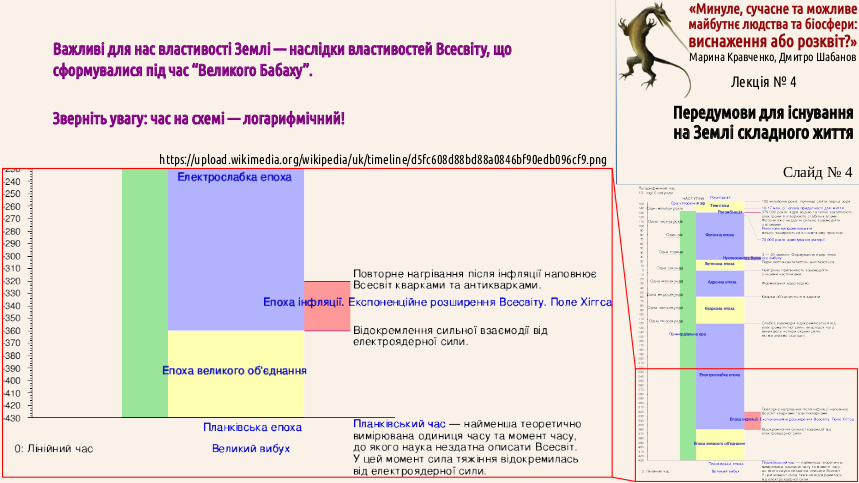
One second after the creation of the Universe, hydrogen nuclei (that is, protons) already began to form in it. Note: Ukrainian chemical nomenclature distinguishes between hydrogen (the substance) and Hydrogen (the element, from which this substance is composed). When discussing topics like the one we are now considering, different terms for these different entities are very useful.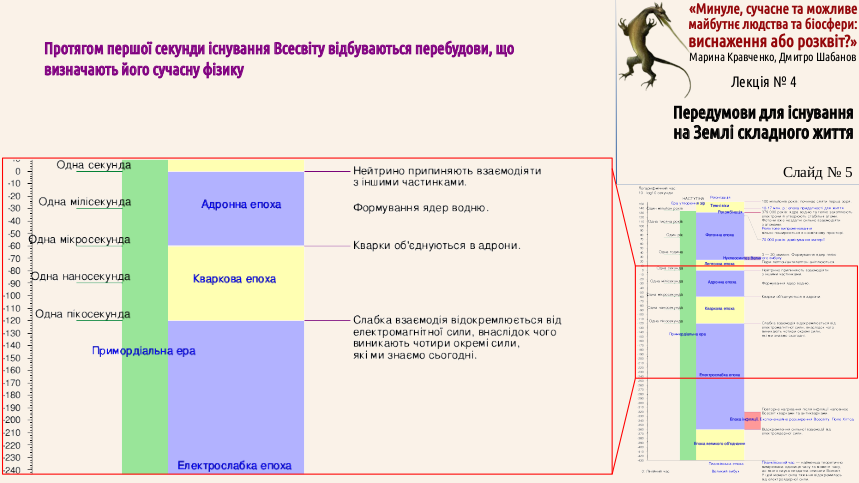
The formation of elements (nucleosynthesis) lasted for 200 seconds. As a result of this process, various isotopes of hydrogen and helium formed, and a very small amount of lithium. Most likely, this is insufficient for the formation of complex chemical machines that living organisms, as we know them, are. Despite the fact that in the history of the Universe there were several million years when its temperature would have been favorable for terrestrial life, there is no reason to expect such life to appear in those years.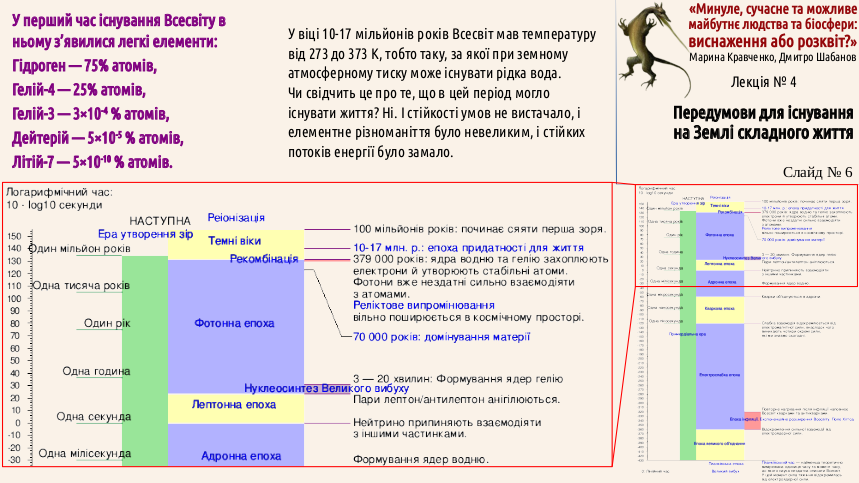
The nucleosynthesis epoch determined the chemical composition of the Universe. This composition is gradually changing as a result of the process that we will now discuss in more detail. However, from the perspective of chemical composition changes, the Universe originated relatively recently and hasn't been able to change substantially. In any case, the place where we are now (with a significant amount of oxygen, carbon, silicon) is very atypical for the Universe as a whole.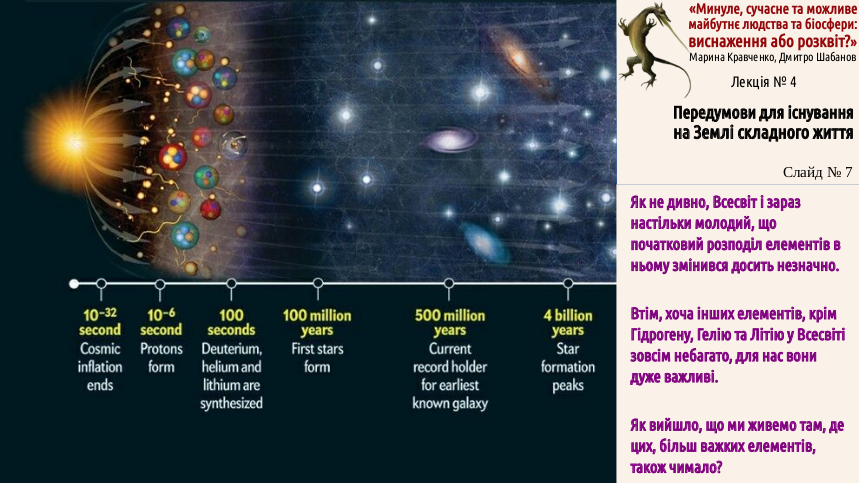
The stars in the sky are very different, so they can be classified by various characteristics. In 1910, two astronomers working independently (Ejnar Hertzsprung from Denmark and Henry Russell from the USA) constructed color-luminosity diagrams that reflected the relationship between luminosity (or absolute stellar magnitude) and spectral class (that is, the surface temperature) of a star. On the Hertzsprung-Russell diagram, the very non-random placement of stars is clearly visible: some parameter combinations are very "popular," others remain vacant. It became clear that this diagram reflects the connection between closely related parameters and, probably, allows understanding how a star's parameters change during its existence.
As you can see, the Hertzsprung-Russell diagram can be drawn in different ways... The letters O, B, A, F, G, K, M are spectral classes.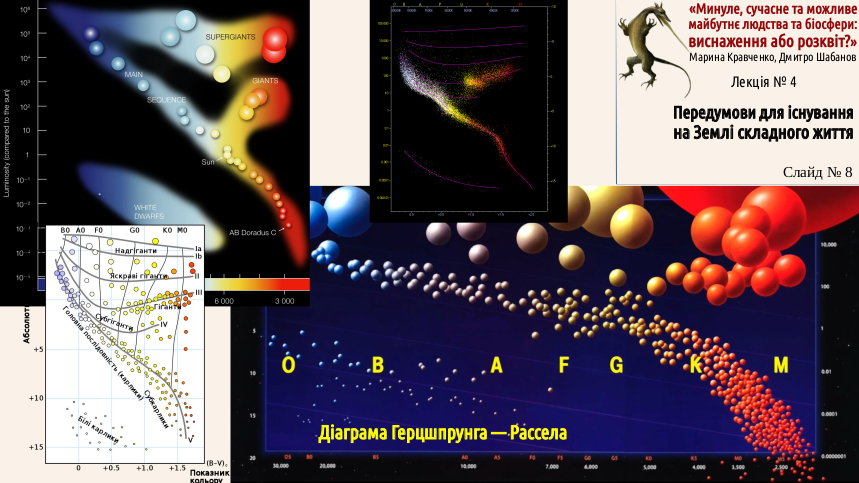
The Sun is a fairly typical main-sequence star; however, there are very different stars and stars very unlike the Sun.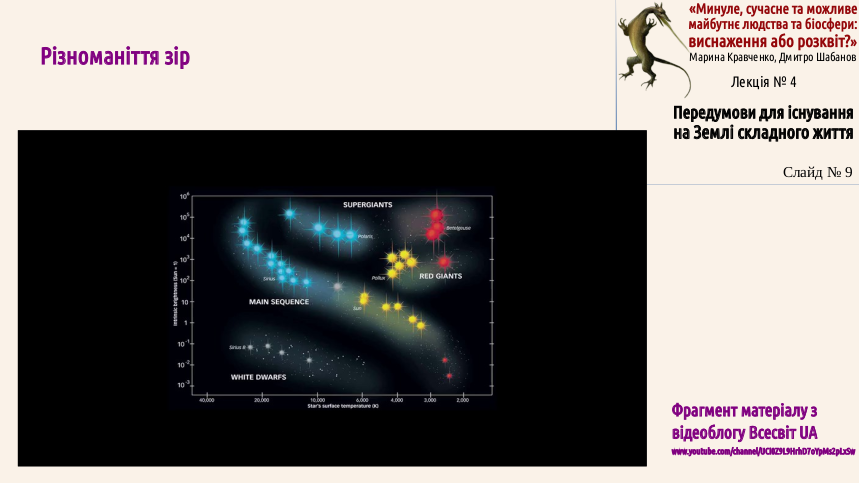
Depending on size (and to a lesser extent, composition), stars have very different life cycles. They are born in stellar nurseries (gas nebulae), contract due to gravity, and ignite due to the beginning of thermonuclear reactions (what these reactions are — we will discuss shortly). In general, a star is a more or less stable (in the end — generally unstable) result of the balancing of two forces, gravitational compression and the scattering of substance due to a thermonuclear explosion extended in time.
The end of stellar life can be black holes (for massive stars), gas nebulae from supernova explosions or shell ejection, neutron stars, white and brown dwarfs, and other strange objects. Gas nebulae from dead stars can participate in the birth of new ones. In fact, all these puzzling events are consequences of the main features of the Universe that were determined in the first moments of its existence after the Big Bang. We see here the consequences of self-organization, the selection of more stable objects, and the emergence of dissipative structures in energy flows. Despite all the difference between a star and a living organism, general patterns determine their development and evolution.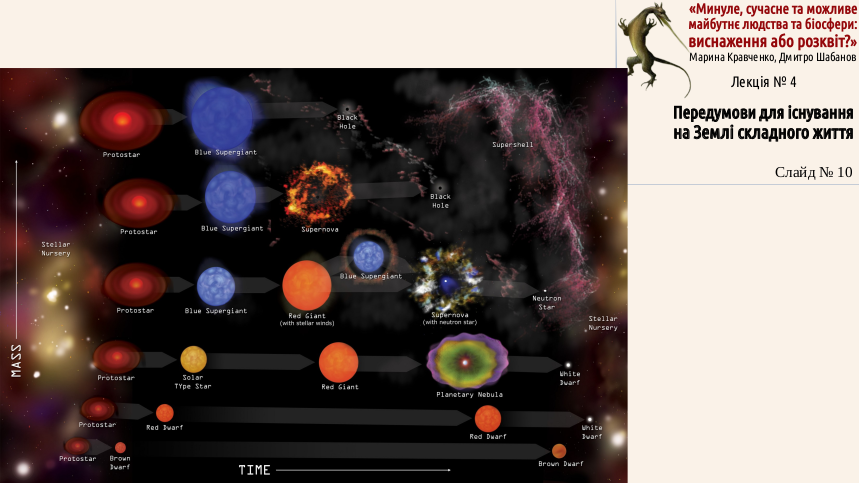
Of course, we are interested in the fate of the Sun. It is fairly well studied. We cannot observe the changes of a single star because the time of our existence, and especially our ability to make quality observations, is incomparably smaller. But imagine an alien who is on Earth for only a short time: can they understand how people change during their ontogeny? Of course, they can: not by observing a particular object, but by comparing different objects that are at different stages of their life path. The next slide shows, in two different ways, the fate of stars like our Sun. From a molecular cloud to a protostar, then — the long existence of a yellow dwarf, its gradual transformation into a red giant, the ejection of the outer shell, and post-existence as a white dwarf. The most significant for us is that such a star can remain for a long time in a state of relatively constant amount of radiated energy, which gives a chance for the evolution of life on its planet in relatively stable conditions.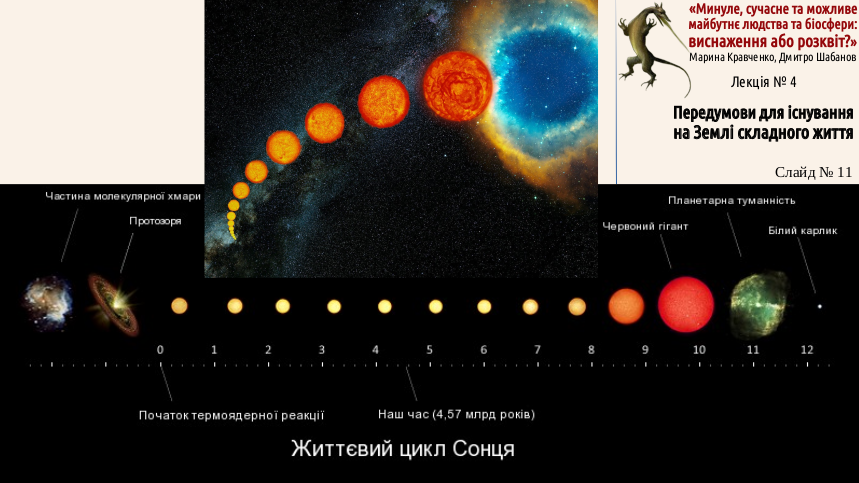
We were lucky with the Sun. We were lucky with the planet on which we exist. And we were even lucky with the position that the Sun occupies in the Milky Way. In English, the concept of "Goldilocks Zone" is used to denote those regions of the Solar System and the Galaxy where we can exist. This refers to the heroine of a children's fairy tale (known to us as "The Three Bears"), who ended up in a certain strange place. Something there didn't fit her in size (a chair, a bowl, a bed...), and something turned out to be just right. If Goldilocks randomly chooses one of three bowls, of which only one fits by size, the probability of a lucky choice is 1/3. If we were to choose a random place in the Galaxy, we would need much more luck. But the probability calculations here are more complex than Goldilocks in the bears' house; we need to understand how the observer principle affects our assessment of our luck.
Let's start with a simpler problem. In the Solar System — 8 planets (after Pluto lost this noble status). If we randomly choose one of the planets, our chances of landing on Earth are 1/8. To land on Earth, where there are such misty forests as shown in slide #2 of this lecture — is quite a great fortune. This fortune can be even greater if we randomly choose some area on the surface of any planet of our system (with all the conditionality of the term "surface" when it comes to the gas giants Jupiter, Saturn, Uranus, and Neptune). The thing is that due to the enormous size of Jupiter, the chances of landing on it are much greater than the chances of landing on the relatively small Earth... In that case, our existence would seem completely improbable to us.
But can we randomly choose a place for our existence, as Goldilocks chooses a bowl from the possible set? Such life, as ours, could not have appeared on Mercury, Venus, Mars, Jupiter, Saturn, Uranus, Neptune, and Pluto, as well as on any other celestial body of the Solar System, except Earth. Another formulation: such life as ours can exist in the Solar System only on Earth. Either we exist on Earth, or we don't exist; the probability of coincidence of our existence and our placement on Earth — 1/1=1, it could not have been otherwise. Goldilocks could choose bowls (and after an unsuccessful attempt, make another one), but we — cannot. Probability is a numerical measure of the possibility of an event. In the case where we exist, we can exist only on Earth; only near such a stable star as the Sun; only in such a cozy place in the Milky Way as that section of the Orion arm in which we are.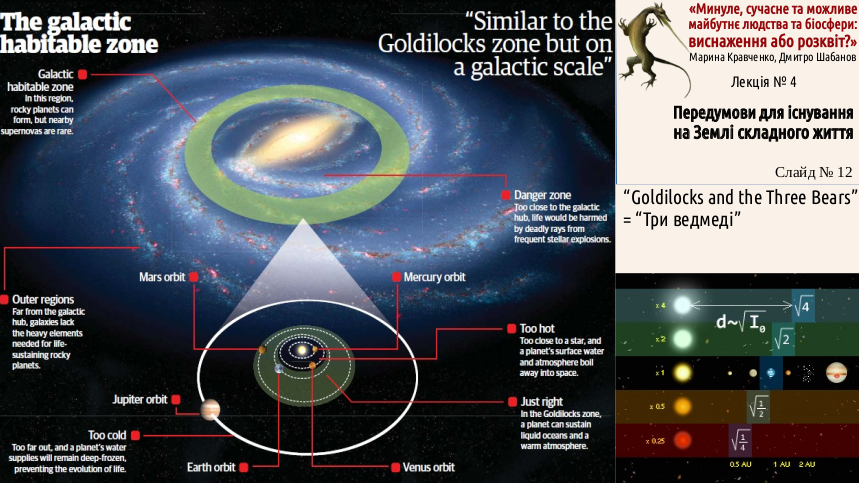
Here some requirements for the place where we exist are discussed...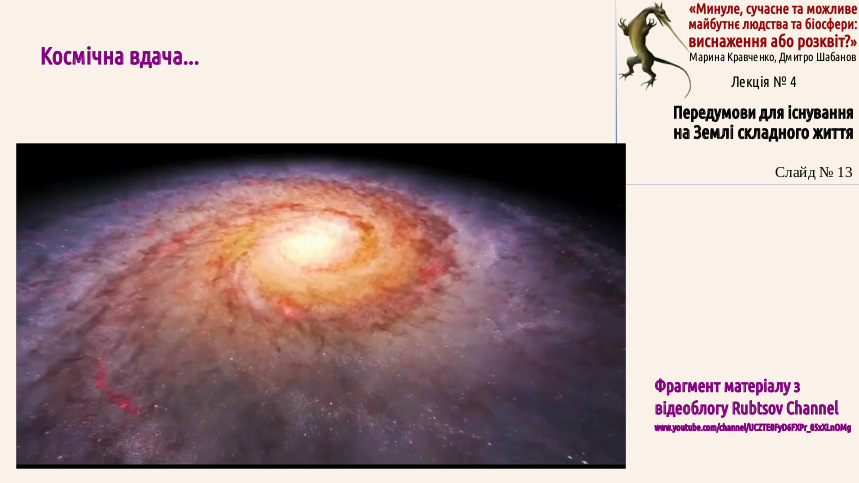
Actually, it is difficult for us to firmly determine whether we really could not exist under some other conditions. Imagine yourself in a situation where you hear someone saying: "no, under NO conditions would I agree to marry her," and you realize that your interlocutor says this only because they tried and it didn't work out... In any case, the nearest known exoplanet belonging to another stellar system is not unambiguously unworthy of our existence.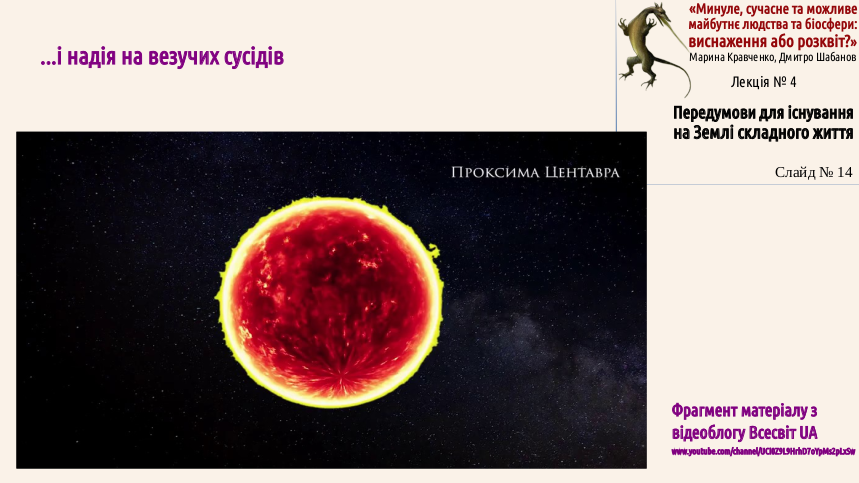
Sometimes another extreme must be encountered. Conditions suitable for life are not just conditions in which one can survive for a certain time. At minimum, they are conditions in which the life cycles of all species forming a minimal stable ecosystem can effectively proceed. In a broader sense — these are conditions in which life capable of appearing, evolving, and remaining stable can emerge.
A characteristic example of misunderstanding this circumstance is the tales told about tardigrades. These are strange and attractive animals. Typical tardigrades live in drops of moisture on mosses and lichens, that is, in environments that can undergo wetting and drying. During drying, tardigrades undergo certain physiological restructurings and enter the tun stage. They open their mouth, through which water evaporates. This is a vivid example of anabiosis, that is, a state in which life processes are stopped almost completely. At the tun stage, tardigrades can withstand vacuum, radiation, heating, and cooling. But they can actually live only in fairly narrow conditions. When soaking a moss sample with tardigrades, one should not over-soak it in water, because tardigrades can drown! Maintaining them in a living state is not such a simple task.
Be careful with what is said in this fragment of the film by American astrophysicist and science popularizer Neil deGrasse Tyson. In the listed harsh conditions, tardigrades cannot live; they can only withstand these conditions in a very specific state! And the claim that tardigrades can survive being in boiling water is simply a mistake. In boiling water, the tardigrade's tun very quickly rehydrates — with consequences that are not difficult to predict.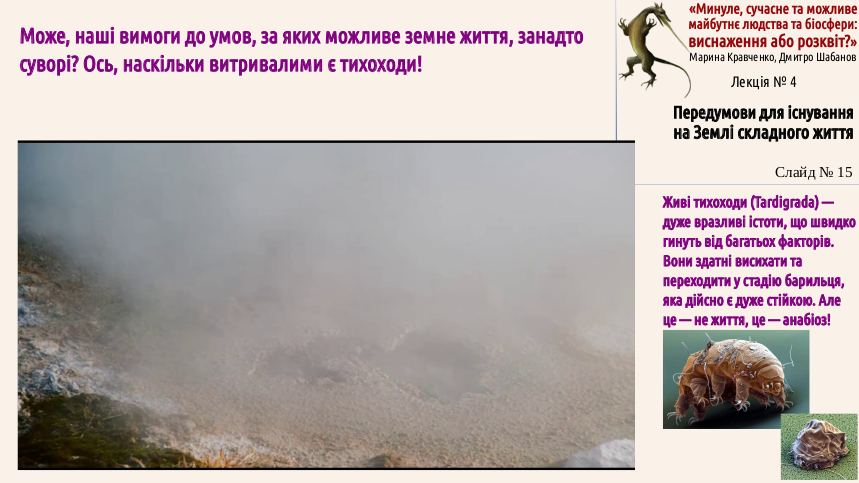
Until now, we have discussed only such life as is familiar to us. In this fragment of Neil deGrasse Tyson's film, hypothetical life on Titan, Saturn's moon, is discussed. Titan is far from the "Goldilocks Zone" that we discussed, and hypothetical life on it must be based on something completely different from what we can observe. During the NASA Cassini-Huygens mission, a probe named after Christiaan Huygens, a Dutch physicist and mechanic of the 18th century, was lowered onto its surface.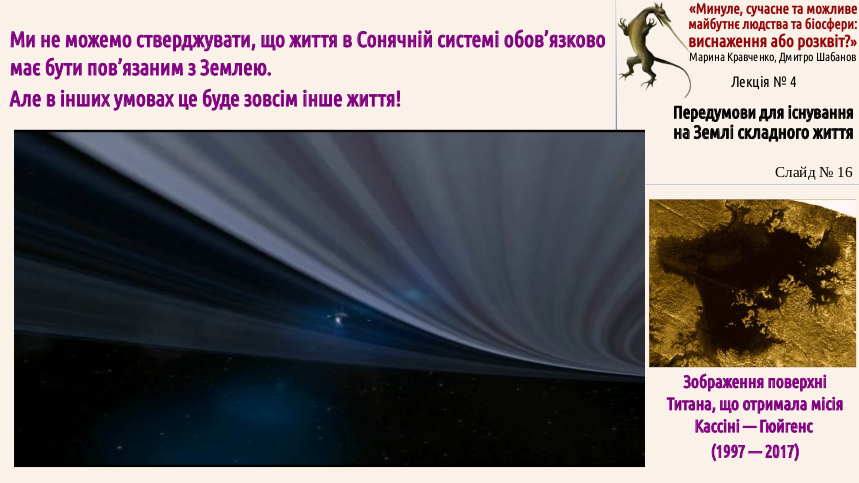
As we noted at the beginning of the lecture, an important characteristic of our environment is chemical diversity, which requires diversity at the element level. The "Great Babakh" created only hydrogen and helium, and also very little lithium; it seems that for normal life this is not enough.
As you know, as the number of nucleons (protons and neutrons) in an atomic nucleus increases, the properties of the atom change regularly (and periodically, relative to the increase in nuclear charge, determined by the number of protons, or atomic mass, which depends on the total number of nucleons). Can we imagine life without oxygen, carbon, and nitrogen? Where did they come from? They formed from other elements! How?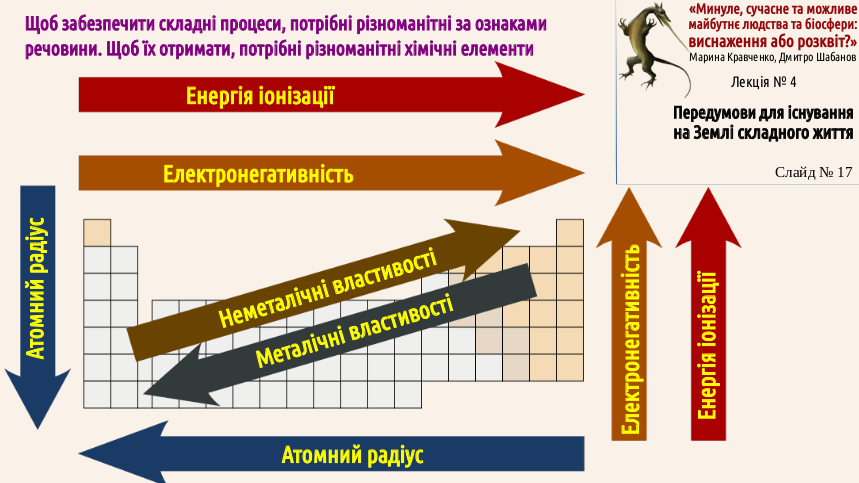
The ability of elements to transform depends on the energy that holds nucleons in the nucleus. In general, even forming a helium-4 nucleus (consisting of two protons and two neutrons) is quite difficult. Protons have a positive charge and repel each other due to electrostatic interaction. Some external force is needed that will bring them so close that the strong nuclear interaction turns out to be stronger than the repulsion. As, we hope, you remember, there are four fundamental interactions: gravitational, electromagnetic, strong and weak nuclear). Electrostatic repulsion is a manifestation of the electromagnetic interaction, which manifests itself at both small and large distances. Strong nuclear interactions manifest themselves only at distances that are comparable to the size of an atomic nucleus. Suppose we have overcome the repulsion between protons and brought them so close that the strong interaction united them (which at small distances is much stronger than repulsion). We have won in the packing energy of nucleons. Even the total mass of two protons and two neutrons in a helium nucleus is less than the total mass of these separate particles — the so-called mass defect has arisen.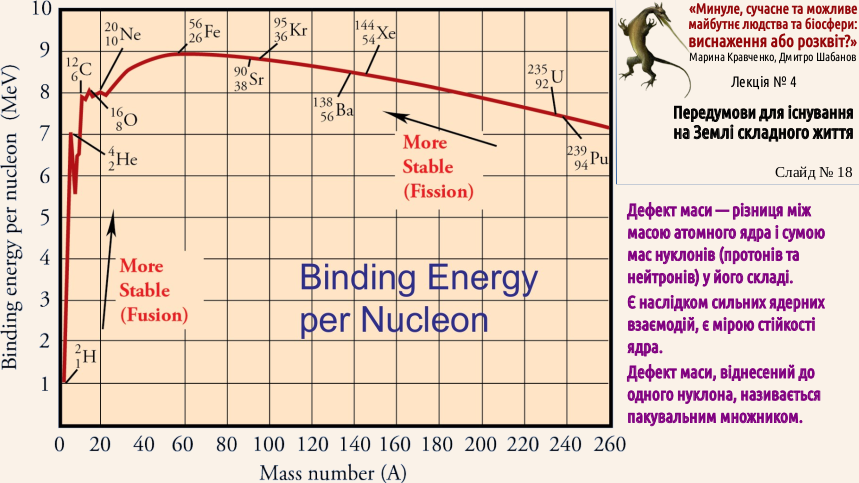
Where did the "defect" mass go (that is, the mass that is missing)? It transformed into energy and was released! This is how thermonuclear reactions, or nuclear fusion reactions, work. Look at slide #16. There the binding energy per nucleon versus the number of nucleons in the nucleus is shown. On the ascending part of the curve (at the top of which is iron), synthesis of lighter elements gives a gain that ensures energy release during thermonuclear reactions. The heaviest elements, such as uranium and plutonium, also have less binding energy per nucleon. The consequence of this is the possibility of spontaneous decay of heavy elements in nuclear reactions.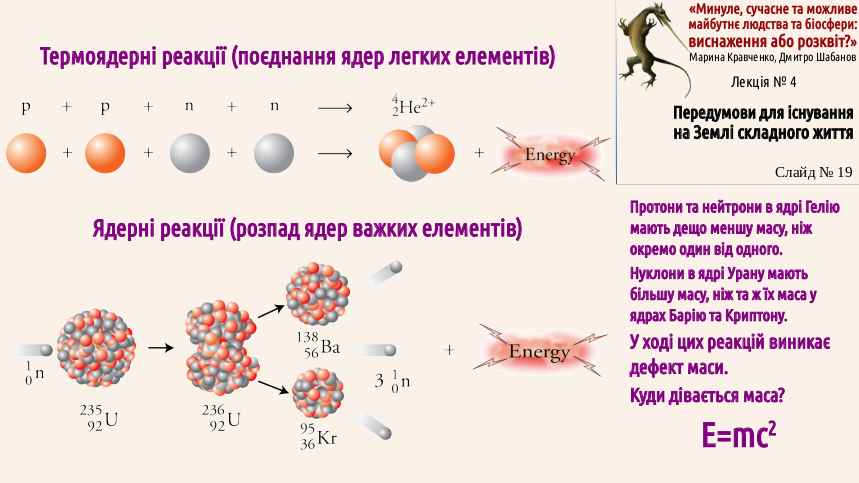
The synthesis of helium from hydrogen is the most common reaction occurring in stars. Don't be surprised by the explanations where either protons or neutrons figure: in such reactions they can transform into each other, as shown in the diagram on the right.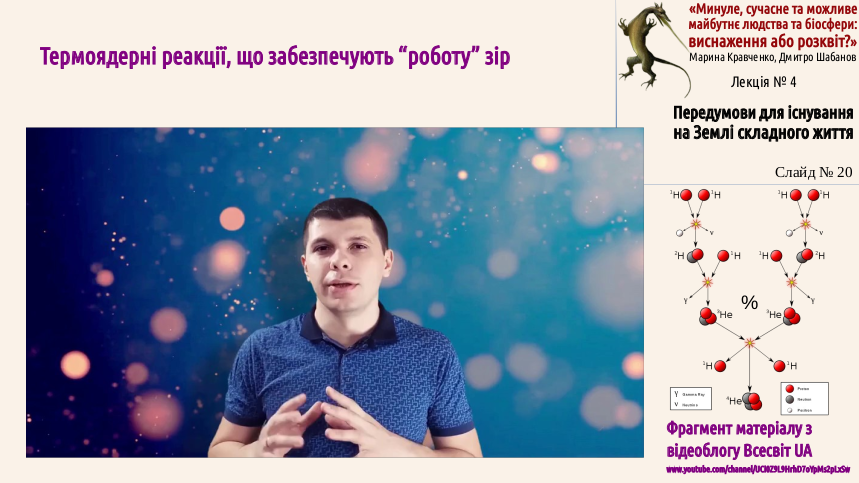
In fact, although nucleons are most efficiently packed in iron itself, spontaneous reactions can even form elements somewhat heavier than iron. For example, if we add helium to iron, we get a nucleus where protons with neutrons are packed almost as efficiently as in iron, and much more efficiently than in helium, so such a reaction under the right conditions can also be spontaneous.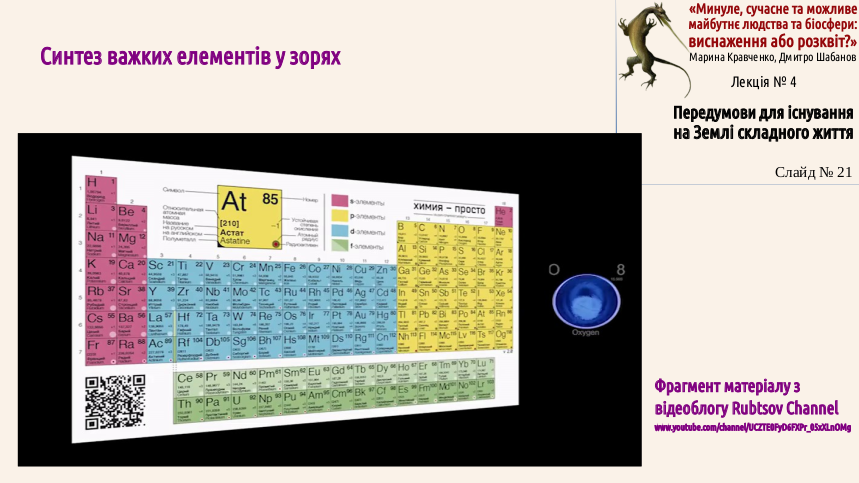
But, of course, the heaviest nuclei cannot be formed through the described processes. Where do we get platinum for our catalysts, gold for jewelry, and uranium for nuclear bombs?
Here are shown the processes thanks to which the known elements of the periodic table appeared.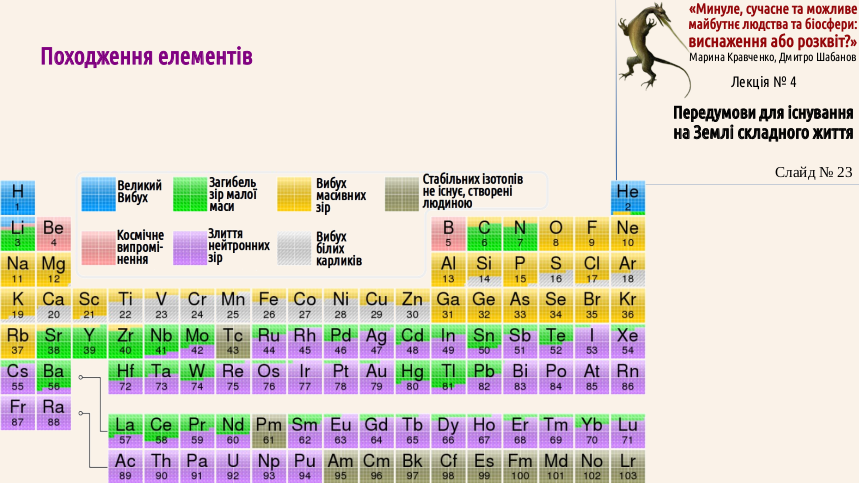
Thus, in our environment there are heavy elements because they were already in the gas-dust cloud from which the Solar System and Earth, as its component, formed.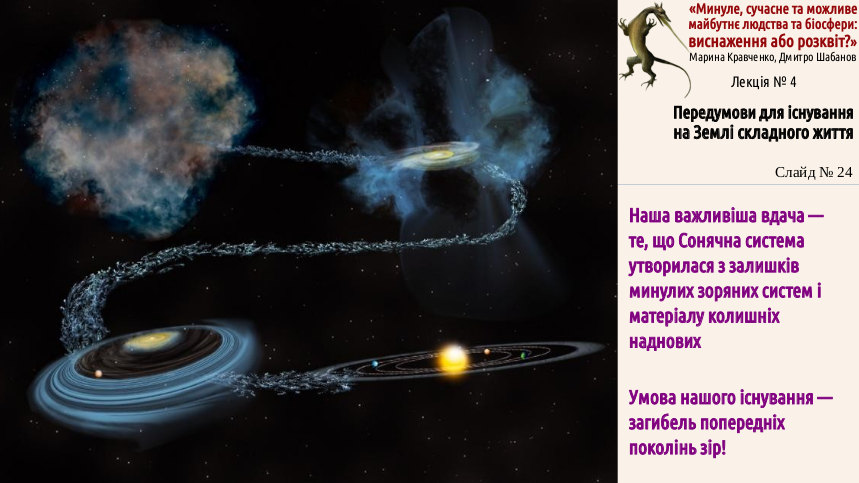
In the cloud from which we all formed, there were elements interesting to us because this substance had already passed through stellar cycles.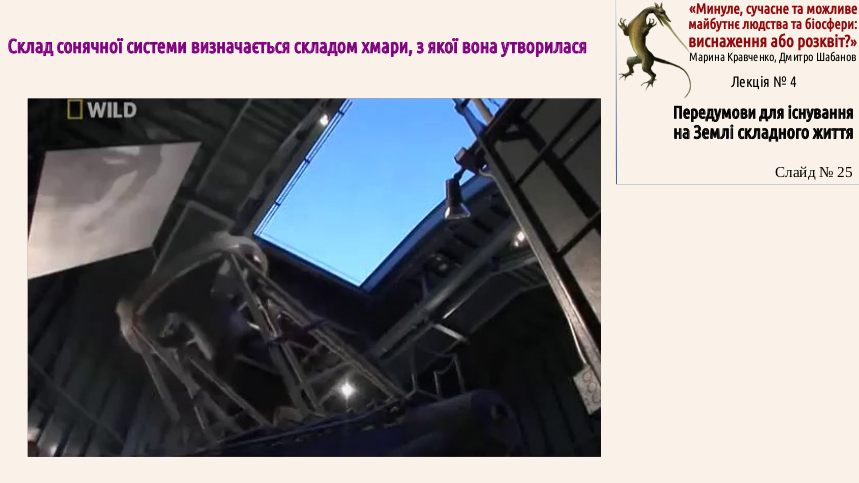
There are processes by which a celestial body can capture a satellite for itself. However, the planets of the Solar System did not form this way. Despite the fact that modern models assume a change in the position of Uranus and Neptune after they formed, for the Sun they are not foreign bodies. The process of star formation can include the retention of a certain amount of substance in orbits around the main celestial body. By the way, the composition of planetary substance differs depending on the distance from the star and can change over time due to its influence.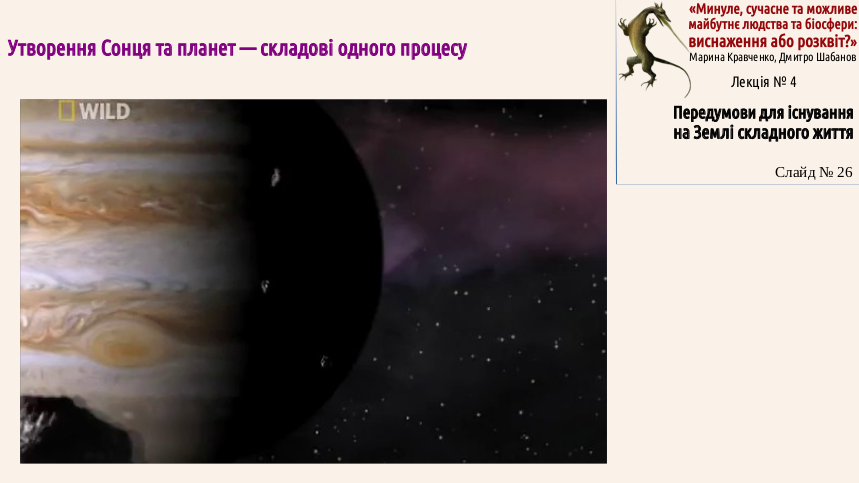
At the beginning of the lecture, we included in the list of prerequisites for the existence of complex life on Earth the energy flows that go through its surface. As shown on slide #3, one of these flows is the Sun's radiation dispersing into space.Another, second, but equally important process is the heat flow emerging from the Earth's interior. In the next lecture we will discuss the Earth's structure in more detail, and now it is important for us that it has a heated core. Every moment a portion of the core's heat passes through the Earth's surface and its atmosphere and is radiated into space. What processes have provided such an internal “stove” for our planet?
For a long time it was believed that the Earth is heated from within by the radioactive decay of heavy elements in its composition. This factor indeed influences the planet, but it is insufficient. More important is the heat released during the gravitational differentiation of the material that makes up our planet during its formation. Another significant source of heat is the energy from impacts that the Earth has experienced throughout its existence; we will also discuss this process.
Very roughly, meteoroids falling to Earth can be divided into three groups: stone, iron, and iron‑stone; that is (considering the approximate nature of such terminology) meteoroids consist of two main components. “Stone” is, first of all, silicate oxides. “Iron” is a mixture of metals formed not only by atoms of Ferrum but also by elements close to it, which arise because Ferrum lies on a relatively gentle slope of the binding‑energy dependence per nucleon on nuclear mass. These meteoroids are the remnants of the material from which our planet once formed.
What is heavier: stone or iron? Of course, iron. Let us compare two states of the planet. In the first, stone and iron are uniformly mixed. In the second, the denser iron is concentrated in the center, while the lighter stone forms an outer shell. Differentiation of the planetary material that will transition the planet from the first state to the second will result in a significant decrease of the system’s potential energy. Where will this energy go? It will be converted into heat!
By the way, even in a hypothetical cold mixture of iron and stone its state would not be stable. Another meteoroid would arrive, strike such a planet and provide local heating. In the place where the planetary components melt, they will begin to stratify, release heat and melt adjacent regions… This will end with the stratification and heating of the entire planet.
But this is a story that happened billions of years ago, and the Earth is still hot from within today! How can this be explained?
Imagine two metal pots of the same shape and material, but different sizes. Fill both with boiling water. Which pot will cool faster? Of course, the smaller one. Why?
As the size of a pot—or any other body—increases, its surface area grows proportionally to the square of the linear dimension, while its volume grows proportionally to the cube, i.e., much faster. The consequence of this geometric fact is that larger bodies have a smaller surface‑area‑to‑volume ratio. Heat loss is proportional to surface area. Heat capacity is proportional to volume. That is why a large pot cools more slowly than a small one.
And Earth? Earth is such a huge “pot” that it has not lost its heat over billions of years of its existence! And it will not lose it until its very end, which will be associated with the Sun’s transformation into a red giant… The Moon and even Mars, which also had hot cores, have already lost their heat because they are smaller in size. In the next lecture we will discuss how important the hot interior of our planet is for us.
Another feature of Earth that influences the suitability of the environment for our existence is the presence of a relatively large satellite. What consequences this has for us we will discuss next time. For now, let us try to explain this feature.
When celestial bodies and their satellites form together, the satellites turn out to be much smaller than the primary body. This can also be seen by comparing the sizes of the Sun and the planets. We will not discuss these causal chains in detail, but it can be noted that the presence of smaller and closer‑to‑the‑Sun terrestrial planets (the first quartet: Mercury, Venus, Earth, Mars) as well as much larger and more distant gas giants (the second quartet: Jupiter, Saturn, Uranus, Neptune) is a consequence of an understandable regularity. No, the Moon could not have accreted simultaneously with Earth from the same material—otherwise it would be much larger.
There is another way to obtain satellites. Beyond Neptune’s orbit lies the Kuiper Belt, “populated” by dwarf planets. The first of them that became known to us was Pluto, which was formerly also formally considered a planet. Pluto and its satellite Charon can be regarded as a double dwarf planet. Interestingly, their common center of mass lies outside Pluto. Relative to Pluto, Charon is much larger than the Moon is relative to Earth. Their size ratio is explained simply: they formed independently and then approached each other so closely that they began to hold each other by their gravity.
However, this second path of satellite acquisition also cannot explain the Moon’s peculiarities. The fact is that it is built from the same material as Earth; the rocks of these two bodies share a common origin. How then can this mystery be solved?
The most popular hypothesis today is the impact (collision) hypothesis.
It turns out that the impact that formed the Moon had to be delivered in a certain way, tangentially, with a sufficiently carefully “calculated” force. Should we also consider this circumstance “luck,” which created the conditions for our emergence? Perhaps…
What consequences the formation of a relatively large satellite had for Earth, the cradle of life, we will discuss in the next lecture...