
IV. Amphibia sensu lato-06. Order Gymnophiona — Caecilians
A brief overview of the smallest and most peculiar order of modern amphibians
Class Amphibia — Amphibians
Subclass Lepospondyli — Lepospondyls
Order Gymnophiona — Caecilians
We begin a systematic review of the diversity of modern amphibians...
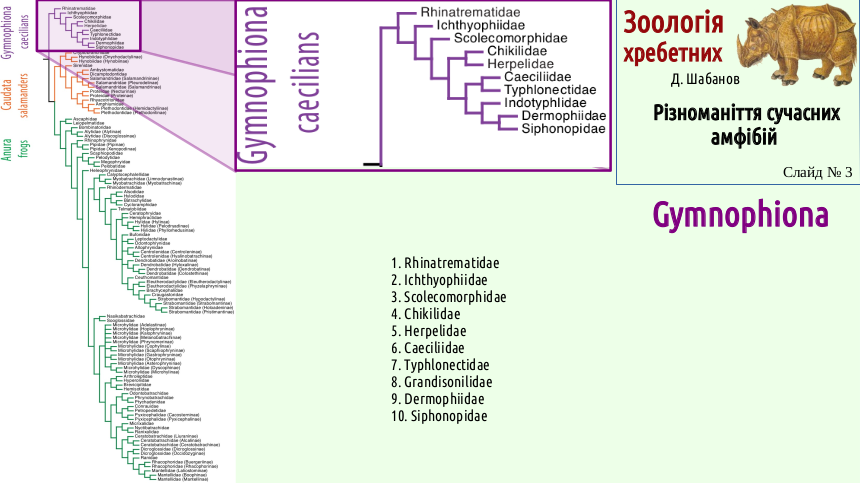
The following slide indicates the sources used to construct the systematics. In the course of this review, we will follow the cladogram shown on the left.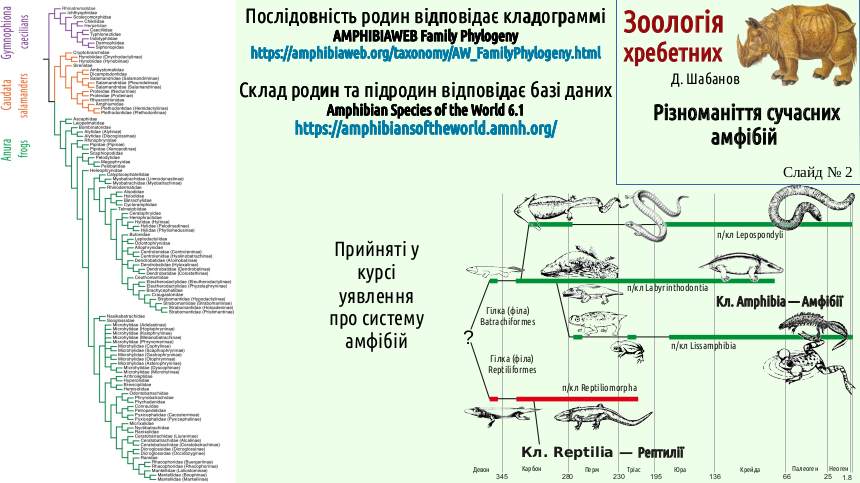
The first group is the caecilians. As already stated, we adhere to the view of caecilians as representatives of the subclass Lepospondyli. This sets them apart from other modern amphibians.
Memorizing the following 10 families is not required, but one should have an idea of their appearance, distribution, and life forms.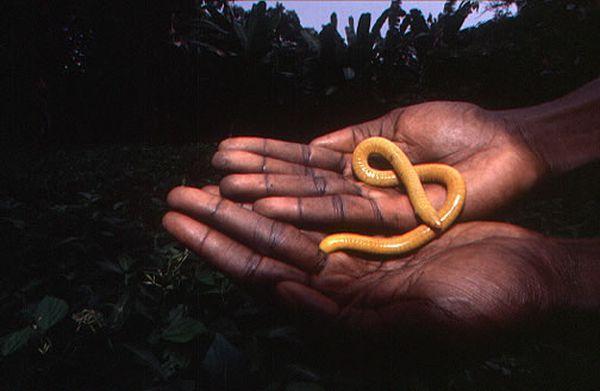
The order is considered to comprise 10 families:
1. Rhinatrematidae
2. Ichthyophiidae
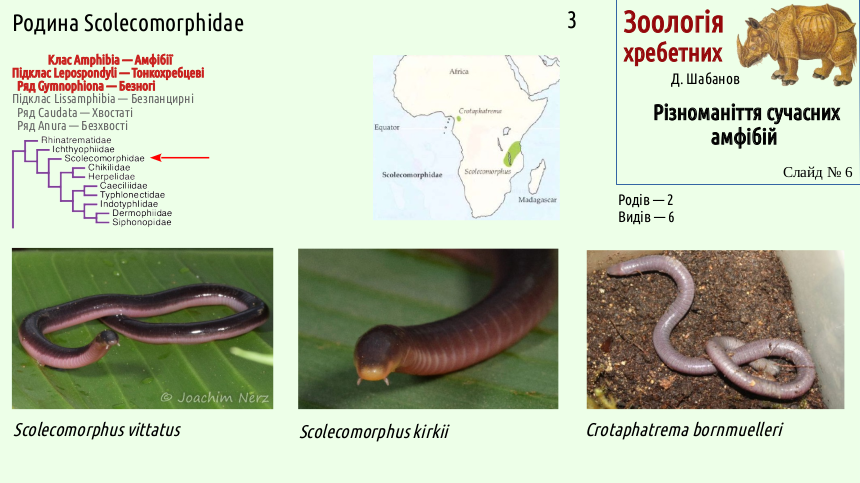
3. Scolecomorphidae
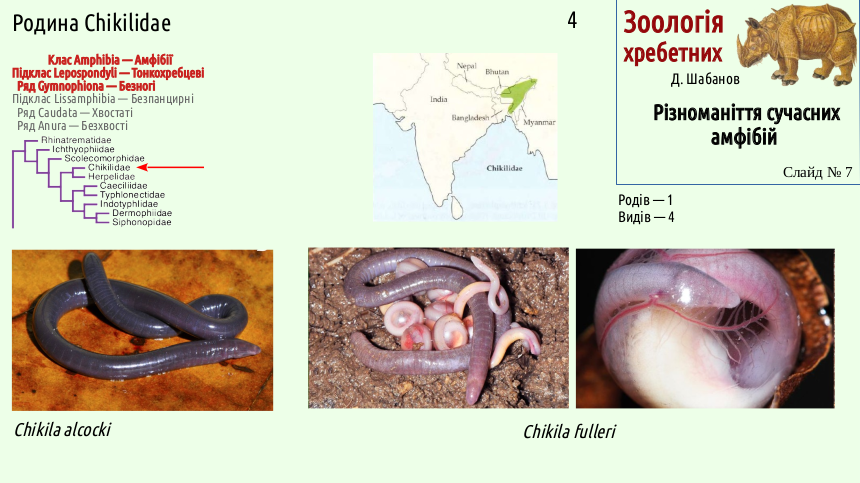
4. Chikilidae
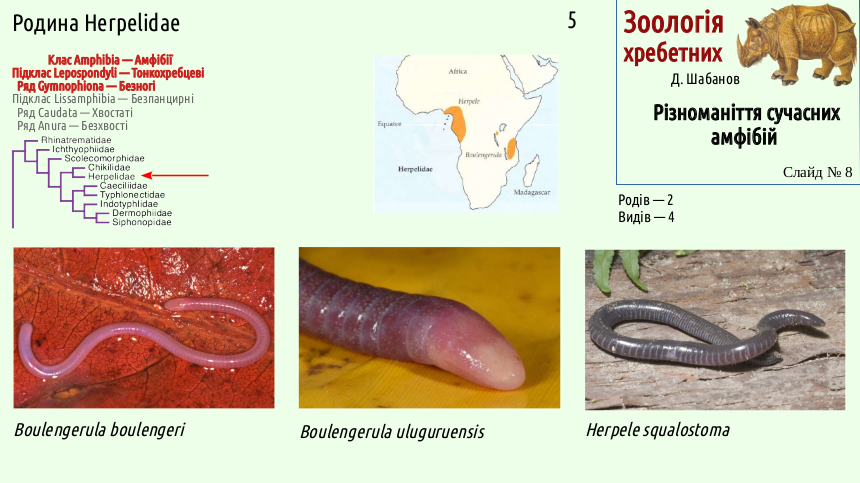
5. Herpelidae
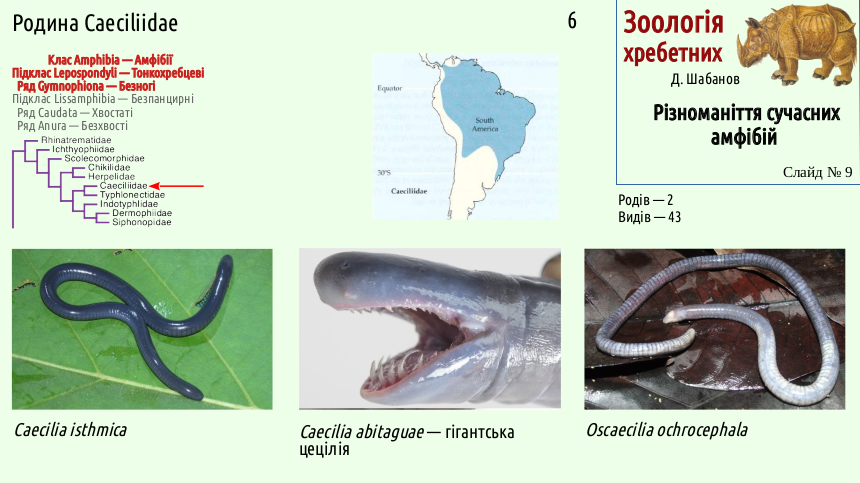
6. Caeciliidae
7. Typhlonectidae
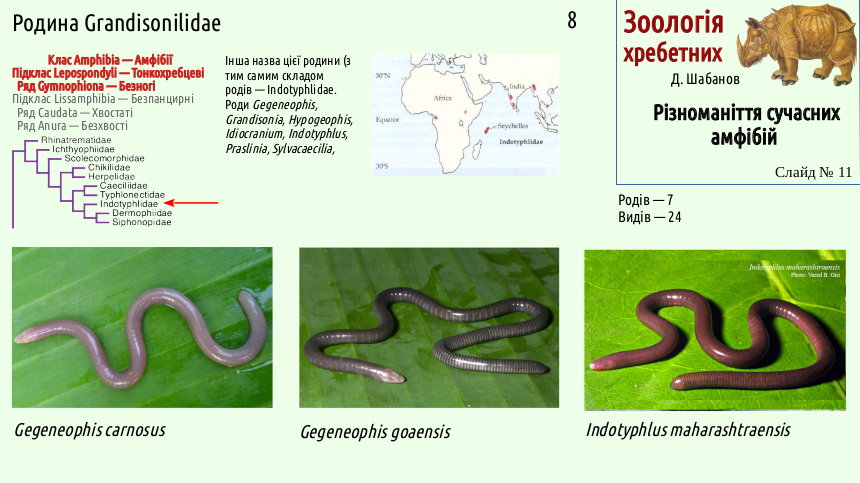
8. Grandisonilidae
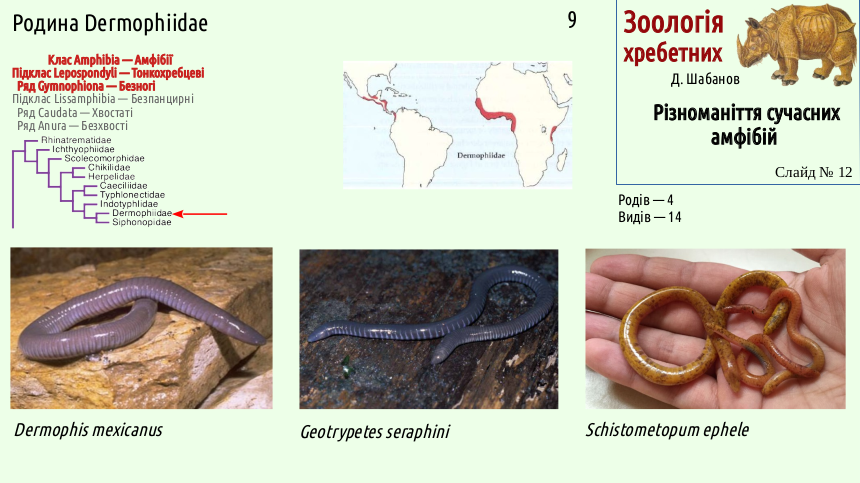
9. Dermophiidae
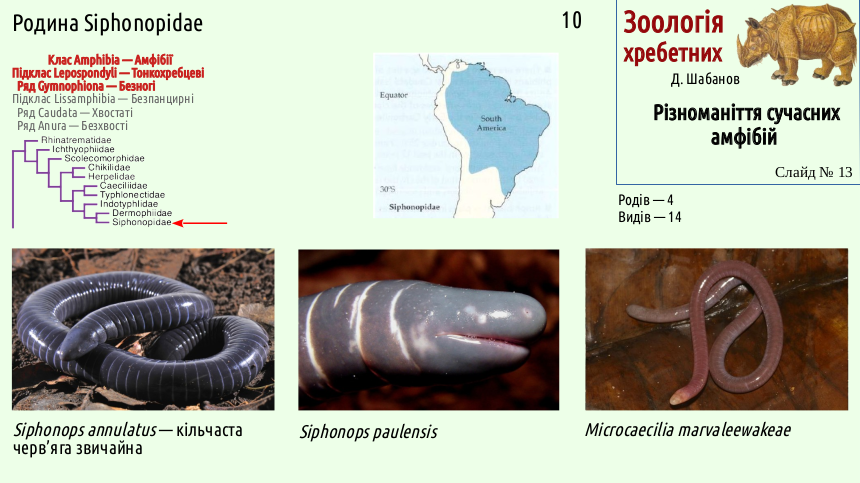
10. Siphonopidae
Overall, caecilians are a tropical group. Here is a map of their general distribution.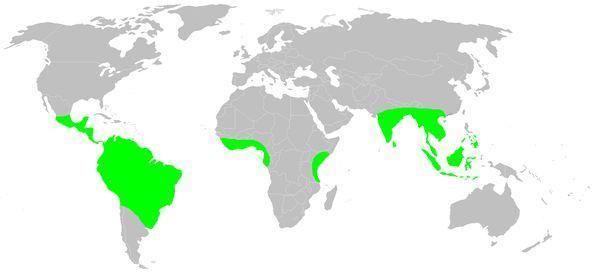
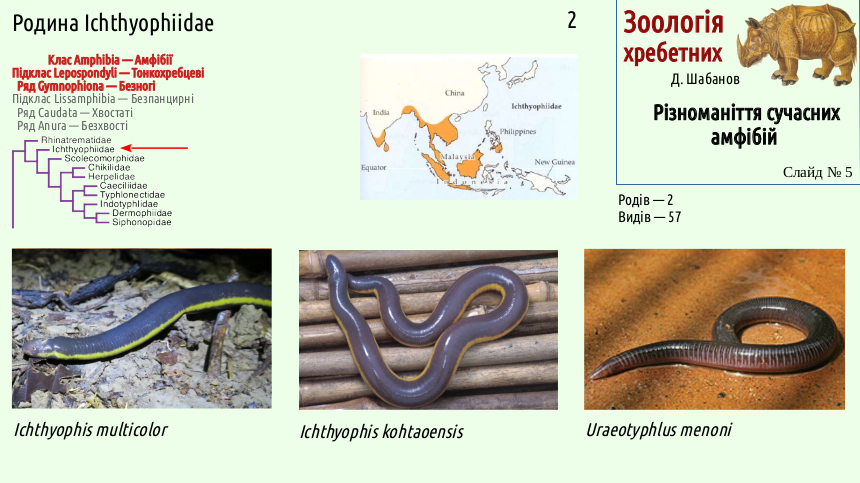
Naturally, caecilians most closely resemble earthworms. This is not surprising: if you inhabit the same environment as earthworms and move through it in a similar manner, you will come to externally resemble an earthworm. The resemblance to earthworms disappears when caecilians open their mouths.
Your browser does not support the video tag.
Despite their name, Ichthyophis (fish-serpents) do not live in water.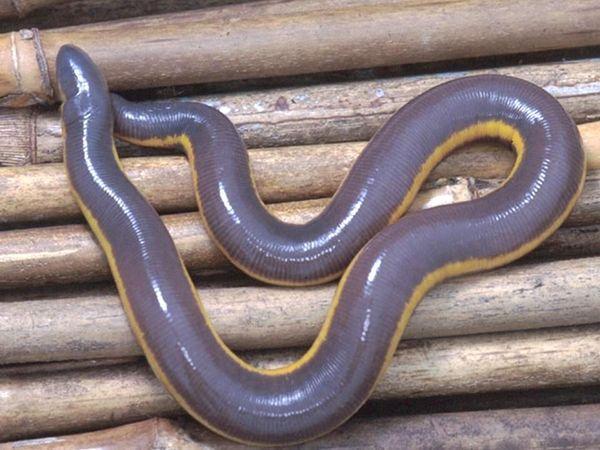
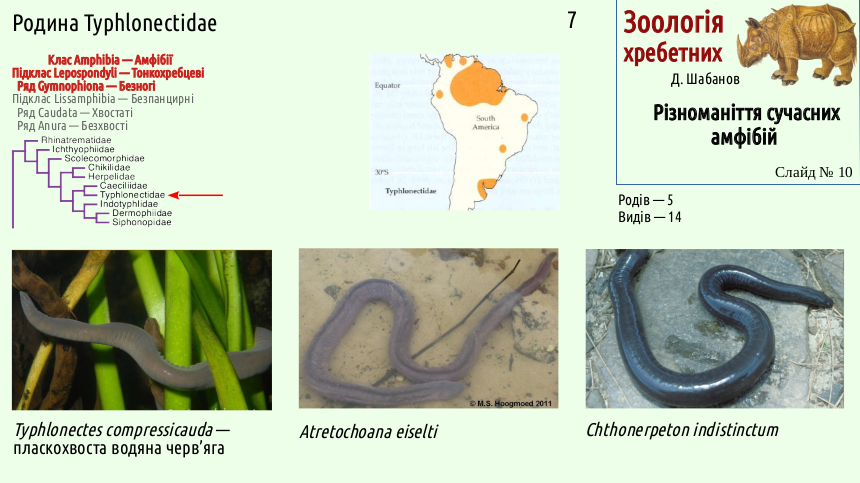
Typhlonectes natans (broad-headed aquatic caecilian) — a species that is sometimes kept in aquariums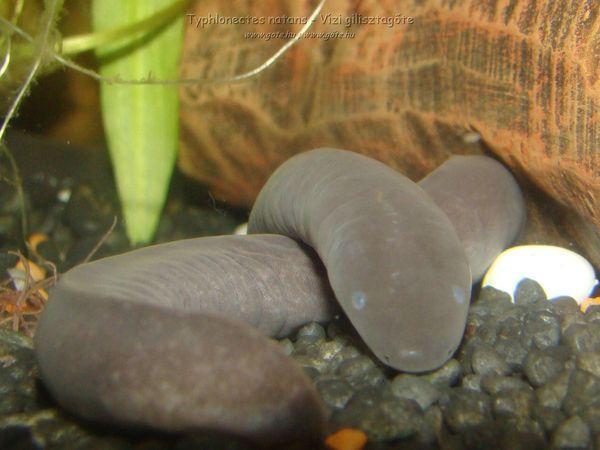
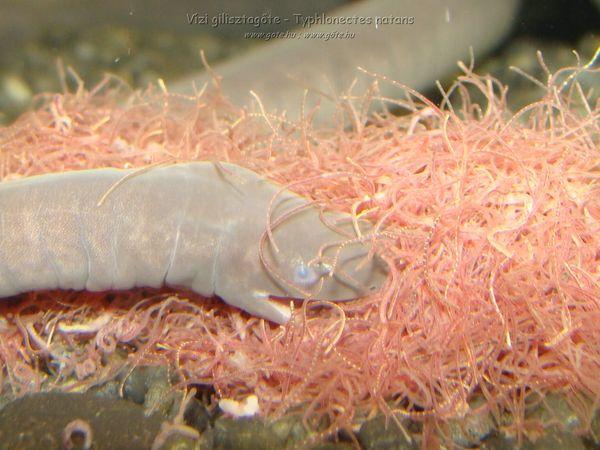
The eyes of caecilians are hidden beneath the skin. Note the tentacle (a whitish protrusion) above the edge of the mouth.
Your browser does not support the video tag.
Despite their name, Ichthyophis (fish snakes) do not live in water. Typhlonectes natans (broad-headed water caecilian) is a species sometimes kept in aquariums. The eyes of caecilians are hidden under the skin. Note the tentacle (whitish appendage) above the edge of the mouth.