
IV. Amphibia sensu lato-07. Order Caudata — Tailed Amphibians
A survey of modern tailed amphibians.
Class Amphibia — Amphibians
Subclass Lissamphibia — Modern amphibians
Order Caudata — Tailed amphibians
Which order one should begin with when considering modern lissamphibians is a matter of taste. According to the source whose taxonomic order we follow, we begin with the tailed amphibians.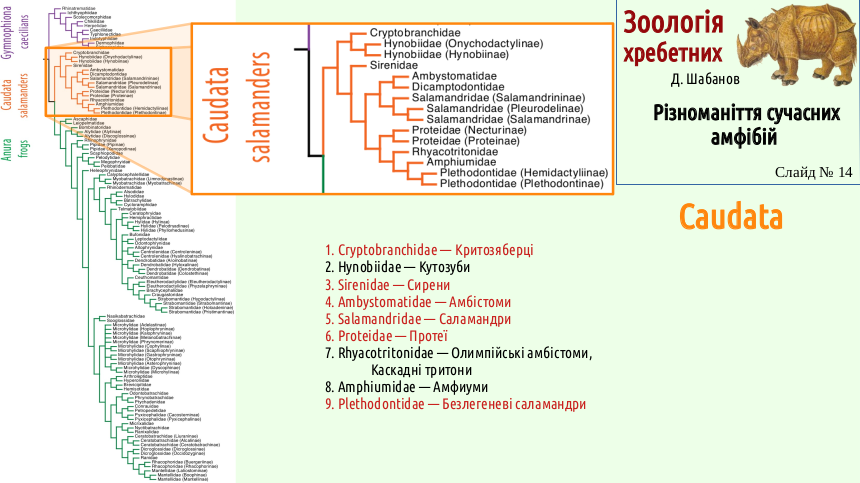
Here we consider this order as consisting of 9 families. It is not necessary to memorize all of them, but students should recognize representatives of the most characteristic families and know some of their features. The groups that should be remembered are marked here (and on the presentation slides) in brick color.
1. Cryptobranchidae — giant salamanders
2. Hynobiidae — hynobiids
3. Sirenidae — sirens
4. Ambystomatidae — ambystomatids
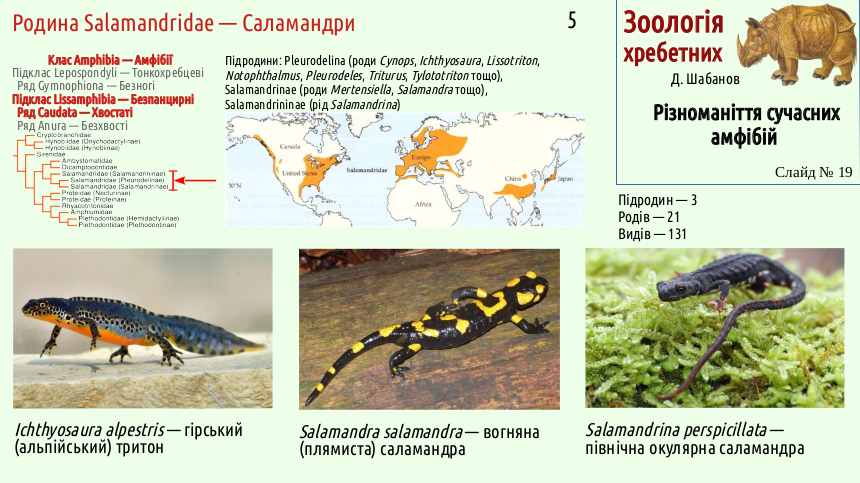
5. Salamandridae — salamanders and newts
6. Proteidae — proteids
7. Rhyacotritonidae — Olympic salamanders, cascade newts
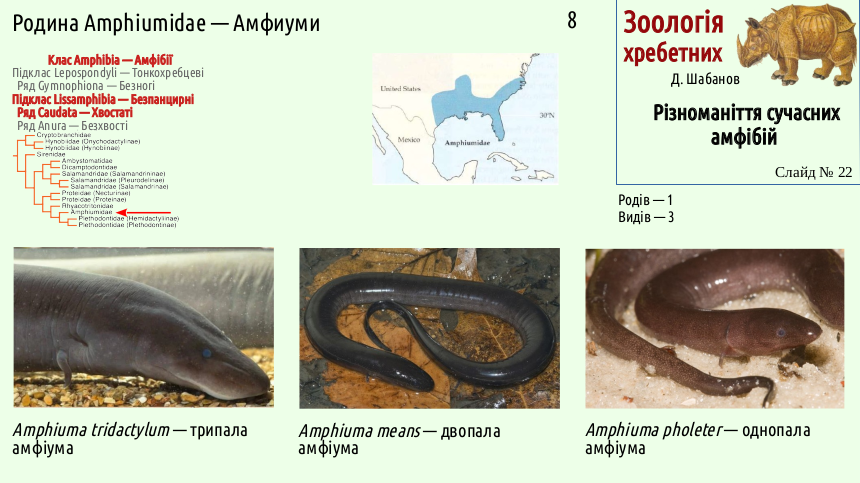
8. Amphiumidae — amphiumas
9. Plethodontidae — lungless salamanders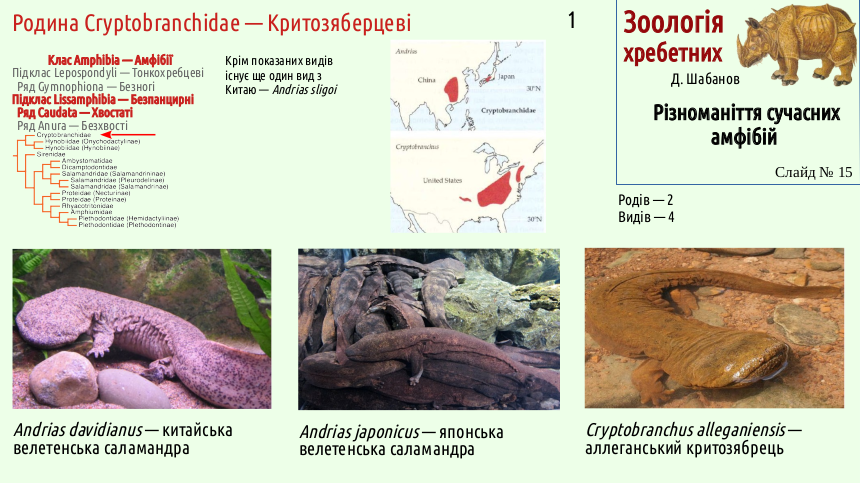
The next video probably shows Andrias japonicus, the Japanese giant salamander. It is somewhat smaller than the Chinese species (which allegedly reaches 1.8 m in length), but very close to it. These two species are capable of hybridizing.
Your browser does not support the video tag.
On land the Japanese giant salamander looks especially clumsy.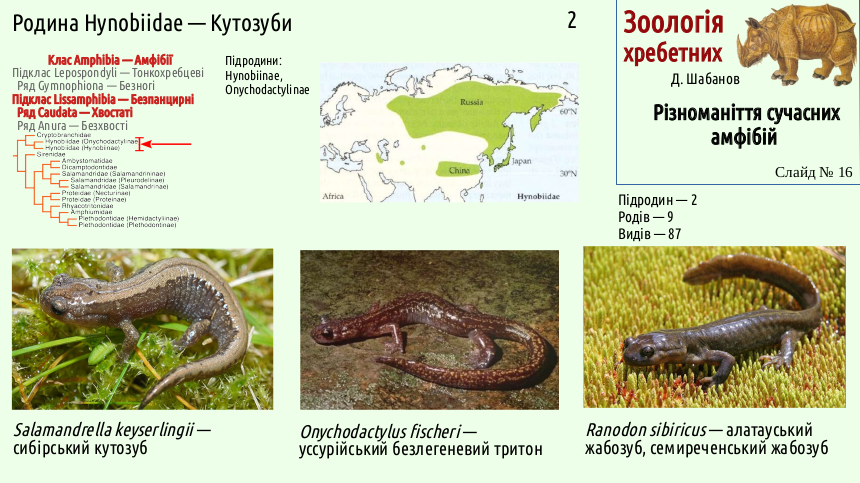
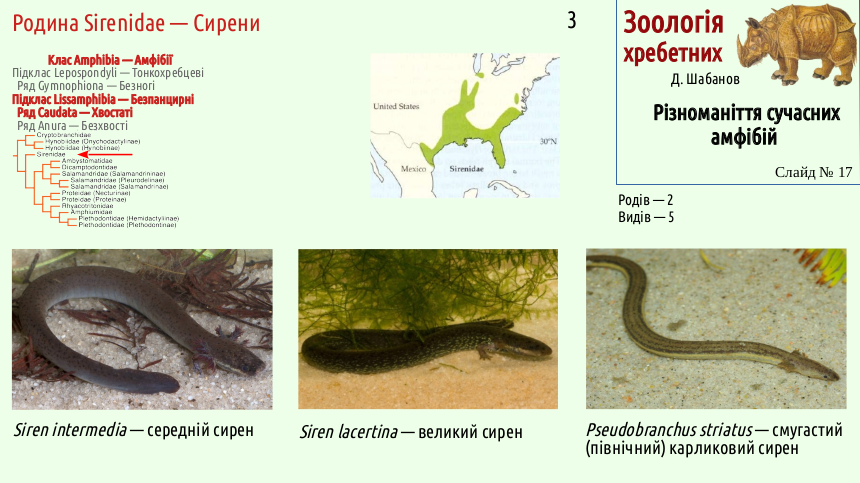
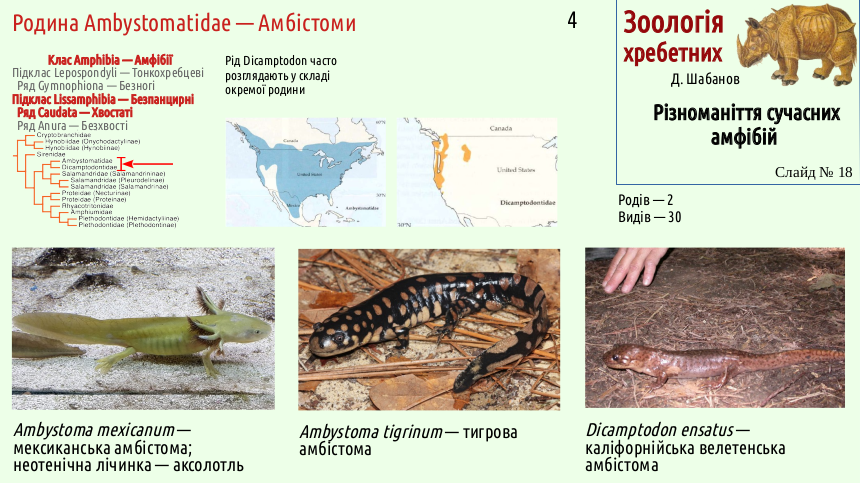
Neotenic larvae of ambystomatids are called axolotls. Neoteny is one of the forms of paedomorphosis, that is, the retention at the final, definitive stage of development of certain traits characteristic of earlier developmental stages. In the case of neoteny, all systems except the reproductive one are slowed, and the larva (from a morphological point of view) acquires the ability to reproduce. Axolotls, including albinos, are rather widespread aquarium amphibians.
The phenomenon of neoteny was discovered precisely in the Mexican ambystoma. In this species, different populations differ in their capacity for metamorphosis. Some undergo it almost always, some almost never, and some depending on conditions. In deep cold water they reproduce neotenically, whereas in shallow warm water they undergo metamorphosis (do you understand why?). In the Paris Botanical Garden at the beginning of the nineteenth century, axolotls (which were already known to be capable of reproducing while remaining axolotls) lived in a small warm basin. Imagine the surprise when they began to transform into ambystomas, which at that time were regarded as representatives of another family!
Below is the spawning of the spotted salamander, Ambystoma maculatum.
Your browser does not support the video tag.
And this is the spawning of the marbled salamander, Ambystoma opacum. This is a much more terrestrial species than the spotted salamander.
Your browser does not support the video tag.
Your browser does not support the video tag.
Among the representatives of this family there are highly poisonous creatures. In the next video, a frog tries to eat the eastern newt, Notophthalmus viridescens, a poisonous North American representative of this family.
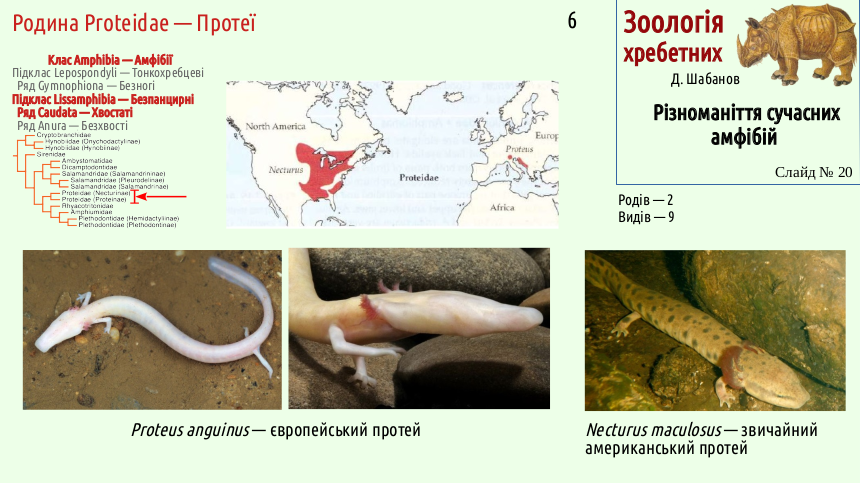
The European olm is a rather sluggish animal. It is a highly specialized troglobiont, a cave dweller.
Like the giant salamanders and sirens, proteids are a permanently neotenic group of amphibians. Once they underwent metamorphosis and reproduced at the adult (definitive, final) stage. Later they acquired the ability to reproduce at the larval stage, as axolotls do. In time, the ability to metamorphose and pass to the definitive stage was finally lost. It would, however, be interesting to see the metamorphosis of a giant salamander!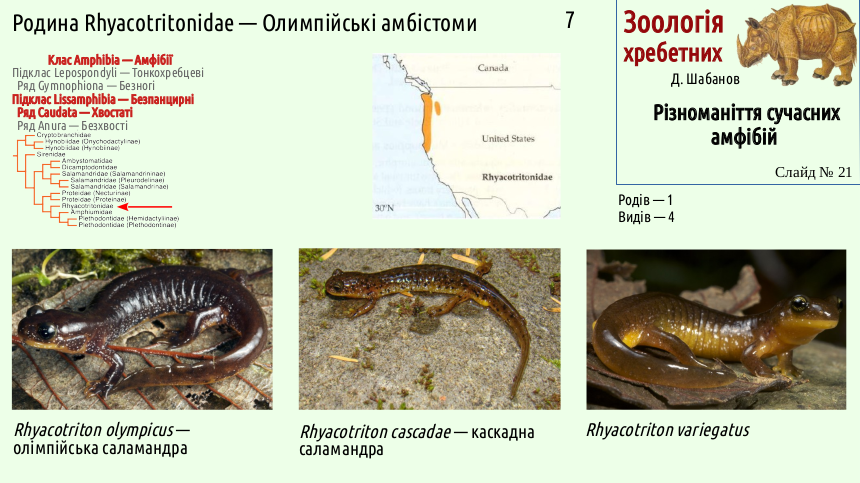
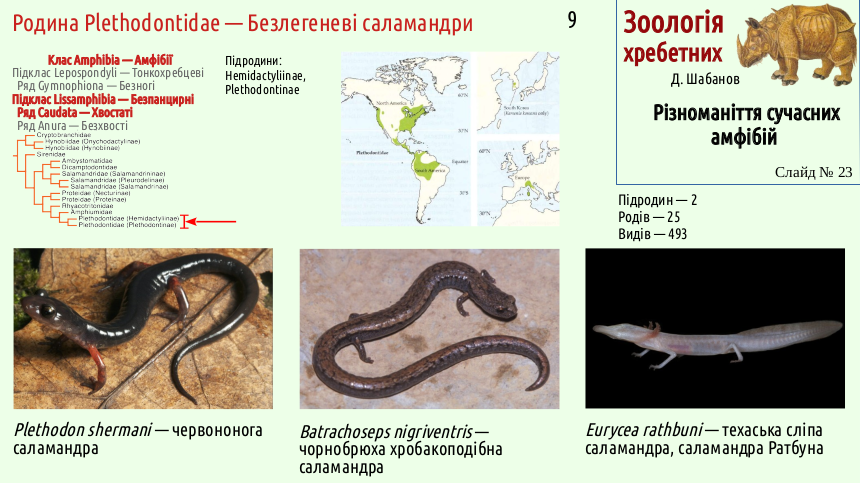
One of the limitations of the morphophysiological organization of amphibians is that gas exchange in them occurs in both circulatory loops: in the pulmonary circuit (in the lungs) and in the systemic circuit (through the skin). This imposes limits on the efficiency of the cardiovascular system. The solution found by lungless salamanders made them the most successful group of tailed amphibians. They abandoned lungs and the pulmonary circulation! And this solution proved effective not only for creatures with a very slow metabolic rate (such as Eurycea rathbuni, which lives in underground waters and is sometimes carried to the surface by artesian waters), but also for active and agile forest dwellers, for example representatives of the genus Plethodon.
The following video shows lungless salamanders of the genus Plethodon.
Your browser does not support the video tag.
The flat-headed salamanders, Hydromantes platycephalus, are able to curl into a ring and roll downhill to escape danger.
And this is Bathrachoseps, a worm-like salamander.
And here one can see the tongue in action in the mushroom-tongued salamander Bolitoglossa.
The Japanese giant salamander looks particularly clumsy on land. Neotenic larvae of mole salamanders are called axolotls. Neoteny is one case of pedomorphosis, i.e., the retention of certain features characteristic of earlier developmental stages in the final, definitive stage of development. In the case of neoteny, all systems except the reproductive system are inhibited, and the larva (from a morphological point of view) acquires the ability to reproduce. Axolotls, including albinos, are quite common aquarium amphibians. The phenomenon of neoteny was discovered precisely using the example of the Mexican mole salamander. Different populations of this species vary in their ability to metamorphose. Some almost always undergo it, some almost never, and some depending on the conditions. In deep cold water, they reproduce neotenically, while in shallow warm water, they undergo metamorphosis (do you understand why?). In the Paris Botanical Garden in the early 19th century, axolotls (which were already known to be able to reproduce while remaining axolotls) lived in a small warm pool. To their surprise, they began to transform into mole salamanders, which were then considered representatives of a different family! Below is shown the spawning of the spotted salamander, Ambystoma maculatum.
And this is the spawning of the marbled salamander, Ambystoma opacum. They are a much more terrestrial species than the spotted salamander.
Representatives of the family are conventionally divided into salamanders and newts. In salamanders, the tail is rounded in cross-section (i.e., they are better adapted for terrestrial life), while in newts, it is flattened laterally (which indicates their greater adaptation to aquatic life). Many newts exhibit surprisingly beautiful courtship behavior. Below is shown the courtship of the great crested newt, Triturus cristatus.
Among the representatives of the family are very poisonous creatures. The next video shows a frog trying to eat a red-spotted newt, Notophthalmus viridescens, a poisonous American representative of this family. The European olm is a rather sluggish animal. It is a highly specialized troglobite, a cave dweller. Like hellbenders and sirens, olms are a permanently neotenic group of amphibians. They once underwent metamorphosis and reproduced at the adult (definitive, final) stage. Later, they acquired the ability to reproduce at the larval stage, as axolotls do. Over time, the ability to metamorphose and transition to the definitive stage was completely lost. It would be interesting to see the metamorphosis of a giant salamander! One of the limitations of the morphophysiological organization of amphibians is that gas exchange occurs in both circulatory systems, in the pulmonary (minor) and systemic (major) circuits. This limits the efficiency of the cardiovascular system. The solution found by lungless salamanders has made them the most successful group of tailed amphibians. They have abandoned lungs and the pulmonary circulation! And this solution turned out to be effective not only for creatures with very slow metabolism (like Eurycea rathbuni, which lives in groundwater and is sometimes brought to the surface by artesian waters) but also for active and mobile forest dwellers, for example, representatives of the genus Plethodon. The following video shows lungless salamanders of the genus Plethodon.
The California slender salamander, Hydromantes platycephalus, can roll into a ball and roll down a slope to escape danger. And this is Bathrachoseps, a worm-like (or earthworm-like?) salamander. And here you can see the tongue action of a web-footed salamander, Bolitoglossa.