Shabanov (2009) Why dioecious organisms outcompete cross‑fertilizing hermaphrodites
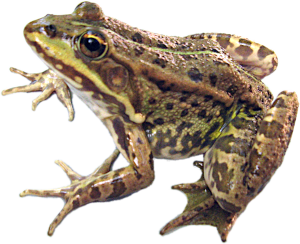
To understand the specifics of green frog reproduction, a classification is needed that delineates the main types of population reproduction characteristic for animals and explains the reasons for transitions from one type of reproduction to another. Here an attempt is made (to which I hope to return) to ...
Shabanov, D. A. Why Dioecious Organisms Displace Cross-Fertilizing Hermaphrodites: Dioecy as a Nesham Equilibrium // Proceedings International Scientific Conference Dedicated to the 80th Anniversary of the Birth of Prof. A. P. Krapivny. – Kharkiv: V. M. Karazin Kharkiv National University, 2009. – pp. 38–49. Why dioecious organisms displace cross-fertilizing hermaphrodites: dioecy as an equilibrium according to Neshem D. A. Shabanov Department of Zoology and Animal Ecology, V. M. d.a.shabanov@gmail.com This work is devoted to a hypothesis explaining the phenomenon of the predominance of sexual dimorphism in animals and the fairly widespread occurrence of dioecy in plants. Despite the theoretical interest in this problem, a universally accepted solution has not yet been developed. The topic of this work has attracted the attention of many researchers. Unable to provide a review of the history of research on this issue here, the author will deliberately limit himself to just a few references and refrain from determining who holds priority over the ideas developed here. This work is intended as a preliminary report, useful to the author in terms of formulating the problem for mathematical modeling of the described processes, as well as in stimulating criticism of the views expressed here. The Diversity of Forms of Population Reproduction Despite the extraordinary diversity of life forms inhabiting the Earth, they exhibit a relatively small number of fundamentally different forms of organismal reproduction. Each method of organism reproduction corresponds to a specific type of population reproduction. Three main forms of population reproduction can be identified, as well as a number of forms specific to individual groups of living organisms. I. Reproduction without recombination. First and foremost, asexual reproduction falls into this category. There are various classifications of asexual reproduction; for example, one can attach fundamental importance to whether a new organism develops from a specialized cell in agamous cytogenesis or from an unspecialized body part during vegetative reproduction (Biological…, 1986). It is important that the offspring produced during such reproduction are clones of the parent individual. Asexual reproduction is generally considered historically primary; however, organisms whose ancestors reproduced with recombination frequently revert to it (this phenomenon is called apomixis). Parthenogenesis (a specialized form of sexual reproduction in which an egg cell develops without fertilization) and apogamy (the development of a new individual not from a gamete, but from a somatic cell). At any given moment, populations of species that use such methods of reproduction are characterized by the presence of functionally identical individuals—asexual organisms or, for example, virgin females. Over time, such a population can be represented as a succession of clones—genetically identical individuals. The fact that fundamentally different forms of reproduction give rise to similarly organized populations serves as the basis for distinguishing between the concepts of “reproduction” (which refers to the organismal level) and “population reproduction” (which refers to the population level of biosystem organization). An alternative to asexual reproduction is sexual reproduction. It is likely that all organisms that use a haploid-diploid life cycle involving fertilization and meiosis are descended from a common ancestor that developed this mode of development. Fertilization (the formation of a zygote as a result of the fusion of two sex cells, gametes) leads to a doubling of the amount of genetic information per cell. Meiosis (reduction division) compensates for this effect by halving the amount of genetic information. However, from the perspective of characteristic population structure, sexual reproduction is represented by two different types of population reproduction. II. Cross-fertilization of hermaphrodites. In this method of reproduction, each individual produces both male and female gametes, typically simultaneously. In botany, this method of reproduction is commonly referred to as monoecious. In this method of reproduction, the population, as in the first case, consists of functionally identical individuals (hermaphrodites that perform both female and male functions). However, the genealogical lines leading from ancestors to descendants turn out to be significantly more complex, and the issue is not merely that the genealogy shifts from linear to networked. Crucially, each individual in any of the genealogical lines turns out to be genetically unique as a result of recombination. III. Separate sexes (dioecy). Male gametes are produced by males, female gametes by females. Each population consists of functionally distinct individuals (males and females), and each genealogical line consists of individuals that are genetically unique due to recombination. This mode of reproduction seems to us the most natural: it is characteristic not only of our species but also of the vast majority of multicellular animals. In plants, it is also widespread (and is called dioecy), but, unlike in animals, it is not the predominant mode. The above list of the three main types of population reproduction does not exhaust their full diversity. For example, from the perspective of population structure, self-fertilization in hermaphrodites is similar to asexual reproduction, since it does not involve the shuffling of new combinations of genetic material. Recombination in diploid hermaphrodites is limited in this case to a reduction in heterozygosity through the breeding of pure lines of homozygous individuals. Conversely, hermaphroditism in which an individual produces gametes of one sex at one stage of ontogenesis and gametes of the other sex at another stage—as occurs, for example, in the clownfish Amphiprion ocellaris (Grzimek’s Animal Life Encyclopedia, 2003)—proves to be closer to Type III. In a number of cases, recombination (for example, in the form of sexual reproduction) can exist independently of asexual reproduction, as is observed, for example, in the paramecium. Another, quite broad category of population reproduction methods, not included in the three “main” groups described above, involves development with complex life cycles, such as the alternation of asexual and sexual reproduction across different generations. Such life cycles correspond to a very complex population structure with a division into hemipopulations, distinguished by their characteristic reproductive mechanisms. For some organisms, such as hybrid green frogs (Pelophylax esculentus complex), the phenomenon of hemiclonal inheritance has been described, in which, during sexual reproduction in population systems, both clonal and recombinant genomes are transmitted simultaneously (Plötner, 2005; Shabanov et al., 2009). Such species are characterized by highly unusual systems of population reproduction. Understanding the patterns of transition between the main types of population reproduction will also prove useful for studying the emergence of unusual types. The Advantage of Sexual Reproduction As already mentioned, the transition from Type I reproduction to Types II and III likely occurred only once in the history of life on Earth. It is evident that the transition from Type II to Type III and back, as well as their return to Type I, occurred numerous times independently in different groups. In many animal and plant taxa, a mosaic of representatives using Type I, II, or III modes of population reproduction is observed. The hypothesis that recombination during reproduction increases the rate of adaptation to changing environmental conditions was proposed quite some time ago and has received a number of confirmations. Quite recently, it was also demonstrated in a direct experiment. For example, in an experiment on the nematode Caenorhabditis elegans (Morran et al., 2009), it was demonstrated that cross-fertilization is far more effective in terms of generating adaptations than self-fertilization by hermaphrodites. It should be noted that the mode of reproduction of the organism in question