

Ecology: Biology of Interaction. II-06. Biogeochemical Cycle of Carbon
Carbon is the foundation of organic compounds, and therefore the Carbon cycle is of particular significance for living organisms. The most important feature of this cycle is the presence of CO2 reserves — carbon dioxide — in the atmosphere, from which living organisms can draw. The movement of Carbon through living organisms is closely linked...
II-6. Biogeochemical Cycle of Carbon
The examination of the characteristics of BGC cycles of several of the most important elements should naturally begin with Carbon (Fig. II-6.1). Carbon is the foundation of organic compounds, and therefore the Carbon cycle is of particular significance for living organisms. The most important feature of this cycle is the presence of CO2 reserves — carbon dioxide — in the atmosphere, from which living organisms can draw. The movement of Carbon through living organisms is closely linked to the movement of other biogenic elements. For example, the ratio of Carbon to Nitrogen fluxes through living matter is approximately 6:1 (six Carbon atoms per one Nitrogen atom), while the ratio of Carbon to Phosphorus fluxes is approximately 100:1. Naturally, this reflects the ratio of these elements in the composition of living matter.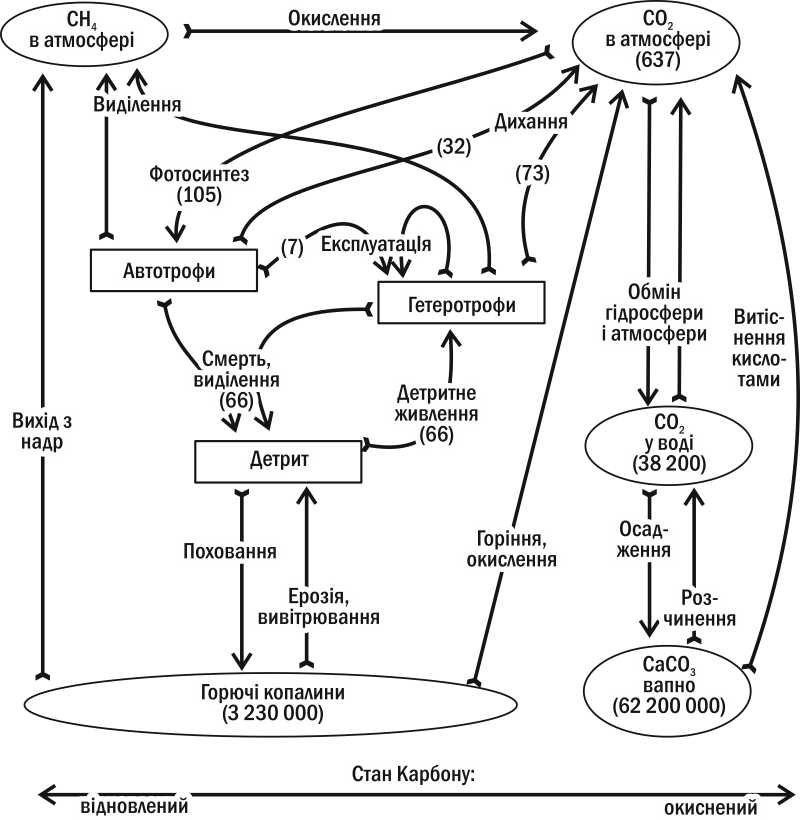
Fig. II-6.1. Global Carbon cycle. Numbers — millions of billions of grams (10¹⁵ g); for stocks — average values, for fluxes — per year
Industrial emissions of carbon monoxide (CO) into the atmosphere equal or even exceed its natural inputs.
The special significance of the Carbon cycle is connected with its influence on climate. Carbon dioxide and methane are the most important greenhouse gases (see sections V-15 and VI-9). CH₄, methane, stabilises the ozone layer, is released by bogs and shallow waters, as well as by intestinal endosymbionts of ruminants. Methods of combating this using antibiotics are currently being developed. The result of such measures is an increase in live-weight gain and a reduction of the greenhouse effect in the atmosphere (i.e., to some extent — a slowing of global warming).