
Multilevel frogs. Column in ComputerreOnline #72
The study of multidirectional multilevel selection is useful for the development of system control technologies in general: from biological to socio-economic.
←
Dmytro Shabanov
→
Selfish Gene or/and Selfish Individual? Multilevel Frogs "I Feel Some Inevitability..."
Column in KompyuterraOnline #71 Column in KompyuterraOnline #72 Column in KompyuterraOnline #73
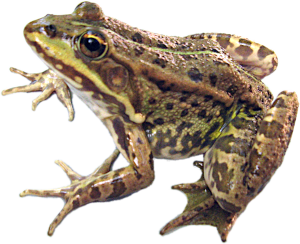
In this column, I will try to tie together several topics I've discussed before. Last time, I wrote that some aspects of evolution are conveniently explained from the perspective of the selfish gene, while others are explained from the perspective of the selfish individual. In the past two columns, we discussed the debate about the role of group selection in evolution. And once, I wrote that depending on the alignment of parameters, the optimization of a system and its subsystems receives either support from an Invisible Hand or support from an Invisible Foot. All these abstractions are meaningful to the extent that they help solve specific problems. My "task" is to study the semi-clonal hybridization of green frogs. I use it as a focal point for testing the theoretical constructs mentioned. For clarity, I will repeat the minimum set of information about the problem. More details are in the review from "Nature." In most of Europe, there are two species of green frogs (more precisely, even two species groups, but we won't delve into that). These are the pond frog (Rana lessonae or Pelophylax lessonae) and the lake frog (Rana ridibunda or Pelophylax ridibundus). They crossbreed, producing hybrids named similarly to the species: edible frogs (Rana esculenta or Pelophylax esculentus). To avoid cluttering the column with Latin, I will refer to the frogs by letters (L and R), denoting their genomes (single chromosomal sets; species-specific sets of hereditary information). If so, pond frogs are LL frogs, lake frogs are RR, and hybrids (edible) are LR. Here's an analogy. We belong to the species Homo sapiens, and any of us can be designated as an SS human. We each received one S genome from our mother and the other from our father. Hybrids of our species and Neanderthals, Homo neanderthalensis, would be designated as NS humans according to this logic. The "trick" of hybrid frogs is their semi-clonal reproduction. Chromosomes from different genomes in LR frogs do not "recognize" each other during gamete formation (sex cells). But in the germline cells (which will give rise to gametes), miracles happen (I described them here). One of the genomes is discarded (eliminated), and then the second is duplicated (endoreduplicated). The gamete receives one of the parental genomes (the clonal genome) unchanged. So, look, a frog L(R), i.e., a hybrid with a clonal genome R, produces R gametes (the symbol of the clonal genome is in parentheses): What is shown in this diagram is otherwise depicted in this figure. Hybrid frogs most often live not alone, but together with individuals of the parental species. Groups are formed, united by common reproduction. These are not populations. Both regular genomes, which are shuffled from generation to generation, and clonal genomes are transmitted in them. We call these groups HPS – hemiclonal (=semi-clonal) population systems. For Western Europe, HPS with LL and L(R) are typical. When such frogs crossbreed, hybrids are again produced: LL×L(R)→L(R). European frog researchers predicted that the ability for semi-clonal inheritance is a property of the R genome: it contains genes that promote the elimination of the L genome. Dawkins expresses the same idea in "The Extended Phenotype," suggesting that selection should act on LL frogs to prevent them from crossing with LR and RR. Last time, we talked about meiotic drive genes and cited strange flies as an example, where one chromosome enters gametes much more likely than another. In frogs, the entire chromosome set of 13 chromosomes behaves similarly. So, is semi-clonal inheritance an extreme case of meiotic drive and an example of selfish genes at work (or rather, a selfish R genome)? For Eastern Ukraine, HPS with RR and (L)R frogs are characteristic. Everything happens the other way around there. Strange coincidence, isn't it? It turns out that in Eastern Ukraine, such an unusual selfish gene is found in the L genome! And in the region we called the North-Donetsk center of green frog diversity, individuals RR, (L)R, L(R), (L)(R), LLR, and LRR can gather in one place for spawning. Each of these categories has different forms, differing in details, the discussion of which will not fit in this column. And it is clear to me that hybrid frogs can "mix" their genomes and change the nature of gametogenesis in various ways, and the HPS where they end up acts as a filter, selecting suitable ways of gametogenesis for the hybrids. Another amazing thing. First-generation hybrids, formed from the crossing of LL and RR frogs, face serious difficulties in gamete production. They often have underdeveloped gonads, and most sex cells are non-viable (primarily due to incomplete chromosome sets). But after more or less prolonged transmission of clonal genomes from generation to generation, gamete formation stabilizes relatively. This indicates selection. A tenth-generation hybrid originates from first, second, and subsequent generation hybrids that were able to successfully produce sex cells. The results of this selection are reflected in the genes within the clonal genomes (nowhere else!). Thus, although clonal genomes are seemingly transmitted unchanged, they are under strong selective pressure that actually changes their properties. What these changes are – gene mutations, epigenetic modifications, amplifications of certain regions – we don't know yet. By the way, this selection I'm writing about occurs primarily at the cellular level within the hybrid frog itself! Those germline cells that fail to reorganize their hereditary apparatus correctly stop developing. Gametes are formed only from those cell lines where complex genome rearrangements were successful; offspring arise only from correctly formed gametes. At the same time, these offspring themselves will only leave offspring if they do not interfere with the normal development of the individual. I have already written about the non-viability of parental species individuals that arise from hybrid crosses. The usual explanation for this phenomenon is the accumulation of harmful mutations in genomes transmitted clonally (the mechanism leading to the degeneration of genomes transmitted without recombination is called "Muller's ratchet" in population genetics). In hybrids, the effect of these mutations is compensated by the second genome (which is used for one generation but does not pass into sex cells). When two such burdened genomes meet, they destroy the unfortunate tadpole or froglet. Unfortunately, this explanation is contradicted by the fact that individuals inheriting identical clonal genomes suffer no more than individuals with different clonal genomes of the same species and, presumably, different, compensating mutations. I hypothesize that the non-viability of such individuals is a consequence of the selection of clonal genomes for their ability to eliminate the other genome from germline cells. And describing this selection is more effective not in the language of "selfish" genes, but in the language of the reproduction of "selfish" cell lines and "selfish" individuals. In different cell lines, in different individuals, different gametogenesis pathways prove to be stable. Different combinations of clonal genomes end up in different HPS. Some of these combinations are non-viable (example – in the column about the Invisible Foot), others are harmonious and successful. Viable HPS can spread – colonize adjacent habitats. If individuals carrying a complementary set of clonal genomes enter a new habitat, a stable HPS will also arise there. It will grow, strengthen, and groups of frogs carrying a successful genome combination will move on. So. Is the concept of the selfish gene (in their case – the selfish genome) useful for describing the case of green frogs? Yes, it is useful. Without it, it is difficult to explain situations where the result of unlimited reproduction of one clonal genome is the death of the entire population system. Is the concept of the selfish gene sufficient for describing the case of green frogs? No. Even the fact of the diversity of semi-clonal inheritance forms requires explanation at the level of individual selection, i.e., from the perspective of the selfish individual. Can the case of green frogs be fully described without analyzing group selection? No. Those groups (HPS) where unstable combinations of clonal genomes form will die out or transform. Those that have found a successful combination of transmitted genomes will survive and eventually spread to new habitats. By the way, returning to the Dawkins and Wilson debate discussed in previous columns, it can be said that the frogs "vote" for Wilson. Group selection is an important factor in their evolution; overall, the idea of multilevel selection, which so irritates Dawkins, is needed to describe it. What about the concept of kin selection, for which Dawkins fights like a lion? In the case of green frogs, it also proves to be useless. Look here. One brood of hybrid frogs enters a pond. For example, let's assume it's (yL)xR, males with a male clonal genome L, as in the case described in the column about the Invisible Foot. Here they are, sitting together in the spawning pit. Each of them has the same genome (yL) as all its brothers, as well as all its children and all its nephews! Can this situation be considered from the perspective of kin selection, evaluating the chances of reproduction for all (yL) genomes? But in doing so, we lose sight of the differences between different individuals associated with the selection of clonal genomes for the stability of clonal transmission. No, we need to consider each line of individuals with the (yL) genome separately. These lines compete with each other: the more individuals with (yL) genomes in the HPS, the harder it is for each of them to reproduce! Thus, the evolution of green frogs turns out to be a highly complex set of processes occurring at different levels. Which ones? The following levels are directly or indirectly mentioned in this column: — Gene level: genes compete with each other for entry into the next generation of individuals; — Genome level: clonal genomes compete with each other for entry into gametes; — Cellular level: different germ cell lines compete for the ability to produce gametes by performing complex operations on their genomes; — Individual level: individuals compete with each other for survival and reproduction; — Semi-clonal level: semi-clones (groups of individuals with identical clonal genomes) interact within HPS; — Group level: HPS compete with each other for survival and dispersal. Systems within systems... And at each level – its own optimization logic! Depending on the consistency or inconsistency of selection at different levels, the presence of upward (from subsystems to systems) and downward (from systems to subsystems) direct and feedback connections, the overall multilevel selection can be quite varied. Subsystems and systems feel either the Invisible Hand or the Invisible Foot. I'll tell you a secret: multilevel selection in green frogs is the core I chose to build my doctoral dissertation around. Let's see how my colleagues will perceive this... Why dig into all this? It's enough for me that it allows me to better understand green frogs. And I can also say that expanding our understanding of such problems, even in the case of frogs, can lead to the most unexpected consequences, up to new technologies for managing populations of agricultural organisms. Studying multidirectional multilevel selection is useful for developing technologies for managing systems in general – from biological to socio-economic. I remind you that each of us is included in several hierarchies of social systems: family members, organization employees, residents of a building and settlement, members of trade unions, public organizations and parties, citizens of a country... We still don't know exactly how the optimization processes at these levels relate. But, dear readers, get excited: what a complex world we live in!
←
Dmytro Shabanov
→
Selfish Gene or/and Selfish Individual? Multilevel Frogs "I Feel Some Inevitability..."
Column in KompyuterraOnline #71 Column in KompyuterraOnline #72 Column in KompyuterraOnline #73