
Origin of sex, gonochorism and hemiclonal inheritance. Statement of the problem. Column for Kompyutera #130
Origin of sexual reproduction. Origin of gonochorism. Ecological differentiation of sexes. Abandonment of sexual process and transition to clonal reproduction. Origin of hemiclonality. Possible abandonment of hemiclonality. The task of this column was...
Ukraine - Great Vradiivka. Selected passages from correspondence with Russian and pro-Russian friends. Origin of sex, duality, and hemiclonal inheritance. Problem statement. The riddle of sex. Cui prodest: gene, individual, group?
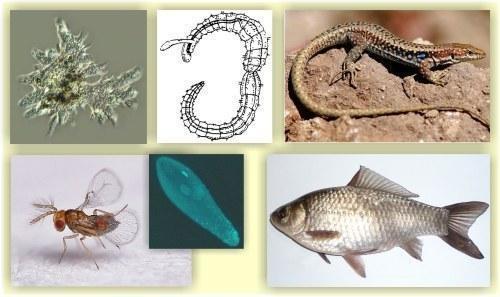
{"translated_text":"← Dmytro Shabanov →\n\n\nUkraine is a large Vradiivka. Selected passages from correspondence with Russian and pro-Russian friends\nOrigin of sex, gonochorism, and hemiclonal inheritance. Problem statement\nThe riddle of sex. Cui prodest: gene, individual, group?\n\n\nComputerra Column #129\nComputerra Column #130\nComputerra Column #131\n\n\nHaving just started cooperating with the online \"Computerra,\" I wrote a column that led up to the topic of the origin of gonochorism. That column was the fourth in the series. There I explained why gonochorism, widespread among highly organized living organisms, is not so easy to explain. In the seventh column, I explained why the well-known (and quite interesting) ideas of Vigen Geodakyan do not allow us to explain the origin (specifically the origin, not the success) of gonochorism. In those articles I promised to soon continue the discussion on this topic... and did not keep my promise. At the time, it seemed to me that there was only a little left to finish the almost-ready model. Alas, over the past two and a half years, I have not been able to accomplish this task. But I must return to the topic, and I will do so—starting with this, the one hundred and thirtieth column. Now I will try to work through this topic more thoroughly.\nThe first step that must be taken is to establish a classification of types of population reproduction. Note: we are talking about types of reproduction (their classifications were developed long ago). Reproduction is a process that occurs at the organism level, while at the population level, reproduction takes place. One type of population reproduction can be achieved through fundamentally different modes of reproduction.\nI will clarify this idea with examples.\n— The amoeba Amoeba proteus divides in half through the basic type of division in all eukaryotic organisms, mitosis. First, the nucleus divides (with the formation of two identical daughter nuclei), then the cell cytoplasm.\n— The small marine polychaete worm Ctenodrilus monostylos has lost the ability to undergo sexual reproduction and reproduces through architomy. In this form of vegetative reproduction, the body divides into anterior and posterior halves, each of which regenerates the missing part.\n— Rock lizards of the genus Darevskia (named after I. S. Darevsky, who described their reproduction) reproduce through parthenogenesis (the outdated term is \"virgin reproduction\"). Parthenogenesis, according to the accepted classification, is one of the forms of sexual reproduction; before the egg cell forms, the chromosomes in the precursor cell duplicate through endomitosis (chromosome doubling without cell division), and the resulting egg cell can develop without fertilization.\n— In parasitic wasps (hymenopteran insects) infected with the parasitic bacterium Wolbachia, the bacteria stop the first division of meiosis (cell division during which sex cells are formed), leading to parasitically induced parthenogenesis.\n— Silver crucian carp in many bodies of water reproduce through gynogenesis, in which the egg laid by the female crucian carp is activated by the sperm of any cyprinid fish. The sperm nucleus does not enter the egg, and the offspring's development is ensured by the egg nucleus.\n[IMG_1]\nIllustrations of the mentioned examples of clonal reproduction: Amoeba proteus; architomy of the polychaete Ctenodrilus monostylos; the rock lizard Darevskia unisexualis; the wasp Trichogramma and its egg infected with Wolbachia bacteria (light dots); the silver crucian carp Carassius gibelio\nThe described forms of reproduction differ from each other quite fundamentally. Yet from the standpoint of population reproduction, they are quite similar, as they produce clones—sets of genetically identical individuals. In all these cases, offspring are not genetically different from their parents (strictly speaking, this statement is not absolutely correct, but for the subsequent exposition it is not essential). Populations consisting of clones fundamentally differ from populations with sexual reproduction. Essentially, they are \"bundles\" of independent clonal lines capable of branching and dying out. By the way, the functioning of clonal populations, the mechanisms by which their belonging to a single species is maintained, and generally the understanding of what a species is in clonal organisms, have been developed by modern science quite insufficiently...\nThus, the same types of reproduction can develop on different bases. To compare them, they must be identified and designated. The classification of population types by their reproduction mechanisms, which I propose, is shown in the diagram. This classification is a result of detailing the one I published several years ago. However, before proceeding to its discussion, I will make an important clarification.\nThe classification we will discuss concerns only populations with a constant mode of individual reproduction. In addition to these, many cases of complex life cycles or alternation of reproduction modes are known. In many species, sexual reproduction alternates with asexual reproduction, or fertilization-based reproduction alternates with parthenogenesis. Thus, daphnia and aphids form clonal lines of parthenogenetic females during the summer, and before overwintering, they produce a gonochoristic generation. Males and females produce fertilized eggs that wait for the following spring.\n[IMG_2]\nCyclic parthenogenesis in daphnia\nStrictly speaking, such modes of reproduction do not fit into the proposed classification. However, one can always say, for example, that daphnia and aphids combine reproduction subtypes IIIa and IIb. Nevertheless, alternation of generations is, in any case, a separate discussion. Postponing it for better times, let us proceed to considering population types with a constant nature of reproduction.\n[IMG_3]\nClassification of population reproduction types (in species with constant individual reproduction mode). Detailed explanations are in the text\nType I is represented by the already-mentioned clonal populations. It is divided into two subtypes depending on whether the clonal lines are genetically isolated from each other or not.\nSubtype Ia is characterized by the ability for horizontal transfer of genetic information (\"vertical\" is considered transfer within a genealogical sequence, from ancestors to descendants, and \"horizontal\" is transfer between unrelated organisms). The most diverse bacteria belong precisely to this type. Horizontal gene transfer in prokaryotes (organisms without nuclei) was discovered through the example of antibiotic resistance transfer. Recently, it has become clear that such transfer is a widespread phenomenon. Isolated species gene pools are not characteristic of bacteria. \"Pieces\" of genetic material are transferred from \"species\" to \"species\" through various mechanisms.\nThat is why some bacterium is drawn in column Ia. Beneath it is a completely different creature—the bdelloid rotifer. This is a microscopic worm—and therefore a eukaryotic (nucleated) organism. As in most other animals, and in particular in you and me, its cells contain a double set of genetic information, placed on a double (diploid) set of chromosomes (DNA-containing cell structures). The peculiarity is that in you and me, one set was received from the father and the other from the mother, while bdelloid rotifers lost sexual reproduction in the fairly distant evolutionary past. Our paired chromosomes contain similar (to the extent of individual differences) versions of the same genetic text. The paired chromosomes of bdelloid rotifers have essentially ceased to be paired: they contain functionally different text that is literally stuffed with fragments received from other organisms through horizontal transfer. These amazing worms reproduce through parthenogenesis.\nFor bacteria, a situation is probably possible where a foreign fragment of genetic information integrates somewhere and turns out to be useful. Such an insertion is not a completely random text. It is the result of selection that occurred in other organisms, and it is possibly connected with some valuable properties. Eukaryotes rearrange their genetic information differently. Do you remember, in recent columns on the epigenetic theory of evolution, I said that the development of highly organized organisms is regulated much more complexly than in bacteria? If during individual development there is multi-stage interaction between genes and the products of their work, if gene activity is regulated by complex gene networks, then the chances that a random piece of genetic text, integrated into a random location, could potentially be useful are very slim.\nHorizontal transfer also occurs in eukaryotes, but in general they are characterized by a completely different mechanism of recombination, closely connected with sexual reproduction. Upon fertilization, a cell with a doubled chromosome set arises. This means that during the formation of sex cells, the chromosome set must be halved. This occurs during division called meiosis. In meiosis, paired chromosomes recognize each other and exchange fragments during the process named crossing over (or simply crossover). New genetic information that bears traces of selection that occurred in other organisms enters not just anywhere, but precisely into that location of the chromosome where mechanisms for regulating its activity already exist.\nHowever, we are now talking about clonal populations, for which sexual processes and the recombination associated with them are not characteristic. We distinguish subtype IIa, which is characterized by the rejection of systematic use of horizontal transfer. Representatives of such a subtype regularly arise from ancestors belonging to the following types, but probably can also originate from Ia populations. The diagram shows Amoeba proteus and silver crucian carp, whose reproduction we have already discussed.\nType II includes populations of cross-fertilizing hermaphrodites. The diagram depicts the earthworm and the vineyard snail: these are animals that during reproduction form pairs of hermaphroditic individuals, each of which transfers male sex products to its partner. Such creatures already fully utilize the key advantages of sexual reproduction and the associated recombination (the consequences of crossing over during sex cell formation), but do not yet bear the burden of gonochorism.\nType III. Gonochoristic. Divided into two subtypes depending on whether there are significant ecological differences between females and males or not. Perhaps it was not worth dividing this type into subtypes... The main reason why it was nevertheless done is as follows. There are serious reasons for which ecological sexual dimorphism turns out to be beneficial, and here I fully agree with Vigen Geodakyan. However, it is obvious that gonochorism must first simply arise (subtype IIIa)—and only then between the two sexes can serious differences accumulate that do not relate directly to the sphere of reproduction (subtype IIIb).\nSubtype IIIa in the diagram is illustrated by images of the Colorado beetle and the green toad. By the way, there is some sexual dimorphism in green toads: females are larger than males (as in many other amphibians). Nevertheless, the lifestyle of both sexes of toads is approximately the same; they are placed in IIIa precisely to show that certain differences between sexes can be observed in this subtype. Subtype IIIb in the diagram includes orb-weaver spiders and humans.\nFinally, type IV. Hemiclonal (semi-clonal) population systems, HPS. Usually they are not considered as something standing apart from all other population types (the very concept of HPS was invented and introduced by my colleagues and me only a few years ago). In the diagram—the edible frog (Pelophylax esculentus) and the American poeciliid fish of the genus Poeciliopsis, in which the type of reproduction characteristic of frogs was first described. In such organisms, interspecific hybrids transmit the genome of one of the parental species as a whole (almost as a whole) into sex cells. Interspecific hybrids coexist with representatives of the parental species, interbreed with them, and together participate in reproduction. In such systems, from generation to generation, both clonal (practically unchanging) and recombinant, ordinary genomes are transmitted.\nIs the list of reproduction types exhausted? I do not know. Considering the degrees of freedom by which the listed types differ, I do not know of any other combinations, but this does not mean they cannot exist...\nThe table below shows the results of comparing different population types by those characteristics that seem significant to me. Note that type IV turns out to be quite independent. The smallest differences are quite naturally observed between subtypes IIIa and IIIb. Alas, in this column I will be able to discuss not all columns of the table: for example, the discussion of recombination will require a separate column. Nevertheless, I hope that I have set the direction for discussion.\n\nPopulation type\n\nIa\n\nIb\n\nII\n\nIIIa\n\nIIIb\n\nIV\n\n\n\nGenealogy\n\nLinear\n\nReticulate\n\nLinear\n\n\n\n\"Double cost\" of sex\n\nNo (all individuals directly produce offspring)\n\nYes (only females directly produce offspring)\n\n\n\nSexual selection\n\nNo\n\nIneffective\n\nEffective\n\nYes\n\n\n\nUniqueness of individual\n\nNo\n\nInheritable\n\nNon-inheritable\n\n\n\nGene pool\n\nAggregate of clones\n\nRecombinant gene pool of population\n\nRecombinant gene pool + hemiclones\n\n\n\nIsolation\n\nGene flow between clones\n\nIsolated clones\n\nGene flow within species, isolated from other species\n\nGene flow within and between species\n\n\n\nRecombination\n\nChaotic\n\nNo\n\nOrdered intraspecific\n\nOrdered intra- and interspecific\n\n\n\nAnd now I will do what, essentially, I wrote this column for. I will repeat the diagram that you have already seen, adding in it the legend for transitions between types that occurred during evolution. Solid arrows denote those evolutionary transitions regarding which we know that they occurred, or we can assume this with a high degree of confidence (for example, the transition shown in green occurred either as I→II, or as I→IIIa).\n[IMG_4]\nI plan to discuss the logic of the following transitions in the near future.\nOrigin of sexual reproduction: I→II (more probable) or I→IIIa (green arrows).\nOrigin of gonochorism: II→IIIa (more probable) or I→IIIa (red arrows).\nEcological differentiation of sexes: IIIa→IIIb (purple arrow).\nRejection of sexual process and transition to clonal reproduction: III→I or II→I (brown arrow).\nOrigin of hemiclonality: III→IV (and why not? Maybe also II→IV)—blue arrow.\nPossible rejection of hemiclonality: IV→III (IV→II)—blue dashed arrow.\nThe task of this column was to establish a scheme that would allow organizing the discussion of the just-listed problems. I hope that I will simply be able to repeat the diagram with arrows and, using a reference, send everyone who needs explanations here, to this column.\nAgree? Believe me, there is much to tell about and much to ponder.\n\n← Dmytro Shabanov →\n\n\nUkraine is a large Vradiivka. Selected passages from correspondence with Russian and pro-Russian friends\nOrigin of sex, gonochorism, and hemiclonal inheritance. Problem statement\nThe riddle of sex. Cui prodest: gene, individual, group?\n\n\nComputerra Column #129\nComputerra Column #130\nComputerra Column #131"}
Having just begun collaborating with the "Computerra" network, I wrote a column where I steered the conversation towards the topic of the origin of sexual dimorphism. This column was the fourth in the series. There, I argued why sexual dimorphism, widespread among highly organized living organisms, is not so easy to explain. In the seventh column, I explained why the widely known (and very interesting) ideas of Vigen Geodakyan do not allow for an explanation of the origin (specifically the origin, not the success) of sexual dimorphism. In those articles, I promised to continue the discussion on this topic in the near future... and I did not keep my promise. At that time, it seemed to me that only a little more work was needed to finalize an almost ready model. Unfortunately, over the past two and a half years, I have not been able to cope with this task. But the topic still needs to be revisited, and I will do so – starting with this, the one hundred and thirtieth column. Now I will try to work through the topic more thoroughly. The first step that needs to be taken is to establish a classification of types of population reproduction. Please note: this is not about types of reproduction (their classifications have been developed long ago). Reproduction is a process that occurs at the organism level, while reproduction occurs at the population level. Homogeneous population reproduction can be carried out through fundamentally different methods of reproduction. I will explain this idea with examples. — Amoeba proteus divides in half as a result of the basic type of division in all eukaryotic organisms, mitosis. First, the nucleus divides (forming two identical daughter nuclei), then the cell cytoplasm. — The small marine polychaete worm Ctenodrilus monostylos has lost the ability to reproduce sexually and reproduces by architomy. In this form of asexual reproduction, the body divides into anterior and posterior halves, each of which regrows the missing part. — Rock lizards of the genus Darevskia (named after I. S. Darevsky, who described their reproduction) reproduce by parthenogenesis (an outdated term is "virgin reproduction"). Parthenogenesis, according to the accepted classification, is a form of sexual reproduction; before the formation of the egg cell, the chromosomes in the precursor cell double through endomitosis (doubling of chromosomes without cell division), and the resulting egg cell can develop without fertilization. — In parasitoid wasps (hymenopteran insects) infected with the parasitic bacterium Wolbachia, the bacteria stop the first division of meiosis (cell division during which gametes are formed), leading to parasitically induced parthenogenesis. — Silver crucian carp in many bodies of water reproduce by gynogenesis, in which the egg laid by the female crucian carp is activated by the sperm of any cyprinid fish. The sperm nucleus does not enter the egg, and the development of offspring is ensured by the nucleus of the egg. Illustrations of the mentioned examples of clonal reproduction: Amoeba proteus; architomy of the polychaete Ctenodrilus monostylos; rock lizard Darevskia unisexualis; parasitoid wasp Trichogramma and its egg infected with Wolbachia bacteria (light spots); silver crucian carp Carassius gibelio. The described forms of reproduction differ from each other in practically fundamental ways. And from the perspective of population reproduction, they are very similar, as they produce clones – populations of genetically identical individuals. In all these cases, the daughter individuals are genetically indistinguishable from the mother individuals (strictly speaking, this statement is not absolutely true, but it is not essential for further discussion). Populations consisting of clones are fundamentally different from populations with sexual reproduction. In fact, they are "bundles" of independent clonal lines capable of branching and dying. By the way, the functioning of clonal populations, the mechanisms by which their belonging to the same species is maintained, and in general, the understanding of what a species is in clonal organisms, are quite insufficiently developed by modern science... Thus, the same types of reproduction can develop on different bases. To compare them, they must be identified and labeled. The classification of population types by their reproduction mechanisms, which I propose, is shown in the diagram. This classification is the result of detailing the one I published a few years ago. However, before moving on to discussing it, I will make an important clarification. The classification we will discuss applies only to populations with a constant mode of reproduction of individuals. In addition to them, numerous cases of complex life cycles or alternation of reproduction methods are known. In many species, sexual reproduction alternates with asexual reproduction, or reproduction with fertilization alternates with parthenogenesis. For example, Daphnia and aphids form clonal lines of parthenogenetic females during the summer, and before winter, they produce a dimorphic generation. Males and females produce fertilized eggs, which wait for the next spring. Cyclic parthenogenesis in Daphnia. Strictly speaking, such reproduction methods do not fit into the proposed classification. However, one can always say, for example, that Daphnia and aphids combine subtypes of reproduction IIIa and IIb. However, the alternation of generations is a separate topic in any case. Let's postpone it to better times and move on to considering types of populations with a constant mode of reproduction. Classification of population reproduction types (in species with a constant mode of individual reproduction). Detailed explanations are in the text. Type I is represented by the already mentioned clonal populations. It is divided into two subtypes depending on whether the clonal lines are genetically isolated from each other. Subtype Ia is characterized by the ability for horizontal gene transfer ("vertical" is considered transfer within a genealogical sequence, from ancestors to descendants, and "horizontal" – between non-related organisms). The most diverse bacteria belong to this type. Horizontal gene transfer in prokaryotes (pre-eukaryotic organisms) was discovered by the example of antibiotic resistance transfer. It has recently become clear that such transfer is a widespread phenomenon. Isolated species gene pools are not characteristic of bacteria. "Pieces" of genetic material are transferred from "species" to "species" through various mechanisms. That is why a bacterium is depicted in column Ia. Below it is a completely different creature – a bdelloid rotifer. It is a microscopic worm – thus, a eukaryotic (nucleated) organism. Like most other animals, and, in particular, like us, its cells contain a double set of genetic information located on a double (diploid) chromosomal system (containing DNA of cellular structures). The peculiarity is that we have one set inherited from the father and the other from the mother, while bdelloid rotifers lost sexual reproduction in the distant evolutionary past. Our paired chromosomes contain similar (up to individual differences) versions of the same genetic text. The paired chromosomes of bdelloid rotifers have essentially ceased to be paired: they contain functionally different text that is literally packed with fragments obtained from other organisms as a result of horizontal transfer. These amazing worms reproduce by parthenogenesis. For bacteria, a situation is likely possible where an alien fragment of genetic information is inserted randomly and turns out to be useful. Such an insertion is not a completely random text. It is the result of selection that occurred in other organisms, and it may be associated with some valuable properties. Eukaryotes rearrange their genetic information differently. Remember, in recent columns about the epigenetic theory of evolution, I said that the development of highly developed organisms is regulated much more complexly than in bacteria? If, during individual development, there is a multi-stage interaction between genes and the products of their work, if gene activity is regulated by complex gene networks, then the chance that a random piece of genetic text inserted into a random place will turn out to be potentially useful is very small. Horizontal transfer is also found in eukaryotes, but in general, a completely different recombination mechanism is characteristic of them, closely related to sexual reproduction. Fertilization results in a cell with a doubled set of chromosomes. This means that during the formation of gametes, the chromosome set must be halved. This occurs during a division called meiosis. In meiosis, paired chromosomes recognize each other and exchange fragments in a process called crossing over (or simply overlap). New genetic information, carrying traces of selection that occurred in other organisms, is not inserted randomly, but precisely into the location on the chromosome where mechanisms for regulating its activity already exist. However, we are now talking about clonal populations, for which sexual reproduction and associated recombination are not characteristic. We distinguish subtype IIa, which is characterized by the refusal to systematically use horizontal transfer. Representatives of this subtype regularly arise from ancestors belonging to other types, but may also originate from Ia populations. The diagram shows Amoeba proteus and silver crucian carp, whose reproduction we have already discussed. Type II includes populations of cross-fertilizing hermaphrodites. The diagram shows an earthworm and a garden snail: these are animals that, during reproduction, form pairs of hermaphroditic individuals, each of which transfers its male gametes to its partner. Such creatures already fully utilize the key advantages of sexual reproduction and associated recombination (the consequences of crossing over during gamete formation), but do not yet bear the burden of sexual dimorphism. Type III. Dimorphic. Divided into two subtypes depending on whether there are significant ecological differences between females and males. Perhaps this type should not have been divided into subtypes... The main reason why it was done is this. There are serious reasons why ecological sexual dimorphism proves to be advantageous, and here I fully agree with Vigen Geodakyan. However, it is obvious that sexual dimorphism must first arise (subtype IIIa) – and only then can significant differences accumulate between the two sexes that do not directly relate to reproduction (subtype IIIb). Subtype IIIa in the diagram is illustrated by images of the Colorado potato beetle and the green frog. By the way, some sexual dimorphism exists in green frogs: females (as in many other frogs) are larger than males. However, the lifestyle of both sexes of frogs is approximately the same; they are placed in IIIa precisely to show that certain differences between the sexes can be observed in this subtype as well. Type IIIb in the diagram includes orb-weaver spiders and humans. Finally, Type IV. Hemiclonal (semi-clonal) population systems, HPS. Usually, they are not considered as something separate from all other population types (the concept of HPS itself was invented and introduced by my colleagues only a few years ago). The diagram shows the edible frog (Pelophylax esculentus) and the American killifish of the genus Poeciliopsis, in which the type of reproduction characteristic of frogs was first described. In such organisms, interspecific hybrids transmit the genome of one of the parental species as a whole (almost as a whole) to their gametes. Interspecific hybrids live together with representatives of the parental species, crossbreed with them, and participate in reproduction together. Both clonal (practically unchanged) and recombinant, normal genomes are transmitted from generation to generation in such systems. Is the list of reproduction types exhausted? I don't know. Considering the degrees of freedom by which the listed types differ, I am not aware of any other combinations, but this does not mean that they cannot exist... The table below shows the results of comparing different population types based on characteristics that seem significant to me. Note that Type IV turns out to be completely independent. The smallest differences are logically observed between subtypes IIIa and IIIb. Unfortunately, in this column, I will not be able to discuss all the cells of the table: for example, the discussion about recombination will require a separate column. Nevertheless, I hope that I have set the direction for the discussion.
Population Type
Ia
Ib
II
IIIa
IIIb
IV
Генеалогія
Linear
Reticulate
Linear
The "Double Price" of Sex
No (offspring are produced directly by all individuals)
Yes (offspring are produced directly only by females)
Sexual Selection
No
Ineffective
Effective
Is
Uniqueness of the Individual
No
Inherited
Uninherited
Генофонд
Collection of Clones
Recombinant Population Gene Pool
Recombinant Gene Pool + Semi-Clones
Ізоляція
Gene Flow Between Clones
Isolated Clones
Gene Flow Within a Species, Isolated from Other Species
Gene Flow Within and Between Species
Recombination
Chaotic
No
Ordered Intra-species
Ordered Inter- and Intra-species
And now I will do what, in essence, I wrote this column for. I will repeat the diagram you have already seen, adding conditional notations of transitions between types that occurred during evolution. Continuous arrows denote evolutionary transitions that we know have occurred, or can assume with high confidence (for example, the transition shown in green occurred either like this: I→II, or like this: I→IIIa). I plan to discuss the logic of the following transitions in the near future. Appearance of sexual reproduction: I→II (more likely) or I→IIIa (green arrows). Appearance of sexual dimorphism: II→IIIa (more likely) or I→IIIa (red arrows). Ecological differentiation of sexes: IIIa→IIIb (purple arrow). Abandonment of sexual reproduction and transition to clonal reproduction: III→I or II→I (brown arrow). Appearance of hemiclonality: III→IV (and why not? Perhaps II→IV too) - blue arrow. Possible abandonment of hemiclonality: IV→III (IV→II) - light blue dashed arrow. The task of this column was to provide a scheme that allows organizing the discussion of the just-listed problems. I hope that I can simply repeat the diagram with arrows and, by reference, send explanations to everyone who needs it, here, in this column. Agreed? Believe me, there is something to talk about and something to think about.