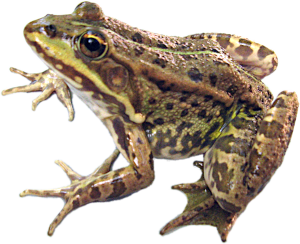
On the psyche of other organisms
Chicken brains. Birds are capable of many things, but the most astonishing is what the African grey parrot Alex learned. How else can one understand you? Do other animals experience pain? Kindred spirits. What images do macaques prefer? Adult films. Why are pandas shown adult videos?
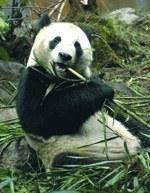
Chicken Brains For decades Soviet (and not only) zoopsychologists‑materialists explained that speaking parrots do not talk, but merely repeat sounds that have become associated with a particular situation. Idealistic notions that birds can understand words are a gross anthropomorphism (the projection of human traits onto animals) and reflect a misunderstanding of the role of labor in the formation of speech activity… It is now becoming clear that the avian brain is not primitive at all: it is simply organized differently from the mammalian brain. Nevertheless, even in the most “brainy” birds (parrots and corvids) the brain, from a human perspective, is still somewhat weak. But the most interesting data are linked to the study of bird behavior in experimental situations. Recently, once again, the world was flooded with reports about the parrot Alex, who “invented” zero. The Alex name is borne by a foundation at the American Brandeis University, which since 1977 has been studying the behavior of four African grey parrots (Psittacus erithacus) – the titans of thought among birds. The 28‑year‑old Alex among them is a star. He knows more than fifty nouns, color names, and numerals from one to six. Among the words he uses was “none” – a designation of a lack of information. When the parrot was given tasks involving counting, he for a while deliberately teased the experimenters by saying nonsense. Supporting the game, foundation staff member Irene Pepperberg (Irene Pepperberg) asked a meaningless question. Alex answered “none”. Further research showed that the bird uses the word “none” in the sense of “zero”, i.e., to denote the absence of any quantity. If it were not for the parrot’s game of random answers, the experimenters would never have discovered this. Humans acquire the concept of zero only by about four years of age. Grey parrots live up to a hundred years, and there is still time to study Alex’s complex psyche. And that is not all the wonders related to parrots. Apparently, like dolphins, they have proper names. In dolphins each individual emits a characteristic song that begins with a specific individual sequence. A significant portion of the time the dolphin repeats exactly this “name”. Other individuals recognize and associate the sequence with its owner. This property is, of course, fascinating, but from our point of view it hardly indicates a deep mind. How would you assess the state of a person who spends half a day singing his own name? Small South‑American parrots Forpus conspicillatus also have names, but they are used not for self‑identification, but for addressing each other. Studying the acoustic communication of seventeen birds, scientists from the University of Hamburg found that when addressing a particular individual, all others begin a “query” with a characteristic identifier. Hearing its name, the bird turned around, like a human called by name. If, when describing dolphin communication, the word “name” should probably be put in quotation marks, here they apparently are not needed. The data obtained thanks to parrots can somehow be reconciled. The parrot has always been considered a special and intelligent bird (Alex, compared with other avian species, has a relatively large brain: the size of a walnut). English biophysicists from the Silsoe Research Institute worked with domestic chicken chicks on a poultry farm. A chicken, as is known, is “not a bird”, and generally a symbol of stupidity. Chicks were trained to peck colored buttons, receiving food as a reward. If the chick took the food immediately, the amount was small, but if it patiently waited a third of a minute, the amount was much larger. Most chicks learned to wait, demonstrating enviable self‑control. Such behavior requires specific structures both in the psyche and in the “material part” of the brain. Who could have expected that hens would prefer to endure hunger for a larger future reward? The future of chicks, in general, is predetermined. Every year poultry farms on our planet raise 40 billion chickens, consumed in the most diverse forms. We are accustomed not to see evil in this: if it comes to that, these 40 billion individuals appear into the world quite purposefully. It is commonly assumed that our existence is far more important: we, unlike birds, possess abstract thinking, have individuality, and care about the future. Unfortunately, we are not immortal… How can another understand you? …Will he understand what you live by? F. I. Tyutchev Norwegian scientists from the School of Veterinary Science in Oslo published striking results of their research. The government of that country planned to ban fishing with live bait. It was assumed that attaching worms to a hook causes them suffering, but scientific data were needed to make a decision. Professor Wenche Farstad, who led the research on this problem, stated that a worm cannot feel pain. The convulsive movements of a worm placed on a hook are simply a manifestation of its nervous system activity. “It seems that, in the case of worms, these are merely reflexes. They may sense something, but it is not painful and does not threaten their welfare,” concluded the Norwegian veterinarians. What this “welfare” is, which triggers convulsive attempts to get rid of it, is not very clear. At the same time, animal‑welfare specialists also touched on lobsters and langoustines thrown into boiling water. It turns out that crustaceans twitch not because they feel pain. They have too few neurons to perceive pain. To assess the contribution of Norwegian veterinarians to zoopsychology, one can recall that Norway is one of the few countries that continue whaling. The largest brain on our planet belongs to the sperm whale. How to justify that a blood‑spilling, harpooned whale does not feel pain? There are many options. One can detail the differences between the whale and human brain and prove that they have different anatomy of pain centers. One can say that the behavior of a shot whale (it sometimes darts one way, then freezes to avoid aggravating wounds) is based not on mental experience but on “nervous system functioning”. One can try to prove that the sperm whale’s language lacks the concept of pain. Or one can contemplate how not to cause other beings to suffer in vain. Thus, can we at all imagine the processes occurring in the psyche of other living organisms? Can we obtain an “objective” criterion for comparing the functioning of two psyches, two inner worlds? Assessing the complexity of a psyche by the complexity of its physiological basis is fraught with errors. For example, for decades neurophysiologists believed that birds are incapable of complex behavior because they lack a developed cerebral cortex. In fact, zoopsychologists, and even bird enthusiasts, were convinced that parrots and corvids belong to animals with the most complex psyches, but no one listened to them. Only recently it became clear that subcortical neuron clusters in birds work no worse than the cortex in mammals. What is the reason for the long‑standing misconception? It is that birds should not have been evaluated by criteria developed for another animal group. In any comparison a suitable measure must be found. Consider a simple example. For humans it is typical that two neighboring peoples consider each other barbarians (i.e., muttering, speaking unintelligibly). Each of these peoples sees that the neighbors speak poorly in the “normal” language and do not follow proper customs. Can one consider the outsiders real people? A person laughs at the meager vocabulary of a “butt‑fool”; a caged parrot suffers because a person does not maintain the “normal” communication typical for a flock of parrots and is forced to learn human acoustic signals. In both our and other relatively complex animal species, behavior is determined by the nervous system. The functioning of a complex nervous system gives rise to a psyche. The task of the psyche is to ensure adaptation to a changing environment. The functioning of the psyche in each species has its own unique features, and its adequate comparison across species is impossible. We can see traits common with us only when dealing with animals relatively close to humans. Scientists at the National Institute of Mental Health in Maryland (USA) used tomography to study processes occurring in the brain of rhesus macaques. When the monkeys heard acoustic signals indicating food or a predator, the tomograph registered increased activity in cortical areas processing visual images. Other sounds did not provoke such a reaction. Thus, there are solid grounds to believe that, upon hearing a “word” of their language, monkeys visually imagine what is being indicated! In vervet monkeys (Cercopithecus aethiops), one of the monkey species, three different alarm cries have been recorded, each eliciting a specific defensive reaction. The cry that can be loosely called “eagle” makes one look up, “snake” makes one glance down, and “leopard” makes one start looking around and climbing a tree. This is not only an analogue of our speech, but also a manifestation of classification ability. Any new danger (photographer in the bushes; observer in a helicopter; microphone on the ground) will be assigned to one of the universally understood classes! Thus, fully understanding the feelings of a suffering creature is very difficult. But the situation can also be viewed from the other side, contemplating the tormentor. When we make a video‑game character suffer, on a rational level we can be sure: it does not feel pain. Unlike the inner world of the psyche, events occurring in the processor or RAM are fully knowable. Yet in the psyche of a player who “kills” a computer character, some processes resemble those occurring in the head of a real murderer. No matter how game manufacturers protest against such a conclusion, the player becomes accustomed to cruelty and even learns to enjoy it (see the news “Music Inspired”). Must one step over empathy for other beings in order to cause them suffering? How does inflicting pain on those who are “too simple to feel it” change people? We cannot avoid causing pain and suffering to other inhabitants of our planet. We are animals, i.e., organisms that feed on other organisms or their parts. Nevertheless, we are free to choose a way of action that does not cause unnecessary, unjustified suffering. Self‑deception based on the belief that others are not like us will only hinder this. Kindred Souls No matter how much we would like to feel superior – we are among the primates, and many features of our social behavior appear in our closest evolutionary relatives. It is enough to recall one example that proves the importance for cultural progress of behavior forms based on simple biological mechanisms. The current success of the Net is largely owed to erotica and pornography. For the Internet to become a seed of the noosphere, it had to reach a certain level of development. The spread of porn addiction is the price (unfortunately not the only one) for achieving that level. But is the interest in viewing the intimate parts of conspecifics a purely human trait? Of course not. Neurobiologists from Duke University Medical Center (North Carolina) succeeded in developing an effective method for assessing the interest that rhesus macaques show in images of their conspecifics. The macaques were trained to “pay” portions of cherry juice for the opportunity to view photographs that interested them. The amount of juice a monkey was willing to part with served as a measure of the attractiveness of the corresponding picture. The highest‑valued images for male rhesus were pictures of female buttocks, as well as photographs of hierarchically higher males. Viewing images of subordinate male monkeys could be achieved only with an additional “payment” (also in juice). The commonality of mechanisms manifested in the interest of male Macaca mulatta and Homo sapiens in conspecific buttocks is undeniable. By the way, eye‑movement analysis shows that even if, on a rational level, a man shows no erotic interest in a woman, his gaze nonetheless almost first “scans” the curves of the opposite‑sex figure. Readers of society gossip magazines and consumers of celebrity photographs taken by lucky paparazzi indulge the same part of their psyche as the juice‑paying macaque. Interesting, “under what heading” are portraits of social‑group leaders placed in public spaces? Adult Films One of the main differences between humans and animals is that we adapt to the environment mainly through cultural inheritance. The more civilized a society, the more an individual’s life success depends on what he has learned rather than what he has inherited biologically. Cultural inheritance is quite natural for us, but rare in other animal species. It has been shown that predatory mammals transmit many hunting techniques to offspring through teaching; songbirds inherit a species‑typical song culturally, and British tits passed each other the “technology” of opening tin caps on milk bottles through learning. Perhaps the list of examples should be expanded by another phenomenon, concerning a rather unexpected sphere – reproduction (reproduction is a vital function of living organisms and is usually well regulated by biological mechanisms). [IMG_1] Generally, when keeping rare animal species in captivity it is much easier to preserve the lives of existing individuals than to obtain offspring from them. There can be many reasons preventing reproduction. At the Beijing Giant Panda Protection Center it was hypothesized that captive‑bred animals might simply not know how to mate because they have never seen other pandas doing it. Curiously, the idea worked: after watching appropriate films one of the females became pregnant (with a male, of course). Establishing a clear causal link to the “movies” is difficult. Giant pandas have a solitary lifestyle and simple behavior: perhaps it was not the films but nature itself that suggested what to do. Now a similar technology is being prepared for use at the New Orleans Zoo, which houses an excessively shy male gorilla. In primate behavior, unlike pandas, cultural inheritance plays an important role – this is where it should be tested whether the technology works. Fortunately, video recordings of gorilla copulation are not considered pornography by human standards, and trouble from zoo administration regulators does not threaten the project. D. Shabanov. Chicken Brains // Computera, M., 2005. – No. 30 (602) D. Shabanov. How Can Another Understand You? // Computera, M., 2005. – No. 8 (580) D. Shabanov. Kindred Souls // Computera, M., 2005. – No. 6 (578). – pp. 14–15 D. Shabanov. Adult Films // Computera, M., 2004. – No. 26–27 (550–551). – pp. 14–16