
III. Pisces-07. Actinopterygii (II): Euteleostei to Istiophoriformes
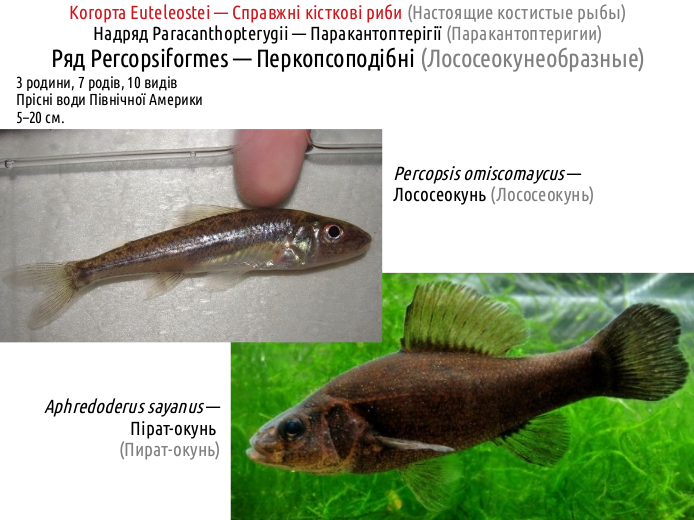
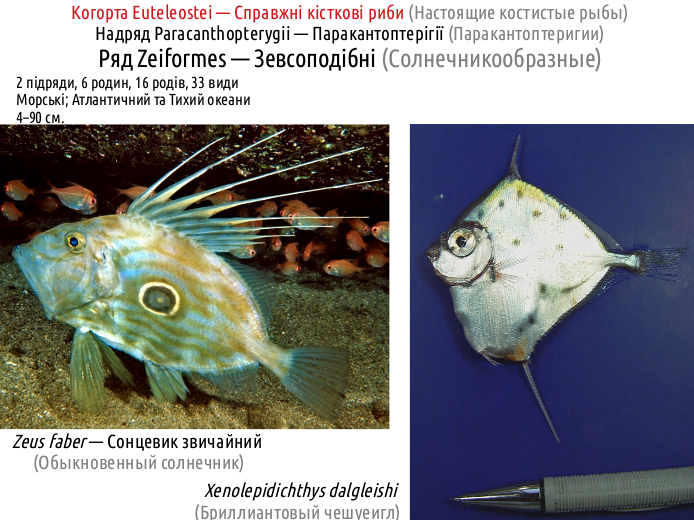
A large group of orders of higher teleost fishes, including — salmoniforms, esociforms, gadiforms, gobiiforms, blenniiforms, beloniforms, cyprinodontiforms and others.
Cohort Euteleostei - true teleost fishes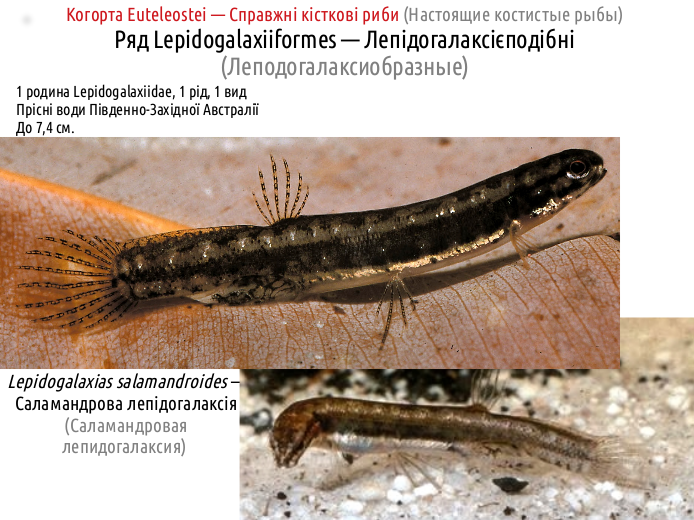
Superorder Protacanthopterygii - protacanthopterygians
Order Salmoniformes - salmoniforms
Many representatives of this order are of exceptionally high commercial importance. These are red fish, which are also a source of red caviar. The systematics of salmonids is very confusing; many species may include different forms that differ, for example, in whether they are anadromous or resident.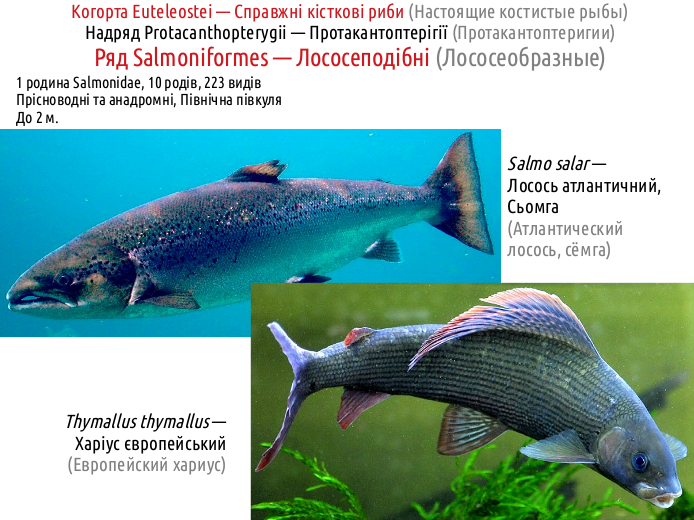
Red fish are undoubtedly a delicacy. Non-anadromous forms of salmon are called trout. Anadromous forms, ascending to spawning grounds, can perform spectacular jumps.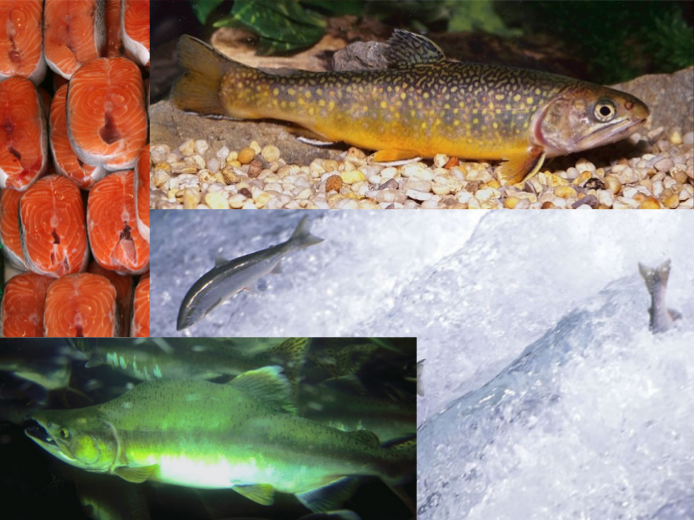
Spawning usually occurs only once in a lifetime. Before spawning, fishes may undergo striking changes, especially vividly expressed in pink salmon (Oncorhynchus gorbuscha), a species widely distributed in the Far East.
Order Esociformes - pike-like fishes
Pikes are freshwater predators of fairly large size (the northern pike, Esox lucius, reaches 1.4 m), whereas umbras are small bottom-dwelling fishes.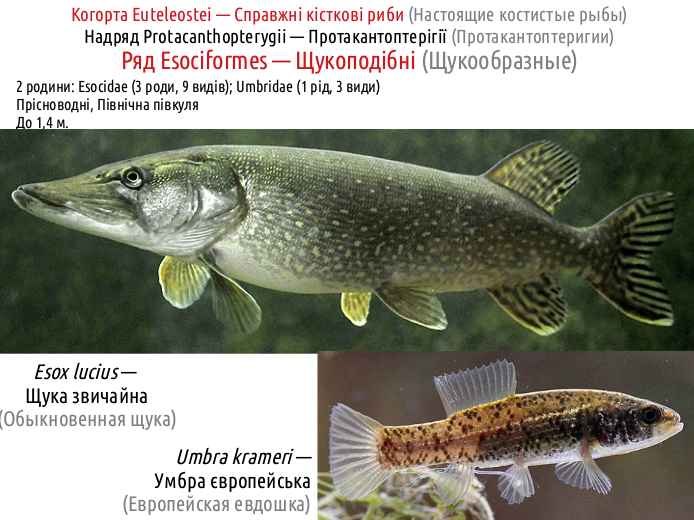
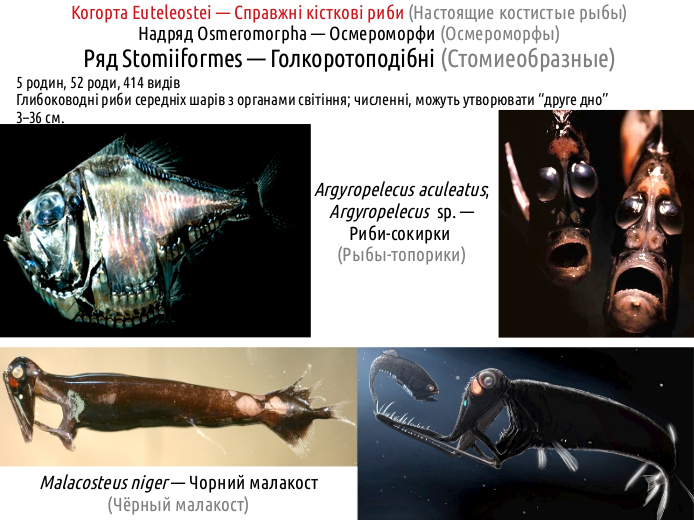
Order Ateleopodiformes - ateleopodiforms
Deep-sea sluggish fishes feeding mainly on the dead remains of other organisms.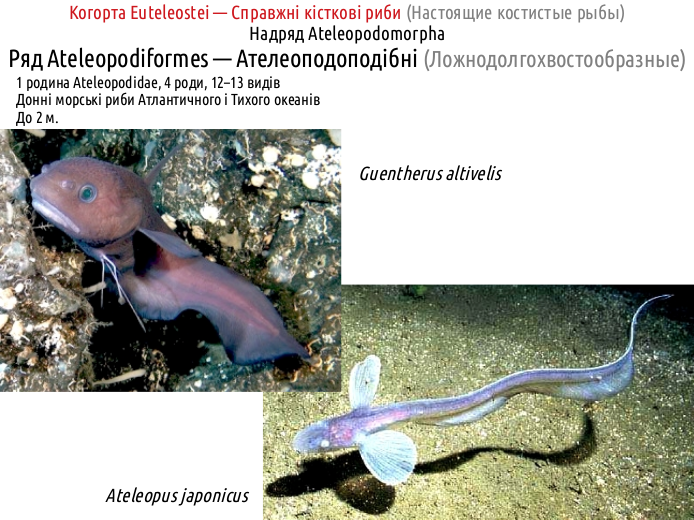
Order Aulopiformes - aulopiforms
An order of marine fishes known since the Cretaceous period. They differ from all other groups by a peculiar structure of the gill apparatus. A large mouth and a deeply incised caudal fin are characteristic. Many species are characterized by synchronous hermaphroditism (simultaneous performance of male and female functions). Several families lead a bottom-dwelling way of life.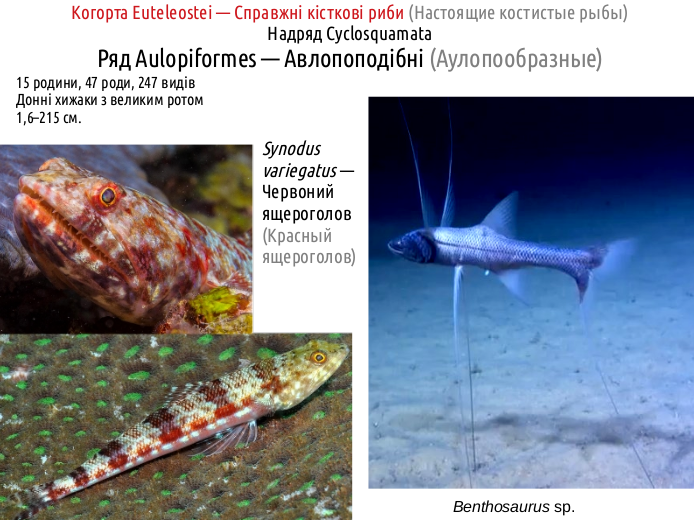
Order Myctophiformes - myctophiforms
An order of marine deep-sea fishes. The head and body are compressed laterally, the mouth is large, and there is an adipose fin. Small or rather small schooling fishes with considerable total biomass. At night many of them can rise to the surface. Owing to their high abundance and vertical movements, they play a very important role in oceanic food chains. 2 families, 33 genera, 246 species.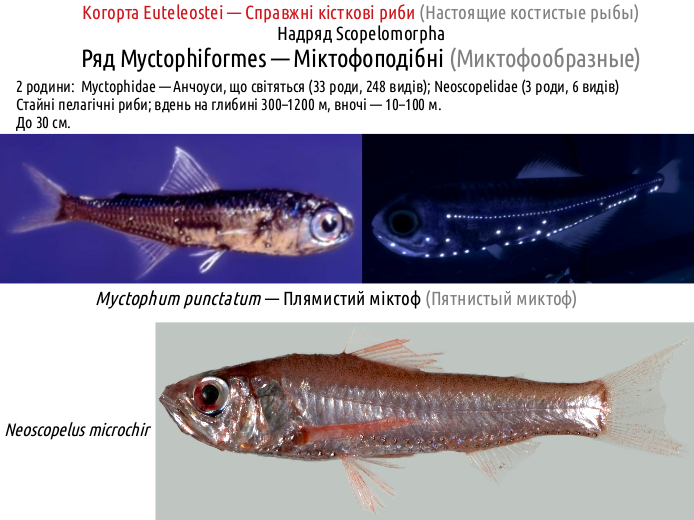
Order Lampriformes - lampriforms
A marine order. In body shape, several families have tall bodies compressed laterally and a symmetrical caudal fin, whereas several others are elongate-bodied with an asymmetrical fin.
Lampris guttatus - the common opah (sunfish) is the only known fish capable of true thermoregulation comparable to that of birds and mammals. Its internal body temperature stably exceeds the ambient temperature by more than 5 degrees C. This fish reaches 2 m in length, weighs up to 270 kg, and hunts small fish at depths of 100-400 meters in all warm seas.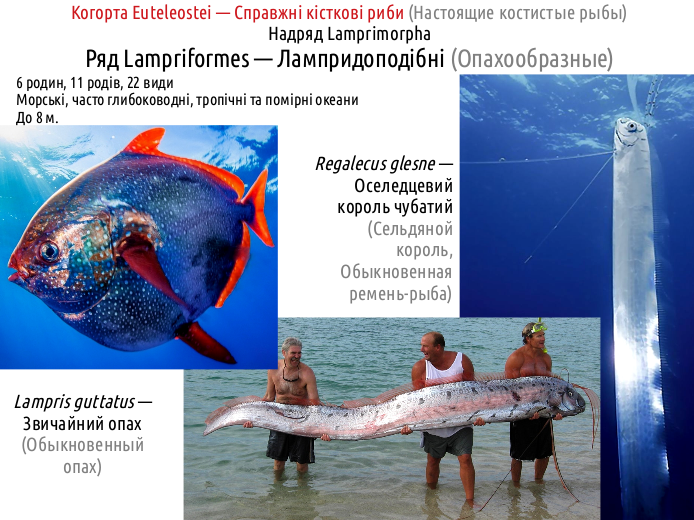
The best-known representative of the order is the oarfish (Regalecus glesne). These are sluggish fishes with a belt-like body that often reach a length of about 5 m, and sometimes even 11 m (thus making them the longest bony fish). The dorsal fin forms an orange crest on the head resembling a crown. Many legends about sea serpents are associated with the oarfish.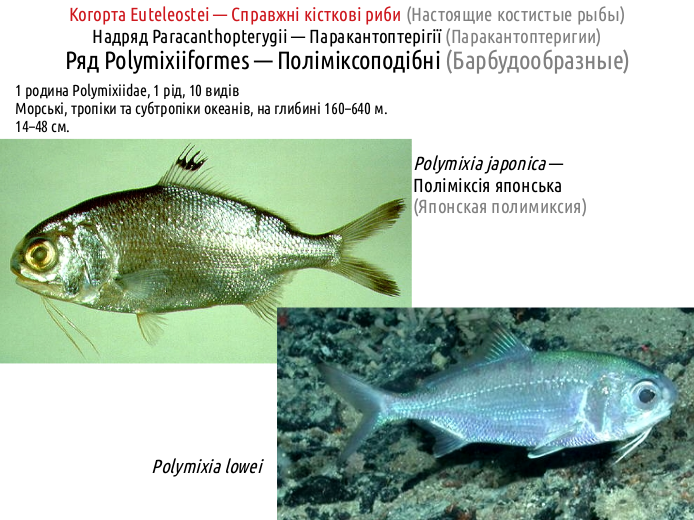
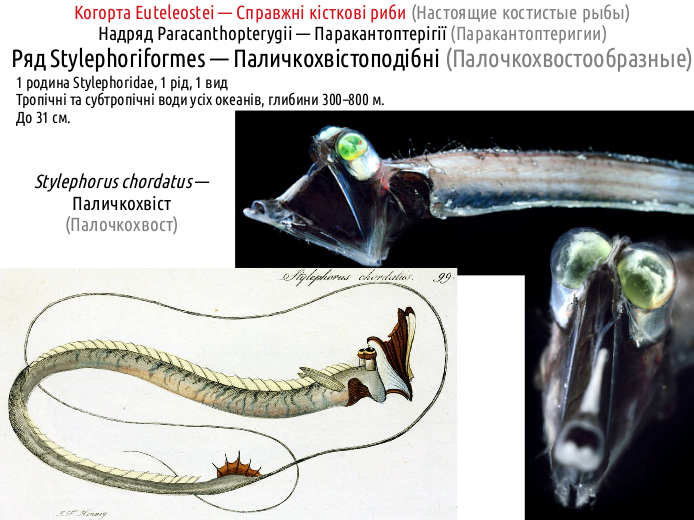
Order Gadiformes - gadiforms
An order of marine fishes (with the single exception of the burbot, Lota lota). The fins are arranged as in perciforms (pelvic fins below the pectorals), but in structure they are like those of cypriniforms (soft, without stiff rays). The order includes many commercially important fish species.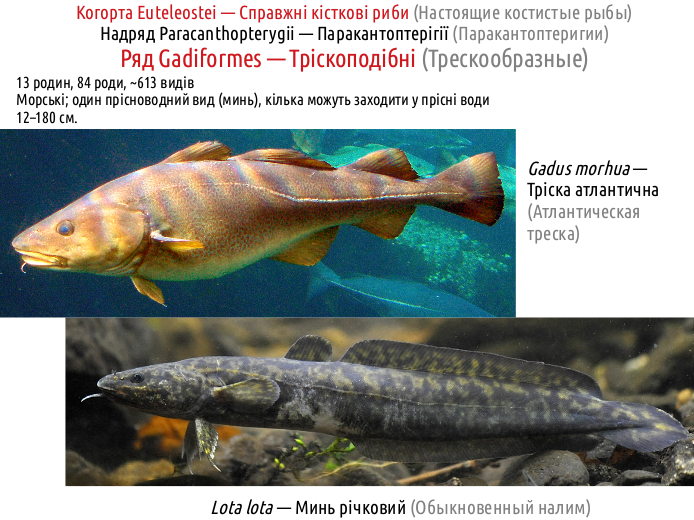
The burbot, Lota lota, is a freshwater fish of the fresh waters of the Northern Hemisphere. Maximum length is 120 cm. It is the only fish in our waters that spawns in winter.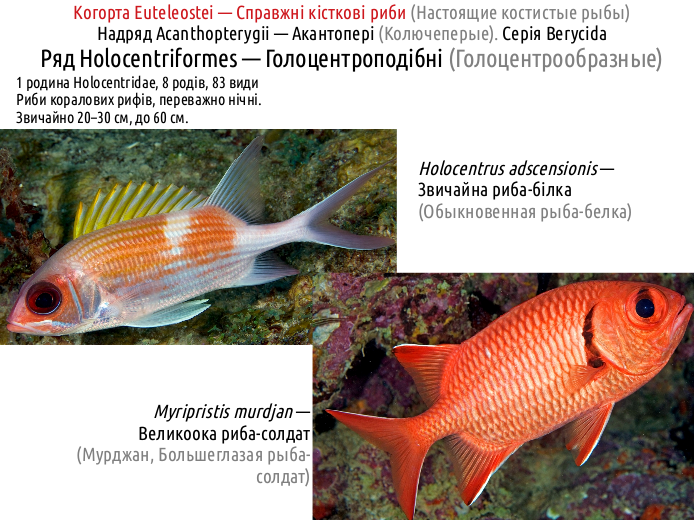
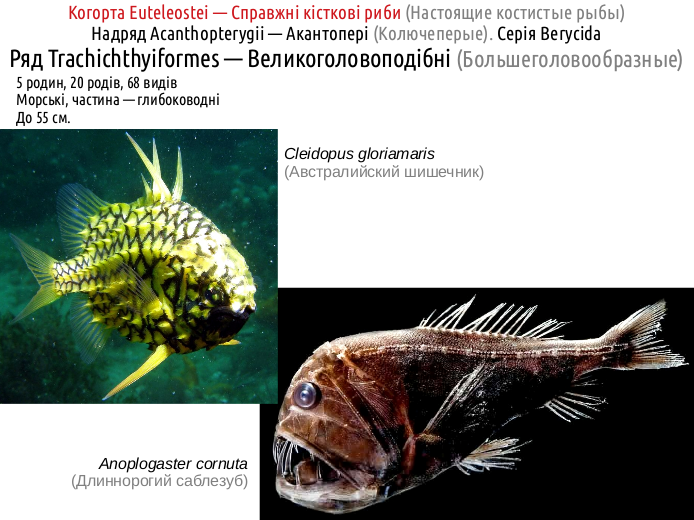
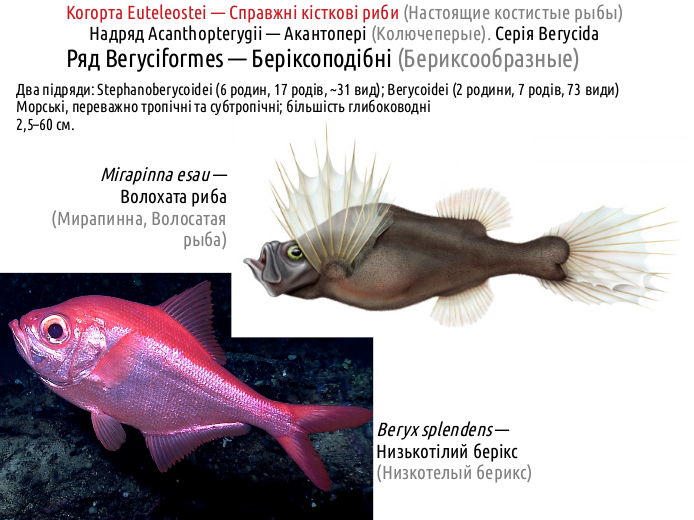
Series Percomorpha
Subseries Ophidiida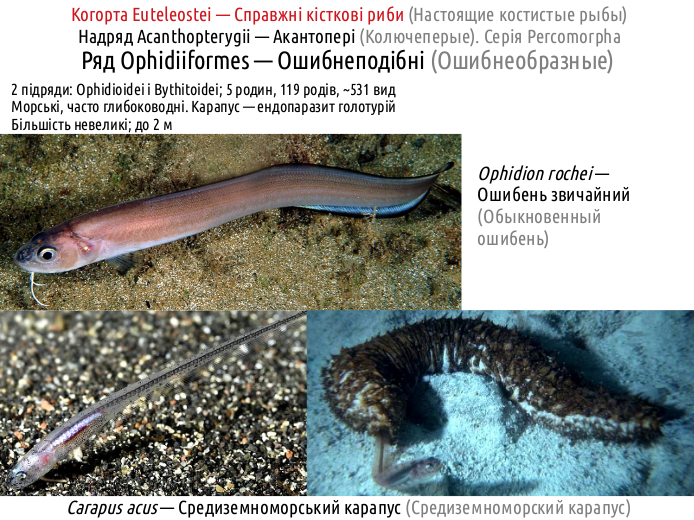
Subseries Batrachoidida
Order Batrachoidiformes - toadfishes
Bottom and near-bottom fishes, mostly marine. Sluggish predators with a large head. A characteristic feature is the ability to produce sounds, including very loud ones. The oyster toadfish (Opsanus tau), inhabiting the Atlantic coast of North America, is remarkable for its ability to produce sounds louder than 100 decibels (a level causing painful sensations).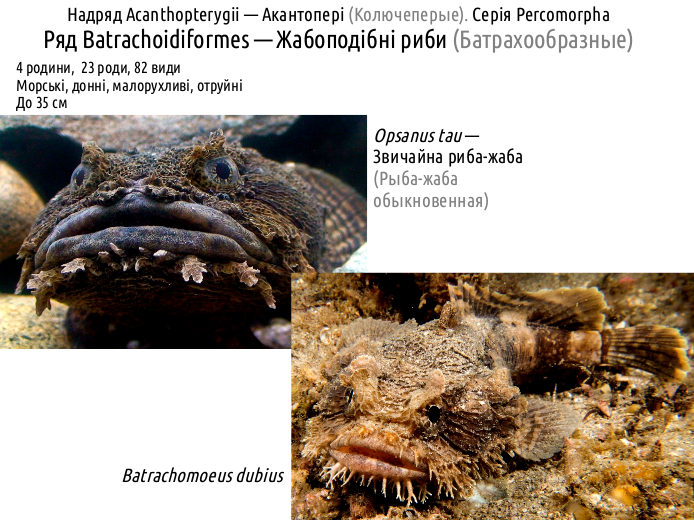
Sanopus splendidus, the splendid toadfish, is indeed beautiful.
Subseries Gobiidae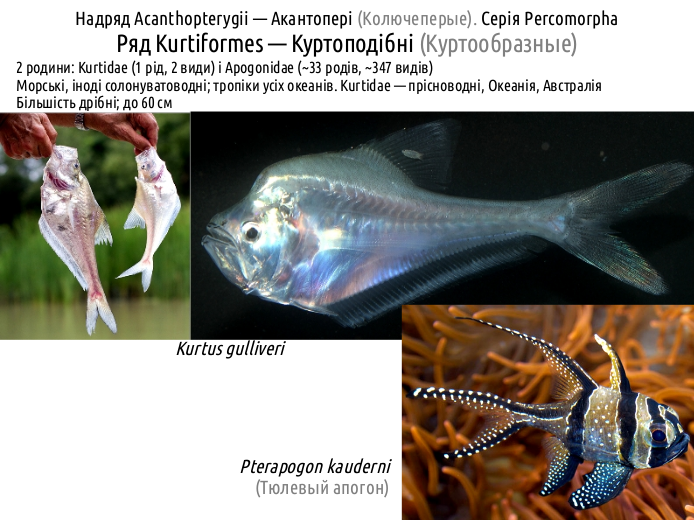
Order Gobiiformes - gobiiforms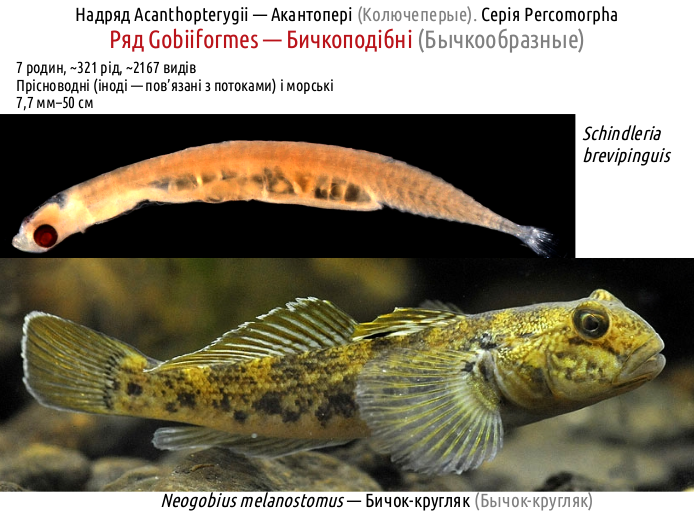
Wonderful representatives of the goby family (Gobiidae) are mudskippers (Periophthalmus), semiterrestrial fishes of the mangrove thickets of the Old World tropics.
Your browser does not support the video tag.
Many gobies display rather complex behavior.
Subseries Ovalentaria
Ovalentaria is a crown group of bony fishes. It is a bundle of phylogenetic branches, most of which are treated as orders. Another 8 branches are very close to the branching point and are so far treated as 8 families of uncertain position (insertae sedis).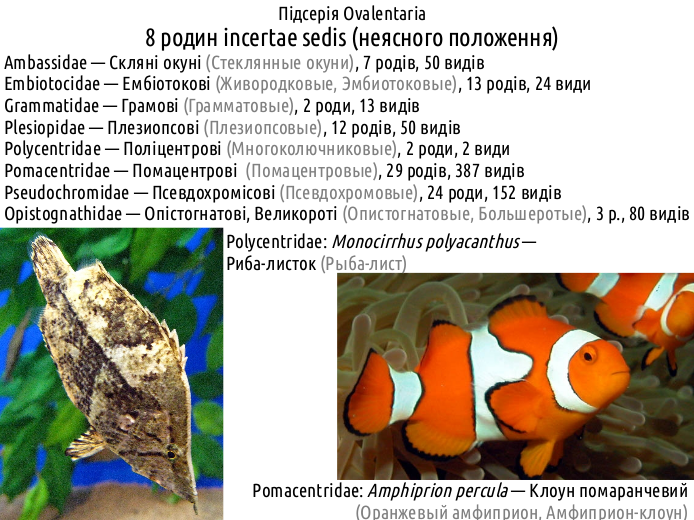
The family Pomacentridae includes the widely known clownfishes, or anemonefishes (Amphiprion). These territorial fishes live among the tentacles of sea anemones.
Order Mugiliformes - mullets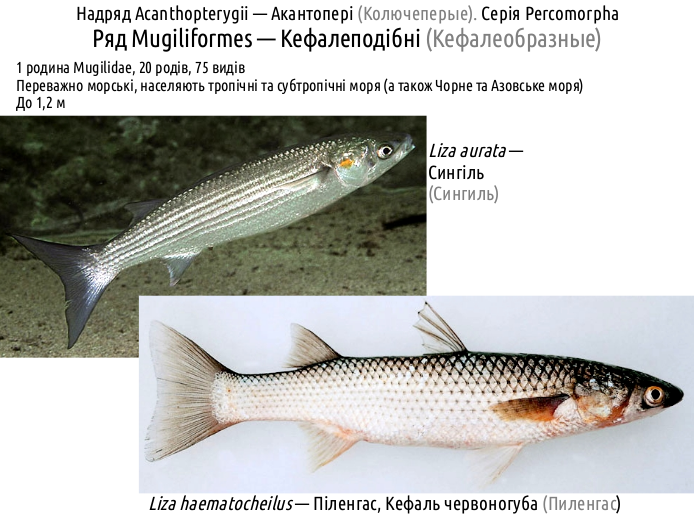
The so-iuy mullet (Liza haematocheilus) is a species of mullet from the Sea of Japan that was successfully acclimatized in the Black and Azov seas. Unfortunately, it competes with autochthonous mullet species such as the singil.
Order Cichliformes - cichlids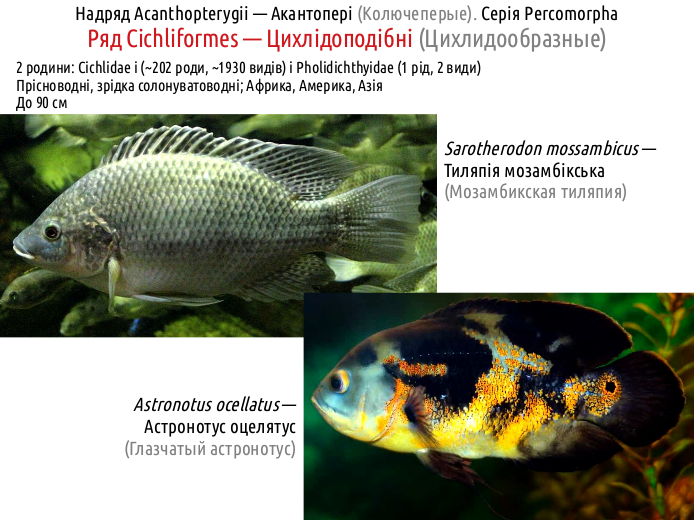
Order Blenniiformes - blennies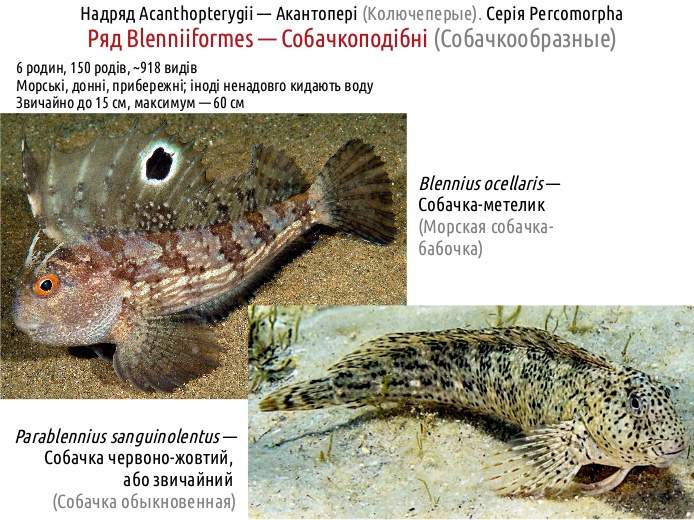
The best-known family, Blenniidae, includes the combtooth blennies. Their name is connected with the fact that many of them are territorial fishes that selflessly defend individual areas from their relatives. Marine blennies are easy to observe on the rocky shallows of the Black Sea.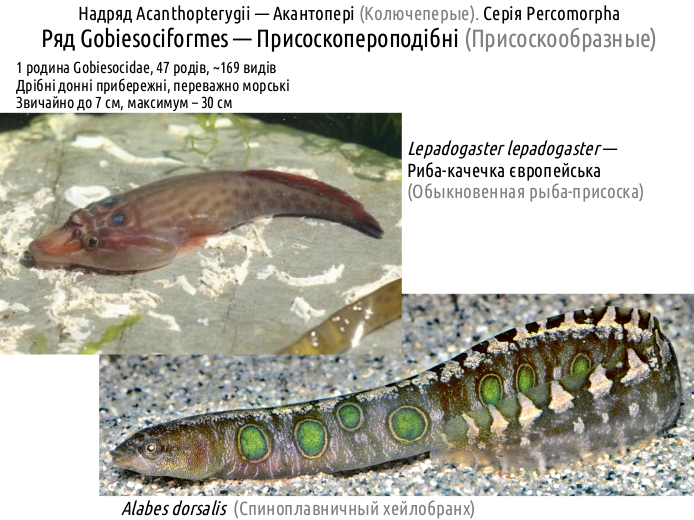
Order Beloniformes - beloniforms
Marine fishes characterized by an elongated body and extended jaws. The dorsal and anal fins are shifted backward, toward the caudal fin. The garfish (Belone belone) is one of the remarkable fishes of the Black Sea.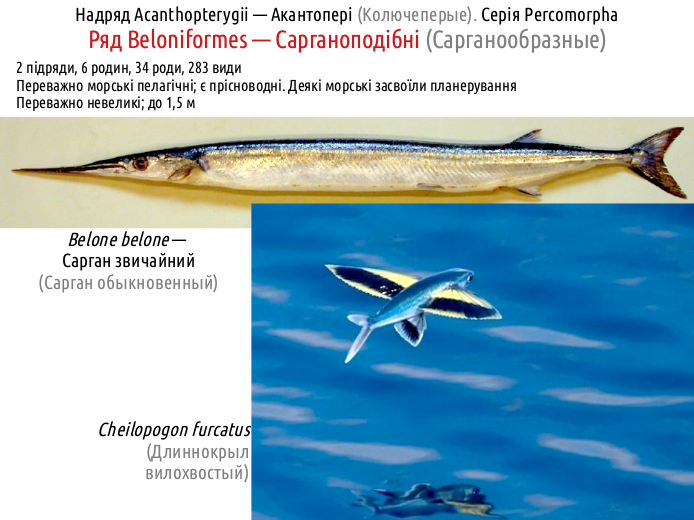
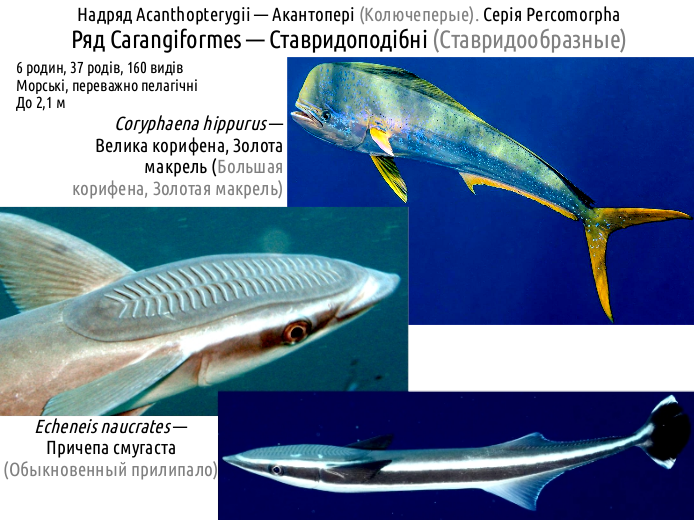
This order includes the family Exocoetidae - flying fishes adapted for gliding above the water surface. In the video below, flying fishes found themselves between two dangers: dolphinfishes (perciforms) below and frigatebirds (pelecaniforms) above.
Your browser does not support the video tag.
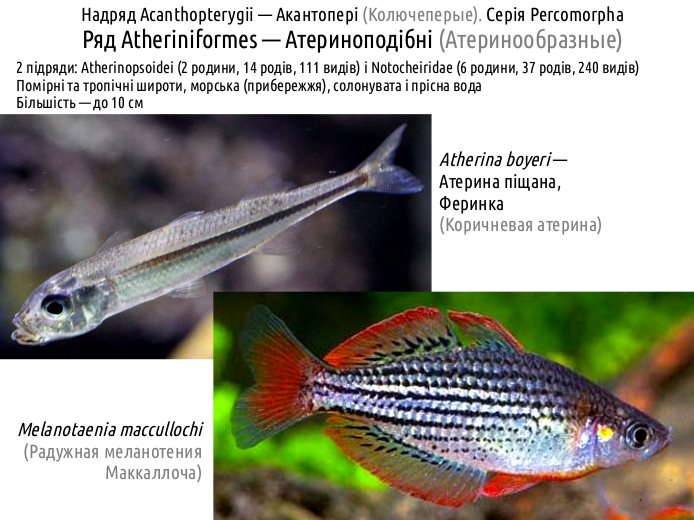
Order Cyprinodontiformes - cyprinodontiforms
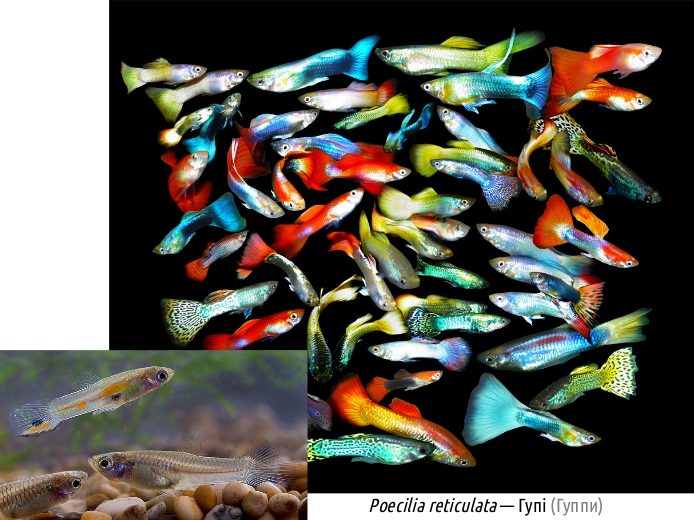
An order including mostly freshwater small fishes distributed in the waters of the Americas, Asia, and Africa. Many are common aquarium and laboratory animals. The caudal fin is rounded or truncate. Males are often brightly different from females. The name is connected with the fact that outwardly these fishes resemble cyprinids, but unlike them have teeth on their jaws.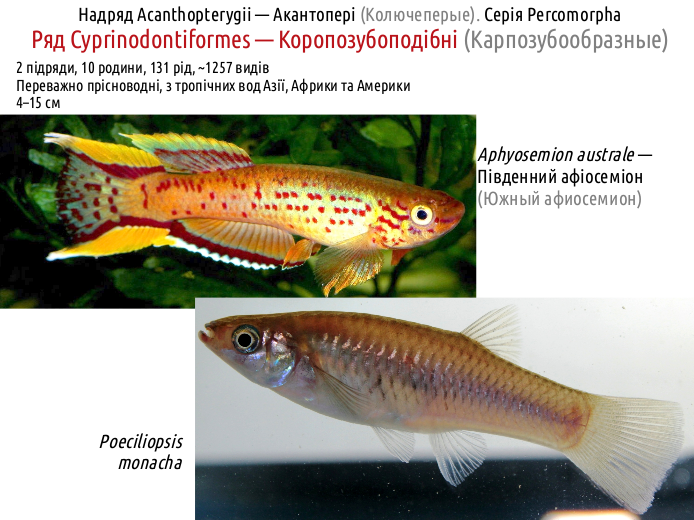
Order Istiophoriformes - istiophoriforms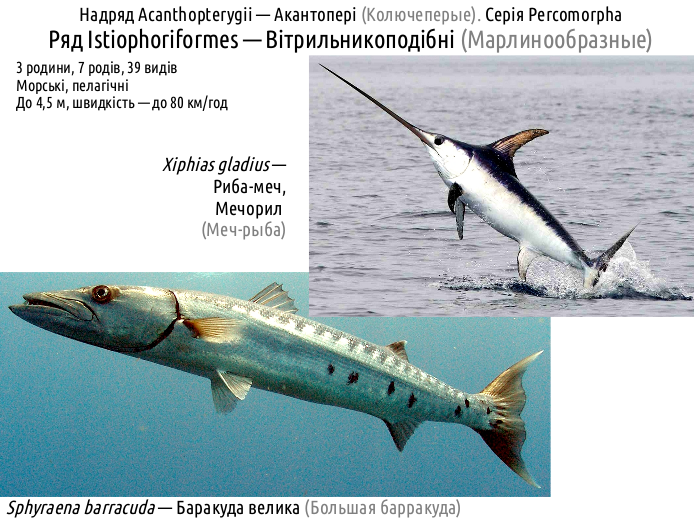
A representative of the family Istiophoridae (marlins, or sailfishes) is chasing a school of fishes in the video placed on the page describing bony fishes. Large sailfishes may exceed 4 meters in length.
Many gobies exhibit rather complex behavior. The subseries Ovalentaria is a terminal group of bony fishes. It is a bundle of phylogenetic branches, most of which are treated as orders. Another 8 branches are very close to the branching point and are currently treated as 8 families of uncertain position (insertae sedis). The family Pomacentridae includes the widely known clownfish, or anemonefish (Amphiprion). These territorial fish live in anemone tentacles. The order Mugiliformes – Mullets. The striped mullet (Liza haematocheilus) is a species of mullet from the Sea of Japan, which has been successfully acclimatized in the Black and Azov Seas. Unfortunately, it competes with indigenous mullet species, such as the flathead grey mullet. The order Cichliformes – Cichlids. The order Blenniiformes – Blennies. The best-known family is Blenniidae – combtooth blennies. Their name is associated with the fact that many of them are territorial fish that selflessly defend their individual territories from relatives. Marine blennies are easily seen in the rocky shallows of the Black Sea. The order Beloniformes – Needlefishes. Marine fish characterized by an elongated body and extended jaws. The dorsal and anal fins are shifted backward, towards the caudal fin. The European needlefish (Belone belone) is one of the remarkable fish of the Black Sea. The family Exocoetidae – flying fish, adapted for gliding above the water surface, belongs to this order. In the video below, flying fish find themselves between two dangers: dorado (Perciformes) from below and frigatebirds (Pelecaniformes) from above.
The order Cyprinodontiformes – Killifish. An order that includes mainly freshwater small fish found in the waters of America, Asia, and Africa. Many are common aquarium and laboratory animals. The caudal fin is rounded or truncated. Males often differ brightly from females. The name is associated with the fact that externally these fish resemble carps, but, unlike them, they have teeth on their jaws. The order Istiophoriformes – Billfishes. A representative of the family Istiophoridae – marlins, or sailfish, chases a school of fish in the video included on the page with the characteristics of bony fish. Large billfish can exceed 4 meters in length.