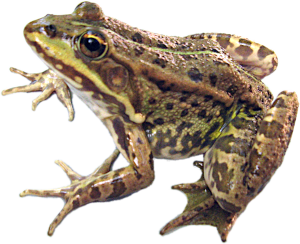

Shabanov (2015) Evolutionary Ecology of Population Systems... (Autoreferat)
Russian-language translation of the autoreferat of a dissertation defended on 26 March 2015, along with a link to the Ukrainian autoreferat in PDF format.
Below is the Russian-language translation of the autoreferat. The Ukrainian text of the autoreferat in PDF format is available here. MINISTRY OF EDUCATION AND SCIENCE OF UKRAINE OLES HONCHAR DNIPROPETROVSK NATIONAL UNIVERSITY SHABANOV DMYTRO ANDRIIOVYCH UDC (597.841::574.4):[477.5+292.485] EVOLUTIONARY ECOLOGY OF POPULATION SYSTEMS OF THE HYBRIDOGENETIC COMPLEX OF GREEN FROGS (PELOPHYLAX ESCULENTUS COMPLEX) OF THE LEFT-BANK FOREST-STEPPE OF UKRAINE 03.00.16 — Ecology AUTOREFERAT of the dissertation for the degree of Doctor of Biological Sciences Dnipropetrovsk — 2015 The dissertation is a manuscript The work was carried out at the Department of Zoology and Animal Ecology, Faculty of Biology, V. N. Karazin Kharkiv National University, Ministry of Education and Science of Ukraine Official opponents Doctor of Biological Sciences, Professor Serebryakov Valentyn Valentynovych, Taras Shevchenko Kyiv National University, Department of Zoology, Head; Doctor of Biological Sciences, Professor Domnich Valery Ivanovych, Zaporizhzhia National University, Department of Hunting and Ichthyology, Head; Doctor of Biological Sciences, Associate Professor Zhukov Oleksandr Viktorovych Oles Honchar Dnipropetrovsk National University, Department of Zoology and Ecology, Professor. The defense will take place on 26 March 2015 at 10:00 at the meeting of the specialized academic council D 08.051.04 for the defense of dissertations for the degree of Doctor of Biological Sciences at Oles Honchar Dnipropetrovsk National University, Ministry of Education and Science of Ukraine, at: 49010, Dnipropetrovsk, Gagarin Avenue, 72, Building 17, Faculty of Biology, Ecology and Medicine, Room 611. The dissertation may be consulted at the scientific library of Oles Honchar Dnipropetrovsk National University at: Dnipropetrovsk, Kazakova Street, 8. The autoreferat was distributed on 26 February 2015. Scientific Secretary of the Specialized Academic Council, Candidate of Biological Sciences, Associate Professor A. A. Dubyna GENERAL CHARACTERISTICS OF THE WORK Relevance of the topic.
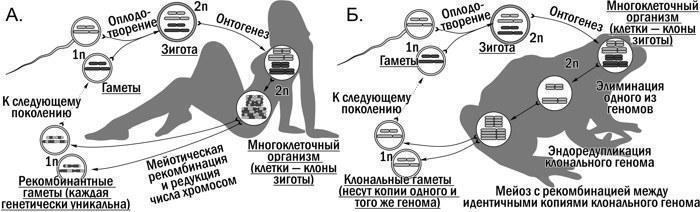
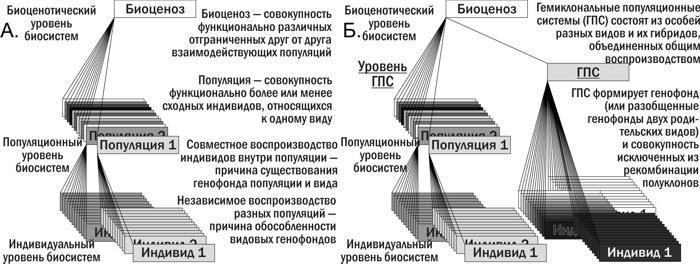
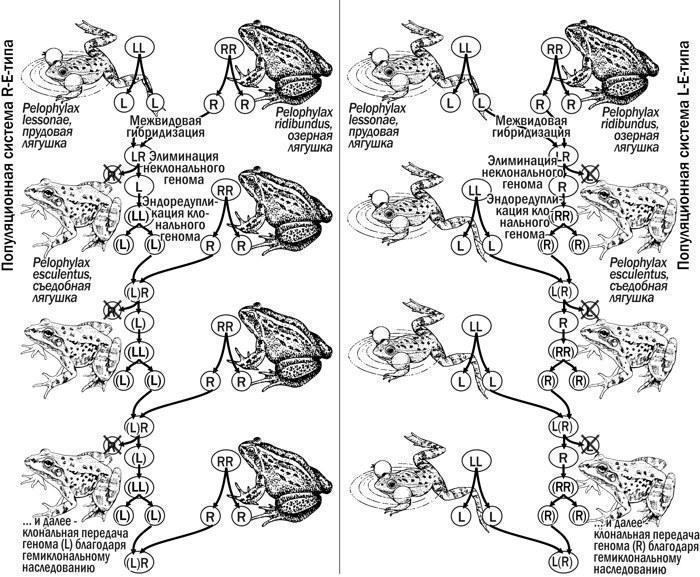
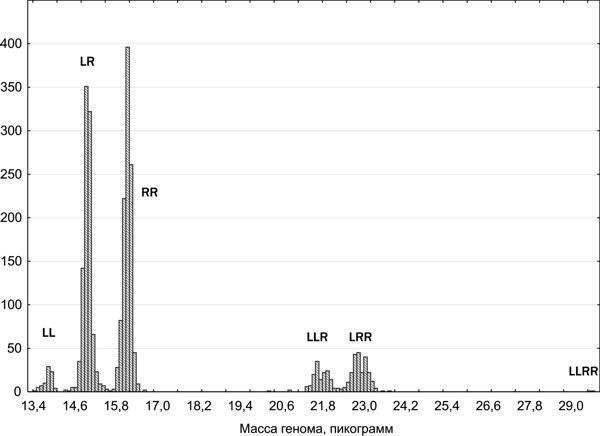
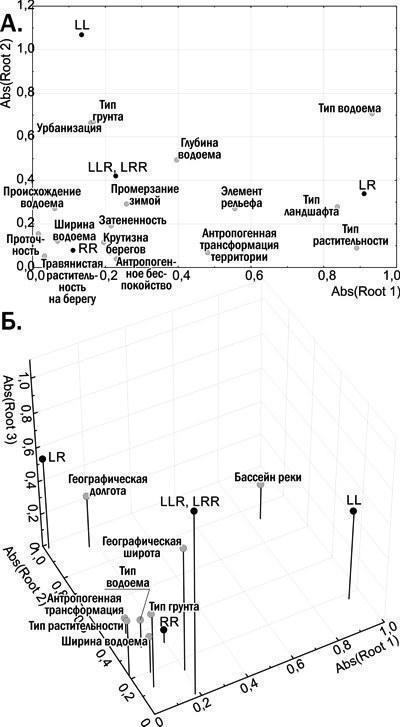
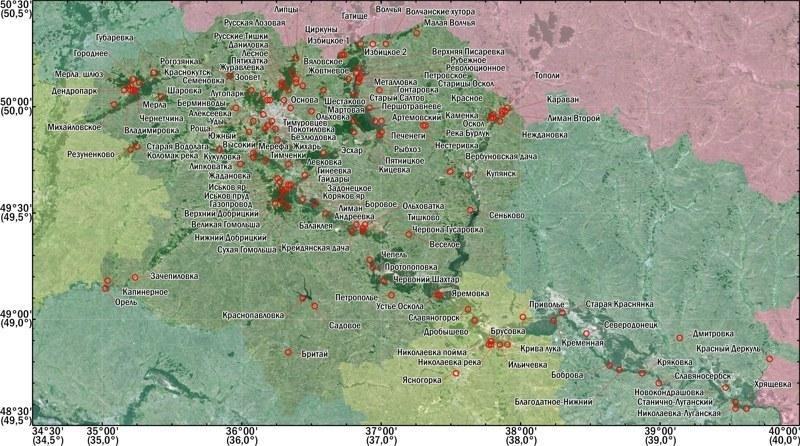
Fifty years ago, in 1964, Polish hydrobiologist Leszek Berger discovered that the classic object of experimental biology — the edible frog, Pelophylax esculentus (Linnaeus, 1758), known since the time of Carl Linnaeus — is not an ordinary species (Berger, 1964). It is an interspecific hybrid of the pool frog, Pelophylax lessonae (Camerano, 1882), and the marsh frog, Pelophylax ridibundus (Pallas, 1771). The efforts of a group of European researchers demonstrated that the reproduction of Pelophylax esculentus is maintained through hemiclonal inheritance (the clonal transmission from generation to generation of individual parental genomes in a relatively unchanged form). It has now been established that hemiclonal inheritance required modification of the basic mechanisms underlying reproduction in the vast majority of eukaryotic organisms. The unusual nature of green frogs manifests at all levels of their biology: from the functioning of their population systems and mode of evolution to the mechanisms operating within their cells. The study of such an unusual phenomenon expands our understanding of regularities in the fields of population and evolutionary ecology, as well as a number of other biological sciences. Ten years ago, with the participation of the present author, unusually composed population systems of green frogs, Pelophylax esculentus complex, were described in the Kharkiv Oblast, in the forest-steppe portion of the Siverskyi Donets river basin (Mass..., 2004; Massovaya..., 2005; Izucheniye..., 2006). In the course of their study it became clear that these systems rank among the most complex known to science. The study of the population systems of the hybridogenetic complex of green frogs in the forest-steppe portion of the Siverskyi Donets basin required the establishment, at the Department of Zoology and Animal Ecology of V. N. Karazin Kharkiv National University, of a working group of which the present author is the scientific supervisor. The present investigation is intended to integrate the results obtained by the working group with the participation of the author and to create a theoretical framework organizing further study of the natural phenomenon discovered in the course of joint work. At the outset of the dissertation research, the composition of populations and population systems of representatives of Pelophylax esculentus complex in the Left-Bank Forest-Steppe of Ukraine had been studied in a highly uneven manner. The composition of these systems in the part of the Left-Bank Forest-Steppe situated within the Dnipro catchment (Left-Bank Dnipro physico-geographical province) had been established in a series of studies employing protein marker electrophoresis and other methods by staff of the I. I. Schmalhausen Institute of Zoology of the NAS of Ukraine (Morozov-Leonov, 1998; Nekrasova, Morozov-Leonov, 2001; Nekrasova, 2002). Therefore, in our work it was sufficient to study the composition of such systems only for the eastern part of that province. The Middle Russian physico-geographical province, situated within the Siverskyi Donets basin (a tributary of the Don) and belonging to the Forest-Steppe of Ukraine, required the most complete possible investigation given its insufficient prior study. Moreover, population systems of Pelophylax esculentus complex similar to those recorded in the Forest-Steppe of Ukraine also occur in the part of the Steppe where forest-steppe landscape elements are distributed. Therefore, part of the investigation had to be conducted within the Donetsk-Don northern-steppe physico-geographical province. Relationship of the work to scientific programs, plans, and topics. The work was carried out in accordance with the research topics of the Department of Zoology and Animal Ecology, Faculty of Biology, V. N. Karazin Kharkiv National University: "Unorthodox speciation (hybridization, non-Mendelian inheritance, polyploidy, and reticulate evolution): study using amphibians as a model" (state registration no. 0109U007439; 2009-2010); "Development of technologies for obtaining clonal offspring of vertebrates by crossing hemiclonal interspecific hybrids (using green frogs as a model)" (state registration no. 0112U001026; 2012-2014). Aim and objectives of the investigation. The aim of the work is to elucidate the regularities governing the functioning and evolution of population systems of Pelophylax esculentus complex in the Left-Bank Forest-Steppe of Ukraine. To achieve this aim, the following objectives were set: — to establish the composition of population systems of Pelophylax esculentus complex characteristic of the Middle Russian physico-geographical province, the eastern part of the Left-Bank Dnipro physico-geographical province, and the part of the Donetsk-Don northern-steppe physico-geographical province adjacent to the Forest-Steppe; — to identify within the study region separate subregions differing in the composition of the population systems of Pelophylax esculentus complex distributed across them; to reveal the biogeocoenotic and geographical factors determining the distribution of population systems of Pelophylax esculentus complex across their territory; — to determine those subregions of the study area that are of greatest scientific interest and of greatest value from the standpoint of biodiversity conservation; to establish the characteristic features of the representatives of Pelophylax esculentus complex distributed within these subregions; — to elucidate the specific nature of the biosystems in which hemiclonal reproduction of Pelophylax esculentus occurs; — to develop methods for studying the stability and regularities of transformations of population systems of Pelophylax esculentus complex using simulation modelling; — to construct a dynamic typology of population systems containing diploid representatives of Pelophylax esculentus complex; — to determine the levels of selection influencing the dynamics of biosystems in which hemiclonal reproduction of Pelophylax esculentus occurs; to establish the possible mechanisms by which selection maintains hemiclonal hybrid reproduction in Pelophylax esculentus complex. Object of the investigation — population systems of Pelophylax esculentus complex in the Left-Bank Forest-Steppe of Ukraine. Subject of the investigation — the regularities governing the functioning and maintenance of stability of population systems of Pelophylax esculentus complex, their diversity, and evolutionary significance. Methods of investigation: — qualitative determination of the type of green frog population systems based on the composition of the forms inhabiting them; — formalized description of habitats of populations and population systems of Pelophylax esculentus complex; — estimation of population size and composition of population systems using mark-recapture; — preliminary determination of species identity based on external morphology characters; — rapid determination of ploidy using cytometry; — skeletochronological determination of individual age and retrospective assessment of growth rate based on analysis of the size of cement lines on cross-sections of tubular bones; — comparative ecological, morphological, biochemical, and physiological studies of representatives of Pelophylax esculentus complex; — genotyping of individuals using flow DNA cytometry and protein marker electrophoresis; — karyoanalysis of squash preparations of macerated tissues, dropped metaphase plates, and dropped cells; — determination of the genomic composition of gametes using flow DNA cytometry, protein marker electrophoresis, lampbrush chromosome marker analysis, and analysis of crossing results; — simulation modelling and experiments with simulation models; statistical processing of modelling results (principal component analysis); — comparison of modelling results with empirical data, formalization of empirical and literature data. Scientific novelty of the results obtained. The results reflecting scientific novelty are as follows. For the first time: — regions with mass distribution of polyploid Pelophylax esculentus have been discovered in the Left-Bank Forest-Steppe of Ukraine; — five subregions have been identified within the study region that differ in the set of population and population system types of Pelophylax esculentus complex distributed on their territory; — the biogeocoenotic relationships determining the composition of local population systems of Pelophylax esculentus complex within each of the described subregions have been established; — the Siverskyi Donets Diversity Centre of Pelophylax esculentus complex has been discovered and described; — the concept of the "hemiclonal population system" (HPS) has been proposed and justified as a special category of biosystems characteristic of hybridogenetic species complexes; — it has been demonstrated that transformations of HPSs constitute a special type of biosystem dynamics; the key factors determining these transformations have been established; — a conceptual model of HPS transformations has been developed, on the basis of which simulation models of these processes have been constructed; — a dynamic typology of HPSs of Pelophylax esculentus complex containing diploid interspecific hybrids has been developed; — using simulation modelling of HPSs of the Siverskyi Donets Diversity Centre of Pelophylax esculentus complex consisting of diploid representatives, testable hypotheses regarding the composition of the clonal genomes transmitted within them have been formulated; — a hypothesis explaining the phenomenon of hybrid amphispermy by competition in germline cells among clonal genomes modified through selection for their ability to cause elimination of alternative genomes has been advanced; — differences in the stability of different types of HPSs of Pelophylax esculentus complex have been considered as a manifestation of group selection; — a hypothesis has been advanced viewing the capacity for hemiclonal hybridization as an adaptation to homeologous interspecific recombination maintained by species selection; the following have received further development: — concepts concerning the diversity of population systems of Pelophylax esculentus complex; — the classification of types of population reproduction and concepts regarding the relationship of these types to the characteristics of individual-, population-, and species-level biosystems; — methods for using simulation models to investigate the empirically recorded diversity of natural biosystems; — the conceptual framework for describing and modelling population systems of hybridogenetic species complexes with hemiclonal inheritance; — concepts regarding the forms of biosystem typology and methods for constructing dynamic typologies of complex systems; — the concept of biosystem stability as the capacity to maintain their dynamic type over time; — the concept of multilevel selection; — concepts regarding the selection of cell lineages in the gonads of Pelophylax esculentus; — theoretical concepts regarding the regularities of recombination evolution; — the concept of species selection. Practical significance of the results obtained. The results obtained in the course of the work are important for the planning and organization of conservation of the unique population systems of Pelophylax esculentus complex. The developed methods for using simulation models make it possible to assess the stability of complex biological systems and are useful for testing hypotheses that compensate for a shortage of empirical data. The possibility of using simulation models for the development of dynamic typologies of biosystems has been demonstrated. The data and generalizations obtained in the course of the work are used in teaching general and specialized courses in Ecology, Modelling in Ecology, Batrachology and Herpetology, Biological Statistics in Zoology and Ecology, and Vertebrate Zoology, as well as in conducting field practice in vertebrate zoology at the Faculty of Biology of V. N. Karazin Kharkiv National University. Personal contribution of the applicant. The dissertation is an independent and original study. A number of publications addressing the topics considered in the dissertation were prepared as part of the Amphibian Population Ecology Working Group of V. N. Karazin Kharkiv National University. The author is the scientific supervisor of this group; he played a leading role in defining the research objectives, participated personally in all stages of the work including fieldwork, and supervised the interpretation of results. Some of the results presented in this work were partially reflected in the candidate dissertations of A. V. Korshunov (2010) and M. A. Kravchenko (2013), both carried out under the author's supervision. A number of publications resulted from international collaboration with research groups in Russia, Germany, and other countries. In those publications the author participated in formulating the objectives, personally collected material, and participated in its processing and in the interpretation of results. Presentation of dissertation results. The dissertation materials were presented at the III, IV, and V International Scientific Conferences Zoocenosis-2005, Zoocenosis-2007, and Zoocenosis-2009 (Dnipropetrovsk); the scientific conference "Current Problems of Zoology and Ecology" (Odesa, 2005); the IX and XI International Scientific-Practical Ecological Conferences devoted to population ecology (Belgorod, 2006 and 2010); the III and V Congresses of the A. M. Nikolsky Herpetological Society (Pushchino, 2006; Minsk, 2012); the scientific conference of the Faculty of Biology of KhNU dedicated to the 100th anniversary of the birth of E. I. Semenenko (Kharkiv, 2006); the International Conference "Current Problems of Biological Evolution" (Moscow, 2007); the III, IV, V, VI, and VII Congresses of the Ukrainian Herpetological Society (Melitopol, 2007; Dnipropetrovsk, 2008; Kharkiv, 2010; Kyiv, 2011; Vylkove, 2013); the III International Conference of Young Scientists "Biology: from Molecule to Biosphere" (Kharkiv, 2008); the International Scientific-Practical Conference "Biodiversity and Sustainable Development" (Simferopol, 2010); the I All-Ukrainian Scientific-Practical Conference "Current Issues and Methodology of Bioecological Research: A Population Approach" (Ivano-Frankivsk, 2012); the conference-school "Anomalies and Pathologies of Amphibians and Reptiles: Methodology, Evolutionary Significance, and the Possibility of Environmental Health Assessment" (Yekaterinburg, 2013); and the conference dedicated to the 100th anniversary of the Biological Station of V. N. Karazin Kharkiv National University (Haidary, 2014). Publications. Based on the dissertation materials, 51 scientific publications have been published, including 31 articles in specialist scientific journals and collected scientific papers, of which 9 are in journals included in international bibliographic databases, 7 articles in other publications, and 14 scientific publications in conference proceedings and abstracts. Structure and volume of the dissertation. The dissertation comprises a list of abbreviations, introduction, 9 chapters, conclusion, findings, and list of references. The work contains 36 tables and 62 figures. The dissertation materials are set out over 364 pages of typeset text, of which the main text occupies 275 pages. The list of references contains 419 sources, of which 125 are in Roman script. LIST OF ABBREVIATIONS AND DEFINITIONS OF SPECIFIC TERMS Terms are given in logical rather than alphabetical order. Pelophylax esculentus complex Group of European green frogs: pond frog, Pelophylax lessonae (Camerano, 1882), marsh frog Pelophylax ridibundus (Pallas, 1771), as well as various forms of their interspecific hybrids: edible frog, Pelophylax esculentus (Linnaeus, 1758), for which a name analogous to the species name is used Hemiclonal inheritance Inheritance in interspecific hybrids, in which one of the parental genomes (clonal genome) is transmitted (typically) into gametes whole, without recombination Clonal genomes: (L), (R) Genomes transmitted to offspring as a whole, without recombination: (L) — genome of P. lessonae, (R) — genome of P. ridibundus Recombinant genomes: L, R Genomes transmitted with recombination (as in parental species): L — genome of P. lessonae, R — genome of P. ridibundus XL, XR, (XL), (XR) Female genomes (carrying the X chromosome) YL, YR, (YL), (YR) Male genomes (carrying the Y chromosome) Karyogenetic forms Forms of representatives of the P. esculentus complex that differ in the composition of genomes in their genotype and in the gametes they produce R(L), L(R), (L)(R) Diploid P. esculentus with different clonal genomes Genomes transmitted with recombination (as in the parental species): L — genome of P. lessonae, R — genome of P. ridibundus XL, XR, (XL), (XR) Female genomes (carrying the X chromosome) YL, YR, (YL), (YR) Male genomes (carrying the Y chromosome) Karyogenetic forms Forms of representatives of P. esculentus complex differing in the genomic composition of their genotype and of the gametes they produce R(L), L(R), (L)(R) Diploid P. esculentus with different clonal genomes LLR, LRR Triploid P. esculentus HPS, hemiclonal population system An assemblage of co-inhabiting and co-reproducing representatives of various hybrid forms and parental species individuals, in which both clonal and recombinant genomes are transmitted from generation to generation HPS transformations A form of HPS dynamics consisting in changes in the abundance and proportions of different karyogenetic forms within them R-E-L-type HPS; R-Ep-type HPS (etc.) Designations of HPS types in the analytical classification, where the letter R denotes P. ridibundus, E denotes P. esculentus, L denotes P. lessonae, and the letter p denotes the presence of polyploid P. esculentus in the HPS Conspecific genome A clonal genome of the same species as the predominant parental species in the HPS (e.g., (R) in an R-E-type HPS); the concept is applicable to R-E- and L-E-type HPSs Heterospecific genome A clonal genome of a species different from the predominant parental species in the HPS (e.g., (L) in an RE-type HPS); the concept is applicable to RE- and LE-type HPSs Reproduction (organismal) A phenomenon at the organismal level of biosystem organization associated with the production of offspring by an organism; it serves as the basis for population-level reproduction Reproduction (population) A phenomenon at the population level of biosystem organization associated with the maintenance of a certain composition through the reproduction of organisms Hybridolysis The appearance of parental species individuals as a result of crosses between hybrids that clonally transmit the genome of a single species Hybrid amphispermy The production by interspecific hybrids (P. esculentus) of a mixture of gametes, some of which carry the genome of P. lessonae and some the genome of P. ridibundus. Diploid hybrids exhibiting hybrid amphispermy are designated (L)(R) in this work. Clone An assemblage of cells or individuals with an identical (to within copying errors) genotype. A human organism is typically a clone of cells; identical twins are clonal organisms Hemiclone An assemblage of individuals sharing an identical (to within copying errors) clonal genome and differing recombinant genomes MAIN CONTENT OF THE WORK CURRENT STATE OF THE PROBLEM A brief account is given of the history of the discovery and study of hybridogenesis in Pelophylax esculentus complex, together with a discussion of its ecological significance. It is shown that the life cycle typical of eukaryotes (Fig. 1.A.) is the cause of the biosystem hierarchy characteristic of them (Fig. 2.A.). Hemiclonal inheritance, characteristic of P. esculentus and other interspecific hybrids, represents a profound modification of this cycle (Fig. 1.B.). The question of how such modification is reflected at different levels of biosystems, including those considered within the framework of ecology, remains insufficiently studied. Fig. 1. Comparison of the haplo-diploid life cycle with fertilization and meiosis typical of eukaryotes (A.) and the modification of the typical life cycle characteristic of interspecific hybrids with hemiclonal inheritance (B.) Fig. 2. A. The biosystem hierarchy typical of sexually reproducing eukaryotes, and some features of the biosystems characteristic of them (Chapter 1). B. Modifications of the biosystem hierarchy characteristic of hybridogenetic species complexes with hemiclonal inheritance (Chapter 6) The biosystems in which P. esculentus reproduces are termed (Uzzell, Berger, 1975) population systems. The commonly used typology reflects the set of frog forms comprising the systems: L-type — populations of P. lessonae; L-E-type — P. lessonae and P. esculentus; L-E-R-type — both parental species and their hybrids; E-type — so-called "pure" populations of P. esculentus, etc. (Plotner, 2005). The presence of polyploid (3n and 4n) individuals among P. esculentus is indicated by the letter p. If P. esculentus are represented only by females, the letter f is used; if only by males, the letter m. The reproduction of P. esculentus in population systems of various compositions (Fig. 3) is possible because different karyogenetic forms of hybrids produce gametes that may belong to different parental species. There exist hybrids capable of simultaneously producing gametes of both species (the phenomenon of hybrid amphispermy). When hybrids transmitting clonal genomes of the same species are crossed, offspring of that species arise in the progeny (the phenomenon of hybridolysis), which have reduced viability and, in most cases, die during metamorphosis or shortly thereafter. Fig. 3. The reproduction of P. esculentus both in R-E-type and in L-E-type population systems is possible because different karyogenetic forms of P. esculentus produce gametes carrying different genomes A brief outline is given of the history of the study of representatives of Pelophylax esculentus complex in the biocoenoses of the Left-Bank Forest-Steppe of Ukraine; a comparison is made of the extent of knowledge of their population systems in different physico-geographical provinces of the Left-Bank Forest-Steppe of Ukraine. The use of modelling in population biology, the development of concepts regarding the diversity of ecological strategies in animals, and the current state of the debate on levels of selection in evolutionary biology are discussed. MATERIAL AND METHODS OF INVESTIGATION Using a complex of methods, the composition of 134 populations and population systems of Pelophylax esculentus complex was determined; the collection localities are shown in Fig. 6 (p. 15). In Fig. 6, points corresponding to research localities are superimposed on a satellite image obtained from the Google Earth database and labelled with the conventional names of the samples. Different oblasts of Ukraine and the territory of the Russian Federation are shown in different colour shades. Using methods that permit reliable identification of the genomic composition of individuals, more than 300 samples comprising more than 2,500 individuals of green frogs were studied (several samples were examined from some localities). The most detailed study was devoted to the population systems situated in the vicinity of the Homilshanski Forests National Nature Park and the Siverskyi Donets Biological Station named after Professor V. M. Arnoldi of V. N. Karazin Kharkiv National University. Population size and composition were estimated by mark-recapture for 3 population systems (Isikovyi Pond, Nyzhnii Dobrytskyi Pond, and the pond in the village of Zhovtneve; Fig. 6). The ecological and geographical conditioning of composition was examined based on the results of formalized description of 102 population systems and populations and the features of their habitats. Age and growth rates were determined by skeletochronological methods for 500 individuals; ploidy was determined by cytometry for approximately 1,000 individuals. Rapid determination of green frog form membership (Table 1) was carried out for approximately 10,000 individuals. In the overwhelming majority of cases, the studies listed above did not require removal of individuals from natural habitats. By direct methods (various modifications of karyoanalysis), karyotypes of somatic cells and spermatocytes were determined for more than 150 individuals. The composition of gametes was determined by flow DNA cytometry of sperm for more than 150 individuals, and by lampbrush chromosome analysis in oocytes for approximately 30 individuals. Approximately 50 artificial crosses were performed; the composition of progeny was determined for 12 clutches. Fertility was determined by hormonal stimulation for 70 males. The number of iterations in experiments with the simulation model exceeded 130,000. Detailed descriptions are given of the methods employed. Methods for studying population- and biogeocoenotic-level biosystems include determination of the size of population systems and individual forms using mark-recapture, and description of habitat features. Organismal-level methods include preliminary determination of the taxonomic identity of individuals (Table 1), methods for individual marking of frogs, skeletochronological determination of age and retrospective assessment of growth rate from skeletochronological data, and the method of obtaining urinal sperm from males using hormonal stimulation. Table 1. Characters of the three forms of green frogs accessible to direct observation (Lada, 1995; Izucheniye..., 2006; Korshunov, 2010, with additions) Character Pool frog — Pelophylax lessonae (Camerano, 1882) Edible frog — Pelophylax esculentus (Linnaeus, 1758). Marsh frog — Pelophylax ridibundus (Pallas, 1771) Size and shape of the inner metatarsal tubercle Semicircular Low, often semicircular, not oblique Flat (low), oblique Relative length of the tibia Coloration of the dorsal surface of the body Light green, grass-green, and brown; males during breeding may be lemon-yellow; pigment spots are few and dark Light green or grass-green, brown or bronze; numerous pigment spots are black, generally sharply defined Olive-green with borders, or brown with large brown (rarely greenish) bright, irregular spots Dorsomedial stripe Always present (striata form) Always present (striata form) Sometimes present (striata form), sometimes absent (maculata form) Coloration of the ventral surface of the body Generally white or slightly pigmented, less often with grey spots or marbled White or grey marbled From grey to blackish-marbled or spotted Coloration of the upper surface of the femur covered by the tibia when the leg is half-flexed Internally and externally intensely yellow or orange Often with yellow spots (especially during the breeding season), almost always yellow present in the pattern In the posterior part, whitish, greyish, or rarely greenish spots; yellow spots never present Coloration of vocal sacs in males Always white, entirely unpigmented From white to dark grey (through all shades of grey) From light grey to black Odour Faint odour Strong odour Sharp, characteristic odour Male advertisement call (after the introductory note) Chirping Intermediate in character between the parental species Rolling, resembling laughter Behaviour when threatened Swim underwater and resurface Intermediate between the parental species Hide motionless at the bottom Behaviour of males towards competitors Highly aggressive Aggressive Relatively neutral Hibernation On land Together with the parental species In water Preferred habitats Small waterbodies in the forest zone; lives on land outside the breeding season Various, except the extreme types characteristic of the parental species Large waterbodies in open landscapes Cell-level methods include the rapid method for determining ploidy by measuring the mean erythrocyte length, studies of erythrocyte shape when comparing di- and triploids, and determination of the level of heterochromatin condensation. Karyotype-level methods include karyoanalysis in squash preparations of macerated tissues, karyoanalysis of dropped macerated cells, determination of ploidy by counting nucleoli in interphase nuclei, and studies of lampbrush chromosome markers. Molecular methods used include determination of the nuclear DNA content in somatic cells, determination of genotypes of the studied animals and their germ cells using species-specific protein markers, and determination of haemoglobin content and lactate dehydrogenase activity. DISTRIBUTION OF POPULATION SYSTEMS OF PELOPHYLAX ESCULENTUS COMPLEX IN THE BIOCOENOSES OF THE LEFT-BANK FOREST-STEPPE OF UKRAINE The composition of representatives of Pelophylax esculentus complex recorded in the study region is shown in Fig. 4 and Table 2, and the locations of the populations and population systems of green frogs are shown in Fig. 7 (see below). Fig. 4. Distribution of recorded representatives of Pelophylax esculentus complex by genome mass as determined by flow DNA cytometry Table 2. Composition of representatives of Pelophylax esculentus complex recorded in different types of populations and population systems Population or population system type Composition of forms recorded in the habitat No. % R-population RR 50 37% R-E-type RR, LR 35 25.75% L-E-type LL, LR 1 0.75% L-E-R-type LL, RR, LR 10 7% R-E-Ep-type RR, LR, LLR, LRR (in Verkhnii Dobrytskyi and Nyzhnii Dobrytskyi — also LLRR) 28 21% R-Ep-type RR, LLR, LRR 1 0.75% Ep-type LLR, LRR 1 0.75% R-E-Epf-type RR, LR, females LLR (in Zhovtneve — also females LRR) 4 3% R-Epf-type RR, females LLR 4 3% In addition to the parental species, di-, tri-, and, in rare cases, tetraploid hybrids were recorded in the study region. Of the precise determination methods used in the work, the most widely applied was flow DNA cytometry, performed by Yu. M. Rozanov and S. M. Litvinchuk (Centre for Cell and Molecular Biology of the Russian Academy of Sciences, St Petersburg). This method is based on the fact that the genome mass of P. lessonae is 6.92 pg and that of P. ridibundus is 8.07 pg (Fig. 4). The determination of di- and triploid green frogs was confirmed by various karyoanalysis methods. The composition of representatives of Pelophylax esculentus complex distributed in the east of the Left-Bank Dnipro physico-geographical province corresponds to that found by other researchers in its western part (Morozov-Leonov, 1998; Nekrasova, Morozov-Leonov, 2001; Nekrasova, 2002). In the territory of the Middle Russian and Donetsk-Don northern-steppe physico-geographical provinces, regions of mass distribution of triploid P. esculentus have been discovered. BIOGEOCOENOTIC AND GEOGRAPHICAL FACTORS DETERMINING THE DISTRIBUTION OF POPULATION SYSTEMS OF PELOPHYLAX ESCULENTUS COMPLEX IN THE STUDY REGION To identify the factors influencing the composition of green frog population systems, canonical analysis was applied (searching for relationships between two variable lists: the "left" list concerning the presence or absence of a particular form in the habitat, and the "right" set of habitat characters). Biogeocoenotic habitat characters account for approximately 25% of the variance in green frog composition. Fig. 5.A. shows the placement of the variables used in the reduced canonical analysis with biogeocoenotic characters on the plane defined by the absolute (unsigned) values of the canonical roots. Biogeocoenotic characters positioned on this plane close to variables indicating the presence of particular frog forms influence the distribution of those forms. Fig. 5. Relationships among variables used in the canonical analysis. A. Effect of a reduced set of biogeocoenotic characters on the distribution of green frogs. B. Joint consideration of geographical and biogeocoenotic data Fig. 6. Collection localities and conventional names of the studied samples Fig. 7. Types of population systems, subregions in the study region, the location of the Siverskyi Donets Diversity Centre of Pelophylax esculentus complex, and probable dispersal routes of different green frog forms The addition of geographical characters to the analysis (Dnipro or Don basin, geographical coordinates) substantially increases the proportion of variance (in the composition of green frogs in the habitat) that can be explained by canonical analysis. In the version shown in Fig. 5.B., a fairly short list of characters explains 41% of the variance in frog composition. However, in the analysis combining geographical and biogeocoenotic factors, the influence of geographical factors proves more substantial. Thus, in Fig. 5.B. all biogeocoenotic factors are positioned near the origin, close to the variable indicating the presence of P. ridibundus in the habitat — a species that inhabits virtually any waterbody in the study region. The importance of geographical factors in determining the composition of green frog populations and population systems provides grounds for dividing the study region into five subregions differing in the composition of their characteristic P. esculentus complex population systems (Fig. 7). Subregion I is formed by territories where only typical species populations of P. ridibundus exist. It encompasses the other subregions from the south and north-east. The greater part of this subregion lacks habitats meeting the biogeocoenotic requirements of P. lessonae and P. esculentus. However, this subregion also includes the Oskil, a left tributary of the Siverskyi Donets, and its floodplain (the forested zone extending north-south at approximately 37 degrees 30 minutes east longitude; see Fig. 6). This area has habitats suitable for P. esculentus, but apparently during dispersal these frogs were unable to reach the Oskil and its floodplain. Subregion II is situated in the Dnipro basin and is characterized by R-E-L-, R-E-, and L-E-type population systems and populations of P. ridibundus. It is limited by the availability of waterbodies suitable for P. esculentus and P. lessonae situated adjacent to forest patches. It includes an isolated (probably relict) enclave located in the Russkyi Orchyk nature reserve on the border of Kharkiv, Poltava, and Dnipropetrovsk oblasts. It should be emphasized that sexually mature P. lessonae were found only in the Dnipro basin. They are absent from the Siverskyi Donets basin. Subregion III is situated in the vicinity of the city of Kharkiv, in the basins of the Uda and Mzha rivers. It is characterized by R-E-type population systems and populations of P. ridibundus. To the east, Subregion III borders on the environs of the Siverskyi Donets, belonging to Subregion IV, where in addition to populations of P. ridibundus, R-Ep- and R-E-type population systems are distributed. In this subregion, triploid P. esculentus of both sexes and both genomic compositions (LLR and LRR) are present, and only in the Zhovtneve population system have males been lost among the triploids. Subregion IV extends along the Siverskyi Donets in Donetsk Oblast. In Donetsk and Luhansk oblasts lies Subregion V, characterized by only P. ridibundus and triploid P. esculentus females with the genomic composition LLR. Within this subregion, areas characteristic of Subregion IV remain. The distribution of different green frog forms in the study region allows hypotheses to be proposed regarding their dispersal routes (Fig. 7). The hypothesis according to which triploid hybrids descended downstream along the Siverskyi Donets from Subregion IV to Subregion V, gradually losing certain forms, is far more probable than its alternative, which posits upstream dispersal. During dispersal, P. esculentus did not ascend the Oskil, a left tributary of the Siverskyi Donets. The frogs of Subregion II, situated in the Dnipro basin, have a different origin. Subregion III was probably colonized by diploid hybrids originating from Subregion IV. To establish the biogeocoenotic factors influencing the distribution of individual forms of P. esculentus complex, their diversity must be analysed within the subregions where particular forms are distributed. Factors influencing the presence of diploid P. esculentus in Subregions III and IV and of triploid P. esculentus in Subregion IV are discussed. THE SIVERSKYI DONETS DIVERSITY CENTRE OF PELOPHYLAX ESCULENTUS COMPLEX AND THE CHARACTERISTICS OF THE GREEN FROGS DISTRIBUTED WITHIN IT Subregions III and IV (see Fig. 7) form a zone that we (Shabanov et al., 2009) termed the Siverskyi Donets Diversity Centre of Pelophylax esculentus complex. This corresponds to the internationally accepted definition of a "diversity centre", applied to regions where a greater number of particular forms occur naturally than in other territories. In the course of studying the nature of gametogenesis of P. esculentus from the above-named diversity centre, paradoxical and, to a certain degree, contradictory data were obtained. Table 3 presents the results of the study of spermatogenesis in P. esculentus by flow DNA cytometry, performed by S. M. Litvinchuk and Yu. M. Rozanov (Centre for Cell and Molecular Biology of the Russian Academy of Sciences, St Petersburg). Table 3. Spermatogenesis of P. esculentus males from the Siverskyi Donets Green Frog Diversity Centre according to flow DNA cytometry data (rid — genome of P. ridibundus, les — genome of P. lessonae, rec — gametes with recombinant genome, "-" — absence of gametes) Population system type Genotype No. Gamete types (% of individuals with a given spermatogenesis type) rid les rid + rec + les rid + les rec + les — R-E- LR 28 38% — 4% 29% 29% R-E-Ep- LR 99 25% 9% 1% 33% 1% 31% LRR 18 61% — — 6% — 33% LLR 2 — 100% — — — — The nature of spermatogenesis was determined by the genome size of haploid cells. Sperm suspensions were examined under a microscope to verify the presence of diploid spermatozoa. No individuals producing diploid spermatozoa were found. In addition, the nature of spermatogenesis in P. esculentus from the Siverskyi Donets Diversity Centre was studied by protein marker electrophoresis (S. Yu. Morozov-Leonov, I. I. Schmalhausen Institute of Zoology, NAS of Ukraine). The results are shown in Table 4. Table 4. Spermatogenesis of P. esculentus males from the Siverskyi Donets Diversity Centre based on protein marker electrophoresis data (Nasledovaniye..., 2009) Genotype No. rid les Unreduced gametes (LR) rid + les LR 10 1 5 1 3 LRR 1 1 0 0 0 The results presented in Table 4 confirm the presence of a substantial number of individuals with hybrid amphispermy, but show a greater number of individuals producing les gametes than the data in Table 3. This difference probably reflects heterogeneity within the groups of studied individuals. The nature of oogenesis was studied using protein marker electrophoresis and by examination of lampbrush chromosomes (Cytological maps..., 2011). The majority of LR and LRR females produce rid gametes. LLR females produce L gametes. Hybrid amphispermy has been recorded in LRR females, and the production of diploid eggs bearing two P. ridibundus genomes has been recorded in LR females. LR females may produce oocytes with the genotype LR, and LRR females may produce oocytes with the genotype LRR. This type of gametogenesis can explain the origin of LRR and LLR triploids and tetraploids. However, the available data on the nature of gametogenesis in P. esculentus from the Siverskyi Donets Diversity Centre raise more questions than they answer. Since P. lessonae is absent from the Siverskyi Donets basin and R-E- and R-E-Ep-type systems are distributed there, it is to be expected that P. esculentus predominantly produce gametes bearing the P. lessonae genome (Fig. 3). Yet in the studied individuals, transmission of the P. ridibundus genome through gametes predominates. The large number of individuals with hybrid amphispermy and individuals with disturbed spermatogenesis is surprising. One avenue for investigating how the population systems under study reproduce may be simulation modelling. For rapid ploidy determination of green frogs in our studies, measurement of erythrocyte parameters is used. In this connection, we conducted an investigation of the size and shape of erythrocytes in various P. esculentus (Bondareva et al., 2012). It was established that triploidy leads to an increase in erythrocytes and their nuclei across all parameters, while the nucleo-cytoplasmic ratio remains constant. The relative surface area of cells in triploids decreases, which is partially compensated by their more elliptical shape. Two individuals of P. esculentus were found with abnormally small erythrocytes, the dimensions of which should correspond to hypothetical haploid cells. It was established that such cells are diploid, and that the reduction in nuclear and cell size is a consequence of a higher degree of heterochromatin condensation. Triploid erythrocytes also differ from those of diploids in a higher degree of heterochromatin compaction. The reduction in the relative surface area of transport cells must influence the characteristics of metabolic processes. We therefore conducted a comparison of several haematological parameters in di- and triploid P. esculentus (Bondarev et al., 2013). It was established that triploids have reduced erythrocyte counts and haemoglobin content, and elevated lactate dehydrogenase activity in erythrocytes compared to diploids. The latter indicates that triploid frogs have specific mechanisms for compensating the increase in erythrocyte size, in particular intensification of anaerobic glucose catabolism. THE SPECIFIC NATURE OF THE BIOSYSTEMS IN WHICH HEMICLONAL HYBRIDIZATION AND REPRODUCTION OF HEMICLONAL HYBRIDS OCCURS Population systems in which P. esculentus reproduces differ fundamentally from populations of species with typical sexual reproduction (Fig. 2.B.). For them we (Shabanov et al., 2009) proposed the concept of hemiclonal population systems (HPSs). HPSs are characterized by the co-habitation and reproduction of individuals of the parental species and various forms of hemiclonal hybrids, as well as the transmission of both clonal and, typically, recombinant genomes. HPSs of Pelophylax esculentus complex exhibit a specific form of dynamics, distinct both from demographic processes and from successions — transformations of their composition expressed as changes in the proportions of different karyogenetic forms. One approach to studying this form of dynamics is simulation modelling.
The differences between HPSs and ordinary (Mendelian) populations are a consequence of differences in the nature of population reproduction.
To generalize all stages of the process of change in forms of population reproduction, we (Shabanov, 2010) proposed a classification of its types (Table 5). For example, clonal reproduction may be achieved through asexual reproduction, gynogenesis, or parthenogenesis. Biosystems generated by different modes of reproduction differ in their properties (Table 5).
To establish the regularities determining the composition of HPSs of green frogs and its dynamics, long-term observations are required.
The longest history of study, begun in 1995, belongs to the HPS of Isikovyi Pond, situated in the vicinity of Homilshanski Forests National Nature Park and the Biological Station of V. N. Karazin Kharkiv National University.
In 1995, a viable population system consisting of diploid P. esculentus was recorded in the pond (Lada, 1998).
After drainage in 2000, the pond was partially refilled in 2001 (Achkasova et al., 2001).
Subsequently its HPS found itself in a critical state.
By our assessment, in 2006 the majority of P. esculentus in the pond were carriers of the male clonal genome of P. lessonae.
During the breeding season, almost exclusively males were present; single P. ridibundus females that may have approached from neighbouring habitats crossed with them (Shabanov et al., 2006).
As a result, exclusively male P. esculentus again arose: female XRXR x male XR(YL) -> male XR(YL).
Simulation modelling (Kravchenko, 2013) showed that for the survival of the HPS, introduction of other clonal genomes into it is necessary.
Table 5.
Classification of types of population reproduction and associated biosystem characteristics (the diversity of forms of genetic recombination, shown in the last two rows of the table, is considered in the final section of the work) Biosystems and their characteristics Populations HPS (hemiclonal population systems) clonal Mendelian with horizontal transfer without transfer hermaphroditic gonochoristic without sexual dimorphism with sexual dimorphism Ia Ib II IIIa IIIb IV Individuals Uniform Uniform, two sexes Two markedly distinct sexes Two sexes, different forms Genealogy Linear Reticulate Effectively linear Uniqueness of the individual Absent Present Non-heritable (hemiclones and clones) Population gene pool Absent Present Absent (set of hemiclones and clones) "Twofold cost of sex" Absent Present Sexual selection Absent Ineffective Effective Present Intraspecific recombination Non-homologous (to a lesser extent — homologous) Absent Homologous Absent or limited homologous (in triploids) Interspecific recombination Non-homologous Absent Homeologous In 2010-2011, numerous one- and two-year-old frogs appeared in the described HPS. From 2010 we began to study it by mark-recapture (Populyatsionnaya..., 2012).
The composition of this HPS continues to change.
In 2012-2013, the number of sexually mature individuals in the breeding assemblage of this population system was approximately 500, while in 2014 it decreased substantially.
A significant increase in the proportion of triploid P. esculentus (p <0.02) and a decrease in the proportion of females (constituting approximately 20% of the breeding assemblage) were recorded.
Apparently, the HPS of Isikovyi Pond has not found a stable state and has once again entered a crisis (Meleshko et al., 2014). Monitoring its future is of exceptional interest. From 2012, marking was begun in two further HPSs: Nyzhnii Dobrytskyi and Zhovtneve (Fig. 6). The HPS of the green frogs inhabiting the pond in the village of Zhovtneve represents an R-E-Epf-type system in which triploids are represented by LRR and LLR females. The results of rapid ploidy analysis using erythrocyte size measurement correspond to the results of flow DNA cytometry. This HPS is located at the border of Subregions IV and III and demonstrates the possibility of partial loss of genomes leading to the appearance of triploids. Fig. 8. Dependence of erythrocyte length on body length in green frogs from the pond in the village of Zhovtneve. A — sample of 2012; B — sample of 2013. Group I — triploid females, Group II — diploid males, Group III — diploid females POPULATION-ECOLOGICAL PARAMETERS OF POPULATION SYSTEMS OF PELOPHYLAX ESCULENTUS COMPLEX RELEVANT TO SIMULATION MODELLING OF THEIR TRANSFORMATIONS The features of the annual cycle and ontogeny of green frogs that must be taken into account in simulation modelling are considered. The viability parameters used to characterize the fitness of various karyogenetic forms are enumerated. Frog mortality is partitioned into density-dependent (competition-related) and density-independent components. The simplifying assumptions adopted in constructing the simulation model are described. The difference equations employed in developing the conceptual model are presented. A comparison is made between different implementations of the simulation model: the earlier version created in Microsoft Excel (Kravchenko, Shabanov, 2010; Research..., 2011; Kravchenko, 2013) and the one applied in this study, a console application in Java developed by A. O. Leonov. The operational logic of the model is schematically illustrated in Fig. 9. Fig. 9. Illustration of the operational logic of the simulation model The model assumes that resource consumption is proportional to individual body mass; body mass dynamics were assessed using skeletochronology. Explanations for the choice of parameters used in the modelling are provided. The equilibrium composition of the model P. ridibundus population generated under the default settings is characterized. Examples of the dynamics of a model HPS are considered: upon introduction of a heterospecific female genome into a parental-species population (P. ridibundus) (Fig. 10), and upon introduction of a conspecific female genome added to the HPS after an increase in the number of carriers of the heterospecific genome (Fig. 11). Fig. 10. Collapse of an R-E-type HPS in which heterospecific clonal genomes (XL) are transmitted. This process began when, at the first simulation step, a single female P. esculentus XR(XL) entered the P. ridibundus population Fig. 11. Transition to a stable state of an R-E-type HPS in which genomes (XR) and (XL) are transmitted.
Up to step 144, the dynamics of the HPS shown here are identical to the previous case. At step 145, one female P. esculentus (XL)(XR) is added to the HPS, causing the transition to a stable state A distinctive feature of the model applied is that its output is probabilistic. Survival and reproduction of each individual are stochastic processes whose probabilities are determined by the viability parameters of each karyogenetic form and each age class.
For each variant of initial experimental conditions, a specific probability distribution of final simulation states can be determined. Fig. 12 shows the probability distribution for simulations constructed as follows. In the first stage of the model, 10 XR(XL) females were added to the HPS. In the majority of cases, the HPS initiated the process illustrated in Fig. 10. Subsequently, one XL(XR) female was added to the HPS. The timing of her addition was varied from step 1 to step 300 of the model; for each variant of the timing of XL(XR) female addition, 200 simulations were performed. Fig. 12. Dependence of the probability of transition to a stable state of an R-E-type HPS, in which the proportion of (XL) genomes is increasing, on the timing of introduction of (XR) genomes into the system In the experiment described, three terminal states were possible: — the (XL) genome disappears from the model HPS, and it becomes a P. ridibundus population; — the model HPS collapses, as in Fig. 10; — the model HPS transitions to a stable state, as in Fig. 11. During experiments with the model, transient (unstable) states of the model HPS were registered; over time, under the influence of stochastic factors, these states shift to other states. An example of such a transition from an unstable to a stable state is shown in Fig. 13. Fig. 13. The model HPS persisted in an unstable state (referred to in the following chapter as the Wandering R-E-type). Following the stochastic loss of the (XR) genome and, accordingly, the disappearance of genotypes (XL)(XR) and (YL)(XR), the HPS transitioned to a stable state The possibility of verifying the adequacy of the modelling results is discussed.
Simulation modelling cannot prove that processes in real HPSs occur in a specific manner. However, if substantial discrepancies between modelling results and empirical data are detected, the assumptions being tested in the modelling can be rejected. For comparison, one may use the distribution of states assumed by model HPSs and the empirically recorded diversity of natural HPSs (Fig. 14). Fig. 14. Use of the simulation model to test hypotheses about the mechanisms of HPS functioning. The distribution of model HPSs that corresponds to the empirical distribution is generated by selecting variant B of the variable part. This does not prove variant B, but allows variant A to be rejected in its favour DYNAMIC TYPOLOGY AND STABILITY OF POPULATION SYSTEMS INCLUDING DIPLOID REPRESENTATIVES OF PELOPHYLAX ESCULENTUS COMPLEX Three types of typologies are compared. Associative typologies link objects to certain reference patterns. Analytical typologies classify objects by their existing characteristics. Dynamic typologies assign objects to types based on predictions of their future dynamics. To construct a dynamic typology of HPSs of green frogs consisting of diploid representatives, 5,895 initial HPS compositions were examined, uniformly distributed across the space of possible states. The variable component of modelling assumptions (Fig. 14) corresponds to the results of studying R-E HPSs of the Seversko-Donetsk Diversity Center. For each of the 5,895 initial points, 10 simulations of 500 steps were performed; for those 1,117 points whose simulations ended with different outcomes, an additional 10 simulations were carried out. The resulting aggregate of 70,120 final states was distributed among 5 groups (Fig. 15): — Death — 37,946 finals ending in HPS collapse; — R-E-HPS — 22,204 finals corresponding to various R-E-type HPSs; — HPS E-type I — 5,884 finals corresponding to "pure" E-type HPSs; such HPSs consist of ♀(XL)(XR) and ♂(XL)(YR); — HPS E-type II — 3,892 finals corresponding to another possible type of "pure" E-type HPS, consisting of ♀(XL)(XR) and ♂(YL)(XR); — Dying — 124 finals in the vicinity of the Dead point, moving toward collapse (this group may be further subdivided into 13 types by composition); — R-population — 70 finals corresponding to a P. ridibundus population. Fig. 15. Ordination on the plane of the first two principal components of the results of 70,120 simulations. The data analyzed concern the composition of the spawning aggregation of the model HPS after 500 simulation steps. The origin represents the equilibrium center for the surrounding points; the asymmetry of the graph is due to the Dead point located in the upper right quadrant, to which 56% of all simulations correspond Within the R-E-HPS group, three overlapping subgroups are distinguished (Fig. 16): — Stable RE-type I — 18,852 outcomes corresponding to the stable state shown in Fig. 11. — Stable RE-type II — 2,847 finals corresponding to the stable state shown in Fig. 13; — Wandering RE-type — 505 cases in which, in addition to P. ridibundus, P. esculentus individuals are present that transmit both heterospecific genomes and the female conspecific genome. Fig. 16. Ordination on the plane of principal components I and III of the finals from the same simulations as in Fig. 15 To determine the stability types to which the identified dynamic HPS types belong, 162,580 pairs of states were analyzed: the state of the model HPS at a given stage and the state it transitioned to after 100 simulation steps. All recorded HPS states were classified according to the stability types shown in Fig. 17. Thus, in the space of possible states of HPSs consisting of diploid individuals and corresponding in their genome-transmission characteristics to the features of the Seversko-Donetsk Diversity Center of Pelophylax esculentus complex, six stability basins exist. One of them corresponds to a parental-species population, two correspond to HPSs consisting exclusively of P. esculentus, two correspond to HPSs containing both P. ridibundus and P. esculentus, and one corresponds to HPS collapse. The modelling predictions are compared with available data on the composition of natural HPSs and the characteristics of gametogenesis in P. esculentus. It is shown that E-type HPSs are currently absent in the study region, but two such systems probably existed in 1995 (Lada, 1998). The Stable RE-type II variant is inconsistent with available data. The assumption that Stable RE-type I may exist in the region, with the majority of recorded systems being in transitional states, is not contradicted by the empirical data. Fig. 17. Types of stability of biosystems recorded in experiments with the simulation model MULTILEVEL SELECTION IN PELOPHYLAX ESCULENTUS COMPLEX Green frogs are a suitable model for studying multilevel selection (Table 6; Shabanov, 2012). Genomic level of selection. The inviability of hybridogenetic offspring is conventionally explained by the accumulation of lethal mutations in clonal genomes due to Muller's ratchet (Plötner, 2005). This is contradicted by the fact that the viability of offspring receiving clonal genomes of one species decreases to the same degree regardless of whether the copies derive from a single clone or from different ones (Plötner, 2005). This contradiction is resolved by our hypothesis that clonal genomes are subject to selection for their ability to cause elimination of the alternative genome (Shabanov, 2006). Indirect support for this hypothesis is provided by the widespread occurrence of hybrid amphispermy in the Seversko-Donetsk Diversity Center of green frogs. According to this hypothesis, the cause of hybrid amphispermy is competition between the two genomes, modified by prolonged clonal transmission in germline lineages. Table 6. Levels of multilevel selection in Pelophylax esculentus complex Level Examples of processes induced Manifestations recorded in this work Gene level: "selfish gene" Changes in allele frequencies due to selection on their phenotypic expression. Not considered in this work, apart from the recording of differences between regional population groups in allele frequencies Genomic level: "selfish genome" Integral transmission of one genome under hemiclonal inheritance as the limiting case of gene drive; competition of clonal genomes within a single gametocyte The phenomenon of hemiclonal inheritance. A hypothesis is proposed explaining hybrid amphispermy by competition between clonal genomes modified by selection for the ability to eliminate the alternative genome Cellular level: "selfish cell lineage" Selection of germline cells, leading to the formation of viable gametes carrying a specific clonal genome. Presence of a "filtration" mechanism for the results of aberrant spermatogenesis.
Differential stability of gametogenesis among different forms Organismal level: "selfish individual" Competition among hemiclones and clones in terms of their viability and reproductive capacity.
Differences among individuals in gonadal development and fertility.
Differences among individuals in viability.

Changes in the ratio of different forms across generations.

Different developmental strategies Group level: "selfish HPS" Differences among HPSs in their stability.

Dispersal of successful HPSs, collapse or transformation of unstable ones Experiments with the model demonstrate differential stability of different types, consistent with field observations of HPSs Cellular level of selection. It has been established that gametogenesis in P. esculentus is significantly less stable than in P. ridibundus. Cells with a karyotype absent from the sperm have been found in the testes of male P. esculentus (Mykhailova et al., 2011; Kechedzhyi et al., 2011). This indicates the existence of a mechanism for the elimination of cell lineages whose development did not yield fully functional gametes. Organismal level of selection. Spermatogenesis disorders in first-generation hybrids have long been known (Berger, 1971), but the degree of prevalence of such disorders recorded by us proved unexpected (Fertility disorders..., 2014). Fertility disorders were detected in 85% of P. esculentus (n = 46) and 29% of P. ridibundus (n = 17) from the Seversko-Donetsk Diversity Center of green frogs. Skeletochronological studies demonstrate differences among individuals in growth rate, age at sexual maturity, and longevity. In the diversity of intra-population ontogenetic strategies of green frogs (and several other groups), the existence of two typical cases may be postulated: early maturation and slow growth (Intra-population..., 2014). Group level of selection. The differential stability of different HPS types is a modelling result consistent with field observations. Different HPS types collapse, undergo transformation, or persist in a stable state. They may "reproduce" (disperse), transmitting a specific set of clonal genomes. Phylogenetic level of selection. Three pathways for overcoming hybrid sterility are known, enabling the preservation of the hybrid genomic composition (Shabanov, 2006): transition to clonal reproduction (from vegetative propagation to parthenogenesis); polyploidy; and hemiclonality. Of these, hemiclonal inheritance specifically requires the action of a complex karyogenetic mechanism ensuring genome elimination and endoreduplication.

Since the purposiveness of biosystems is a result of selection, it is necessary to determine which level of selection maintains hemiclonal inheritance.

A number of studies have demonstrated that disruptions of hemiclonality during hybrid reproduction give rise to partial recombinants, which upon crossing with parental-species individuals can transfer fragments of genetic information from one parental species into the gene pools of the other (Inheritance..., 2009; The ploidy..., 2010, and other works).

These represent manifestations of homeologous recombination (Table 5), i.e., recombination between corresponding chromosomes belonging to different species. We have proposed that limited (bounded by the level of disruptions in clonal genome transmission) interspecific homeologous recombination confers an evolutionary advantage upon those species whose hybridization yields hemiclonal hybrids. This explanation is consistent with the concept of species selection (Eldredge, Gould, 1972), which has been demonstrated in a number of cases (Goldberg et al., 2010). We propose that the capacity for hybridization with the formation of hemiclonal hybrids in the genus Pelophylax is maintained by species selection. This explains the rapid evolution of the genus and the presence within it of several hybridogenetic complexes (Plötner, 2005). CONCLUSION Prospects for further research on HPSs of green frogs of the Seversko-Donetsk Diversity Center of Pelophylax esculentus complex are discussed. CONCLUSIONS 1. In the territory of the Left-Bank Forest-Steppe of Ukraine, representatives of the hybridogenetic complex Pelophylax esculentus exist not only within populations of the parental species Pelophylax lessonae (Camerano, 1882) and Pelophylax ridibundus (Pallas, 1771), but also within population systems including diploid and, in some cases, polyploid interspecific hybrids Pelophylax esculentus (Linnaeus, 1758). The composition and dynamics of such systems are influenced by the biogeocoenotic characteristics of habitats, the specifics of hemiclonal reproduction in Pelophylax esculentus, and the restricted distribution of individual forms of Pelophylax esculentus in river basins within the study region. 2. Five subregions have been distinguished in the study region, differing in the composition of population systems and populations of representatives of Pelophylax esculentus complex distributed within them. Population systems including Pelophylax esculentus are found in four of these subregions; Pelophylax esculentus triploids have been recorded in two of them. 3. Within the distinguished subregions, the composition of Pelophylax esculentus complex population systems is determined by biogeocoenotic conditions, primarily the character of vegetation in the vicinity of the spawning water body and the level of anthropogenic transformation of the territory. Differences between subregions are attributable in part to differences in their characteristic biogeocoenotic conditions and in part to the isolation of different river basins. 4. For two subregions located in the catchment basin of the Siverskyi Donets River, a uniquely high diversity of Pelophylax esculentus complex representatives has been recorded, as well as an unusual composition of their population systems compared with surrounding territories. This region has been designated the Seversko-Donetsk Diversity Center of Pelophylax esculentus complex. 5. The uniqueness of the Seversko-Donetsk Diversity Center of Pelophylax esculentus complex is associated with the following characteristics: — throughout part of its territory, triploid Pelophylax esculentus of both sexes with genotypes of both possible genomic compositions (LLR and LRR) are widespread; — R-Ep- and R-E-type HPSs predominate within it; — sexually mature Pelophylax lessonae are absent; Pelophylax lessonae individuals arising as a result of hybridolysis (hybrid crossing) perish at early stages of ontogenesis; — it is characterized by a high proportion of Pelophylax esculentus individuals exhibiting hybrid amphispermy (production of sex cells of both parental species); — a substantial proportion of Pelophylax esculentus individuals display fertility disorders. 6. The characteristic properties of biosystems at different levels of organization are closely linked to the mode of recombination (at the gene level), gametogenesis or comparable processes (at the cellular level), reproduction (at the organismal level), and population reproduction.
Hemiclonal inheritance in Pelophylax esculentus is associated with a profound alteration of the entire chain of these processes and gives rise to specific biosystems at different levels of organization, differing from those of organisms with typical sexual reproduction. 7. The existence of interspecific hybrids Pelophylax esculentus, owing to the peculiarities of their reproduction, is possible not within populations but within hemiclonal population systems (HPSs). HPSs of hybridogenetic species complexes constitute a special category of biosystems, fundamentally distinct from populations (in that they consist of individuals of different species and interspecific hybrids, and in that they transmit not only recombinant but also clonal genomes), as well as from guilds and communities (in that they are united by joint reproduction). HPSs are characterized not only by sex and age structure but also by the composition of karyogenetic forms (groups of individuals differing in genomic composition and in the composition of genomes transmitted in gametes), which determines the composition of clonally transmitted genomes. HPSs are capable of transformation, i.e., changes in the composition and ratio of different karyogenetic forms within them. 8. A simulation model has been developed and created for investigating the mechanisms of transformation of HPSs of Pelophylax esculentus complex. This model enables the generation of probability distributions of HPS transformation outcomes depending on the initial HPS composition and on the assumptions adopted regarding the nature of inheritance of different genomes and the relative viability of different karyogenetic forms of Pelophylax esculentus complex under the conditions of a specific biogeocoenosis. 9. The use of the simulation model created in this work makes it possible to test hypotheses relating to poorly understood aspects of HPS functioning against the body of accumulated empirical data. 10. A dynamic typology (grouping the objects considered on the basis of predictions of their future dynamics) of HPSs including diploid representatives of Pelophylax esculentus complex has been developed. It is shown that such HPSs can exist in only four stable states in which representatives of Pelophylax esculentus are included in their composition. In all four of these stable states, the genomes of both parental species are transmitted within the HPS. 11. The theoretical possibility of the existence of hemiclonal population systems consisting exclusively of diploid Pelophylax esculentus is substantiated. It is shown that such HPSs will be stable provided they consist of individuals with hybrid amphispermy belonging to two different clones (assemblages of genetically identical individuals). 12. Pelophylax esculentus complex provides exceptional opportunities for studying multilevel selection. Selection has been recorded within it at several levels: — gene-level, corresponding to the "selfish gene" model and manifesting as differential success in the spread of individual alleles within populations or HPSs; — genomic-level (the limiting case of gene-level selection when all genes of one genome are inherited as a unit), corresponding to the "selfish genome" model and manifesting as competition among individual hemiclones; — cellular-level, corresponding to the "selfish germline" model and manifesting as competition among different germline lineages within the gonads of Pelophylax esculentus; only those lineages in which successful elimination of the recombinant genome and endoreduplication of the clonal genome occur (in the case of diploid hybrids) complete development to yield viable gametes; — organismal-level, corresponding to the "selfish organism" model and manifesting in its pure form as competition among hybrid individuals within a clone; — group-level, corresponding to the "stable HPS" model and manifesting as differences in the probability of survival and dispersal of HPSs of different composition. The dynamics of change in each individual HPS are determined by the interaction of selection effects at different levels. 13. A hypothesis is proposed explaining the phenomenon of hybrid amphispermy by competition within germline cells between clonal genomes modified as a result of selection for the ability to cause elimination of alternative genomes. 14. A hypothesis is proposed according to which the capacity of two relatively closely related species for hemiclonal hybridization is an adaptation to homeologous interspecific recombination, maintained at the level of species selection. ACKNOWLEDGEMENTS The author carried out this work in collaboration with many colleagues and received valuable consultative and organizational assistance from numerous specialists. At different stages of his scientific career, he was guided by V. P. Kudokotsev and V. M. Epshtein, to whose grateful memory the dissertation candidate pays tribute. The author expresses his deep gratitude to V. L. Bulakhov, who supervised his candidate's dissertation, and to A. P. Rasnitsyn, who provided valuable consultations during the preparation of the doctoral dissertation. An important role in the completion of this work was played by collaboration with S. N. Litvinchuk, Yu. M. Rozanov, L. Ya. Borkin, G. A. Lada, and S. Yu. Morozov-Leonov. Of particular importance to the author was the work of A. V. Korshunov and M. A. Kravchenko, who prepared their candidate's dissertations under his supervision. To all those named and many unnamed colleagues, the author expresses his sincere and profound gratitude. PUBLICATIONS ON THE DISSERTATION TOPIC Articles in journals indexed in scientometric databases Inheritance of parental genomes by the hybrid form Rana "esculenta" (Amphibia, Ranidae) / S. Yu. Morozov-Leonov, S. V. Mezhzherin, O. D. Nekrasova, D. A. Shabanov, A. V. Korshunov, F. F. Kurtyak // Genetika. – 2009. – Vol. 45, No.
4. – P. 488–495. (The dissertation candidate participated in material collection and interpretation of results). The ploidy and genetic structure of hybrid population of water frogs Pelophylax esculentus complex (Amphibia, Ranidae) of Ukraine fauna / S. V. Mezhzherin, S. Yu.
Morozov-Leonov, O. V. Rostovskaya, D. A. Shabanov, L. Yu.
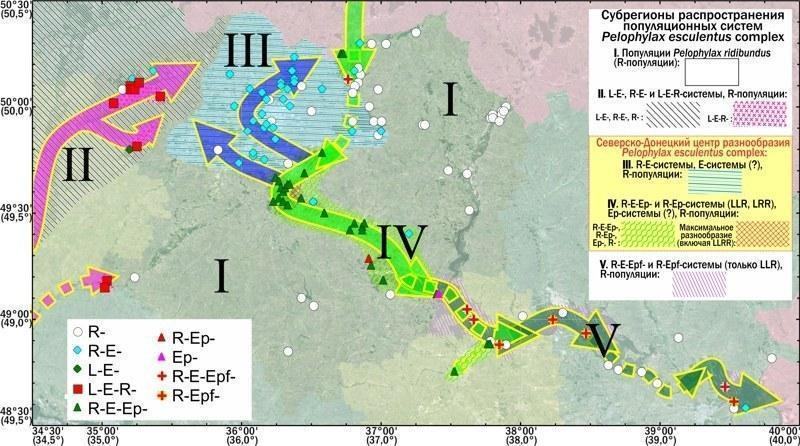
Sobolenko // Cytology and Genetics. – 2010. – Vol. 44, No. 4. – P. 212–216. (The dissertation candidate participated in planning collections in the Left-Bank Forest-Steppe of Ukraine, collected material, and participated in interpretation of results). Influence of environmental conditions on the distribution of Central Asian green toads with three ploidy levels / S. N. Litvinchuk, G. O. Mazepa, R. A. Pasynkova, A. Saidov, T. Satorov, Yu. A. Chikin, D. A. Shabanov, A. Crottini, L. J. Borkin, J. M. Rosanov, M. Stöck // Journal of Zoological Systematics and Evolutionary Research. – 2011. – Vol. 49, No. 3. – P. 233–239. (The dissertation candidate participated in material collection and interpretation of results). Kechedzhyi A. E. Spermatogenesis in triploid Pelophylax esculentus (Amphibia, Anura) from the Seversko-Donetsk Diversity Center of green frogs (Ukraine, Kharkiv region) / A. E. Kechedzhyi, O. V. Mykhailova, D. A. Shabanov // Visnyk of V. N. Karazin Kharkiv National University. Series: Biology. – 2011. – Issue 14, No. 971. – P. 112–116. (The dissertation candidate participated in formulating the research objective, selecting and refining the methodology, conducting fieldwork, and interpreting results). Bondareva A. A. Cytogenetic characteristics of erythrocytes of green frogs from the Seversko-Donetsk Diversity Center of Pelophylax esculentus complex / A. A. Bondareva, Yu. S. Bibik, S. M. Samilo, D. A. Shabanov // Visnyk of V. N. Karazin Kharkiv National University. Series: Biology. – 2012. – Issue 15, No. 1008. – P. 116–123. (The dissertation candidate participated in formulating the research objective, selecting and refining the methodology, conducting fieldwork, and interpreting results). Cytological maps of lampbrush chromosomes of European water frogs (Pelophylax esculentus complex) from the Eastern Ukraine / D. Dedukh, G. Mazepa, D. Shabanov, Ju. Rosanov, S. Litvinchuk, L. Borkin, A. Saifitdinova, A. Krasikova // BMC Genetics. – 2013. – Vol. 14. – P. 26–46. (The dissertation candidate participated in material collection and interpretation of results). Intra-population ontogenetic strategies of early and slow maturation: definition using anuran amphibians as an example / D. A. Shabanov, A. V. Korshunov, E. V. Meleshko, A. V. Shabanova, E. E. Usova // Visnyk of V. N. Karazin Kharkiv National University, series "Biology". – 2014. – Issue 22, No. 1126. – P. 115–124 (The dissertation candidate participated in formulating the research objective, analyzing accumulated material, and interpreting results). Meleshko O. V. The study of three hemiclonal population systems Pelophylax esculentus complex from the Seversko-Donetskiy center of green frogs diversity / O. V. Meleshko, O. V. Korshunov, D. A. Shabanov // Visnyk of V. N. Karazin Kharkiv National University. Series "Biology". – 2014. – Issue 20, No. 1100. – P. 153–158. (The dissertation candidate participated in formulating the research objective, selecting and refining the methodology, conducting fieldwork, and interpreting results). Articles in specialized Ukrainian and international journals Mass occurrence of polyploid green frogs (Rana esculenta complex) in Eastern Ukraine / L. J. Borkin, A. V. Korshunov, G. A. Lada, S. N. Litvinchuk, J. M. Rosanov, D. A. Shabanov, A. I. Zinenko // Russian Journal of Herpetology. – 2004. – Vol. 11, No. 3. – P. 194–213. (The dissertation candidate participated in material collection and interpretation of results). Diversity of green frogs (Rana esculenta complex) in Kharkiv region: morphological aspect of study / O. V. Korshunov, T. V. Babinich, O. I. Zinenko, D. A. Shabanov // Biolohiia ta valeolohiia. – 2004. – Issue 6. – P. 24–30. (The dissertation candidate formulated the research objective and participated in processing the literature data and interpreting results). Kravchenko M. A. Assessment of the uniqueness of Bufo viridis Laurenti, 1768 (Amphibia, Anura) populations from the perspective of rational ecological ethics / M. A. Kravchenko, D. A. Shabanov // Visnyk of Dnipropetrovsk University. – 2005. – No. 3/2. – P. 91–95. (The dissertation candidate formulated the research objective, provided empirical material for its execution, and participated in interpreting results). Mazepa G. O. Formalized description of the rostral pattern of green toads (Bufo viridis) / G. O. Mazepa, D. A. Shabanov // Biolohiia ta valeolohiia. – 2005. – Issue 7. – P. 77–83. (The dissertation candidate formulated the research objective and participated in selecting and refining the methodology, collecting material, and interpreting results). Study of population systems of green frogs (Rana esculenta complex) in Kharkiv region: history, current state and prospects / D. A. Shabanov, A. I. Zinenko, A. V. Korshunov, M. A. Kravchenko, G. A. Mazepa // Visnyk of V. N. Karazin Kharkiv National University. Series: Biology. – 2006. – Issue 3, No. 729. – P. 208–220. (The dissertation candidate formulated the research objective and participated in processing the literature and empirical data, fieldwork, and interpreting results). On the reorganization of zoning of the National Nature Park "Homilshanski Lisy" / O. Yu. Akulov, T. A. Atemasova, O. F. Barteniev, S. G. Viter, A. S. Vlashchenko, O. I. Zinenko, O. V. Korshunov, N. B. Saidakhmedova, Ye. V. Skorobohativ, D. A. Shabanov, A. Yu. Utievskyi // Zapovidna sprava v Ukraini. – 2006. – Vol. 12, Issue 2. – P. 73–79. (The dissertation candidate participated in material collection and in formulating conclusions in the part relating to green frogs). Evolutionary-genetic aspects of hemiclonal reproduction of the hybrid form Rana kl. esculenta (Amphibia, Ranidae) / S. V. Mezhzherin, S. Yu. Morozov-Leonov, O. D. Nekrasova, F. F. Kurtyak, D. A. Shabanov, A. V. Korshunov // Naukovyi visnyk Uzhhorodskoho universytetu: Series: Biology. – 2007. – Issue 21. – P. 79–84. (The dissertation candidate participated in material collection and interpretation of results). A case of natural triploidy in European diploid green toad (Bufo viridis), with some distributional records of diploid and tetraploid toads / L. J. Borkin, D. A. Shabanov, O. V. Brandler, O. V. Kukushkin, S. N. Litvinchuk, G. A. Mazepa, J. M. Rosanov // Russian Journal of Herpetology. – 2007. – Vol. 14, No. 2. – P. 121–132. (The dissertation candidate participated in material collection, processing, and interpretation of results). On the southern distribution boundary of hybrid Rana esculenta (Ranidae, Anura, Amphibia) on the territory of Ukraine and Moldova: data from flow DNA cytometry / L. Ya. Borkin, O. S. Bezman-Moseyko, G. A. Mazepa, A. I. Zinenko, A. V. Korshunov, G. A. Lada, D. A. Shabanov, S. N. Litvinchuk, Yu. M. Rozanov // Pratsi Ukrainskoho herpetolohichnoho tovarystva. – 2008. – No. 1. – P. 3–8. (The dissertation candidate participated in material collection and interpretation of results). Maro A. N. Can tadpole development conditions in Bufo bufo determine the rates of post-metamorphic growth and maturation? / A. N. Maro, A. V. Shabanova, D. A. Shabanov // Problems of Herpetology. Proceedings of the III Congress of the A. M. Nikolsky Herpetological Society. – St. Petersburg: 2008. – P. 274–280. (The dissertation candidate formulated the research objective and participated in data processing and interpretation of results). Kravchenko M. A. Possible pathways of transformation of population systems of Pelophylax esculentus complex (Ranidae, Anura, Amphibia) / M. A. Kravchenko, D. A. Shabanov // Pratsi Ukrainskoho herpetolohichnoho tovarystva. – No. 1, 2008. – P. 15–20. (The dissertation candidate participated in formulating the research objective, processing empirical data, and interpreting results). Shabanov D. A. Which green frogs inhabit Kharkiv region? Terminological and nomenclatural aspects of the problem / D. A. Shabanov, O. V. Korshunov, M. O. Kravchenko // Biolohiia ta valeolohiia. – 2009. – Issue 11. – P. 116–125. (The dissertation candidate formulated the research objective and participated in processing the literature data and interpreting results). Korshunov A. V. Ecological factors affecting the distribution of Pelophylax esculentus complex representatives in Kharkiv region / A. V. Korshunov, D. A. Shabanov // Biologicheskyi vestnik. – 2009. – Vol. 13, No. 1–2. – P. 76–83. (The dissertation candidate participated in formulating the research objective, selecting and refining the methodology, collecting material, and interpreting results). Kravchenko M. A. Modelling transformations of hemiclonal population systems of green frogs (Pelophylax esculentus complex; Amphibia, Ranidae) using recurrent difference equations / M. A. Kravchenko, D. A. Shabanov // Visnyk of V. N. Karazin Kharkiv National University. Series: Biology. – 2010. – Issue 12, No. 920. – P. 70–82. (The dissertation candidate participated in formulating the research objective, selecting the methods for its implementation, and interpreting results). Bondareva A. A. Do cell size effects in diploid and triploid edible frogs influence their resistance to hypoxia? / A. A. Bondareva, T. I. Makhnyy, D. A. Shabanov // Biolohiia ta valeolohiia. – 2010. – Issue 12. – P. 10–15. (The dissertation candidate formulated the research objective and participated in selecting and refining the methodology, and in interpreting results). Mykhailova O. V. How to assess the population load associated with hemiclonal hybridization in Pelophylax esculentus complex population systems? / O. V. Mykhailova, O. Ye. Usova, D. A. Shabanov // Biolohiia ta valeolohiia. – 2011. – Issue 13. – P. 44–50. (The dissertation candidate formulated the research objective and participated in refining the methodology and in interpreting results). Study of the stability of hemiclonal population systems of the hybridogenetic green frog complex using simulation modelling / M. A. Kravchenko, D. A. Shabanov, M. V. Vladymyrova, G. N. Zholtkevych // Visnyk of Dnipropetrovsk University. Biology. Ecology. – 2011. – Vol. 1, Issue 19. – P. 51–64. (The dissertation candidate participated in formulating the research objective, selecting and refining the methodology, and in interpreting results). Mykhailova O. V. Study of spermatogenesis in diploid Pelophylax esculentus (Amphibia, Anura) using karyoanalysis of squash preparations / O. V. Mykhailova, A. E. Kechedzhyi, D. A. Shabanov // Pratsi Ukrainskoho herpetolohichnoho tovarystva. – 2011. – No. 3. – P. 120–127. (The dissertation candidate participated in formulating the research objective, selecting and refining the methodology, and in interpreting results). Shabanov D. A. The hybridogenetic complex of green frogs as a model for studying multilevel selection / D. A. Shabanov // Visnyk of Vasyl Stefanyk Precarpathian National University. Series – Biology. – 2012. – Issue XVII. – P. 90–94. The population system of green frogs (Pelophylax esculentus complex) of Iskov Pond in the Zmiyiv district of Kharkiv region: history of study and population size assessment / E. V. Meleshko, A. D. Suvorova, M. A. Kravchenko, D. A. Shabanov // Biologicheskyi vestnik. – 2012. – Vol. 14, No. 1. – P. 63–68. (The dissertation candidate formulated the research objective and participated in selecting and refining the methodology and in interpreting results). Study of fluctuating asymmetry in perch (Perca fluviatilis L., 1758) / K. P. Vynohradova, Yu. V. Sakun, K. M. Belousova, G. L. Goncharov, D. A. Shabanov // Biolohiia ta valeolohiia. – 2012. – Issue 14. – P. 9–17. (The dissertation candidate formulated the research objective and participated in refining the methodology and in interpreting results). Bondareva A. A. Comparison of certain haematological parameters of diploid and triploid Pelophylax esculentus / A. A. Bondareva, K. V. Siedova, D. A. Shabanov // Pratsi ukrainskoho herpetolohichnoho tovarystva. – 2013. – No. 4. – P. 22–26. (The dissertation candidate formulated the research objective, collected material, and participated in interpreting results). Fertility disorders in interspecific hybrids of green frogs from the Seversko-Donetsk Diversity Center of Pelophylax esculentus complex / A. A. Bobrova, R. M. Makaryan, V. P. Sheyko, D. A. Shabanov // Biolohiia ta valeolohiia. – 2014. – Issue 16. – P. 7–15. (The dissertation candidate formulated the research objective and participated in refining the methodology, collecting material, and interpreting results). Articles in other publications Mass polyploidy in the hybridogenetic complex Rana esculenta (Ranidae, Anura, Amphibia) in Eastern Ukraine / L. Ya. Borkin, A. I. Zinenko, A. V. Korshunov, G. A. Lada, S. N. Litvinchuk, Yu. M. Rozanov, D. A. Shabanov // Proceedings of the First Conference of the Ukrainian Herpetological Society. – Kyiv: Zoological Museum of NMNH NASU, 2005. – P. 23–26. Maro A. N. Dispersal mechanisms of the common toad (Bufo bufo (L. 1758); Amphibia, Anura) and characteristics of its populations in recently colonized habitats / A. N. Maro, D. A. Shabanov // Proceedings of the First Conference of the Ukrainian Herpetological Society. – Kyiv: Zoological Museum of NMNH NASU, 2005. – P. 107–110. Investigation of the integral properties of biosystems using simulation modelling of hybridogenetic population systems of green frogs / M. V. Vladymyrova, G. N. Zholtkevych, A. A. Lutsyk, D. A. Shabanov // Visnyk of V. N. Karazin Kharkiv National University. Series "Mathematical Modelling. Information Technologies. Automated Control Systems". – 2007. – No. 780. – P. 61–70. Shabanov D. A. Regional survey, textbook, handbook, and scientific monograph. Review of the book by V. L. Bulakhov, V. Ya. Gasso, A. E. Pakhomov "Biological Diversity of Ukraine. Dnipropetrovsk Region. Amphibians and Reptiles (Amphibia et Reptilia)" / D. A. Shabanov, A. I. Zinenko // Visnyk of Dnipropetrovsk University. Biology. Ecology. – 2008. – Issue 16, Vol. 2. – P. 209–211. Shabanov D. A. Why do gonochorous organisms displace cross-fertilizing hermaphrodites: gonochorism as a Nash equilibrium / D. A. Shabanov // Proceedings of the International Scientific Conference dedicated to the 80th anniversary of the birth of Prof. A. P. Krapivny. – Kharkiv: V. N. Karazin Kharkiv National University, 2009. – P. 38–49. Shabanov D. A. Green frogs: life without rules or a special mode of evolution / D. A. Shabanov, S. N. Litvinchuk // Priroda. – 2010. – No. 3 (1135). – P. 29–36. Vlasova T. Simulation of the Expanded Iterated Version of the Prisoner's Dilemma Game Recognisers / T. Vlasova, M. Vladymyrova, D. Shabanov // 7-th Int. Conf. ICTERI, 2011. – Vol. 716. – P. 82–86. Conference abstracts Shabanov D. A. Uniqueness of anuran amphibian populations as a basis for their conservation / D. A. Shabanov, A. V. Korshunov, M. A. Kravchenko // Contemporary Problems of Zoology and Ecology. – Odessa: Feniks, 2005. – P. 328–329. Kravchenko M. A. On the development of methods for assessing population value from the perspective of rational ecological ethics / M. A. Kravchenko, D. A. Shabanov // Biodiversity and the Role of Zoocoenoses in Natural and Anthropogenic Ecosystems: Proceedings of the III International Scientific Conference. – Dnipropetrovsk: Dnipropetrovsk National University Press, 2005. – P. 78–80. Korshunov A. V. Transformation of population systems of green frogs as a special category of natural development processes / A. V. Korshunov, M. A. Kravchenko, D. A. Shabanov // Contemporary Problems of Population Ecology. Proceedings of the IX International Scientific-Practical Ecological Conference. – Belgorod: POLITERRA Press, 2006. – P. 101–102. Shabanov D. A. Hybrid Rana esculenta frogs producing gametes of both parental forms — the result of independent clonal evolution of genomes? / D. A. Shabanov // Proceedings of the Conference "Contemporary Problems of Biological Evolution. On the Occasion of the 100th Anniversary of the State Darwin Museum". – Moscow: State Darwin Museum Press, 2007. – P. 199–201. Kravchenko M. A. Hierarchy of biodiversity levels using the hybridogenetic Rana esculenta complex as an example / M. A. Kravchenko, D. A. Shabanov // Zoocenosis-2007. Biodiversity and the Role of Animals in Ecosystems. – Dnipropetrovsk: Dnipropetrovsk National University, 2007. – P. 381–383. Kravchenko M. A. What new can be learned about green frogs through simulation modelling? (Plenary address at the conference opening) / M. A. Kravchenko, A. A. Lutsyk, D. A. Shabanov // "Biology: from Molecule to Biosphere". Proceedings of the III International Conference of Young Scientists. – Kharkiv: SPD FO Mykhailov G. G., 2008. – P. 9–11. Usova E. E. On the optimization of the methodology for retrospective assessment of body size dynamics in representatives of Pelophylax esculentus complex (Amphibia, Ranidae) using skeletochronology / E. E. Usova, D. A. Shabanov // Zoocenosis-2009. Biodiversity and the Role of Animals in Ecosystems. – Dnipropetrovsk: Dnipropetrovsk National University, 2009. – P. 278–280. Data on the helminth fauna of green frogs (Rana esculenta complex) in Kharkiv region / M. V. Rezvantseva, G. A. Lada, D. S. Aksenov, D. A. Shabanov, A. V. Korshunov, I. V. Chikhlyaev, L. Ya. Borkin, S. N. Litvinchuk, Yu. M. Rozanov // Theoretical and Practical Problems of Parasitology. Proceedings of the International Scientific Conference. – Moscow, 2010. – P. 308–312. Shabanov D. A. Towards the development of a classification of types of population reproduction / D. A. Shabanov // Species Populations and Communities in Anthropogenically Transformed Landscapes: State and Diagnostic Methods. Proceedings of the XI International Scientific-Practical Ecological Conference. – Belgorod, 2010. – P. 228–229. Kravchenko M. A. Levels of biodiversity of Pelophylax esculentus complex / M. A. Kravchenko, D. A. Shabanov // Biodiversity and Sustainable Development. Abstracts of the International Scientific-Practical Conference. – Simferopol: Crimean Scientific Center, 2010. – P. 68–71. Vlasova T. Simulation modelling of the expanded iterated version of the Prisoner's Dilemma game / T. Vlasova, M. Vladymyrova, D. Shabanov // ICTERI 2011. ICT in Education, Research, and Industrial Applications: Integration, Harmonization and Knowledge Transfer. – Kherson: Kherson State University, 2011. – P. 57–58. Bondareva A. A. Comparison of the size and shape of erythrocytes in diploid and triploid hybrids of green frogs (Pelophylax esculentus) / A. A. Bondareva, D. A. Shabanov // All-Ukrainian Competition of Student Scientific Papers in Biological Sciences: Proceedings of the Final Scientific-Practical Conference (Melitopol, 29–31 March 2011). – Melitopol: "Lyuks", 2011. – P. 11–14. Cytological maps of lampbrush chromosomes of European water frogs / D. Dedukh, G. Mazepa, D. Shabanov, S. Litvinchuk, L. Borkin, A. Saifitdinova, A. Krasikova // 18th International Chromosome Conference (Manchester, 29 August – 2 September 2011). Speaker abstracts. – P. 48–49. ANOTATION (Ukrainian) Shabanov D. A. Evolutionary ecology of population systems of the hybridogenetic complex of green frogs (Pelophylax esculentus complex) of the Left-Bank Forest-Steppe of Ukraine. — On the rights of a manuscript. Dissertation for the degree of Doctor of Biological Sciences in specialty 03.00.16 — Ecology. — Oles Honchar Dnipropetrovsk National University. — Dnipropetrovsk, 2015. The results of many years of research on Pelophylax esculentus complex in the Left-Bank Forest-Steppe of Ukraine are presented. Five subregions differing in the composition of population systems and populations of Pelophylax esculentus complex representatives distributed within them have been distinguished in the study region. Population systems including Pelophylax esculentus are found in four of these subregions; Pelophylax esculentus triploids have been recorded in two of them. The Seversko-Donetsk Diversity Center of Pelophylax esculentus complex is described. Hemiclonal inheritance in Pelophylax esculentus is the cause of the origin of hemiclonal population systems (HPSs). A simulation model has been developed for studying transformations of HPSs of Pelophylax esculentus complex. A dynamic typology of HPSs including diploid representatives of Pelophylax esculentus complex has been developed using this model. It is shown that Pelophylax esculentus complex provides exceptional opportunities for studying multilevel selection. Hypotheses explaining the phenomenon of hybrid amphispermy and selection for the capacity for hemiclonal hybridization are proposed. Key words: ecology, evolution, Pelophylax esculentus complex, P. ridibundus, P. lessonae, P. esculentus, hemiclonal population systems, simulation modelling, multilevel selection, stability. ANNOTATION (Russian) Shabanov D. A. Evolutionary ecology of population systems of the hybridogenetic complex of green frogs (Pelophylax esculentus complex) of the Left-Bank Forest-Steppe of Ukraine. — On the rights of a manuscript. Dissertation for the degree of Doctor of Biological Sciences in specialty 03.00.16 — Ecology. — Oles Honchar Dnipropetrovsk National University. — Dnipropetrovsk, 2015. The results of many years of research on Pelophylax esculentus complex in the Left-Bank Forest-Steppe of Ukraine are presented. Five subregions differing in the composition of population systems and populations of Pelophylax esculentus complex representatives distributed within them have been distinguished in the study region. Population systems including Pelophylax esculentus are found in four of these subregions; Pelophylax esculentus triploids have been recorded in two of them. Differences between subregions are attributable in part to differences in their characteristic biogeocoenotic conditions and in part to the isolation of different river basins. Two subregions located in the catchment basin of the Siverskyi Donets River form the Seversko-Donetsk Diversity Center of Pelophylax esculentus complex. It is shown that the characteristic properties of biosystems at different levels of organization are closely linked to the mode of recombination, gametogenesis, reproduction, and population reproduction. Hemiclonal inheritance in Pelophylax esculentus is associated with a profound alteration of this chain of processes. Reproduction of Pelophylax esculentus is possible only within hemiclonal population systems (HPSs), which constitute a special category of biosystems. A simulation model has been developed for studying the mechanisms of HPS transformation in Pelophylax esculentus complex, enabling hypotheses relating to poorly understood aspects of HPS functioning to be tested against the body of accumulated empirical data. A dynamic typology (grouping the objects considered on the basis of predictions of their future dynamics) of HPSs including diploid representatives of Pelophylax esculentus complex has been developed using this model. The theoretical possibility of the existence of hemiclonal population systems consisting exclusively of diploid Pelophylax esculentus is substantiated. It is shown that Pelophylax esculentus complex provides exceptional opportunities for studying multilevel selection. Manifestations of selection at the gene, genomic, cellular, organismal, and group levels have been recorded within it. A hypothesis is proposed explaining the phenomenon of hybrid amphispermy by competition within germline cells between clonal genomes modified as a result of selection for the ability to cause elimination of alternative genomes. A hypothesis is proposed according to which the capacity of two relatively closely related species for hemiclonal hybridization is an adaptation to homeologous interspecific recombination, maintained at the level of species selection. Key words: ecology, evolution, Pelophylax esculentus complex, P. ridibundus, P. lessonae, P. esculentus, hemiclonal population systems, simulation modelling, multilevel selection, stability. Annotation Shabanov D. A. Evolutionary ecology of population systems of green frogs' hybridogenetic complex (Pelophylax esculentus complex) from Left Bank forest-steppes of Ukraine. — The Rights of the manuscript.
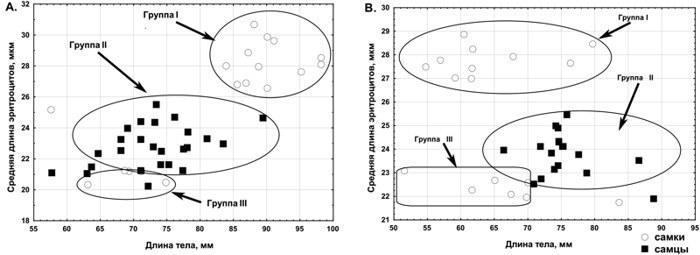
Dissertation for a degree of Doctor of Biological Sciences by speciality 03.00.16. – Ecology. – Oles' Gonchar Dnipropetrovsk National University. – Dnipropetrovsk, 2015. The results of long-term research of Pelophylax esculentus complex in Left Bank forest-steppes of Ukraine are represented. The 5 sub-regions were distinguished in the study region. They differ in composition of widespread population systems and populations of Pelophylax esculentus complex representatives. Population systems, which include Pelophylax esculentus, were found in four of these regions, Pelophylax esculentus triploids were registered in two of them. The Seversko-Donetskiy center of green frogs' diversity was described. The hemiclonal inheritance is the reason of hemiclonal population systems (HPS) origin. The simulation model was developed for studying the transformation of HPS of Pelophylax esculentus complex. The dynamic typology of HPS was developed using this model. It was shown, that Pelophylax esculentus complex gives exceptional opportunities for studying the multilevel selection. The hypothesis explaining the hybrid-amphispermy and selection for hemiclonal hybridization ability were proposed. Key words: ecology, evolution, Pelophylax esculentus complex, P. ridibundus, P. lessonae, P. esculentus, hemiclonal population systems, simulation modelling, multilevel selection, stability. **CONCLUSION** Prospects for further research on the HPS of green frogs of the North Donets center of diversity of the Pelophylax esculentus complex are discussed. **FINDINGS** 1. On the territory of the Left-Bank Forest-Steppe of Ukraine, representatives of the hybridogenic complex Pelophylax esculentus exist not only as part of the populations of the parental species Pelophylax lessonae (Camerano, 1882) and Pelophylax ridibundus (Pallas, 1771), but also as part of population systems that include diploid and, in some cases, polyploid interspecific hybrids Pelophylax esculentus (Linnaeus, 1758). The composition and dynamics of such systems are influenced by the bioexenocenotic features of habitats, the specifics of hemiclonal reproduction of Pelophylax esculentus, and the limited distribution of certain forms of Pelophylax esculentus in the river basins of the study region. 2. Five subregions were identified in the study area, differing in the composition of the population systems and populations of Pelophylax esculentus complex representatives found there.
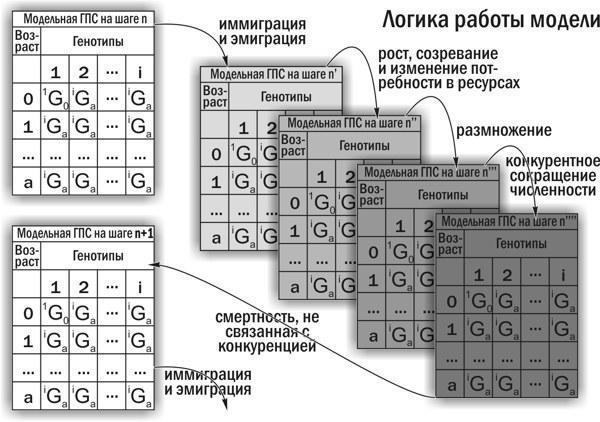
Population systems including Pelophylax esculentus are found in four of these subregions, and triploid Pelophylax esculentus have been recorded in two of them. 3. Within the identified subregions, the composition of population systems of the Pelophylax esculentus complex is determined by bioexenocenotic conditions, primarily the nature of vegetation around the spawning pond and the level of anthropogenic transformation of the territory. Differences between subregions are partly related to differences in their characteristic bioexenocenotic conditions, and partly to the isolation of different river basins. 4. For two subregions located in the Northern Donets River basin, a uniquely high diversity of Pelophylax esculentus complex representatives has been recorded, as well as an unusual composition of their population systems compared to the surrounding areas. This region is named the North Donets center of diversity of the Pelophylax esculentus complex. 5. The uniqueness of the North Donets center of diversity of the Pelophylax esculentus complex is due to the following features: — on part of its territory, triploid Pelophylax esculentus of both sexes with genotypes of both possible genomic compositions (LLR and LRR) are widespread; — R-Ep- and R-E-type HPS predominate in it; — sexually mature Pelophylax lessonae are absent in it; individuals of Pelophylax lessonae arising from hybridization (crossing of hybrids) die at early stages of ontogenesis; — it is characterized by a high proportion of Pelophylax esculentus individuals with hybrid amphispermy (production of sex cells of both parental species); — a significant proportion of Pelophylax esculentus individuals exhibit fertility disorders.
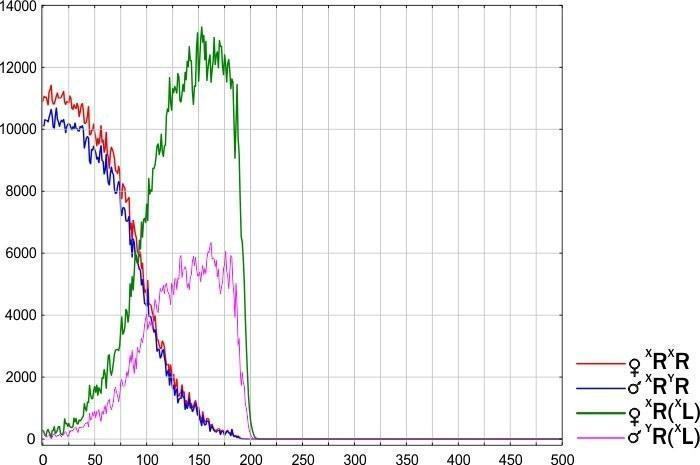
6. The characteristic properties of biosystems at different levels of organization are closely related to the mode of recombination (at the gene level), gametogenesis or similar processes (at the cellular level), reproduction (at the organismal level), and population reproduction. Hemiclonal inheritance in Pelophylax esculentus is associated with a profound change in the entire chain of these processes and generates specific biosystems at different levels of organization that differ from those in organisms with typical sexual reproduction.
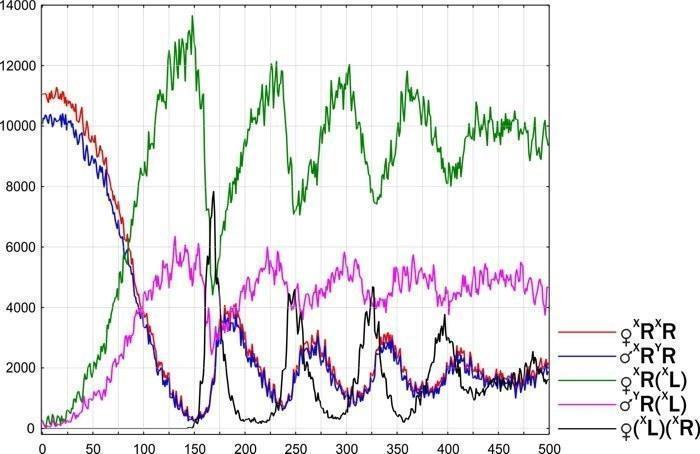
7. The existence of interspecific hybrids Pelophylax esculentus, due to the peculiarities of their reproduction, is possible not as part of populations, but as part of hemiclonal population systems (HPS). HPS of hybridogenic species complexes are a special category of biosystems, fundamentally different from populations (consisting of individuals of different species and interspecific hybrids, and also because they transmit not only recombinant but also clonal genomes), as well as from guilds and communities (united by common reproduction). HPS are characterized not only by sexual and age structure, but also by the composition of karyogenetic forms (groups of individuals differing in genomic composition and the composition of genomes transmitted in gametes), which determines the composition of clonally transmitted genomes. HPS are capable of transformations, i.e., changes in the composition and ratio of different karyogenetic forms within them. 8. To study the transformation mechanism of HPS of the Pelophylax esculentus complex, a simulation model has been developed and created. This model allows obtaining probability distributions of HPS transformation outcomes depending on the initial composition of the HPS, as well as the assumptions made about the inheritance pattern of different genomes and the relative viability of different karyogenetic forms of the Pelophylax esculentus complex under specific bioexenocenotic conditions. 9. The use of the simulation model created in this work allows testing hypotheses concerning unexplored aspects of HPS functioning for consistency with the accumulated empirical data. 10. A dynamic typology (grouping considered objects based on the prediction of their future dynamics) of HPS including diploid representatives of the Pelophylax esculentus complex has been developed. It has been shown that such HPS can exist only in four stable states, in which representatives of Pelophylax esculentus are included. In all these four stable states, genomes of both parental species are transmitted in the HPS. 11. The theoretical possibility of the existence of hemiclonal population systems consisting exclusively of diploid Pelophylax esculentus has been substantiated.
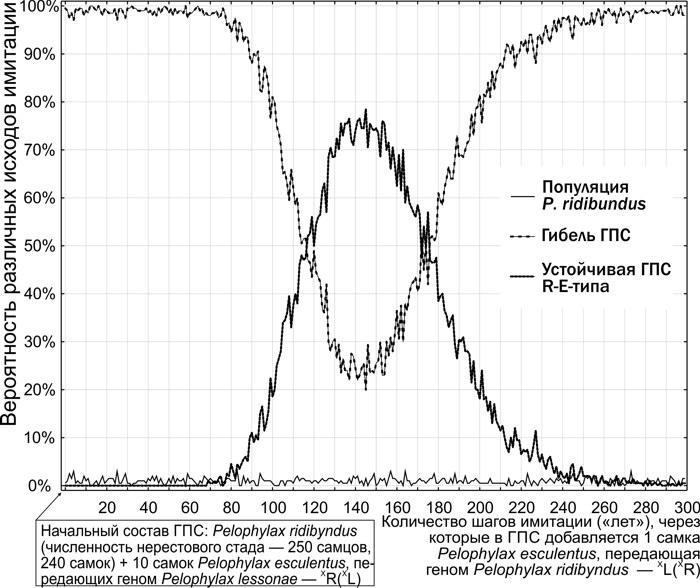
It has been shown that these HPS will be stable if they consist of individuals with hybrid amphispermy belonging to two different clones (sets of genetically identical individuals). 12. The Pelophylax esculentus complex provides exceptional opportunities for studying multilevel selection. Selection is recorded at several levels: — gene level, corresponding to the 'selfish gene' model and manifested in the different success of allele distribution in populations or HPS; — genomic (a limiting case of gene level, when all genes of one genome are inherited as a whole), corresponding to the 'selfish genome' model and manifested in the competition of individual hemiclones; — cellular level, corresponding to the 'selfish germ line' model and manifested in the competition of different germ cell lines in the gonads of Pelophylax esculentus; the formation of viable gametes completes the development only of those lines in which elimination of the recombinant genome and endoreduplication of the clonal genome (in the case of diploid hybrids) occurs successfully; — organismal level, corresponding to the 'selfish organism' model and manifested in its pure form in the competition of hybrid individuals within a clone; — group level, corresponding to the 'stable HPS' model and manifested in the difference in the probability of survival and dispersal of HPS of different compositions. The dynamics of changes in each individual HPS are determined by the interaction of selection effects at different levels. 13. A hypothesis is proposed that explains the phenomenon of hybrid amphispermy by competition in germ line cells of clonal genomes modified by selection for the ability to induce elimination of alternative genomes. 14.
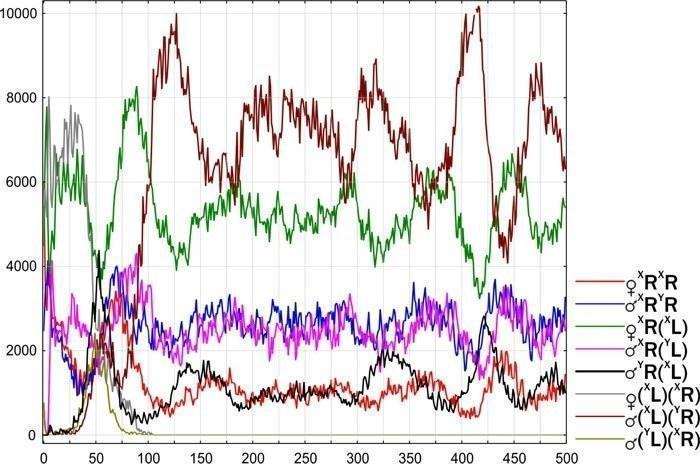
A hypothesis is proposed according to which the ability of two relatively close species to undergo hemiclonal hybridization is an adaptation to homologous interspecific recombination, which is maintained at the level of species selection. **ACKNOWLEDGMENTS** The author carried out this work in collaboration with many colleagues and received valuable consultative and organizational assistance from numerous specialists. At various stages of his scientific career, he was mentored by V. P. Kudokotsev and V. M. Epstein, whose memory the dissertation author cherishes. The author expresses gratitude to V. L. Bulahov, who supervised his candidate dissertation, and to A. P. Rasnycyn, who provided valuable consultations during the preparation of his doctoral dissertation. Cooperation with S. N. Litvinchuk, Yu. M. Rosanov, L. Ya. Borkin, G. A. Lada, and S. Yu. Morozov-Leonov played an important role in the execution of this work. The work of A. V. Korshunov and M. A. Kravchenko, who completed their candidate dissertations under his supervision, was particularly important for the author. The author expresses sincere and deep gratitude to all named and many unnamed colleagues. Cellular level of selection.
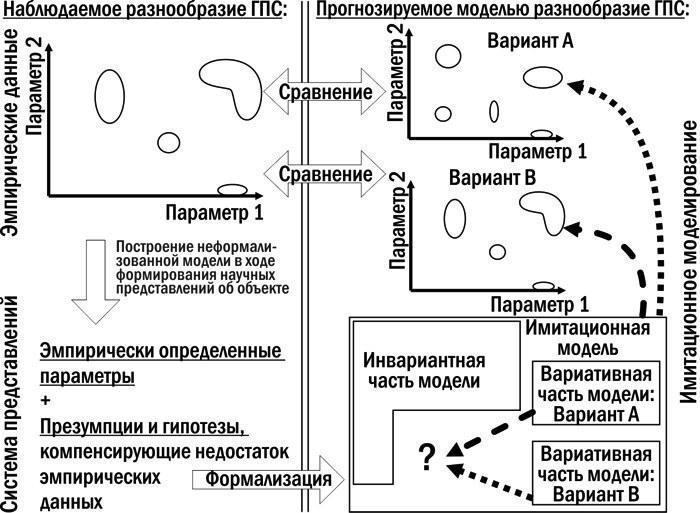
It has been established that gametogenesis in P. esculentus is significantly less stable than in P. ridibundus. Cells with a karyotype absent from the sperm have been found in the testes of male P. esculentus (Mykhailova et al., 2011; Kechedzhyi et al., 2011). This indicates the existence of a mechanism for the elimination of cell lineages whose development did not yield fully functional gametes. Organismal level of selection. Spermatogenesis disorders in first-generation hybrids have long been known (Berger, 1971), but the degree of prevalence of such disorders recorded by us proved unexpected (Fertility disorders..., 2014). Fertility disorders were detected in 85% of P. esculentus (n = 46) and 29% of P. ridibundus (n = 17) from the Seversko-Donetsk Diversity Center of green frogs. Skeletochronological studies demonstrate differences among individuals in growth rate, age at sexual maturity, and longevity. In the diversity of intra-population ontogenetic strategies of green frogs (and several other groups), the existence of two typical cases may be postulated: early maturation and slow growth (Intra-population..., 2014). Group level of selection. The differential stability of different HPS types is a modelling result consistent with field observations. Different HPS types collapse, undergo transformation, or persist in a stable state. They may "reproduce" (disperse), transmitting a specific set of clonal genomes. Phylogenetic level of selection. Three pathways for overcoming hybrid sterility are known, enabling the preservation of the hybrid genomic composition (Shabanov, 2006): transition to clonal reproduction (from vegetative propagation to parthenogenesis); polyploidy; and hemiclonality. Of these, hemiclonal inheritance specifically requires the action of a complex karyogenetic mechanism ensuring genome elimination and endoreduplication. Since the purposiveness of biosystems is a result of selection, it is necessary to determine which level of selection maintains hemiclonal inheritance. A number of studies have demonstrated that disruptions of hemiclonality during hybrid reproduction give rise to partial recombinants, which upon crossing with parental-species individuals can transfer fragments of genetic information from one parental species into the gene pools of the other (Inheritance..., 2009; The ploidy..., 2010, and other works). These represent manifestations of homeologous recombination (Table 5), i.e., recombination between corresponding chromosomes belonging to different species. We have proposed that limited (bounded by the level of disruptions in clonal genome transmission) interspecific homeologous recombination confers an evolutionary advantage upon those species whose hybridization yields hemiclonal hybrids. This explanation is consistent with the concept of species selection (Eldredge, Gould, 1972), which has been demonstrated in a number of cases (Goldberg et al., 2010). We propose that the capacity for hybridization with the formation of hemiclonal hybrids in the genus Pelophylax is maintained by species selection. This explains the rapid evolution of the genus and the presence within it of several hybridogenetic complexes (Plötner, 2005). CONCLUSION Prospects for further research on HPSs of green frogs of the Seversko-Donetsk Diversity Center of Pelophylax esculentus complex are discussed. CONCLUSIONS 1.
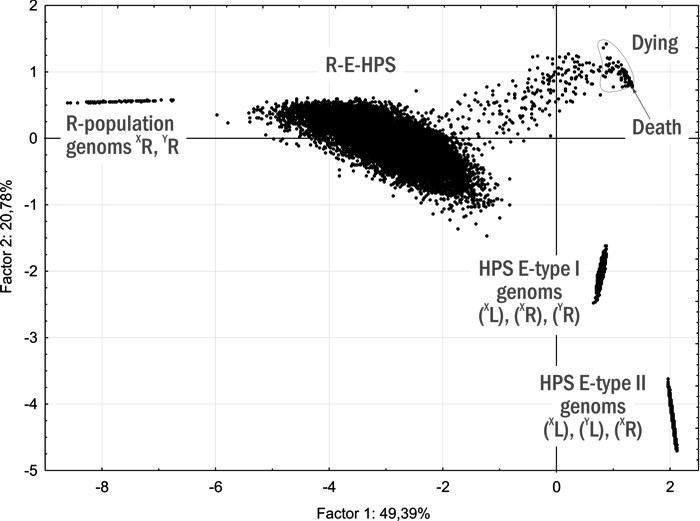
In the territory of the Left-Bank Forest-Steppe of Ukraine, representatives of the hybridogenetic complex Pelophylax esculentus exist not only within populations of the parental species Pelophylax lessonae (Camerano, 1882) and Pelophylax ridibundus (Pallas, 1771), but also within population systems including diploid and, in some cases, polyploid interspecific hybrids Pelophylax esculentus (Linnaeus, 1758). The composition and dynamics of such systems are influenced by the biogeocoenotic characteristics of habitats, the specifics of hemiclonal reproduction in Pelophylax esculentus, and the restricted distribution of individual forms of Pelophylax esculentus in river basins within the study region. 2. Five subregions have been distinguished in the study region, differing in the composition of population systems and populations of representatives of Pelophylax esculentus complex distributed within them. Population systems including Pelophylax esculentus are found in four of these subregions; Pelophylax esculentus triploids have been recorded in two of them. 3. Within the distinguished subregions, the composition of Pelophylax esculentus complex population systems is determined by biogeocoenotic conditions, primarily the character of vegetation in the vicinity of the spawning water body and the level of anthropogenic transformation of the territory. Differences between subregions are attributable in part to differences in their characteristic biogeocoenotic conditions and in part to the isolation of different river basins. 4. For two subregions located in the catchment basin of the Siverskyi Donets River, a uniquely high diversity of Pelophylax esculentus complex representatives has been recorded, as well as an unusual composition of their population systems compared with surrounding territories. This region has been designated the Seversko-Donetsk Diversity Center of Pelophylax esculentus complex.
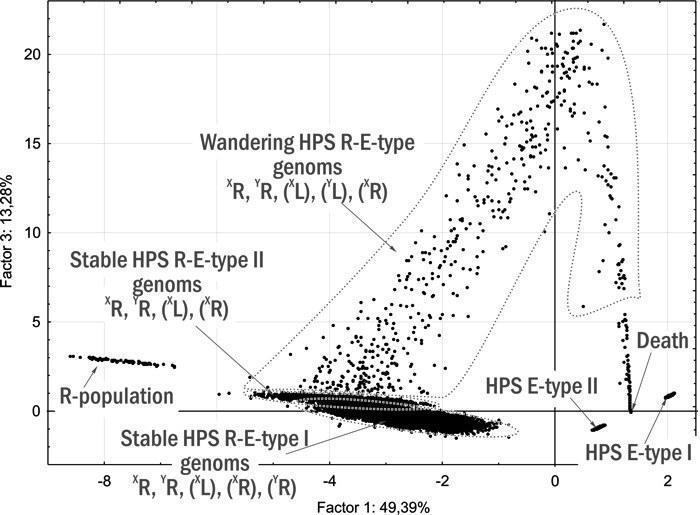
5. The uniqueness of the Seversko-Donetsk Diversity Center of Pelophylax esculentus complex is associated with the following characteristics: — throughout part of its territory, triploid Pelophylax esculentus of both sexes with genotypes of both possible genomic compositions (LLR and LRR) are widespread; — R-Ep- and R-E-type HPSs predominate within it; — sexually mature Pelophylax lessonae are absent; Pelophylax lessonae individuals arising as a result of hybridolysis (hybrid crossing) perish at early stages of ontogenesis; — it is characterized by a high proportion of Pelophylax esculentus individuals exhibiting hybrid amphispermy (production of sex cells of both parental species); — a substantial proportion of Pelophylax esculentus individuals display fertility disorders. 6. The characteristic properties of biosystems at different levels of organization are closely linked to the mode of recombination (at the gene level), gametogenesis or comparable processes (at the cellular level), reproduction (at the organismal level), and population reproduction. Hemiclonal inheritance in Pelophylax esculentus is associated with a profound alteration of the entire chain of these processes and gives rise to specific biosystems at different levels of organization, differing from those of organisms with typical sexual reproduction. 7. The existence of interspecific hybrids Pelophylax esculentus, owing to the peculiarities of their reproduction, is possible not within populations but within hemiclonal population systems (HPSs). HPSs of hybridogenetic species complexes constitute a special category of biosystems, fundamentally distinct from populations (in that they consist of individuals of different species and interspecific hybrids, and in that they transmit not only recombinant but also clonal genomes), as well as from guilds and communities (in that they are united by joint reproduction). HPSs are characterized not only by sex and age structure but also by the composition of karyogenetic forms (groups of individuals differing in genomic composition and in the composition of genomes transmitted in gametes), which determines the composition of clonally transmitted genomes. HPSs are capable of transformation, i.e., changes in the composition and ratio of different karyogenetic forms within them. 8. A simulation model has been developed and created for investigating the mechanisms of transformation of HPSs of Pelophylax esculentus complex. This model enables the generation of probability distributions of HPS transformation outcomes depending on the initial HPS composition and on the assumptions adopted regarding the nature of inheritance of different genomes and the relative viability of different karyogenetic forms of Pelophylax esculentus complex under the conditions of a specific biogeocoenosis. 9. The use of the simulation model created in this work makes it possible to test hypotheses relating to poorly understood aspects of HPS functioning against the body of accumulated empirical data. 10. A dynamic typology (grouping the objects considered on the basis of predictions of their future dynamics) of HPSs including diploid representatives of Pelophylax esculentus complex has been developed. It is shown that such HPSs can exist in only four stable states in which representatives of Pelophylax esculentus are included in their composition.
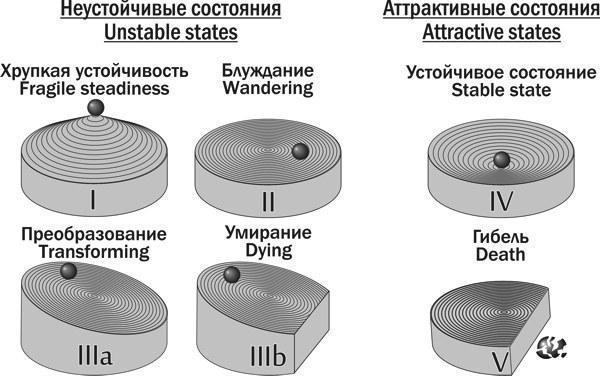
In all four of these stable states, the genomes of both parental species are transmitted within the HPS. 11. The theoretical possibility of the existence of hemiclonal population systems consisting exclusively of diploid Pelophylax esculentus is substantiated. It is shown that such HPSs will be stable provided they consist of individuals with hybrid amphispermy belonging to two different clones (assemblages of genetically identical individuals). 12. Pelophylax esculentus complex provides exceptional opportunities for studying multilevel selection. Selection has been recorded within it at several levels: — gene-level, corresponding to the "selfish gene" model and manifesting as differential success in the spread of individual alleles within populations or HPSs; — genomic-level (the limiting case of gene-level selection when all genes of one genome are inherited as a unit), corresponding to the "selfish genome" model and manifesting as competition among individual hemiclones; — cellular-level, corresponding to the "selfish germline" model and manifesting as competition among different germline lineages within the gonads of Pelophylax esculentus; only those lineages in which successful elimination of the recombinant genome and endoreduplication of the clonal genome occur (in the case of diploid hybrids) complete development to yield viable gametes; — organismal-level, corresponding to the "selfish organism" model and manifesting in its pure form as competition among hybrid individuals within a clone; — group-level, corresponding to the "stable HPS" model and manifesting as differences in the probability of survival and dispersal of HPSs of different composition. The dynamics of change in each individual HPS are determined by the interaction of selection effects at different levels. 13. A hypothesis is proposed explaining the phenomenon of hybrid amphispermy by competition within germline cells between clonal genomes modified as a result of selection for the ability to cause elimination of alternative genomes. 14. A hypothesis is proposed according to which the capacity of two relatively closely related species for hemiclonal hybridization is an adaptation to homeologous interspecific recombination, maintained at the level of species selection. ACKNOWLEDGEMENTS The author carried out this work in collaboration with many colleagues and received valuable consultative and organizational assistance from numerous specialists. At different stages of his scientific career, he was guided by V. P. Kudokotsev and V. M. Epshtein, to whose grateful memory the dissertation candidate pays tribute. The author expresses his deep gratitude to V. L. Bulakhov, who supervised his candidate's dissertation, and to A. P. Rasnitsyn, who provided valuable consultations during the preparation of the doctoral dissertation. An important role in the completion of this work was played by collaboration with S. N. Litvinchuk, Yu. M. Rozanov, L. Ya. Borkin, G. A. Lada, and S. Yu. Morozov-Leonov. Of particular importance to the author was the work of A. V. Korshunov and M. A. Kravchenko, who prepared their candidate's dissertations under his supervision. To all those named and many unnamed colleagues, the author expresses his sincere and profound gratitude. PUBLICATIONS ON THE DISSERTATION TOPIC Articles in journals indexed in scientometric databases Inheritance of parental genomes by the hybrid form Rana "esculenta" (Amphibia, Ranidae) / S. Yu. Morozov-Leonov, S. V. Mezhzherin, O. D. Nekrasova, D. A. Shabanov, A. V. Korshunov, F. F. Kurtyak // Genetika. – 2009. – Vol. 45, No. 4. – P. 488–495. (The dissertation candidate participated in material collection and interpretation of results). The ploidy and genetic structure of hybrid population of water frogs Pelophylax esculentus complex (Amphibia, Ranidae) of Ukraine fauna / S. V. Mezhzherin, S. Yu. Morozov-Leonov, O. V. Rostovskaya, D. A. Shabanov, L. Yu. Sobolenko // Cytology and Genetics. – 2010. – Vol. 44, No. 4. – P. 212–216. (The dissertation candidate participated in planning collections in the Left-Bank Forest-Steppe of Ukraine, collected material, and participated in interpretation of results). Influence of environmental conditions on the distribution of Central Asian green toads with three ploidy levels / S. N. Litvinchuk, G. O. Mazepa, R. A. Pasynkova, A. Saidov, T. Satorov, Yu. A. Chikin, D. A. Shabanov, A. Crottini, L. J. Borkin, J. M. Rosanov, M. Stöck // Journal of Zoological Systematics and Evolutionary Research. – 2011. – Vol. 49, No. 3. – P. 233–239. (The dissertation candidate participated in material collection and interpretation of results). Kechedzhyi A. E. Spermatogenesis in triploid Pelophylax esculentus (Amphibia, Anura) from the Seversko-Donetsk Diversity Center of green frogs (Ukraine, Kharkiv region) / A. E. Kechedzhyi, O. V. Mykhailova, D. A. Shabanov // Visnyk of V. N. Karazin Kharkiv National University. Series: Biology. – 2011. – Issue 14, No. 971. – P. 112–116. (The dissertation candidate participated in formulating the research objective, selecting and refining the methodology, conducting fieldwork, and interpreting results). Bondareva A. A. Cytogenetic characteristics of erythrocytes of green frogs from the Seversko-Donetsk Diversity Center of Pelophylax esculentus complex / A. A. Bondareva, Yu. S. Bibik, S. M. Samilo, D. A. Shabanov // Visnyk of V. N. Karazin Kharkiv National University. Series: Biology. – 2012. – Issue 15, No. 1008. – P. 116–123. (The dissertation candidate participated in formulating the research objective, selecting and refining the methodology, conducting fieldwork, and interpreting results). Cytological maps of lampbrush chromosomes of European water frogs (Pelophylax esculentus complex) from the Eastern Ukraine / D. Dedukh, G. Mazepa, D. Shabanov, Ju. Rosanov, S. Litvinchuk, L. Borkin, A. Saifitdinova, A. Krasikova // BMC Genetics. – 2013. – Vol. 14. – P. 26–46. (The dissertation candidate participated in material collection and interpretation of results). Intra-population ontogenetic strategies of early and slow maturation: definition using anuran amphibians as an example / D. A. Shabanov, A. V. Korshunov, E. V. Meleshko, A. V. Shabanova, E. E. Usova // Visnyk of V. N. Karazin Kharkiv National University, series "Biology". – 2014. – Issue 22, No. 1126. – P. 115–124 (The dissertation candidate participated in formulating the research objective, analyzing accumulated material, and interpreting results). Meleshko O. V. The study of three hemiclonal population systems Pelophylax esculentus complex from the Seversko-Donetskiy center of green frogs diversity / O. V. Meleshko, O. V. Korshunov, D. A. Shabanov // Visnyk of V. N. Karazin Kharkiv National University. Series "Biology". – 2014. – Issue 20, No. 1100. – P. 153–158. (The dissertation candidate participated in formulating the research objective, selecting and refining the methodology, conducting fieldwork, and interpreting results). Articles in specialized Ukrainian and international journals Mass occurrence of polyploid green frogs (Rana esculenta complex) in Eastern Ukraine / L. J. Borkin, A. V. Korshunov, G. A. Lada, S. N. Litvinchuk, J. M. Rosanov, D. A. Shabanov, A. I. Zinenko // Russian Journal of Herpetology. – 2004. – Vol. 11, No. 3. – P. 194–213. (The dissertation candidate participated in material collection and interpretation of results). Diversity of green frogs (Rana esculenta complex) in Kharkiv region: morphological aspect of study / O. V. Korshunov, T. V. Babinich, O. I. Zinenko, D. A. Shabanov // Biolohiia ta valeolohiia. – 2004. – Issue 6. – P. 24–30. (The dissertation candidate formulated the research objective and participated in processing the literature data and interpreting results). Kravchenko M. A. Assessment of the uniqueness of Bufo viridis Laurenti, 1768 (Amphibia, Anura) populations from the perspective of rational ecological ethics / M. A. Kravchenko, D. A. Shabanov // Visnyk of Dnipropetrovsk University. – 2005. – No. 3/2. – P. 91–95. (The dissertation candidate formulated the research objective, provided empirical material for its execution, and participated in interpreting results). Mazepa G. O. Formalized description of the rostral pattern of green toads (Bufo viridis) / G. O. Mazepa, D. A. Shabanov // Biolohiia ta valeolohiia. – 2005. – Issue 7. – P. 77–83. (The dissertation candidate formulated the research objective and participated in selecting and refining the methodology, collecting material, and interpreting results). Study of population systems of green frogs (Rana esculenta complex) in Kharkiv region: history, current state and prospects / D. A. Shabanov, A. I. Zinenko, A. V. Korshunov, M. A. Kravchenko, G. A. Mazepa // Visnyk of V. N. Karazin Kharkiv National University. Series: Biology. – 2006. – Issue 3, No. 729. – P. 208–220. (The dissertation candidate formulated the research objective and participated in processing the literature and empirical data, fieldwork, and interpreting results). On the reorganization of zoning of the National Nature Park "Homilshanski Lisy" / O. Yu. Akulov, T. A. Atemasova, O. F. Barteniev, S. G. Viter, A. S. Vlashchenko, O. I. Zinenko, O. V. Korshunov, N. B. Saidakhmedova, Ye. V. Skorobohativ, D. A. Shabanov, A. Yu. Utievskyi // Zapovidna sprava v Ukraini. – 2006. – Vol. 12, Issue 2. – P. 73–79.
(The dissertation candidate participated in material collection and in formulating conclusions in the part relating to green frogs). Evolutionary-genetic aspects of hemiclonal reproduction of the hybrid form Rana kl. esculenta (Amphibia, Ranidae) / S. V. Mezhzherin, S. Yu.
Morozov-Leonov, O. D. Nekrasova, F. F. Kurtyak, D. A. Shabanov, A. V. Korshunov // Naukovyi visnyk Uzhhorodskoho universytetu: Series: Biology. – 2007. – Issue 21. – P. 79–84. (The dissertation candidate participated in material collection and interpretation of results). A case of natural triploidy in European diploid green toad (Bufo viridis), with some distributional records of diploid and tetraploid toads / L. J. Borkin, D. A. Shabanov, O. V. Brandler, O. V. Kukushkin, S. N. Litvinchuk, G. A. Mazepa, J. M. Rosanov // Russian Journal of Herpetology. – 2007. – Vol. 14, No. 2. – P. 121–132. (The dissertation candidate participated in material collection, processing, and interpretation of results). On the southern distribution boundary of hybrid Rana esculenta (Ranidae, Anura, Amphibia) on the territory of Ukraine and Moldova: data from flow DNA cytometry / L. Ya. Borkin, O. S. Bezman-Moseyko, G. A. Mazepa, A. I. Zinenko, A. V. Korshunov, G. A. Lada, D. A. Shabanov, S. N. Litvinchuk, Yu. M. Rozanov // Pratsi Ukrainskoho herpetolohichnoho tovarystva. – 2008. – No. 1. – P. 3–8. (The dissertation candidate participated in material collection and interpretation of results). Maro A. N. Can tadpole development conditions in Bufo bufo determine the rates of post-metamorphic growth and maturation? / A. N. Maro, A. V. Shabanova, D. A. Shabanov // Problems of Herpetology. Proceedings of the III Congress of the A. M. Nikolsky Herpetological Society. – St. Petersburg: 2008. – P. 274–280. (The dissertation candidate formulated the research objective and participated in data processing and interpretation of results). Kravchenko M. A. Possible pathways of transformation of population systems of Pelophylax esculentus complex (Ranidae, Anura, Amphibia) / M. A. Kravchenko, D. A. Shabanov // Pratsi Ukrainskoho herpetolohichnoho tovarystva. – No. 1, 2008. – P. 15–20. (The dissertation candidate participated in formulating the research objective, processing empirical data, and interpreting results). Shabanov D. A. Which green frogs inhabit Kharkiv region? Terminological and nomenclatural aspects of the problem / D. A. Shabanov, O. V. Korshunov, M. O. Kravchenko // Biolohiia ta valeolohiia. – 2009. – Issue 11. – P. 116–125. (The dissertation candidate formulated the research objective and participated in processing the literature data and interpreting results). Korshunov A. V. Ecological factors affecting the distribution of Pelophylax esculentus complex representatives in Kharkiv region / A. V. Korshunov, D. A. Shabanov // Biologicheskyi vestnik. – 2009. – Vol. 13, No. 1–2. – P. 76–83. (The dissertation candidate participated in formulating the research objective, selecting and refining the methodology, collecting material, and interpreting results). Kravchenko M. A. Modelling transformations of hemiclonal population systems of green frogs (Pelophylax esculentus complex; Amphibia, Ranidae) using recurrent difference equations / M. A. Kravchenko, D. A. Shabanov // Visnyk of V. N. Karazin Kharkiv National University. Series: Biology. – 2010. – Issue 12, No. 920. – P. 70–82. (The dissertation candidate participated in formulating the research objective, selecting the methods for its implementation, and interpreting results). Bondareva A. A. Do cell size effects in diploid and triploid edible frogs influence their resistance to hypoxia? / A. A. Bondareva, T. I. Makhnyy, D. A. Shabanov // Biolohiia ta valeolohiia. – 2010. – Issue 12. – P. 10–15. (The dissertation candidate formulated the research objective and participated in selecting and refining the methodology, and in interpreting results). Mykhailova O. V. How to assess the population load associated with hemiclonal hybridization in Pelophylax esculentus complex population systems? / O. V. Mykhailova, O. Ye. Usova, D. A. Shabanov // Biolohiia ta valeolohiia. – 2011. – Issue 13. – P. 44–50. (The dissertation candidate formulated the research objective and participated in refining the methodology and in interpreting results). Study of the stability of hemiclonal population systems of the hybridogenetic green frog complex using simulation modelling / M. A. Kravchenko, D. A. Shabanov, M. V. Vladymyrova, G. N. Zholtkevych // Visnyk of Dnipropetrovsk University. Biology. Ecology. – 2011. – Vol. 1, Issue 19. – P. 51–64. (The dissertation candidate participated in formulating the research objective, selecting and refining the methodology, and in interpreting results). Mykhailova O. V. Study of spermatogenesis in diploid Pelophylax esculentus (Amphibia, Anura) using karyoanalysis of squash preparations / O. V. Mykhailova, A. E. Kechedzhyi, D. A. Shabanov // Pratsi Ukrainskoho herpetolohichnoho tovarystva. – 2011. – No. 3. – P. 120–127. (The dissertation candidate participated in formulating the research objective, selecting and refining the methodology, and in interpreting results). Shabanov D. A. The hybridogenetic complex of green frogs as a model for studying multilevel selection / D. A. Shabanov // Visnyk of Vasyl Stefanyk Precarpathian National University. Series – Biology. – 2012. – Issue XVII. – P. 90–94. The population system of green frogs (Pelophylax esculentus complex) of Iskov Pond in the Zmiyiv district of Kharkiv region: history of study and population size assessment / E. V. Meleshko, A. D. Suvorova, M. A. Kravchenko, D. A. Shabanov // Biologicheskyi vestnik. – 2012. – Vol. 14, No. 1. – P. 63–68. (The dissertation candidate formulated the research objective and participated in selecting and refining the methodology and in interpreting results). Study of fluctuating asymmetry in perch (Perca fluviatilis L., 1758) / K. P. Vynohradova, Yu. V. Sakun, K. M. Belousova, G. L. Goncharov, D. A. Shabanov // Biolohiia ta valeolohiia. – 2012. – Issue 14. – P. 9–17. (The dissertation candidate formulated the research objective and participated in refining the methodology and in interpreting results). Bondareva A. A. Comparison of certain haematological parameters of diploid and triploid Pelophylax esculentus / A. A. Bondareva, K. V. Siedova, D. A. Shabanov // Pratsi ukrainskoho herpetolohichnoho tovarystva. – 2013. – No. 4. – P. 22–26. (The dissertation candidate formulated the research objective, collected material, and participated in interpreting results). Fertility disorders in interspecific hybrids of green frogs from the Seversko-Donetsk Diversity Center of Pelophylax esculentus complex / A. A. Bobrova, R. M. Makaryan, V. P. Sheyko, D. A. Shabanov // Biolohiia ta valeolohiia. – 2014. – Issue 16. – P. 7–15. (The dissertation candidate formulated the research objective and participated in refining the methodology, collecting material, and interpreting results). Articles in other publications Mass polyploidy in the hybridogenetic complex Rana esculenta (Ranidae, Anura, Amphibia) in Eastern Ukraine / L. Ya. Borkin, A. I. Zinenko, A. V. Korshunov, G. A. Lada, S. N. Litvinchuk, Yu. M. Rozanov, D. A. Shabanov // Proceedings of the First Conference of the Ukrainian Herpetological Society. – Kyiv: Zoological Museum of NMNH NASU, 2005. – P. 23–26. Maro A. N. Dispersal mechanisms of the common toad (Bufo bufo (L. 1758); Amphibia, Anura) and characteristics of its populations in recently colonized habitats / A. N. Maro, D. A. Shabanov // Proceedings of the First Conference of the Ukrainian Herpetological Society. – Kyiv: Zoological Museum of NMNH NASU, 2005. – P. 107–110. Investigation of the integral properties of biosystems using simulation modelling of hybridogenetic population systems of green frogs / M. V. Vladymyrova, G. N. Zholtkevych, A. A. Lutsyk, D. A. Shabanov // Visnyk of V. N. Karazin Kharkiv National University. Series "Mathematical Modelling. Information Technologies. Automated Control Systems". – 2007. – No. 780. – P. 61–70. Shabanov D. A. Regional survey, textbook, handbook, and scientific monograph. Review of the book by V. L. Bulakhov, V. Ya. Gasso, A. E. Pakhomov "Biological Diversity of Ukraine. Dnipropetrovsk Region. Amphibians and Reptiles (Amphibia et Reptilia)" / D. A. Shabanov, A. I. Zinenko // Visnyk of Dnipropetrovsk University. Biology. Ecology. – 2008. – Issue 16, Vol. 2. – P. 209–211. Shabanov D. A. Why do gonochorous organisms displace cross-fertilizing hermaphrodites: gonochorism as a Nash equilibrium / D. A. Shabanov // Proceedings of the International Scientific Conference dedicated to the 80th anniversary of the birth of Prof. A. P. Krapivny. – Kharkiv: V. N. Karazin Kharkiv National University, 2009. – P. 38–49. Shabanov D. A. Green frogs: life without rules or a special mode of evolution / D. A. Shabanov, S. N. Litvinchuk // Priroda. – 2010. – No. 3 (1135). – P. 29–36. Vlasova T. Simulation of the Expanded Iterated Version of the Prisoner's Dilemma Game Recognisers / T. Vlasova, M. Vladymyrova, D. Shabanov // 7-th Int. Conf. ICTERI, 2011. – Vol. 716. – P. 82–86. Conference abstracts Shabanov D. A. Uniqueness of anuran amphibian populations as a basis for their conservation / D. A. Shabanov, A. V. Korshunov, M. A. Kravchenko // Contemporary Problems of Zoology and Ecology. – Odessa: Feniks, 2005. – P. 328–329. Kravchenko M. A. On the development of methods for assessing population value from the perspective of rational ecological ethics / M. A. Kravchenko, D. A. Shabanov // Biodiversity and the Role of Zoocoenoses in Natural and Anthropogenic Ecosystems: Proceedings of the III International Scientific Conference. – Dnipropetrovsk: Dnipropetrovsk National University Press, 2005. – P. 78–80. Korshunov A. V. Transformation of population systems of green frogs as a special category of natural development processes / A. V. Korshunov, M. A. Kravchenko, D. A. Shabanov // Contemporary Problems of Population Ecology. Proceedings of the IX International Scientific-Practical Ecological Conference. – Belgorod: POLITERRA Press, 2006. – P. 101–102. Shabanov D. A. Hybrid Rana esculenta frogs producing gametes of both parental forms — the result of independent clonal evolution of genomes? / D. A. Shabanov // Proceedings of the Conference "Contemporary Problems of Biological Evolution. On the Occasion of the 100th Anniversary of the State Darwin Museum". – Moscow: State Darwin Museum Press, 2007. – P. 199–201. Kravchenko M. A. Hierarchy of biodiversity levels using the hybridogenetic Rana esculenta complex as an example / M. A. Kravchenko, D. A. Shabanov // Zoocenosis-2007. Biodiversity and the Role of Animals in Ecosystems. – Dnipropetrovsk: Dnipropetrovsk National University, 2007. – P. 381–383. Kravchenko M. A. What new can be learned about green frogs through simulation modelling? (Plenary address at the conference opening) / M. A. Kravchenko, A. A. Lutsyk, D. A. Shabanov // "Biology: from Molecule to Biosphere". Proceedings of the III International Conference of Young Scientists. – Kharkiv: SPD FO Mykhailov G. G., 2008. – P. 9–11.
Usova E. E. On the optimization of the methodology for retrospective assessment of body size dynamics in representatives of Pelophylax esculentus complex (Amphibia, Ranidae) using skeletochronology / E. E. Usova, D. A. Shabanov // Zoocenosis-2009. Biodiversity and the Role of Animals in Ecosystems. – Dnipropetrovsk: Dnipropetrovsk National University, 2009. – P. 278–280. Data on the helminth fauna of green frogs (Rana esculenta complex) in Kharkiv region / M. V. Rezvantseva, G. A. Lada, D. S. Aksenov, D. A. Shabanov, A. V. Korshunov, I. V. Chikhlyaev, L. Ya. Borkin, S. N. Litvinchuk, Yu. M. Rozanov // Theoretical and Practical Problems of Parasitology. Proceedings of the International Scientific Conference. – Moscow, 2010. – P. 308–312. Shabanov D. A. Towards the development of a classification of types of population reproduction / D. A. Shabanov // Species Populations and Communities in Anthropogenically Transformed Landscapes: State and Diagnostic Methods. Proceedings of the XI International Scientific-Practical Ecological Conference. – Belgorod, 2010. – P. 228–229. Kravchenko M. A. Levels of biodiversity of Pelophylax esculentus complex / M. A. Kravchenko, D. A. Shabanov // Biodiversity and Sustainable Development. Abstracts of the International Scientific-Practical Conference. – Simferopol: Crimean Scientific Center, 2010. – P. 68–71. Vlasova T. Simulation modelling of the expanded iterated version of the Prisoner's Dilemma game / T. Vlasova, M. Vladymyrova, D. Shabanov // ICTERI 2011. ICT in Education, Research, and Industrial Applications: Integration, Harmonization and Knowledge Transfer. – Kherson: Kherson State University, 2011. – P. 57–58.
Bondareva A. A. Comparison of the size and shape of erythrocytes in diploid and triploid hybrids of green frogs (Pelophylax esculentus) / A. A. Bondareva, D. A. Shabanov // All-Ukrainian Competition of Student Scientific Papers in Biological Sciences: Proceedings of the Final Scientific-Practical Conference (Melitopol, 29–31 March 2011). – Melitopol: "Lyuks", 2011. – P. 11–14. Cytological maps of lampbrush chromosomes of European water frogs / D. Dedukh, G. Mazepa, D. Shabanov, S. Litvinchuk, L. Borkin, A. Saifitdinova, A. Krasikova // 18th International Chromosome Conference (Manchester, 29 August – 2 September 2011). Speaker abstracts. – P. 48–49. ANOTATION (Ukrainian) Shabanov D. A. Evolutionary ecology of population systems of the hybridogenetic complex of green frogs (Pelophylax esculentus complex) of the Left-Bank Forest-Steppe of Ukraine. — On the rights of a manuscript. Dissertation for the degree of Doctor of Biological Sciences in specialty 03.00.16 — Ecology. — Oles Honchar Dnipropetrovsk National University. — Dnipropetrovsk, 2015. The results of many years of research on Pelophylax esculentus complex in the Left-Bank Forest-Steppe of Ukraine are presented. Five subregions differing in the composition of population systems and populations of Pelophylax esculentus complex representatives distributed within them have been distinguished in the study region. Population systems including Pelophylax esculentus are found in four of these subregions; Pelophylax esculentus triploids have been recorded in two of them. The Seversko-Donetsk Diversity Center of Pelophylax esculentus complex is described. Hemiclonal inheritance in Pelophylax esculentus is the cause of the origin of hemiclonal population systems (HPSs). A simulation model has been developed for studying transformations of HPSs of Pelophylax esculentus complex. A dynamic typology of HPSs including diploid representatives of Pelophylax esculentus complex has been developed using this model. It is shown that Pelophylax esculentus complex provides exceptional opportunities for studying multilevel selection. Hypotheses explaining the phenomenon of hybrid amphispermy and selection for the capacity for hemiclonal hybridization are proposed. Key words: ecology, evolution, Pelophylax esculentus complex, P. ridibundus, P. lessonae, P. esculentus, hemiclonal population systems, simulation modelling, multilevel selection, stability. ANNOTATION (Russian) Shabanov D. A. Evolutionary ecology of population systems of the hybridogenetic complex of green frogs (Pelophylax esculentus complex) of the Left-Bank Forest-Steppe of Ukraine. — On the rights of a manuscript. Dissertation for the degree of Doctor of Biological Sciences in specialty 03.00.16 — Ecology. — Oles Honchar Dnipropetrovsk National University. — Dnipropetrovsk, 2015. The results of many years of research on Pelophylax esculentus complex in the Left-Bank Forest-Steppe of Ukraine are presented. Five subregions differing in the composition of population systems and populations of Pelophylax esculentus complex representatives distributed within them have been distinguished in the study region. Population systems including Pelophylax esculentus are found in four of these subregions; Pelophylax esculentus triploids have been recorded in two of them. Differences between subregions are attributable in part to differences in their characteristic biogeocoenotic conditions and in part to the isolation of different river basins. Two subregions located in the catchment basin of the Siverskyi Donets River form the Seversko-Donetsk Diversity Center of Pelophylax esculentus complex. It is shown that the characteristic properties of biosystems at different levels of organization are closely linked to the mode of recombination, gametogenesis, reproduction, and population reproduction. Hemiclonal inheritance in Pelophylax esculentus is associated with a profound alteration of this chain of processes. Reproduction of Pelophylax esculentus is possible only within hemiclonal population systems (HPSs), which constitute a special category of biosystems. A simulation model has been developed for studying the mechanisms of HPS transformation in Pelophylax esculentus complex, enabling hypotheses relating to poorly understood aspects of HPS functioning to be tested against the body of accumulated empirical data. A dynamic typology (grouping the objects considered on the basis of predictions of their future dynamics) of HPSs including diploid representatives of Pelophylax esculentus complex has been developed using this model. The theoretical possibility of the existence of hemiclonal population systems consisting exclusively of diploid Pelophylax esculentus is substantiated. It is shown that Pelophylax esculentus complex provides exceptional opportunities for studying multilevel selection. Manifestations of selection at the gene, genomic, cellular, organismal, and group levels have been recorded within it. A hypothesis is proposed explaining the phenomenon of hybrid amphispermy by competition within germline cells between clonal genomes modified as a result of selection for the ability to cause elimination of alternative genomes. A hypothesis is proposed according to which the capacity of two relatively closely related species for hemiclonal hybridization is an adaptation to homeologous interspecific recombination, maintained at the level of species selection. Key words: ecology, evolution, Pelophylax esculentus complex, P. ridibundus, P. lessonae, P. esculentus, hemiclonal population systems, simulation modelling, multilevel selection, stability. Annotation Shabanov D. A. Evolutionary ecology of population systems of green frogs' hybridogenetic complex (Pelophylax esculentus complex) from Left Bank forest-steppes of Ukraine. — The Rights of the manuscript. Dissertation for a degree of Doctor of Biological Sciences by speciality 03.00.16. – Ecology. – Oles' Gonchar Dnipropetrovsk National University. – Dnipropetrovsk, 2015. The results of long-term research of Pelophylax esculentus complex in Left Bank forest-steppes of Ukraine are represented. The 5 sub-regions were distinguished in the study region. They differ in composition of widespread population systems and populations of Pelophylax esculentus complex representatives. Population systems, which include Pelophylax esculentus, were found in four of these regions, Pelophylax esculentus triploids were registered in two of them. The Seversko-Donetskiy center of green frogs' diversity was described. The hemiclonal inheritance is the reason of hemiclonal population systems (HPS) origin. The simulation model was developed for studying the transformation of HPS of Pelophylax esculentus complex. The dynamic typology of HPS was developed using this model. It was shown, that Pelophylax esculentus complex gives exceptional opportunities for studying the multilevel selection. The hypothesis explaining the hybrid-amphispermy and selection for hemiclonal hybridization ability were proposed. Key words: ecology, evolution, Pelophylax esculentus complex, P. ridibundus, P. lessonae, P. esculentus, hemiclonal population systems, simulation modelling, multilevel selection, stability. Cellular level of selection. It has been established that gametogenesis in P. esculentus is significantly less stable than in P. ridibundus.
Cells with a karyotype absent from the sperm have been found in the testes of male P. esculentus (Mykhailova et al., 2011; Kechedzhyi et al., 2011). This indicates the existence of a mechanism for the elimination of cell lineages whose development did not yield fully functional gametes. Organismal level of selection. Spermatogenesis disorders in first-generation hybrids have long been known (Berger, 1971), but the degree of prevalence of such disorders recorded by us proved unexpected (Fertility disorders..., 2014). Fertility disorders were detected in 85% of P. esculentus (n = 46) and 29% of P. ridibundus (n = 17) from the Seversko-Donetsk Diversity Center of green frogs. Skeletochronological studies demonstrate differences among individuals in growth rate, age at sexual maturity, and longevity. In the diversity of intra-population ontogenetic strategies of green frogs (and several other groups), the existence of two typical cases may be postulated: early maturation and slow growth (Intra-population..., 2014). Group level of selection. The differential stability of different HPS types is a modelling result consistent with field observations. Different HPS types collapse, undergo transformation, or persist in a stable state. They may "reproduce" (disperse), transmitting a specific set of clonal genomes. Phylogenetic level of selection. Three pathways for overcoming hybrid sterility are known, enabling the preservation of the hybrid genomic composition (Shabanov, 2006): transition to clonal reproduction (from vegetative propagation to parthenogenesis); polyploidy; and hemiclonality. Of these, hemiclonal inheritance specifically requires the action of a complex karyogenetic mechanism ensuring genome elimination and endoreduplication. Since the purposiveness of biosystems is a result of selection, it is necessary to determine which level of selection maintains hemiclonal inheritance. A number of studies have demonstrated that disruptions of hemiclonality during hybrid reproduction give rise to partial recombinants, which upon crossing with parental-species individuals can transfer fragments of genetic information from one parental species into the gene pools of the other (Inheritance..., 2009; The ploidy..., 2010, and other works). These represent manifestations of homeologous recombination (Table 5), i.e., recombination between corresponding chromosomes belonging to different species. We have proposed that limited (bounded by the level of disruptions in clonal genome transmission) interspecific homeologous recombination confers an evolutionary advantage upon those species whose hybridization yields hemiclonal hybrids. This explanation is consistent with the concept of species selection (Eldredge, Gould, 1972), which has been demonstrated in a number of cases (Goldberg et al., 2010). We propose that the capacity for hybridization with the formation of hemiclonal hybrids in the genus Pelophylax is maintained by species selection. This explains the rapid evolution of the genus and the presence within it of several hybridogenetic complexes (Plötner, 2005). CONCLUSION Prospects for further research on HPSs of green frogs of the Seversko-Donetsk Diversity Center of Pelophylax esculentus complex are discussed. CONCLUSIONS 1. In the territory of the Left-Bank Forest-Steppe of Ukraine, representatives of the hybridogenetic complex Pelophylax esculentus exist not only within populations of the parental species Pelophylax lessonae (Camerano, 1882) and Pelophylax ridibundus (Pallas, 1771), but also within population systems including diploid and, in some cases, polyploid interspecific hybrids Pelophylax esculentus (Linnaeus, 1758). The composition and dynamics of such systems are influenced by the biogeocoenotic characteristics of habitats, the specifics of hemiclonal reproduction in Pelophylax esculentus, and the restricted distribution of individual forms of Pelophylax esculentus in river basins within the study region. 2. Five subregions have been distinguished in the study region, differing in the composition of population systems and populations of representatives of Pelophylax esculentus complex distributed within them. Population systems including Pelophylax esculentus are found in four of these subregions; Pelophylax esculentus triploids have been recorded in two of them. 3. Within the distinguished subregions, the composition of Pelophylax esculentus complex population systems is determined by biogeocoenotic conditions, primarily the character of vegetation in the vicinity of the spawning water body and the level of anthropogenic transformation of the territory. Differences between subregions are attributable in part to differences in their characteristic biogeocoenotic conditions and in part to the isolation of different river basins. 4. For two subregions located in the catchment basin of the Siverskyi Donets River, a uniquely high diversity of Pelophylax esculentus complex representatives has been recorded, as well as an unusual composition of their population systems compared with surrounding territories. This region has been designated the Seversko-Donetsk Diversity Center of Pelophylax esculentus complex. 5. The uniqueness of the Seversko-Donetsk Diversity Center of Pelophylax esculentus complex is associated with the following characteristics: — throughout part of its territory, triploid Pelophylax esculentus of both sexes with genotypes of both possible genomic compositions (LLR and LRR) are widespread; — R-Ep- and R-E-type HPSs predominate within it; — sexually mature Pelophylax lessonae are absent; Pelophylax lessonae individuals arising as a result of hybridolysis (hybrid crossing) perish at early stages of ontogenesis; — it is characterized by a high proportion of Pelophylax esculentus individuals exhibiting hybrid amphispermy (production of sex cells of both parental species); — a substantial proportion of Pelophylax esculentus individuals display fertility disorders. 6. The characteristic properties of biosystems at different levels of organization are closely linked to the mode of recombination (at the gene level), gametogenesis or comparable processes (at the cellular level), reproduction (at the organismal level), and population reproduction. Hemiclonal inheritance in Pelophylax esculentus is associated with a profound alteration of the entire chain of these processes and gives rise to specific biosystems at different levels of organization, differing from those of organisms with typical sexual reproduction. 7. The existence of interspecific hybrids Pelophylax esculentus, owing to the peculiarities of their reproduction, is possible not within populations but within hemiclonal population systems (HPSs). HPSs of hybridogenetic species complexes constitute a special category of biosystems, fundamentally distinct from populations (in that they consist of individuals of different species and interspecific hybrids, and in that they transmit not only recombinant but also clonal genomes), as well as from guilds and communities (in that they are united by joint reproduction). HPSs are characterized not only by sex and age structure but also by the composition of karyogenetic forms (groups of individuals differing in genomic composition and in the composition of genomes transmitted in gametes), which determines the composition of clonally transmitted genomes. HPSs are capable of transformation, i.e., changes in the composition and ratio of different karyogenetic forms within them. 8. A simulation model has been developed and created for investigating the mechanisms of transformation of HPSs of Pelophylax esculentus complex. This model enables the generation of probability distributions of HPS transformation outcomes depending on the initial HPS composition and on the assumptions adopted regarding the nature of inheritance of different genomes and the relative viability of different karyogenetic forms of Pelophylax esculentus complex under the conditions of a specific biogeocoenosis. 9. The use of the simulation model created in this work makes it possible to test hypotheses relating to poorly understood aspects of HPS functioning against the body of accumulated empirical data. 10. A dynamic typology (grouping the objects considered on the basis of predictions of their future dynamics) of HPSs including diploid representatives of Pelophylax esculentus complex has been developed. It is shown that such HPSs can exist in only four stable states in which representatives of Pelophylax esculentus are included in their composition. In all four of these stable states, the genomes of both parental species are transmitted within the HPS. 11. The theoretical possibility of the existence of hemiclonal population systems consisting exclusively of diploid Pelophylax esculentus is substantiated. It is shown that such HPSs will be stable provided they consist of individuals with hybrid amphispermy belonging to two different clones (assemblages of genetically identical individuals). 12. Pelophylax esculentus complex provides exceptional opportunities for studying multilevel selection. Selection has been recorded within it at several levels: — gene-level, corresponding to the "selfish gene" model and manifesting as differential success in the spread of individual alleles within populations or HPSs; — genomic-level (the limiting case of gene-level selection when all genes of one genome are inherited as a unit), corresponding to the "selfish genome" model and manifesting as competition among individual hemiclones; — cellular-level, corresponding to the "selfish germline" model and manifesting as competition among different germline lineages within the gonads of Pelophylax esculentus; only those lineages in which successful elimination of the recombinant genome and endoreduplication of the clonal genome occur (in the case of diploid hybrids) complete development to yield viable gametes; — organismal-level, corresponding to the "selfish organism" model and manifesting in its pure form as competition among hybrid individuals within a clone; — group-level, corresponding to the "stable HPS" model and manifesting as differences in the probability of survival and dispersal of HPSs of different composition. The dynamics of change in each individual HPS are determined by the interaction of selection effects at different levels. 13. A hypothesis is proposed explaining the phenomenon of hybrid amphispermy by competition within germline cells between clonal genomes modified as a result of selection for the ability to cause elimination of alternative genomes. 14. A hypothesis is proposed according to which the capacity of two relatively closely related species for hemiclonal hybridization is an adaptation to homeologous interspecific recombination, maintained at the level of species selection. ACKNOWLEDGEMENTS The author carried out this work in collaboration with many colleagues and received valuable consultative and organizational assistance from numerous specialists. At different stages of his scientific career, he was guided by V. P. Kudokotsev and V. M. Epshtein, to whose grateful memory the dissertation candidate pays tribute. The author expresses his deep gratitude to V. L. Bulakhov, who supervised his candidate's dissertation, and to A. P. Rasnitsyn, who provided valuable consultations during the preparation of the doctoral dissertation. An important role in the completion of this work was played by collaboration with S. N. Litvinchuk, Yu. M. Rozanov, L. Ya. Borkin, G. A. Lada, and S. Yu. Morozov-Leonov. Of particular importance to the author was the work of A. V. Korshunov and M. A. Kravchenko, who prepared their candidate's dissertations under his supervision. To all those named and many unnamed colleagues, the author expresses his sincere and profound gratitude. PUBLICATIONS ON THE DISSERTATION TOPIC Articles in journals indexed in scientometric databases Inheritance of parental genomes by the hybrid form Rana "esculenta" (Amphibia, Ranidae) / S. Yu. Morozov-Leonov, S. V. Mezhzherin, O. D. Nekrasova, D. A. Shabanov, A. V. Korshunov, F. F. Kurtyak // Genetika. – 2009. – Vol. 45, No. 4. – P. 488–495. (The dissertation candidate participated in material collection and interpretation of results). The ploidy and genetic structure of hybrid population of water frogs Pelophylax esculentus complex (Amphibia, Ranidae) of Ukraine fauna / S. V. Mezhzherin, S. Yu. Morozov-Leonov, O. V. Rostovskaya, D. A. Shabanov, L. Yu. Sobolenko // Cytology and Genetics. – 2010. – Vol. 44, No. 4. – P. 212–216. (The dissertation candidate participated in planning collections in the Left-Bank Forest-Steppe of Ukraine, collected material, and participated in interpretation of results). Influence of environmental conditions on the distribution of Central Asian green toads with three ploidy levels / S. N. Litvinchuk, G. O. Mazepa, R. A. Pasynkova, A. Saidov, T. Satorov, Yu. A. Chikin, D. A. Shabanov, A. Crottini, L. J. Borkin, J. M. Rosanov, M. Stöck // Journal of Zoological Systematics and Evolutionary Research. – 2011. – Vol. 49, No. 3. – P. 233–239. (The dissertation candidate participated in material collection and interpretation of results). Kechedzhyi A. E. Spermatogenesis in triploid Pelophylax esculentus (Amphibia, Anura) from the Seversko-Donetsk Diversity Center of green frogs (Ukraine, Kharkiv region) / A. E. Kechedzhyi, O. V. Mykhailova, D. A. Shabanov // Visnyk of V. N. Karazin Kharkiv National University. Series: Biology. – 2011. – Issue 14, No. 971. – P. 112–116. (The dissertation candidate participated in formulating the research objective, selecting and refining the methodology, conducting fieldwork, and interpreting results). Bondareva A. A. Cytogenetic characteristics of erythrocytes of green frogs from the Seversko-Donetsk Diversity Center of Pelophylax esculentus complex / A. A. Bondareva, Yu. S. Bibik, S. M. Samilo, D. A. Shabanov // Visnyk of V. N. Karazin Kharkiv National University. Series: Biology. – 2012. – Issue 15, No. 1008. – P. 116–123. (The dissertation candidate participated in formulating the research objective, selecting and refining the methodology, conducting fieldwork, and interpreting results). Cytological maps of lampbrush chromosomes of European water frogs (Pelophylax esculentus complex) from the Eastern Ukraine / D. Dedukh, G. Mazepa, D. Shabanov, Ju. Rosanov, S. Litvinchuk, L. Borkin, A. Saifitdinova, A. Krasikova // BMC Genetics. – 2013. – Vol. 14. – P. 26–46. (The dissertation candidate participated in material collection and interpretation of results). Intra-population ontogenetic strategies of early and slow maturation: definition using anuran amphibians as an example / D. A. Shabanov, A. V. Korshunov, E. V. Meleshko, A. V. Shabanova, E. E. Usova // Visnyk of V. N. Karazin Kharkiv National University, series "Biology". – 2014. – Issue 22, No. 1126. – P. 115–124 (The dissertation candidate participated in formulating the research objective, analyzing accumulated material, and interpreting results). Meleshko O. V. The study of three hemiclonal population systems Pelophylax esculentus complex from the Seversko-Donetskiy center of green frogs diversity / O. V. Meleshko, O. V. Korshunov, D. A. Shabanov // Visnyk of V. N. Karazin Kharkiv National University. Series "Biology". – 2014. – Issue 20, No. 1100. – P. 153–158. (The dissertation candidate participated in formulating the research objective, selecting and refining the methodology, conducting fieldwork, and interpreting results). Articles in specialized Ukrainian and international journals Mass occurrence of polyploid green frogs (Rana esculenta complex) in Eastern Ukraine / L. J. Borkin, A. V. Korshunov, G. A. Lada, S. N. Litvinchuk, J. M. Rosanov, D. A. Shabanov, A. I. Zinenko // Russian Journal of Herpetology. – 2004. – Vol. 11, No. 3. – P. 194–213. (The dissertation candidate participated in material collection and interpretation of results). Diversity of green frogs (Rana esculenta complex) in Kharkiv region: morphological aspect of study / O. V. Korshunov, T. V. Babinich, O. I. Zinenko, D. A. Shabanov // Biolohiia ta valeolohiia. – 2004. – Issue 6. – P. 24–30. (The dissertation candidate formulated the research objective and participated in processing the literature data and interpreting results). Kravchenko M. A. Assessment of the uniqueness of Bufo viridis Laurenti, 1768 (Amphibia, Anura) populations from the perspective of rational ecological ethics / M. A. Kravchenko, D. A. Shabanov // Visnyk of Dnipropetrovsk University. – 2005. – No. 3/2. – P. 91–95. (The dissertation candidate formulated the research objective, provided empirical material for its execution, and participated in interpreting results). Mazepa G. O. Formalized description of the rostral pattern of green toads (Bufo viridis) / G. O. Mazepa, D. A. Shabanov // Biolohiia ta valeolohiia. – 2005. – Issue 7. – P. 77–83. (The dissertation candidate formulated the research objective and participated in selecting and refining the methodology, collecting material, and interpreting results). Study of population systems of green frogs (Rana esculenta complex) in Kharkiv region: history, current state and prospects / D. A. Shabanov, A. I. Zinenko, A. V. Korshunov, M. A. Kravchenko, G. A. Mazepa // Visnyk of V. N. Karazin Kharkiv National University. Series: Biology. – 2006. – Issue 3, No. 729. – P. 208–220. (The dissertation candidate formulated the research objective and participated in processing the literature and empirical data, fieldwork, and interpreting results). On the reorganization of zoning of the National Nature Park "Homilshanski Lisy" / O. Yu. Akulov, T. A. Atemasova, O. F. Barteniev, S. G. Viter, A. S. Vlashchenko, O. I. Zinenko, O. V. Korshunov, N. B. Saidakhmedova, Ye. V. Skorobohativ, D. A. Shabanov, A. Yu. Utievskyi // Zapovidna sprava v Ukraini. – 2006. – Vol. 12, Issue 2. – P. 73–79. (The dissertation candidate participated in material collection and in formulating conclusions in the part relating to green frogs). Evolutionary-genetic aspects of hemiclonal reproduction of the hybrid form Rana kl. esculenta (Amphibia, Ranidae) / S. V. Mezhzherin, S. Yu. Morozov-Leonov, O. D. Nekrasova, F. F. Kurtyak, D. A. Shabanov, A. V. Korshunov // Naukovyi visnyk Uzhhorodskoho universytetu: Series: Biology. – 2007. – Issue 21. – P. 79–84. (The dissertation candidate participated in material collection and interpretation of results). A case of natural triploidy in European diploid green toad (Bufo viridis), with some distributional records of diploid and tetraploid toads / L. J. Borkin, D. A. Shabanov, O. V. Brandler, O. V. Kukushkin, S. N. Litvinchuk, G. A. Mazepa, J. M. Rosanov // Russian Journal of Herpetology. – 2007. – Vol. 14, No. 2. – P. 121–132. (The dissertation candidate participated in material collection, processing, and interpretation of results). On the southern distribution boundary of hybrid Rana esculenta (Ranidae, Anura, Amphibia) on the territory of Ukraine and Moldova: data from flow DNA cytometry / L. Ya. Borkin, O. S. Bezman-Moseyko, G. A. Mazepa, A. I. Zinenko, A. V. Korshunov, G. A. Lada, D. A. Shabanov, S. N. Litvinchuk, Yu. M. Rozanov // Pratsi Ukrainskoho herpetolohichnoho tovarystva. – 2008. – No. 1. – P. 3–8. (The dissertation candidate participated in material collection and interpretation of results). Maro A. N. Can tadpole development conditions in Bufo bufo determine the rates of post-metamorphic growth and maturation? / A. N. Maro, A. V. Shabanova, D. A. Shabanov // Problems of Herpetology. Proceedings of the III Congress of the A. M. Nikolsky Herpetological Society. – St. Petersburg: 2008. – P. 274–280. (The dissertation candidate formulated the research objective and participated in data processing and interpretation of results). Kravchenko M. A. Possible pathways of transformation of population systems of Pelophylax esculentus complex (Ranidae, Anura, Amphibia) / M. A. Kravchenko, D. A. Shabanov // Pratsi Ukrainskoho herpetolohichnoho tovarystva. – No. 1, 2008. – P. 15–20. (The dissertation candidate participated in formulating the research objective, processing empirical data, and interpreting results). Shabanov D. A. Which green frogs inhabit Kharkiv region? Terminological and nomenclatural aspects of the problem / D. A. Shabanov, O. V. Korshunov, M. O. Kravchenko // Biolohiia ta valeolohiia. – 2009. – Issue 11. – P. 116–125. (The dissertation candidate formulated the research objective and participated in processing the literature data and interpreting results). Korshunov A. V. Ecological factors affecting the distribution of Pelophylax esculentus complex representatives in Kharkiv region / A. V. Korshunov, D. A. Shabanov // Biologicheskyi vestnik. – 2009. – Vol. 13, No. 1–2. – P. 76–83. (The dissertation candidate participated in formulating the research objective, selecting and refining the methodology, collecting material, and interpreting results). Kravchenko M. A. Modelling transformations of hemiclonal population systems of green frogs (Pelophylax esculentus complex; Amphibia, Ranidae) using recurrent difference equations / M. A. Kravchenko, D. A. Shabanov // Visnyk of V. N. Karazin Kharkiv National University. Series: Biology. – 2010. – Issue 12, No. 920. – P. 70–82. (The dissertation candidate participated in formulating the research objective, selecting the methods for its implementation, and interpreting results). Bondareva A. A. Do cell size effects in diploid and triploid edible frogs influence their resistance to hypoxia? / A. A. Bondareva, T. I. Makhnyy, D. A. Shabanov // Biolohiia ta valeolohiia. – 2010. – Issue 12. – P. 10–15. (The dissertation candidate formulated the research objective and participated in selecting and refining the methodology, and in interpreting results). Mykhailova O. V. How to assess the population load associated with hemiclonal hybridization in Pelophylax esculentus complex population systems? / O. V. Mykhailova, O. Ye. Usova, D. A. Shabanov // Biolohiia ta valeolohiia. – 2011. – Issue 13. – P. 44–50. (The dissertation candidate formulated the research objective and participated in refining the methodology and in interpreting results). Study of the stability of hemiclonal population systems of the hybridogenetic green frog complex using simulation modelling / M. A. Kravchenko, D. A. Shabanov, M. V. Vladymyrova, G. N. Zholtkevych // Visnyk of Dnipropetrovsk University. Biology. Ecology. – 2011. – Vol. 1, Issue 19. – P. 51–64. (The dissertation candidate participated in formulating the research objective, selecting and refining the methodology, and in interpreting results). Mykhailova O. V. Study of spermatogenesis in diploid Pelophylax esculentus (Amphibia, Anura) using karyoanalysis of squash preparations / O. V. Mykhailova, A. E. Kechedzhyi, D. A. Shabanov // Pratsi Ukrainskoho herpetolohichnoho tovarystva. – 2011. – No. 3. – P. 120–127. (The dissertation candidate participated in formulating the research objective, selecting and refining the methodology, and in interpreting results). Shabanov D. A. The hybridogenetic complex of green frogs as a model for studying multilevel selection / D. A. Shabanov // Visnyk of Vasyl Stefanyk Precarpathian National University. Series – Biology. – 2012. – Issue XVII. – P. 90–94. The population system of green frogs (Pelophylax esculentus complex) of Iskov Pond in the Zmiyiv district of Kharkiv region: history of study and population size assessment / E. V. Meleshko, A. D. Suvorova, M. A. Kravchenko, D. A. Shabanov // Biologicheskyi vestnik. – 2012. – Vol. 14, No. 1. – P. 63–68. (The dissertation candidate formulated the research objective and participated in selecting and refining the methodology and in interpreting results). Study of fluctuating asymmetry in perch (Perca fluviatilis L., 1758) / K. P. Vynohradova, Yu. V. Sakun, K. M. Belousova, G. L. Goncharov, D. A. Shabanov // Biolohiia ta valeolohiia. – 2012. – Issue 14. – P. 9–17. (The dissertation candidate formulated the research objective and participated in refining the methodology and in interpreting results). Bondareva A. A. Comparison of certain haematological parameters of diploid and triploid Pelophylax esculentus / A. A. Bondareva, K. V. Siedova, D. A. Shabanov // Pratsi ukrainskoho herpetolohichnoho tovarystva. – 2013. – No. 4. – P. 22–26. (The dissertation candidate formulated the research objective, collected material, and participated in interpreting results). Fertility disorders in interspecific hybrids of green frogs from the Seversko-Donetsk Diversity Center of Pelophylax esculentus complex / A. A. Bobrova, R. M. Makaryan, V. P. Sheyko, D. A. Shabanov // Biolohiia ta valeolohiia. – 2014. – Issue 16. – P. 7–15. (The dissertation candidate formulated the research objective and participated in refining the methodology, collecting material, and interpreting results). Articles in other publications Mass polyploidy in the hybridogenetic complex Rana esculenta (Ranidae, Anura, Amphibia) in Eastern Ukraine / L. Ya. Borkin, A. I. Zinenko, A. V. Korshunov, G. A. Lada, S. N. Litvinchuk, Yu. M. Rozanov, D. A. Shabanov // Proceedings of the First Conference of the Ukrainian Herpetological Society. – Kyiv: Zoological Museum of NMNH NASU, 2005. – P. 23–26. Maro A. N. Dispersal mechanisms of the common toad (Bufo bufo (L. 1758); Amphibia, Anura) and characteristics of its populations in recently colonized habitats / A. N. Maro, D. A. Shabanov // Proceedings of the First Conference of the Ukrainian Herpetological Society. – Kyiv: Zoological Museum of NMNH NASU, 2005. – P. 107–110. Investigation of the integral properties of biosystems using simulation modelling of hybridogenetic population systems of green frogs / M. V. Vladymyrova, G. N. Zholtkevych, A. A. Lutsyk, D. A. Shabanov // Visnyk of V. N. Karazin Kharkiv National University. Series "Mathematical Modelling. Information Technologies. Automated Control Systems". – 2007. – No. 780. – P. 61–70. Shabanov D. A. Regional survey, textbook, handbook, and scientific monograph. Review of the book by V. L. Bulakhov, V. Ya. Gasso, A. E. Pakhomov "Biological Diversity of Ukraine. Dnipropetrovsk Region. Amphibians and Reptiles (Amphibia et Reptilia)" / D. A. Shabanov, A. I. Zinenko // Visnyk of Dnipropetrovsk University. Biology. Ecology. – 2008. – Issue 16, Vol. 2. – P. 209–211. Shabanov D. A. Why do gonochorous organisms displace cross-fertilizing hermaphrodites: gonochorism as a Nash equilibrium / D. A. Shabanov // Proceedings of the International Scientific Conference dedicated to the 80th anniversary of the birth of Prof. A. P. Krapivny. – Kharkiv: V. N. Karazin Kharkiv National University, 2009. – P. 38–49. Shabanov D. A. Green frogs: life without rules or a special mode of evolution / D. A. Shabanov, S. N. Litvinchuk // Priroda. – 2010. – No. 3 (1135). – P. 29–36. Vlasova T. Simulation of the Expanded Iterated Version of the Prisoner's Dilemma Game Recognisers / T. Vlasova, M. Vladymyrova, D. Shabanov // 7-th Int. Conf. ICTERI, 2011. – Vol. 716. – P. 82–86. Conference abstracts Shabanov D. A. Uniqueness of anuran amphibian populations as a basis for their conservation / D. A. Shabanov, A. V. Korshunov, M. A. Kravchenko // Contemporary Problems of Zoology and Ecology. – Odessa: Feniks, 2005. – P. 328–329. Kravchenko M. A. On the development of methods for assessing population value from the perspective of rational ecological ethics / M. A. Kravchenko, D. A. Shabanov // Biodiversity and the Role of Zoocoenoses in Natural and Anthropogenic Ecosystems: Proceedings of the III International Scientific Conference. – Dnipropetrovsk: Dnipropetrovsk National University Press, 2005. – P. 78–80. Korshunov A. V. Transformation of population systems of green frogs as a special category of natural development processes / A. V. Korshunov, M. A. Kravchenko, D. A. Shabanov // Contemporary Problems of Population Ecology. Proceedings of the IX International Scientific-Practical Ecological Conference. – Belgorod: POLITERRA Press, 2006. – P. 101–102. Shabanov D. A. Hybrid Rana esculenta frogs producing gametes of both parental forms — the result of independent clonal evolution of genomes? / D. A. Shabanov // Proceedings of the Conference "Contemporary Problems of Biological Evolution. On the Occasion of the 100th Anniversary of the State Darwin Museum". – Moscow: State Darwin Museum Press, 2007. – P. 199–201. Kravchenko M. A. Hierarchy of biodiversity levels using the hybridogenetic Rana esculenta complex as an example / M. A. Kravchenko, D. A. Shabanov // Zoocenosis-2007. Biodiversity and the Role of Animals in Ecosystems. – Dnipropetrovsk: Dnipropetrovsk National University, 2007. – P. 381–383. Kravchenko M. A. What new can be learned about green frogs through simulation modelling? (Plenary address at the conference opening) / M. A. Kravchenko, A. A. Lutsyk, D. A. Shabanov // "Biology: from Molecule to Biosphere". Proceedings of the III International Conference of Young Scientists. – Kharkiv: SPD FO Mykhailov G. G., 2008. – P. 9–11. Usova E. E. On the optimization of the methodology for retrospective assessment of body size dynamics in representatives of Pelophylax esculentus complex (Amphibia, Ranidae) using skeletochronology / E. E. Usova, D. A. Shabanov // Zoocenosis-2009. Biodiversity and the Role of Animals in Ecosystems. – Dnipropetrovsk: Dnipropetrovsk National University, 2009. – P. 278–280. Data on the helminth fauna of green frogs (Rana esculenta complex) in Kharkiv region / M. V. Rezvantseva, G. A. Lada, D. S. Aksenov, D. A. Shabanov, A. V. Korshunov, I. V. Chikhlyaev, L. Ya. Borkin, S. N. Litvinchuk, Yu. M. Rozanov // Theoretical and Practical Problems of Parasitology. Proceedings of the International Scientific Conference. – Moscow, 2010. – P. 308–312. Shabanov D. A. Towards the development of a classification of types of population reproduction / D. A. Shabanov // Species Populations and Communities in Anthropogenically Transformed Landscapes: State and Diagnostic Methods. Proceedings of the XI International Scientific-Practical Ecological Conference. – Belgorod, 2010. – P. 228–229. Kravchenko M. A. Levels of biodiversity of Pelophylax esculentus complex / M. A. Kravchenko, D. A. Shabanov // Biodiversity and Sustainable Development. Abstracts of the International Scientific-Practical Conference. – Simferopol: Crimean Scientific Center, 2010. – P. 68–71. Vlasova T. Simulation modelling of the expanded iterated version of the Prisoner's Dilemma game / T. Vlasova, M. Vladymyrova, D. Shabanov // ICTERI 2011. ICT in Education, Research, and Industrial Applications: Integration, Harmonization and Knowledge Transfer. – Kherson: Kherson State University, 2011. – P. 57–58. Bondareva A. A. Comparison of the size and shape of erythrocytes in diploid and triploid hybrids of green frogs (Pelophylax esculentus) / A. A. Bondareva, D. A. Shabanov // All-Ukrainian Competition of Student Scientific Papers in Biological Sciences: Proceedings of the Final Scientific-Practical Conference (Melitopol, 29–31 March 2011). – Melitopol: "Lyuks", 2011. – P. 11–14. Cytological maps of lampbrush chromosomes of European water frogs / D. Dedukh, G. Mazepa, D. Shabanov, S. Litvinchuk, L. Borkin, A. Saifitdinova, A. Krasikova // 18th International Chromosome Conference (Manchester, 29 August – 2 September 2011). Speaker abstracts. – P. 48–49. ANOTATION (Ukrainian) Shabanov D. A. Evolutionary ecology of population systems of the hybridogenetic complex of green frogs (Pelophylax esculentus complex) of the Left-Bank Forest-Steppe of Ukraine. — On the rights of a manuscript. Dissertation for the degree of Doctor of Biological Sciences in specialty 03.00.16 — Ecology. — Oles Honchar Dnipropetrovsk National University. — Dnipropetrovsk, 2015. The results of many years of research on Pelophylax esculentus complex in the Left-Bank Forest-Steppe of Ukraine are presented. Five subregions differing in the composition of population systems and populations of Pelophylax esculentus complex representatives distributed within them have been distinguished in the study region. Population systems including Pelophylax esculentus are found in four of these subregions; Pelophylax esculentus triploids have been recorded in two of them. The Seversko-Donetsk Diversity Center of Pelophylax esculentus complex is described. Hemiclonal inheritance in Pelophylax esculentus is the cause of the origin of hemiclonal population systems (HPSs). A simulation model has been developed for studying transformations of HPSs of Pelophylax esculentus complex. A dynamic typology of HPSs including diploid representatives of Pelophylax esculentus complex has been developed using this model. It is shown that Pelophylax esculentus complex provides exceptional opportunities for studying multilevel selection. Hypotheses explaining the phenomenon of hybrid amphispermy and selection for the capacity for hemiclonal hybridization are proposed. Key words: ecology, evolution, Pelophylax esculentus complex, P. ridibundus, P. lessonae, P. esculentus, hemiclonal population systems, simulation modelling, multilevel selection, stability. ANNOTATION (Russian) Shabanov D. A. Evolutionary ecology of population systems of the hybridogenetic complex of green frogs (Pelophylax esculentus complex) of the Left-Bank Forest-Steppe of Ukraine. — On the rights of a manuscript. Dissertation for the degree of Doctor of Biological Sciences in specialty 03.00.16 — Ecology. — Oles Honchar Dnipropetrovsk National University. — Dnipropetrovsk, 2015. The results of many years of research on Pelophylax esculentus complex in the Left-Bank Forest-Steppe of Ukraine are presented. Five subregions differing in the composition of population systems and populations of Pelophylax esculentus complex representatives distributed within them have been distinguished in the study region. Population systems including Pelophylax esculentus are found in four of these subregions; Pelophylax esculentus triploids have been recorded in two of them. Differences between subregions are attributable in part to differences in their characteristic biogeocoenotic conditions and in part to the isolation of different river basins. Two subregions located in the catchment basin of the Siverskyi Donets River form the Seversko-Donetsk Diversity Center of Pelophylax esculentus complex. It is shown that the characteristic properties of biosystems at different levels of organization are closely linked to the mode of recombination, gametogenesis, reproduction, and population reproduction. Hemiclonal inheritance in Pelophylax esculentus is associated with a profound alteration of this chain of processes. Reproduction of Pelophylax esculentus is possible only within hemiclonal population systems (HPSs), which constitute a special category of biosystems. A simulation model has been developed for studying the mechanisms of HPS transformation in Pelophylax esculentus complex, enabling hypotheses relating to poorly understood aspects of HPS functioning to be tested against the body of accumulated empirical data. A dynamic typology (grouping the objects considered on the basis of predictions of their future dynamics) of HPSs including diploid representatives of Pelophylax esculentus complex has been developed using this model. The theoretical possibility of the existence of hemiclonal population systems consisting exclusively of diploid Pelophylax esculentus is substantiated. It is shown that Pelophylax esculentus complex provides exceptional opportunities for studying multilevel selection. Manifestations of selection at the gene, genomic, cellular, organismal, and group levels have been recorded within it. A hypothesis is proposed explaining the phenomenon of hybrid amphispermy by competition within germline cells between clonal genomes modified as a result of selection for the ability to cause elimination of alternative genomes. A hypothesis is proposed according to which the capacity of two relatively closely related species for hemiclonal hybridization is an adaptation to homeologous interspecific recombination, maintained at the level of species selection. Key words: ecology, evolution, Pelophylax esculentus complex, P. ridibundus, P. lessonae, P. esculentus, hemiclonal population systems, simulation modelling, multilevel selection, stability. Annotation Shabanov D. A. Evolutionary ecology of population systems of green frogs' hybridogenetic complex (Pelophylax esculentus complex) from Left Bank forest-steppes of Ukraine. — The Rights of the manuscript. Dissertation for a degree of Doctor of Biological Sciences by speciality 03.00.16. – Ecology. – Oles' Gonchar Dnipropetrovsk National University. – Dnipropetrovsk, 2015. The results of long-term research of Pelophylax esculentus complex in Left Bank forest-steppes of Ukraine are represented. The 5 sub-regions were distinguished in the study region. They differ in composition of widespread population systems and populations of Pelophylax esculentus complex representatives. Population systems, which include Pelophylax esculentus, were found in four of these regions, Pelophylax esculentus triploids were registered in two of them. The Seversko-Donetskiy center of green frogs' diversity was described. The hemiclonal inheritance is the reason of hemiclonal population systems (HPS) origin. The simulation model was developed for studying the transformation of HPS of Pelophylax esculentus complex. The dynamic typology of HPS was developed using this model. It was shown, that Pelophylax esculentus complex gives exceptional opportunities for studying the multilevel selection. The hypothesis explaining the hybrid-amphispermy and selection for hemiclonal hybridization ability were proposed. Key words: ecology, evolution, Pelophylax esculentus complex, P. ridibundus, P. lessonae, P. esculentus, hemiclonal population systems, simulation modelling, multilevel selection, stability.