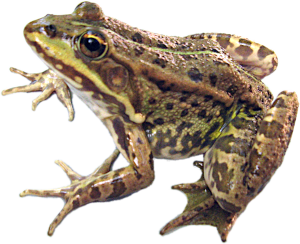

Student works after the II year practice – 2011
Mykhailova O.V. Mosaicism of somatic tissues in tadpoles of the Pelophylax esculentus complex from the vicinity of the biological station of KhNU Gorpynchenko P.Yu., Babuta A.R. Size‑weight relationships in green frogs Bondareva A.A., Deinaka D.I., Gubarenko L.A., Muntianu Y.O. Comparison of erythrocyte size...
Student works after the II-year practice - 2008 Student works after the II-year practice - 2009 Student works after the II-year practice - 2010 Student works after the II-year practice - 2012 (Part I) Student works after the II-year practice - 2012 (Part II) Student works after the II-year practice - 2013 Student works after the II-year practice - 2014 Student works after the II-year practice - 2015 Student works after the II-year practice - 2016 Student works after the II-year practice - 2017 Mosaicism of somatic tissues in tadpoles of the Pelophylax esculentus complex from the vicinity of the HNU biological station Mikhailova O.V. Kharkiv National University named after V.N. Karazin, Faculty of Biology, Department of Zoology and Animal Ecology, Svobodi Square, 4, Kharkiv, Ukraine. e‑mail: miholgabio@rambler.ru The hybridogenic complex of green frogs (Pelophylax esculentus complex) includes the pool frog Pelophylax lessonae (Camerano, 1882), the lake frog Pelophylax ridibundus (Pallas, 1771), as well as their hemiclonal hybrids, the edible frog Pelophylax esculentus (Linnaeus, 1758), represented by both diploid and triploid individuals. In the North‑Donets diversity centre of green frogs, a greater diversity of tadpoles than of adult frogs has been recorded. Thus, tetraploid hybrids and P. lessonae have been found among tadpoles, but not among adults (Borkin et al., 2004; Korshunov, 2008). It can be assumed that the karyological diversity of tadpoles should be even higher. In this work we tested this hypothesis. We examined somatic tissue samples from 15 green‑frog tadpoles caught in July 2011 in one of the bays of the Seversky Donets River. The method of karyotype analysis using squashed preparations of V.V. Klymenko (Klymenko, 2001) was employed. In dividing cells of most tadpoles we observed a diploid chromosome set, which is 26 for green frogs. In the sample of 15 tadpoles, 3 mosaic individuals were found. Their somatic tissues contained both normal diploid and aneuploid cells with chromosome numbers ranging from 22 to 36. Figure 1 shows metaphase chromosome sets from two cells belonging to the same tadpole (A – diploid, B – aneuploid cells). Letter B in Fig. 1 denotes an aneuploid cell of another tadpole at anaphase. The number of daughter chromosomes in this case is 44, whereas division of a diploid cell should yield 52. Thus, we recorded a higher karyological diversity of tadpoles. The mosaics we found probably perish during metamorphosis. [IMG_1] Fig. 1. Somatic cells with different ploidy: A – normal diploid cell with 26 chromosomes; late metaphase; B – aneuploid cell with 36 chromosomes; early metaphase; B – aneuploid anaphase with a deficient number of daughter chromosomes. Summary. Sampling of green frog tadpoles from Seversky Donets was studied using karyoanalysis in squashed preparations. Somatic tissues of three individuals contained both diploid and aneuploid cells. These results indicate that the tadpoles were mosaics. The author thanks Anna Ivashchenko and Anastasia Degtyaryova for assistance, as well as Candidate of Biological Sciences, Associate Professor D.A. Shabanov for scientific supervision of this work. Mikhailova O.V. (Scientific supervisor D.A. Shabanov) Mosaicism of somatic tissues in tadpoles of the Pelophylax esculentus complex from the vicinity of the HNU biological station // “Biology: from molecule to biosphere”. Materials of the VI International Conference of Young Scientists. – Kharkiv, 2011. – pp. 252‑253.
Size‑weight relationships in green frogs Gorpinchenko P.Yu., Babuta A.R. Kharkiv National University named after V.N. Karazin, Faculty of Biology Svobodi Square 4, Kharkiv, 61077, Ukraine e‑mail: gorpinchenko.pavel@mail.ru, grifin16@mail.ru Green frogs constitute a group of animals that attract researchers because of their documented ability for semi‑clonal interspecific hybridisation. While many studies examine frog growth, data on how their mass changes during growth are scarce. Obtaining such data was the aim of our work. In the vicinity of the HNU biological station, specifically on the left bank of the Seversky Donets downstream of Zmiiv and on the bank of the Ispivsky pond in the village of Haidary, we collected 312 green‑frog individuals. Material for the study was recovered at night using flashlights. The examined individuals were released at the capture sites. The study used green frogs Pelophylax esculentus and Pelophylax ridibundus. Sex and species were determined by external characters: presence of yellow spots, height of the heel tubercle, thigh length and colour of the vocal sacs in males. From each specimen, using a caliper accurate to 0.1 mm, the following measurements were taken: body length l (from snout tip to the centre of the cloacal opening) and head width lt_c (at its widest point). Body mass M was measured with a balance accurate to 0.1 g. The data were statistically processed in Statistica. [IMG_2] Fig. 1. Relationship between frog weight and body length Because the results were similar for both species (Fig. 1), they were analysed together. The dependence of green‑frog weight on body length is described by the quadratic equation: M = 230.15 − 1.2 × l + 0.0019 × l². The dependence of head width on body length is linear and described by: lt_c = 17.03 + 0.32 × l. These data can be used to estimate green‑frog biomass in particular habitats. Summary. This study is aimed to investigate the morphometry of frogs from some water bodies in Kharkiv region. It describes the size‑weight correlation of Pelophylax esculentus and Pelophylax ridibundus. The weight/body length correlation is described by a quadratic dependence and the width of the head/body length correlation shows a linear dependence. The work was carried out as an IND‑R during the summer scientific field practice in vertebrate zoology at the HNU biological station in the village of Haidary, Zmiiv district. The authors express great thanks to Associate Professor D.A. Shabanov for scientific supervision. Gorpinchenko P.Yu., Babuta A.R. (Scientific supervisor D.A. Shabanov) Size‑weight relationships in green frogs // “Biology: from molecule to biosphere”. Materials of the VI International Conference of Young Scientists. – Kharkiv, 2011. – pp. 450‑452.
Comparison of erythrocyte size in diploid hybrids of green frogs (Pelophylax esculentus) and the parental species (Pelophylax ridibundus) Bondareva A.A., Deineka D.I., Gubarenko L.A., Muntianu Y.O. Kharkiv National University named after V.N. Karazin, Faculty of Biology Svobodi Square, 4, Kharkiv, Ukraine e‑mail: a.bondaryeva@gmail.com The hybridogenic complex of green frogs (Pelophylax esculentus complex) includes the pool frog Pelophylax lessonae (Camerano, 1882), the lake frog Pelophylax ridibundus (Pallas, 1771), as well as their hemiclonal hybrids, the edible frog Pelophylax esculentus (Linnaeus, 1758), represented by both diploid and triploid individuals. Reliable differences in erythrocyte size have been recorded for diploid and triploid frogs and are used as one of the methods for determining frog ploidy (Plötner J, 2005; Polls Pelaz M., Graf J‑D., 1988). However, it remains unclear how erythrocyte size differs between diploid hybrids and the parental species. The aim of this work was to compare erythrocyte length of diploid P. esculentus and the parental species P. ridibundus inhabiting the area where the material was collected. For this, a sample of 22 frogs was collected in the Seversky Donets basin (vicinity of Haidary village, Zmiiv district, Kharkiv region) and identified morphologically as P. esculentus (12 individuals) and P. ridibundus (10 individuals). Body length was measured for each animal, a blood smear was made following a standard protocol, photographed at 40× magnification with a USB camera, and a micrometer slide photographed at the same magnification. Using PDF‑XChange Viewer, erythrocyte length was measured (20 cells per smear) and converted to micrometres. Statistical analysis was performed with Statistica 8.0. Based on body length, frogs were divided into four groups: I < 58 mm; II = 58–62 mm; III = 62–70 mm; IV > 70 mm. All groups contained both hybrids and parental individuals. Two P. esculentus individuals were identified as triploids (erythrocyte length > 26 µm); their measurements were excluded from the hybrid‑parent comparison. Analysis of variance showed a direct relationship between erythrocyte length and body length for all groups (p < 0.001). No significant differences were found between erythrocyte lengths of diploid P. esculentus and P. ridibundus (p = 0.83): mean erythrocyte length was 21.7 µm for hybrids and 21.3 µm for the parental species. Summary. It was established that there are no statistically significant differences between the erythrocyte length of hybrid forms of green frogs, Pelophylax esculentus, and the parental species, Pelophylax ridibundus. The length of erythrocytes is 21.7 µm and 21.3 µm, respectively. The authors thank Candidate of Biological Sciences, Associate Professor D.A. Shabanov for scientific supervision. Bondareva A.A., Deineka D.I., Gubarenko L.A., Muntianu Y.O. (Scientific supervisor D.A. Shabanov) Comparison of erythrocyte size in diploid hybrids of green frogs (Pelophylax esculentus) and the parental species (Pelophylax ridibundus) // “Biology: from molecule to biosphere”. Materials of the VI International Conference of Young Scientists. – Kharkiv, 2011. – pp. 460‑461.
Investigation of the behaviour of green‑frog tadpoles in an experimental maze Gromenko A.S. Kharkiv National University named after V.N. Karazin, Faculty of Biology, Svobodi Square, 4, Kharkiv, Ukraine The aim of the work was to determine whether the speed and path of green‑frog tadpoles in an experimental maze differ when moving singly versus in groups. Group movement can be independent, antagonistic (each individual tries to swim differently from the others) or cooperative (tadpoles tend to swim where other group members go). We recorded the maze route and the time spent by solitary tadpoles and by groups of two or three individuals. The experiment was conducted in a Y‑shaped maze: the main arm was 46.5 cm long, 10.5 cm wide, 6.5 cm high; the side arms were 21.5 cm long, 8 cm wide, 7 cm high, with a 60° angle between them. The bottom of the main arm was arranged so that water depth at the start was considerably less than at the end and in the side arms, causing tadpoles to swim toward deeper water. Sixty tadpoles of the Pelophylax esculentus complex, captured from the Ispivsky pond (vicinity of Haidary village, Zmiiv district, Kharkiv region), were used. Tadpoles were at developmental stages 6–10 (Bibik, 2010). Ten tadpoles traversed the maze singly, 20 in pairs (10 pairs), and 30 in trios (10 groups). Each tadpole, pair or trio completed the maze six times. The mean passage time was 28.75 s. It turned out that the number of passages did not reduce overall passage time. The number of tadpoles in a group practically did not affect speed. In all series, tadpoles significantly preferred turning left. The direction of turning in successive runs was independent of the previous result, indicating no learning. When tadpoles moved in pairs, the distribution of maze‑outcome patterns differed only insignificantly from a distribution expected if each tadpole chose its route independently of the other. In trios, 66.33 % of all choices were left turns; this preference was highly significant. A random model in which tadpoles turned left with probability 66.33 % would produce 33.2 % of all trios converging in the same maze branch (29.3 % left, 3.9 % right). Fewer such groups were observed than expected (25 %), but the difference between empirical and expected distributions was not significant (p = 0.17). Thus, in our work tadpoles moved through the experimental maze without showing learning and essentially independently of each other (though with a slight tendency toward different directions). Summary. The passage of the maze is independent of the number of tadpoles in the group. Route for each passage chosen at random. Tadpoles are not capable of learning. The preferred choice – left. In pairs, triples and tadpoles route chosen randomly. Tadpoles move independently of each other. The described experiment was performed as a student‑research work during the II‑year practice. The author thanks Associate Professor D.A. Shabanov for scientific supervision of this work. Gromenko A.S. (Scientific supervisor D.A. Shabanov) Investigation of the behaviour of green‑frog tadpoles in an experimental maze // “Biology: from molecule to biosphere”. Materials of the VI International Conference of Young Scientists. – Kharkiv, 2011. – pp. 464‑465. Estimation of the population size of the green‑frog system in Ispivsky pond Melesko E.V., Suvorova A.D. Kharkiv National University named after V.N. Karazin e‑mail: meleshko-a@mail.ru In Ispivsky pond (vicinity of Haidary village, Zmievsky district, Kharkiv region) lives a population system of green frogs that has changed its composition several times during study. The green‑frog group Pelophylax esculentus complex consists of the pool frog Pelophylax lessonae (Camerano, 1882), the lake frog Pelophylax ridibundus (Pallas, 1771), and the hemiclonal hybrid of these two species – the edible frog Pelophylax esculentus (Linnaeus, 1758). Offspring from crosses of P. esculentus with parental‑species individuals receive the same clonal genome (from the hybrid parent) and different recombinant genomes (from the parental‑species parent). Representatives of different species of the Pelophylax esculentus complex can coexist, forming hemiclonal population systems (HPS) (Shabanov et al., 2009). Currently the HPS of Ispivsky pond is emerging from the critical state it was in during 2000–2008. Accordingly, the aim of our research was to study the population size of green frogs for future monitoring. Such work had not been done before. The study was carried out in June–July 2011 as part of field practice for HNU students. To achieve the goal, the Peterson tagging and recapture method (Koli, 1979) was used, based on equal probability of recapturing marked and unmarked frogs. Frogs were caught at night at spawning sites, blinded with a flashlight. Marks were applied by clipping the digits of the fore‑ and hind‑limbs. During the captures (4 June, 2 and 6 July 2011) 104 frogs (males and semi‑adults, larger than two‑year‑olds but probably not participating in spawning) were marked and released into the pond. Recaptures on 12 and 15 July 2011 yielded two abundance estimates: 298 ± 50 and 358 ± 55, from which the mean was calculated as 330 individuals. Thus, the estimated number of Pelophylax esculentus complex representatives in July 2011 was about 330 males and semi‑adult individuals. Because we cannot verify the basic assumption of equal catchability of marked and unmarked individuals, reliable estimation of the HPS of Ispivsky pond requires other monitoring methods, in particular a combined marking approach. Summary. The green frogs, living in Is’kov pond (near the village Gaydary in Zmievsky area of the Kharkov region) form a hemiclonal population system. The main goal of our research was the number estimation of this population system. Two counts by the method of tagging and repeated catching by Peterson were made in July 2011. Number of males and semi‑adult individuals (more senior than 2 years, but not puberal) in a pond is estimated at 330 individuals. The authors thank the scientific supervisor, Candidate of Biological Sciences, Associate Professor of the Department of Zoology at HNU named after V.N. Karazin, D.A. Shabanov, as well as all participants in the captures.
Melesko E.V., Suvorova A.D. (Scientific supervisor D.A. Shabanov) Estimation of the population size of the green‑frog system in Ispivsky pond // “Biology: from molecule to biosphere”. Materials of the VI International Conference of Young Scientists. – Kharkiv, 2011. – pp. 472‑473.