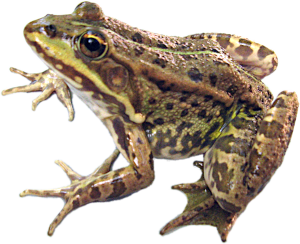
Student Works After Second-Year Practice - 2015
Borozna O. S., Pavliy A. K. Comparison of different forms of green frogs by morphology and fluctuating asymmetry of feet Maleieva A. V., Zinska A. A. Study of green frog distribution along the Seversky Donets river channel: methodology development and first results Pustovalova E. S., Batueva E. D., Kharchenko...
Student works after II-year practice - 2008 Student works after II-year practice - 2009 Student works after II-year practice - 2010 Student works after II-year practice - 2011 Student works after II-year practice - 2012 (Part I) Student works after II-year practice - 2012 (Part II) Student works after II-year practice - 2013 Student works after II-year practice - 2014 Student works after II-year practice - 2016 Student works after II-year practice - 2017 Comparison of different forms of green frogs by morphology and fluctuating asymmetry of feet Borozna O. S., Pavliy A. K. V. N. Karazin Kharkiv National University, Faculty of Biology, 4 Svobody Sq., Kharkiv, Ukraine e-mail: borozna.oksana@yandex.ua, anya.pavly@yandex.ua The aim of our work is to compare two morphometric traits of the feet of green frogs: representatives of the parental species Pelophylax ridibundus, and diploid and triploid interspecific hybrids Pelophylax esculentus, distributed in the North Donets center of diversity of the Pelophylax esculentus complex. The traits used in the work are successfully applied to identify different forms of green frogs (Korshunov, 2010). They are usually measured with calipers on live or fixed individuals. We used in vivo scanning of frog feet, which were pressed against the working glass of an office scanner. Using the PDF‑XChangeViewer program, the length of the heel tubercle (C.i.) and the smallest toe (D.p.) of both limbs were measured from the electronic scans. A caliper scan was used to calibrate the measurement results. Comparison of different groups of frogs by absolute values of measured traits and their fluctuating asymmetry (FA) was performed using Statistica 8.0 software. FA, random non-directional deviations from bilateral symmetry, was considered a measure of developmental instability. We studied three samples of green frogs caught on 01.07.2015 and 13.07.2015 at two ponds near the V. N. Karazin Kharkiv National University Biological Station (village Haidary, Zmiivskyi district, Kharkiv Oblast). 153 individuals were collected from Iskov pond, and 47 from Koriakovyi ravine. Frog collection was non-selective (all individuals near the water body were caught); after examination, the frogs were released at their capture sites. A total of 31 individuals of P. ridibundus (8 immature, 15 ♀♀, and 8 ♂♂), 163 diploid P. esculentus (7 immature, 10 ♀♀, 146 ♂♂), and 6 triploid P. esculentus (1 immature, 4 ♀♀, 1 ♂) were studied. In P. esculentus, the heel tubercle (C.i.) is 25% longer than in P. ridibundus (differences are highly significant); for D.p., the differences are insignificant. There are no significant differences between diploid and triploid P. esculentus. Both studied traits show distributions characteristic of FA. P. esculentus is characterized by higher FA values than P. ridibundus. The right and left D.p. differ in hybrids by an average of 4.1%, and in representatives of the parental species by 2.9% (p=0.048); for C.i., the differences are insignificant. Differences between di- and triploid hybrids in FA are insignificant. In all three studied forms of frogs, females have higher FA values for C.i. and lower FA values for D.p. than males, however, this result is registered only at the level of a slight trend. Our research results show the promise of further research into the values of morphometric traits and their FA using in vivo scans. Summary. A study was conducted to assess the morphology and fluctuating asymmetry (FA) of the waterfrog’s foots. We used quantitative features for the analysis, such as Digitus primus (D.p.) and Callus internus (C.i.). The method of the study was to in vivo scanning of the frog’s foots. It was found that P. esculentus has higher rates of FA than P. ridibundus. Morphological differences in the level of FA between di‑ and triploids of the P. esculentus are not found. The authors express their gratitude to Doctor of Biological Sciences, Professor of the Department of Zoology and Animal Ecology D. A. Shabanov for the idea of the work and scientific supervision, as well as to postgraduate student of the Department of Genetics and Cytology E. V. Meleshko for assistance in carrying out the work. Borozna O. S., Pavliy A. K. Comparison of different forms of green frogs by morphology and fluctuating asymmetry of feet // "Biology: from molecule to biosphere". Materials of the X International Conference of Young Scientists (December 2-4, 2015, Kharkiv, Ukraine). – Kh.: FOP Shapovalova T. M., 2015. – P. 172. Study of the distribution of green frogs along the Northern Donets riverbed: methodology development and initial results Maleeva A. V., Zinskaya A. A. V. N. Karazin Kharkiv National University, Faculty of Biology, Department of Zoology, 4 Svobody Sq., Kharkiv, Ukraine e-mail: zinskaya96@mail.ru; nastusha_asya@mail.ru The riparian zone of the Northern Donets River is characterized by diverse vegetation. Green frogs are found in various parts of the riparian zone. Is their distribution random? The aim of the work was to determine which factors influence the distribution of frogs. We conducted 3 observations during daytime and nighttime. The riverbank was surveyed from a boat with simultaneous photography of frogs and the locations where they were observed. Photo analysis was performed after the counts were completed. Data processing was carried out using CorelDRAW and Statistica 6 software. We identified 5 types of biotopes: cliffs (length in the studied river section – 155 m); sandy beaches (44 m); reed beds (454 m); cattail beds (168 m); hornwort patches (267 m). The density of green frogs varied in different biotope types. In reed beds, 0.19 individuals/m were recorded; in hornwort patches, 0.18 individuals/m; in cattail beds, 0.18 individuals/m; on sandy beaches, 0.52 individuals/m; on cliffs, 0.04 individuals/m. The result is statistically highly significant, and thus, the distribution of green frogs along the bank is not random. It is likely that the factors determining frog distribution are abundant vegetation and food availability. Based on the experience gained, the method used for counting frog distribution by biotope can be optimized: 1. Before starting the counts, the study area should be divided into sections (sectioning and defining boundaries should be done during the day); 2. The type of local environment, characteristic of the area as a whole and characteristic of the frog capture site (determined from the photograph), should be recorded separately; 3. Determining the species of the frog, photographing it for marking, as well as determining its size and sex, should be done after capture directly during the counts; after photographing, release the frog at the capture site; 4. Counts should be conducted at night, as it is optimal for frog capture. Summary. Distribution of water frogs in different biotopes occurring along the river Seversky Donets has been studied. Scheme of the experiment and keeping conditions are described. The authors express their gratitude to Doctor of Biological Sciences, Professor of the Department of Zoology and Animal Ecology Shabanov D. A. for the idea of the work, scientific supervision, and for acting as the rower who ensured the completion of this work. Maleeva A. V., Zinskaya A. A. Study of the distribution of green frogs along the Northern Donets riverbed: methodology development and initial results // "Biology: from molecule to biosphere". Materials of the X International Conference of Young Scientists (December 2-4, 2015, Kharkiv, Ukraine). – Kh.: FOP Shapovalova T. M., 2015. – P. 180-181. Ploidy of green frog tadpoles from Iskov pond and Koriakovyi ravine (Zmiivskyi district, Kharkiv Oblast) Pustovalova E. S., Batueva E. D., Kharchenko T. S. V. N. Karazin Kharkiv National University, Faculty of Biology, Department of Zoology, 4 Svobody Sq., 61077 Kharkiv, Ukraine e-mail: eleonora.pustova@mail.ru Hemiclonal population systems (HPS) of the hybrid complex of green frogs (Pelophylax esculentus complex), inhabiting Iskov pond and Koriakovyi ravine (near the Biological Station of V. N. Karazin Kharkiv National University), are objects of monitoring their composition. These HPS are inhabited by both diploid and triploid interspecific hybrids Pelophylax esculentus, as well as individuals of the parental species Pelophylax ridibundus. We determined the proportion of triploids among tadpoles from these HPS. From Iskov pond, we studied a random sample of 20 tadpoles collected on 01.07.2015. This sample likely contained both P. esculentus and P. ridibundus. In Koriakovyi ravine, despite active spawning observed in spring, we managed to find only 2 tadpoles on 13.07.2015 despite intensive efforts. Tadpoles were caught with a hydrobiological net in the shallow part of the water body. Tadpole developmental stages were determined under a binocular microscope using normal development tables (Gösner, 1960). Tadpole body length and total length were measured using calipers (McDiarmid, Altig, 1999). Ploidy was determined by karyological analysis (Veherina et al., 2013) using the squashing method of intestinal cell suspension. Metaphase chromosome plates were photographed under high magnification using a USB camera. The obtained results were processed using Statistica 8.0 software. Of the 20 tadpoles from the Iskov pond HPS, one was found to be triploid; both tadpoles from Koriakovyi ravine were diploid. The difference between the proportion of triploids among tadpoles from Iskov pond (1 out of 20) and among sexually mature individuals (1 out of 63, see Cherepashuk et al. in this collection) was insignificant (p=0.4 by Pearson's chi-squared test). The triploid did not differ in body size from diploids at the same developmental stage. For future research similar to ours, it is desirable to use larger tadpole samples. Summary: The purpose of this paper is to determine the proportion of triploids among tadpoles of Pelophylax genus. Material for this study was gathered at the Iskov pond and Koryakov ravine. The empirical part was done by karyological analysis. Also, determination of developmental stages and measurement of body length of tadpoles were performed; 1 triploid among the 63 adults had been found in previous studies. In this study 1 triploid was found among 20 tadpoles. Therefore, the proportion of triploids in tadpoles became significantly higher. The authors thank Doctor of Biological Sciences, Professor of the Department of Zoology and Animal Ecology D. A. Shabanov for the idea of the work and assistance in catching tadpoles, and are especially grateful to postgraduate student of the Department of Genetics O. V. Biryuk for teaching karyological analysis methods and for scientific supervision. Pustovalova E. S., Batueva E. D., Kharchenko T. S. Ploidy of green frog tadpoles from Iskov pond and Koriakovyi ravine (Zmiivskyi district, Kharkiv Oblast) // "Biology: from molecule to biosphere". Materials of the X International Conference of Young Scientists (December 2-4, 2015, Kharkiv, Ukraine). – Kh.: FOP Shapovalova T. M., 2015. – P. 183-184. Study of the population system structure of green frogs (Pelophylax esculentus complex) of Iskov pond, Zmiivskyi district, Kharkiv Oblast Cherepashuk I. V., Kochneva E. P., Lavrikova S. S., Levchuk V. D., Myshcherikova V. O., Meleshko E. V., Petliuk V. D., Prodchenko E. A., Smirnova A. I., Stoyanov R. O. V. N. Karazin Kharkiv National University, Faculty of Biology, 4 Svobody Sq., Kharkiv, Ukraine e-mail: heroifiv@gmail.com The group of green frogs (Pelophylax esculentus) consists of Pelophylax lessonae (Camerano, 1882), Pelophylax ridibundus (Pallas, 1771), and their hemiclonal hybrid Pelophylax esculentus (Linnaeus, 1758). Coexisting and reproducing representatives of this complex form hemiclonal population systems (HPS). This work studies the composition of the HPS of green frogs of Iskov pond (outskirts of Gaidary village, Zmiivskyi district, Kharkiv Oblast), where a high proportion of triploid hybrids was previously recorded (Meleshko et al., 2014). The aim of this work is to study the composition and estimate the population size of the mentioned HPS, as well as to compare the obtained data with the results of previous studies (Meleshko et al., 2014). Four samples collected in May and July 2015 were studied. Animals were caught by hand at night using a flashlight. Species and sex of the frogs were determined by a set of morphological traits (Korshunov, 2010). Ploidy was determined by erythrocyte size (Bondareva et al., 2012). Blood smears were photographed under high magnification using a USB camera, erythrocyte length was measured using PDF‑XChangeViewer and ToupView programs, and the obtained results were processed using Statistica 8.0 software. The population size of the studied HPS was estimated using the Peterson mark-recapture method with the Bailey index correction (Koli, 1979). The method is based on the equal probability of capturing marked and unmarked animals. We studied 158 individuals, of which P. esculentus comprised 134 (85%), and P. ridibundus – 24 (15%). The sample included 127 males (78%), 31 females (19%), and 5 immature individuals (3%). The proportion of triploid P. esculentus individuals was 1% of the total sample (2 individuals). Erythrocyte size in females was significantly larger than in males (p=0.01); all triploid individuals were females. Compared to the results of captures in 2012-2013, the species and sex composition of the samples was similar to that observed previously, but the proportion of triploid hybrids decreased significantly (p<0.005). According to the capture results, two estimates of HPS size were obtained: 201±19 and 437±53 individuals. The first estimate can be considered more reliable, given that the interval between the first and recapture was sufficient for uniform mixing of marked and unmarked individuals within the local environment. Over 150 marked individuals were released back into Iskov pond. Thus, Iskov pond is inhabited by an R-E-Et-HPS of green frogs (Shabanov, 2015) with a declining population size, dominated by diploid males of P. esculentus and a significant decrease in the proportion of triploids. A significant correlation between erythrocyte size and frog sex was recorded. It is likely that the studied HPS is experiencing a reproductive crisis, making its further monitoring particularly interesting. Summary. The hemiclonal population system of water frogs from Iskov pond (near the village Gaydary in Zmievsky district of the Kharkiv oblast) was studied. Sexual and species structure was determined. The diploid males of P. esculentus prevailed in this R-E-Et-HPS. The portion of parental species (P. ridibundus) was 15%. Species and sex composition was similar to that registered previously. However, the number of triploids decreased notably in comparison with the previous data. Erythrocytes size was significantly bigger for females than for males. The estimated HPS size was 201±19. The authors thank Professor D. A. Shabanov from the Department of Zoology and Animal Ecology for scientific supervision, and senior lecturer V. V. Terekhova from the same department, as well as all other participants of the captures, for their help in collecting frogs. Cherepashuk I. V., Kochneva E. P., Lavrikova S. S., Levchuk V. D., Myshcherikova V. O., Meleshko E. V., Petliuk V. D., Prodchenko E. A., Smirnova A. I., Stoyanov R. O. Study of the population system structure of green frogs (Pelophylax esculentus complex) of Iskov pond, Zmiivskyi district, Kharkiv Oblast // "Biology: from molecule to biosphere". Materials of the X International Conference of Young Scientists (December 2-4, 2015, Kharkiv, Ukraine). – Kh.: FOP Shapovalova T. M., 2015. – P. 185-186.