
IV. Amphibia sensu lato-09. Order Anura — Tailless Amphibians. Parts II and III — Hylidae, Bufonidae and related families
The second part of the description of tailless amphibian diversity
Order Anura — Tailless Amphibians. Parts II and III — Hylidae, Bufonidae and related families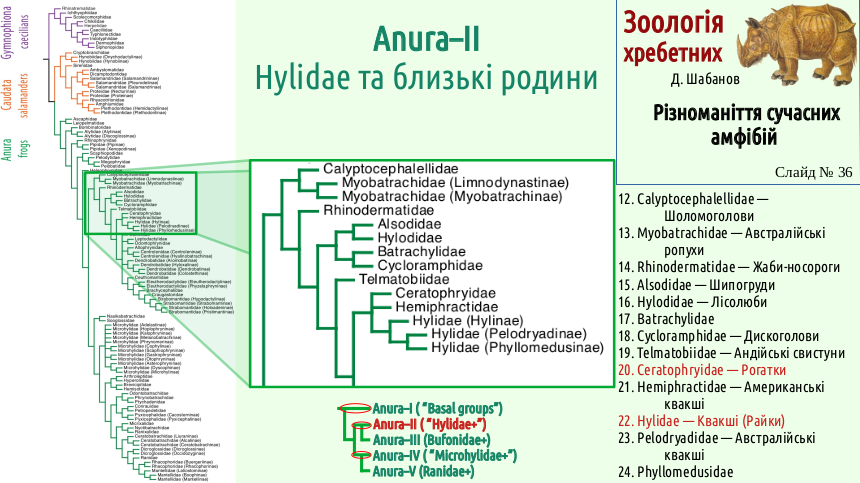
List of families
12. Calyptocephalellidae — Helmeted frogs
13. Myobatrachidae — Australian toads
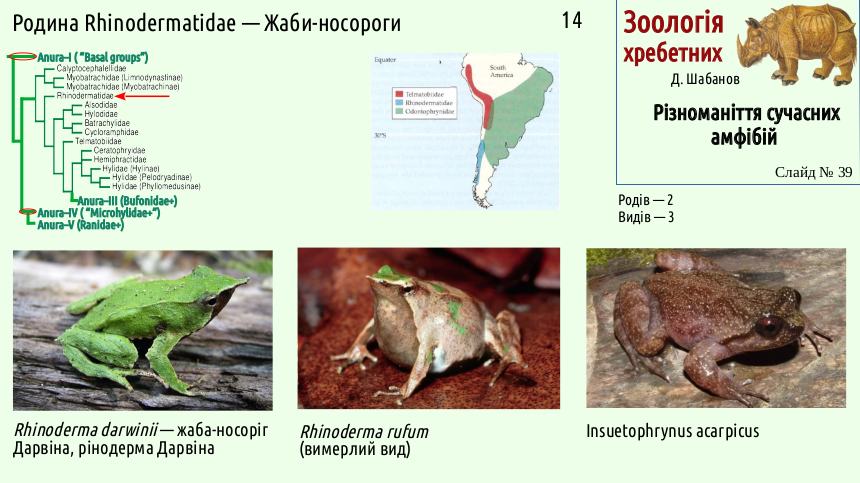
14. Rhinodermatidae — Darwin's frogs
15. Alsodidae — Spiny-chested frogs
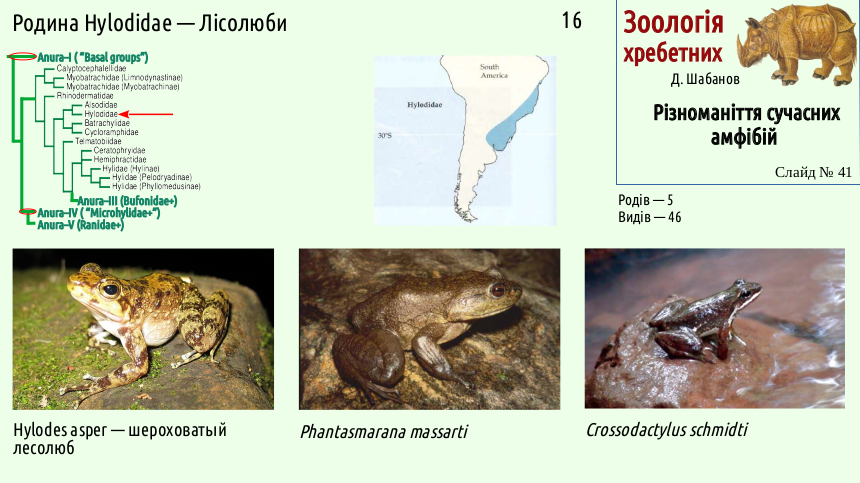
16. Hylodidae — Forest-dwellers
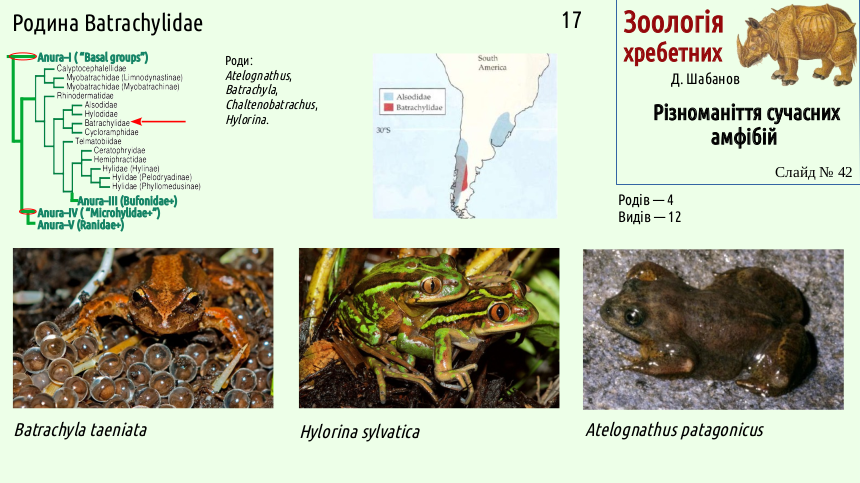
17. Batrachylidae
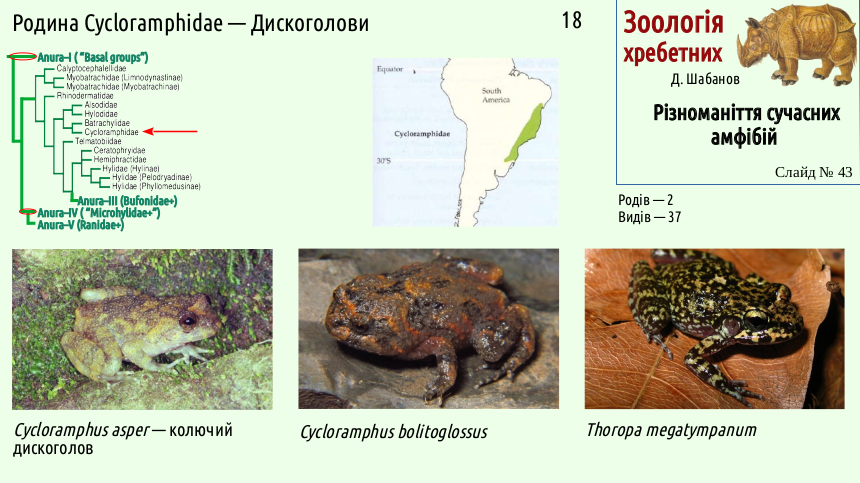
18. Cycloramphidae — Disc-headed frogs
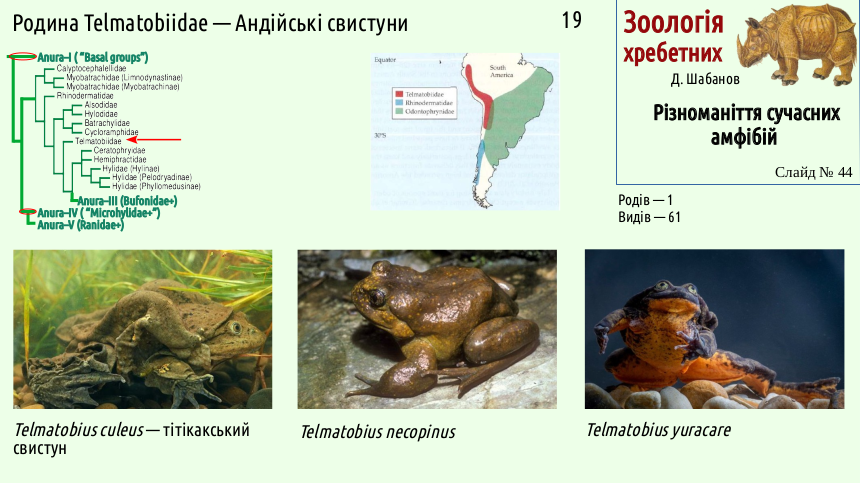
19. Telmatobiidae — Andean whistling frogs
20. Ceratophryidae — Horned frogs
21. Hemiphractidae — American treefrogs
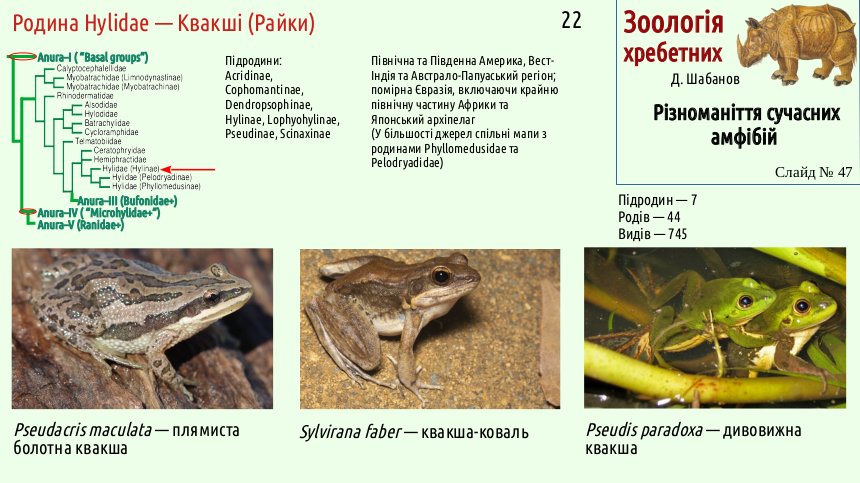
22. Hylidae — Treefrogs
23. Pelodryadidae — Australian treefrogs
24. Phyllomedusidae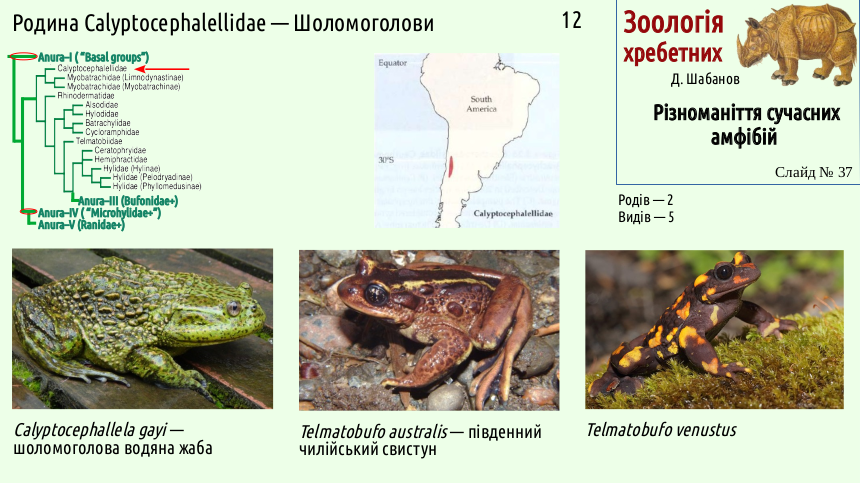
Your browser does not support the video tag.
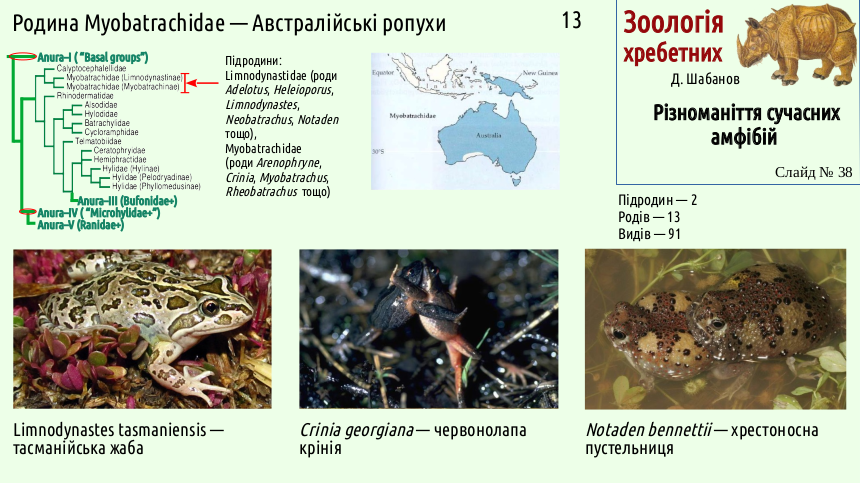
Above — a description of the reproduction of the Australian myobatrachid Assa darlingtoni.
The male Darwin's frog swallows the eggs, which develop in his vocal sac. The embryos attach to the wall of the vocal sac and form something resembling a placenta. Eventually the male simply spits out the fully developed young.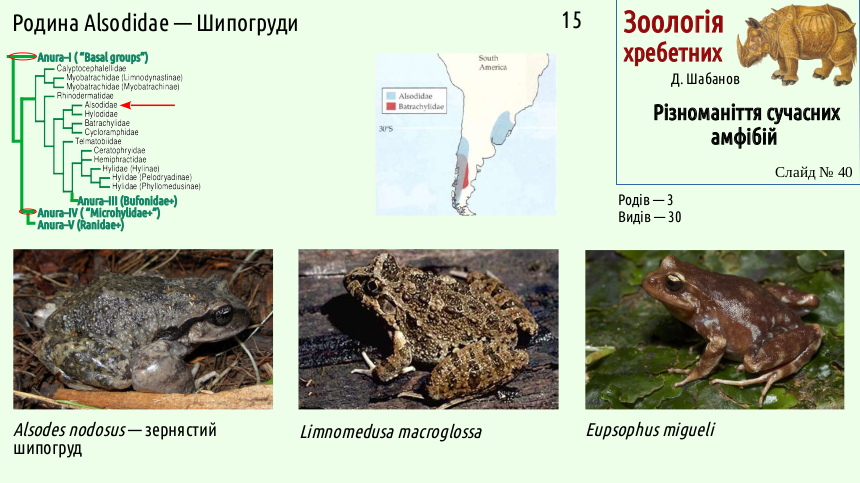
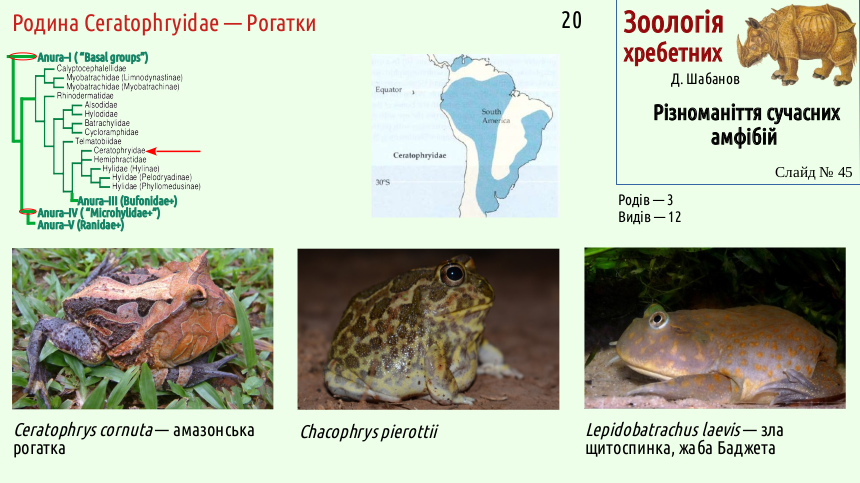
Do you remember that the life form to which horned frogs belong is called a "living trap"?
Above is an example of the defensive reaction of horned frogs to objects resembling a snake. This reaction reaches its peak in the favorite animal of the author of this lecture — Budgett's shield-backed frog.
Your browser does not support the video tag.
The incredible Hemiphractus — the triangle treefrog. This is a predator that feeds on other tailless amphibians.
Your browser does not support the video tag.
Marsupial treefrogs carry tadpoles in pouches on their backs.
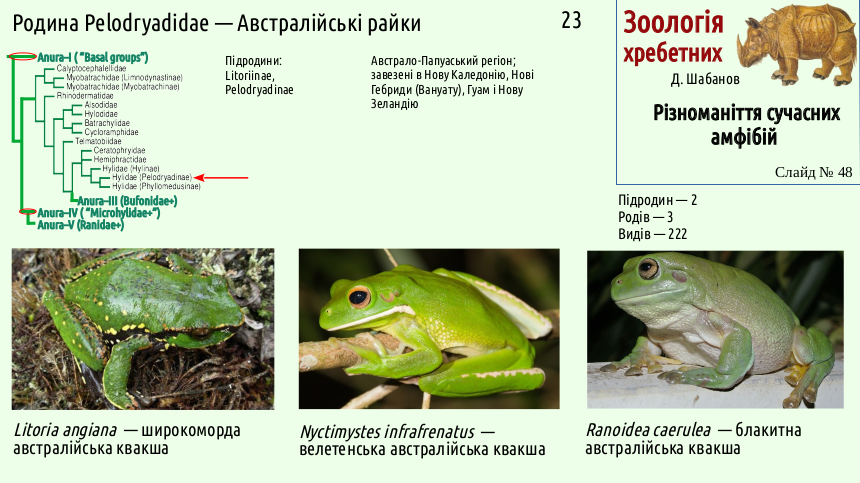
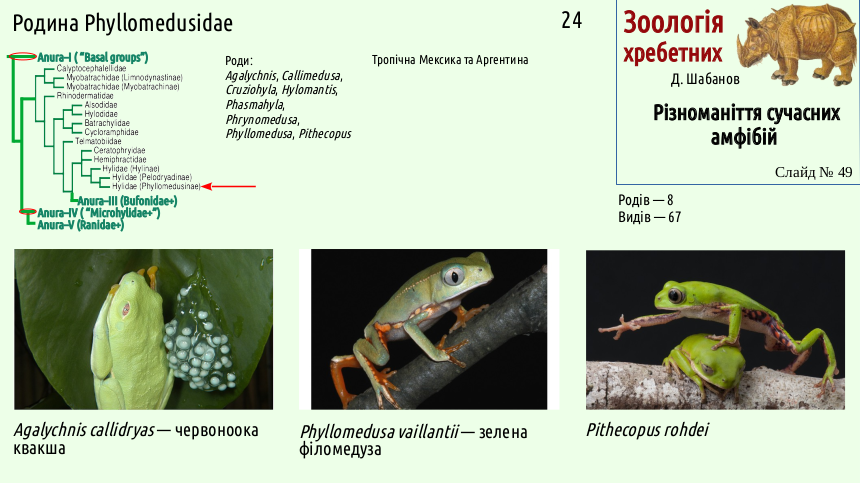
Phyllomedusa frogs cover their bodies with a layer of wax produced by their skin glands. This reduces water evaporation from the body surface.
Your browser does not support the video tag.
Agalychnis, the red-eyed treefrogs, like glass frogs, place their nests above the water surface. Danger can accelerate the emergence of tadpoles.
Your browser does not support the video tag.
Red-eyed treefrogs are a desirable terrarium animal for many enthusiasts. One should keep in mind what their spawning looks like in natural conditions.
Your browser does not support the video tag.
Some South American toad eating an earthworm. The tongue's work is clearly visible.
Your browser does not support the video tag.
Common toads display a very specific defensive reaction to snakes: the toad inflates itself and rises on its legs to appear larger.
Your browser does not support the video tag.
Your browser does not support the video tag.
Your browser does not support the video tag.
Your browser does not support the video tag.
Your browser does not support the video tag.
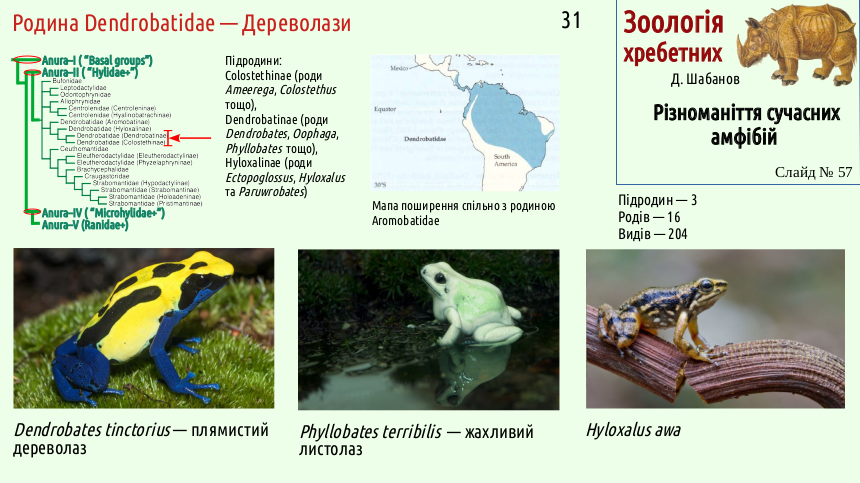
The golden poison frog is one of the most poisonous animals in the world!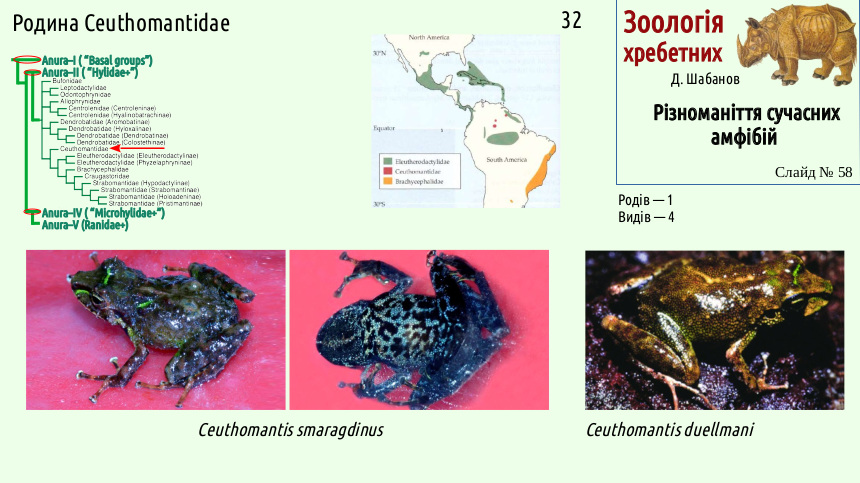
Your browser does not support the video tag.
Direct development is characteristic of many leaf frogs (eleutherodactylids).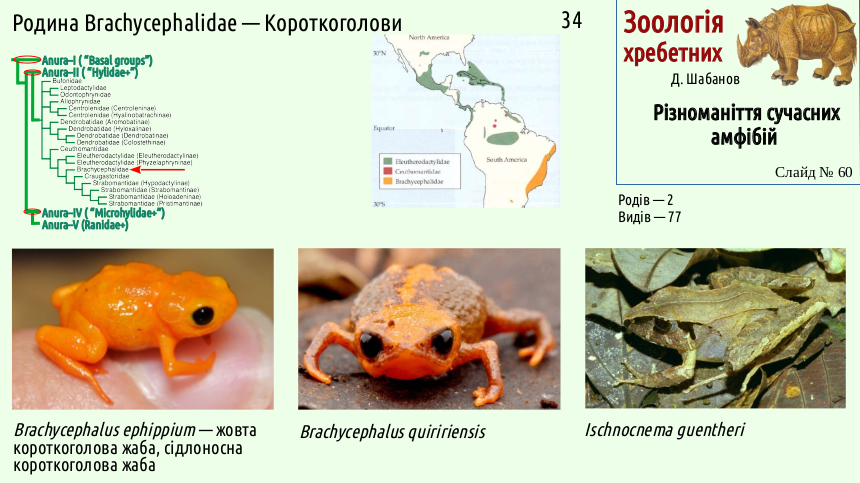
Above is a description of the reproduction of the Australian myobatrachid Assa darlingtoni. The male Darwin's frog swallows the eggs, which develop in his vocal sac. The embryos attach to the walls of the vocal sacs and form something like a placenta. Over time, the male simply spits out the fully developed young. Do you remember that the life form to which horned frogs belong is called a "living trap"? Above is an example of the defensive reaction of horned frogs to snake-like objects. This reaction reaches its apogee in the author's favorite animal, the shield-backed frog, *Uperoleia badgeri*.
The incredible *Hemiphractus* – a triangular horned tree frog. It is a predator that feeds on other tailless amphibians.
Marsupial tree frogs carry tadpoles in pouches on their backs. The song of the Oriental tree frog, *Hyla orientalis*: The pitcher plant, which is a carnivorous plant in itself, becomes particularly predatory when a frog is trapped in its pitcher. Phyllomedusids (*Phyllomedusa*) cover their bodies with a layer of wax produced by their skin glands. This reduces water evaporation from the body surface.
Agalychnis, the brightly colored tree frogs, like glass frogs, place their nests above the water surface. Danger can accelerate the emergence of tadpoles.
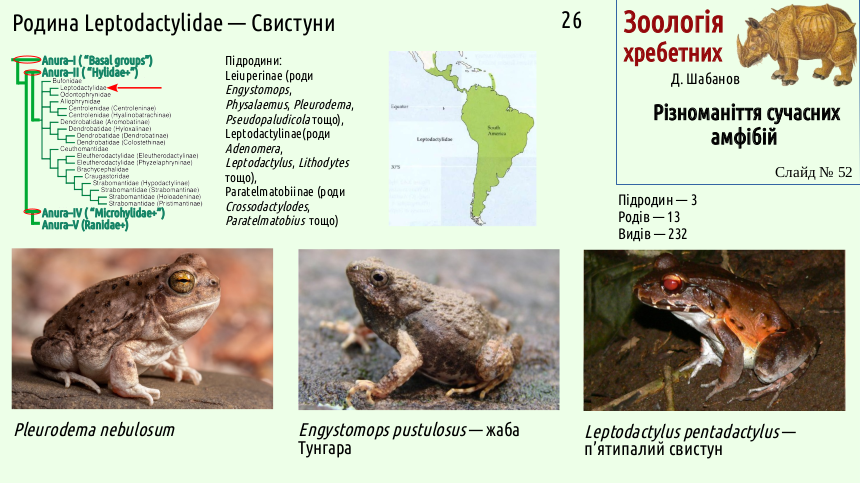
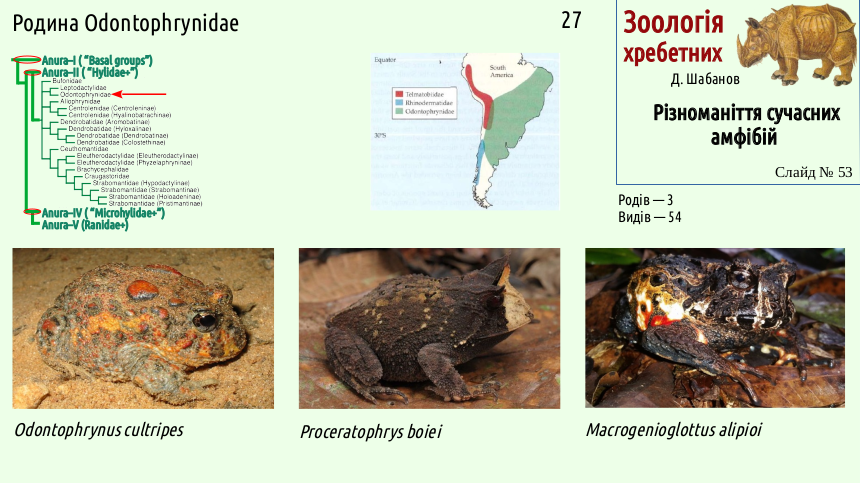
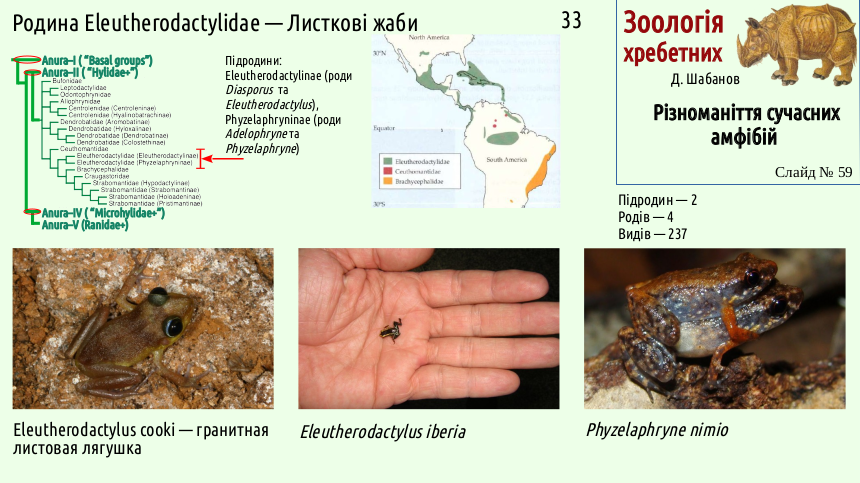
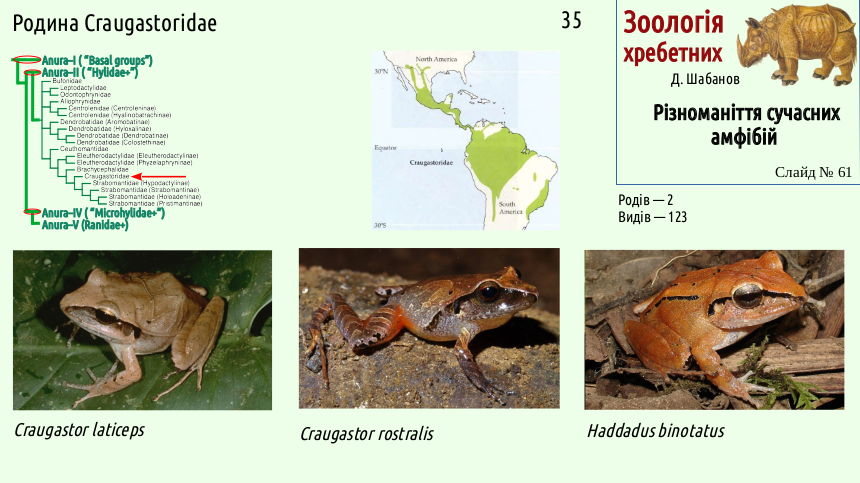
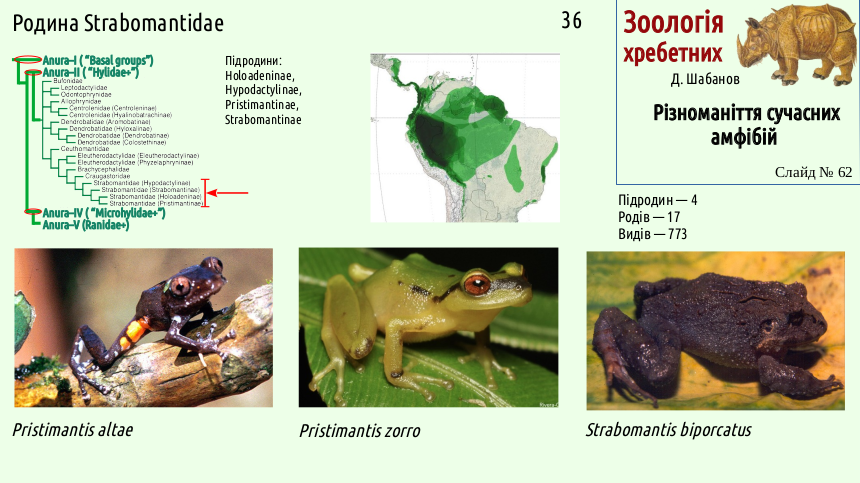
Brightly colored tree frogs are a desirable terrarium animal for many hobbyists. One should consider what their spawning looks like in natural conditions. List of families in this group: 25. Bufonidae – True toads 26. Leptodactylidae – Southern frogs 27. Odontophrynidae 28. Allophrynidae 29. Centrolenidae – Glass frogs 30. Aromobatidae 31. Dendrobatidae – Poison dart frogs 32. Ceuthomantidae 33. Eleutherodactylidae – Rain frogs 34. Brachycephalidae – Short-headed frogs 35. Craugastoridae 36. Strabomantidae
Some South American toad eats an earthworm. The action of the tongue is clearly visible.
Gray toads exhibit a very specific reaction to snakes: the toad inflates and raises itself on its legs to appear larger.
Frogs of the genus *Leptodactylus* are animals capable of defending themselves and hunting sufficiently large prey: The unusual defensive coloration of one of the southern frogs, *Pleurodema bibroni* (subfamily Leiuperinae): Do you understand why glass frogs are called glass frogs?
The female poison dart frog places tadpoles in micro-reservoirs on trees. Imagine how this small animal must navigate to find its tadpoles in the tree canopy!
The terrible leaf frog (*Pristimantis terribilis*) is one of the most poisonous animals in the world!
For many leaf frogs (Eleutherodactylus) direct development is characteristic.