
IV. Amphibia sensu lato-10. Order Anura — Tailless Amphibians. Parts IV and V — Microhylidae, Ranidae and related families
The third and final part of the systematic description of tailless amphibians
Order Anura — Tailless Amphibians. Parts IV and V — Microhylidae, Ranidae and related families
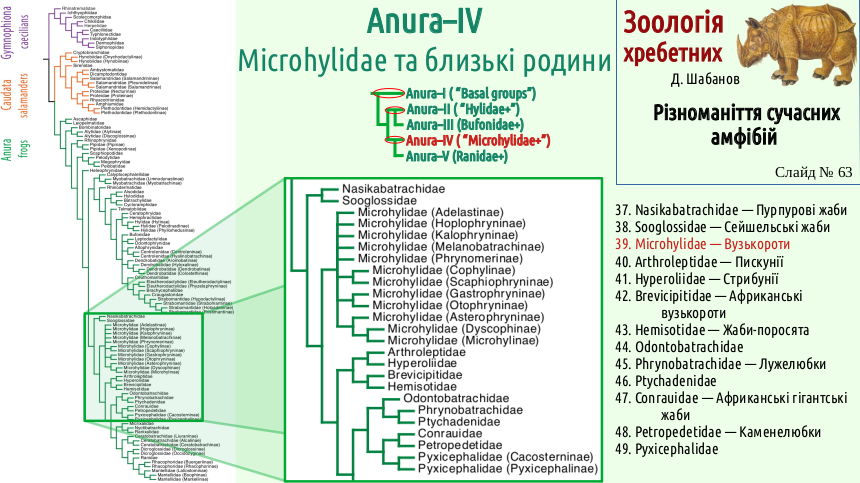
This section covers the following families:
37. Nasikabatrachidae — Purple frogs
38. Sooglossidae — Seychelles frogs
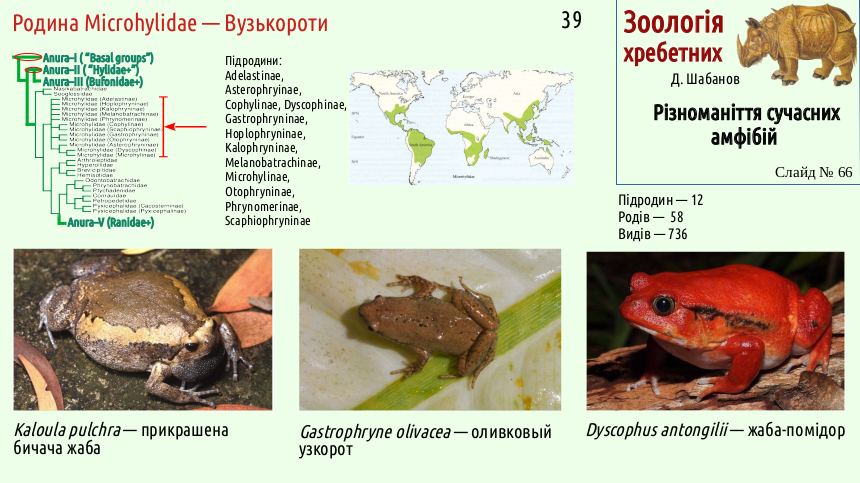
39. Microhylidae — Narrow-mouthed frogs
40. Arthroleptidae — Squeaker frogs
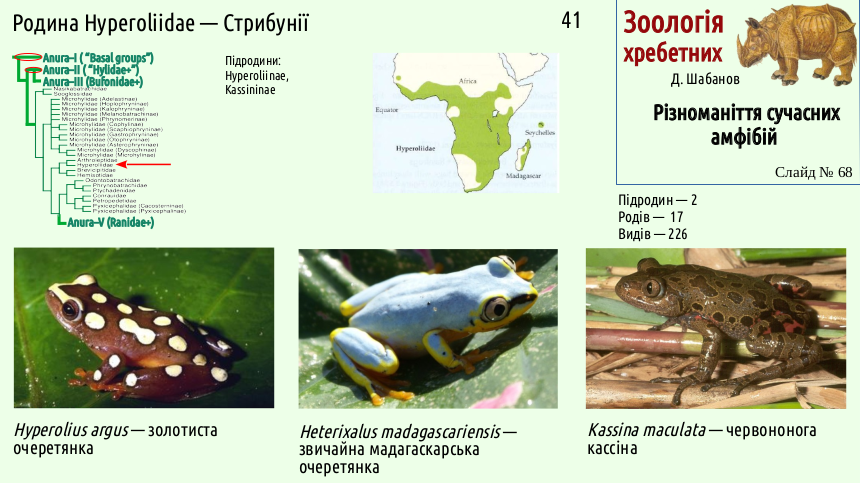
41. Hyperoliidae — Reed frogs
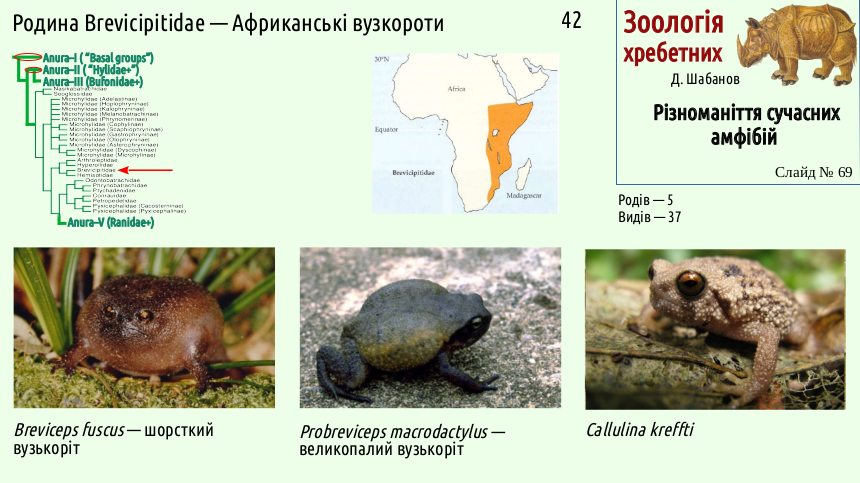
42. Brevicipitidae — African narrow-mouthed frogs
43. Hemisotidae — Shovel-nosed frogs
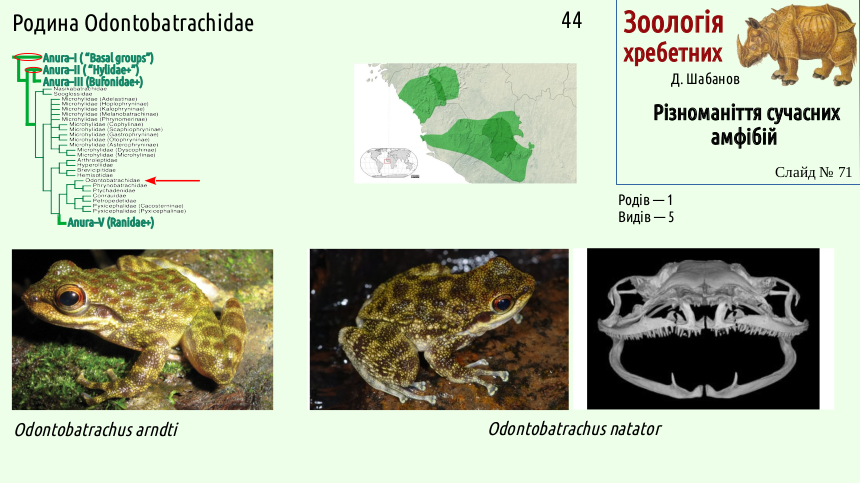
44. Odontobatrachidae
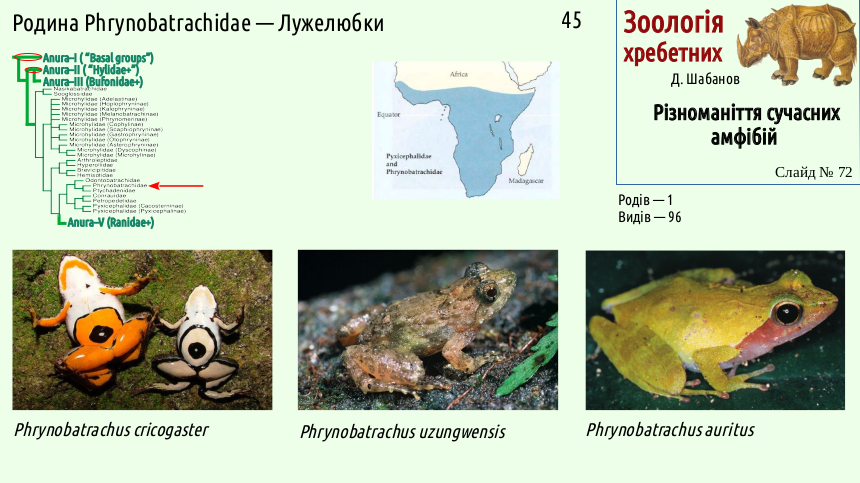
45. Phrynobatrachidae — Puddle frogs
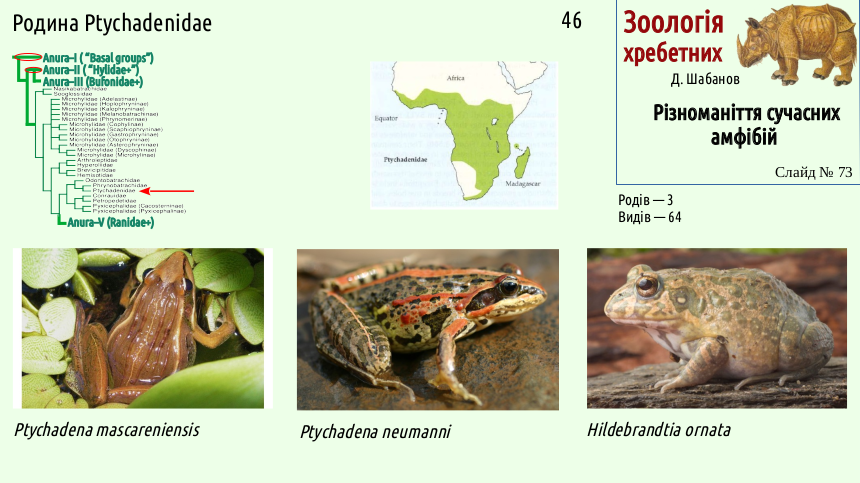
46. Ptychadenidae
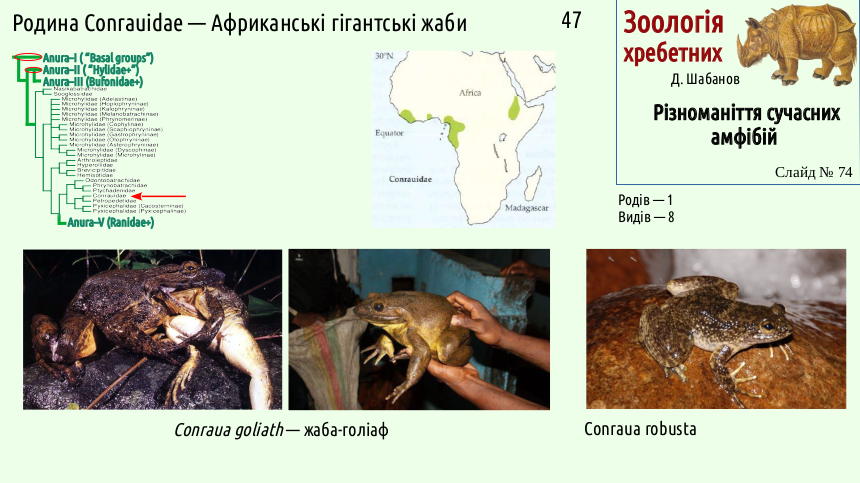
47. Conrauidae — African giant frogs
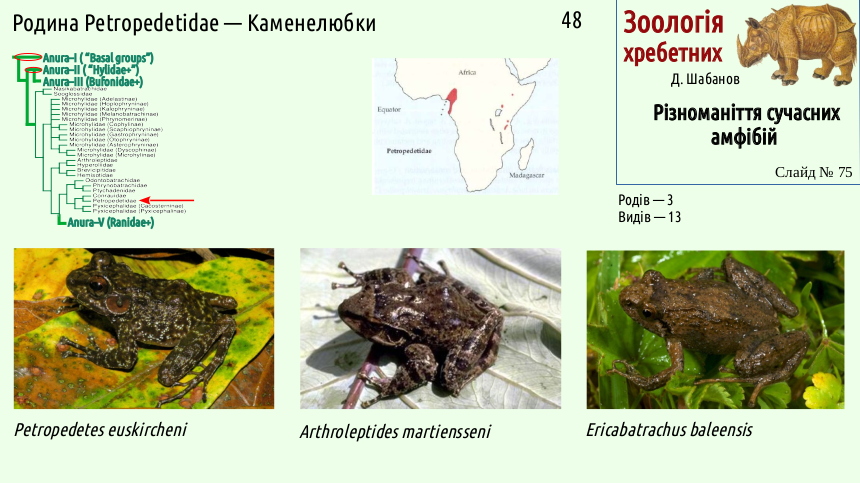
48. Petropedetidae — Rock frogs
49. Pyxicephalidae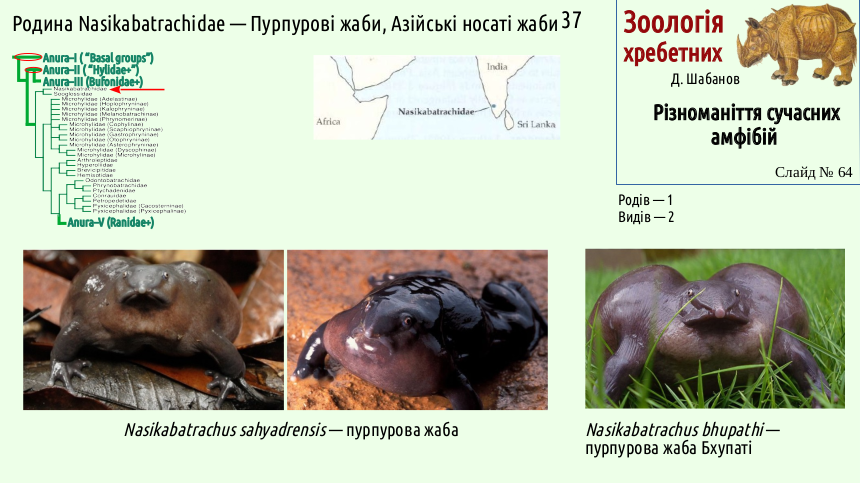
There is a purely English anecdote about a distinguished lady who stood for a long time in front of a giraffe enclosure at the zoo and then said "I simply cannot believe it." Similar difficulties may arise with purple frogs...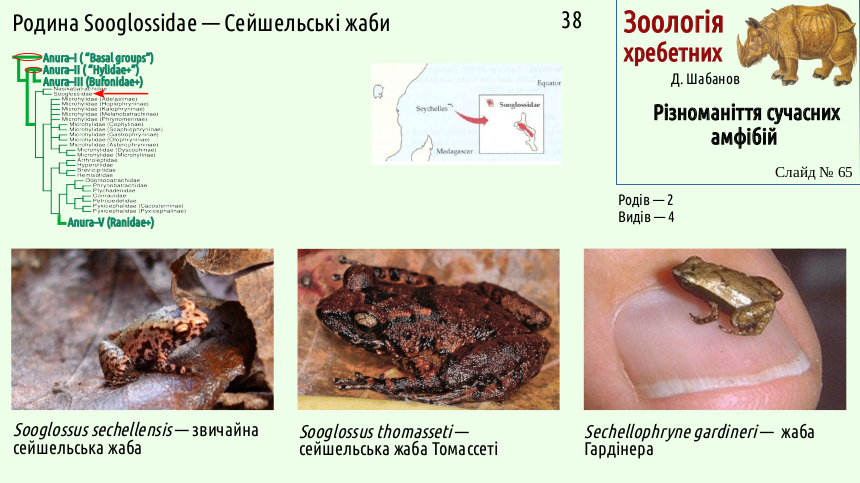
Above is an example of an unusual form of protocooperation between one of the narrow-mouthed frogs and a large spider
Your browser does not support the video tag.
The preceding video shows the reproduction of the fantastic Cape rain frog — Breviceps gibbosus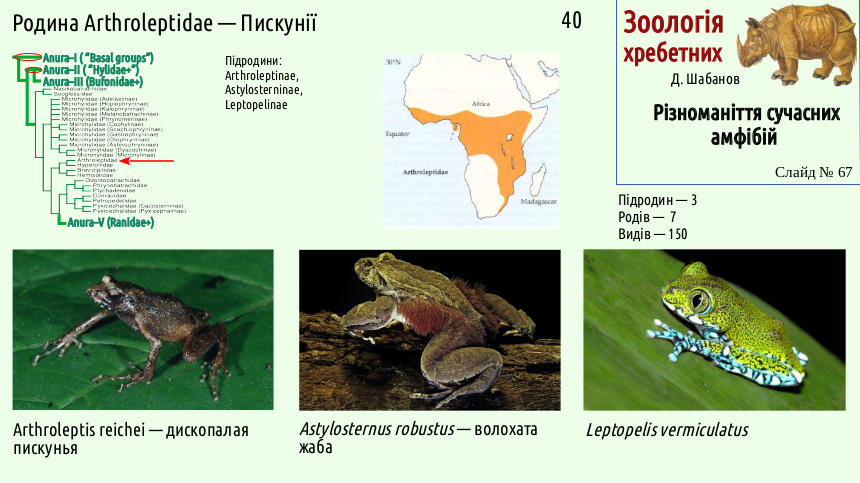
Narrow-mouthed frogs look rather ill-adapted...
...but this does not prevent them from successfully feeding under favorable conditions.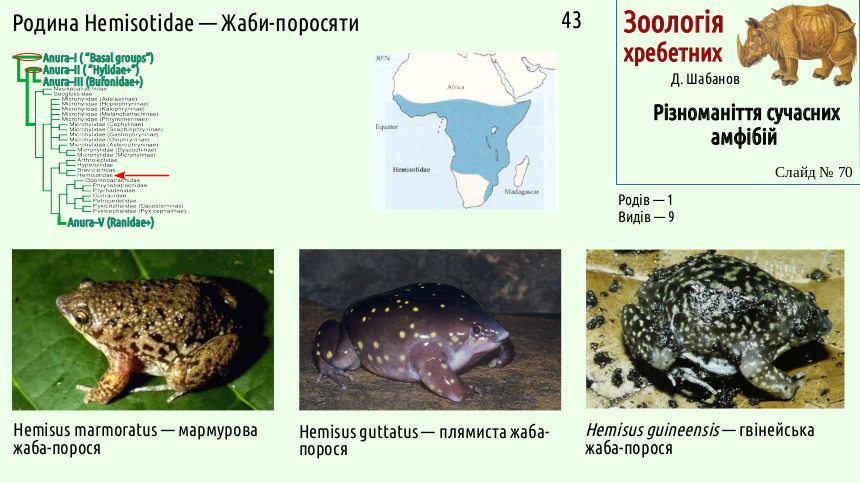
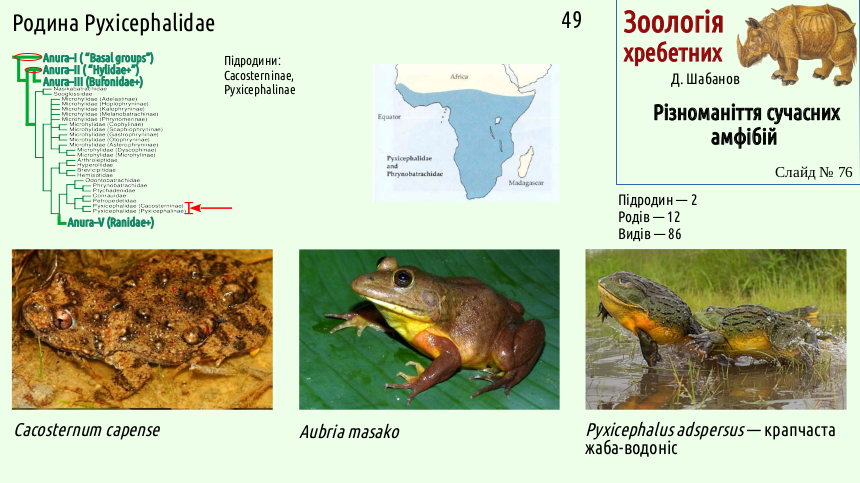
Pyxicephalus frogs have strong jaws with teeth and tooth-like projections of the jaws themselves. This allows them not only to bite through human skin (note the drop of blood in the video!)...
...but also to feed on quite large prey.
Pyxicephalus frogs demonstrate striking parental care
Your browser does not support the video tag.
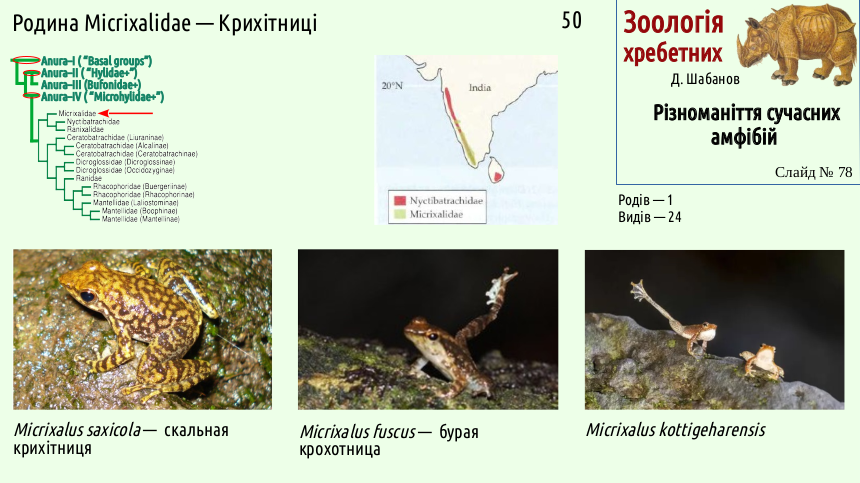
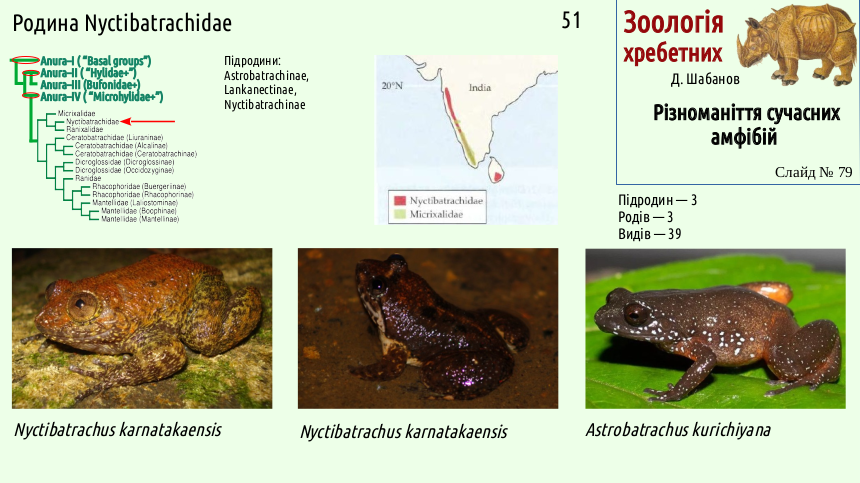
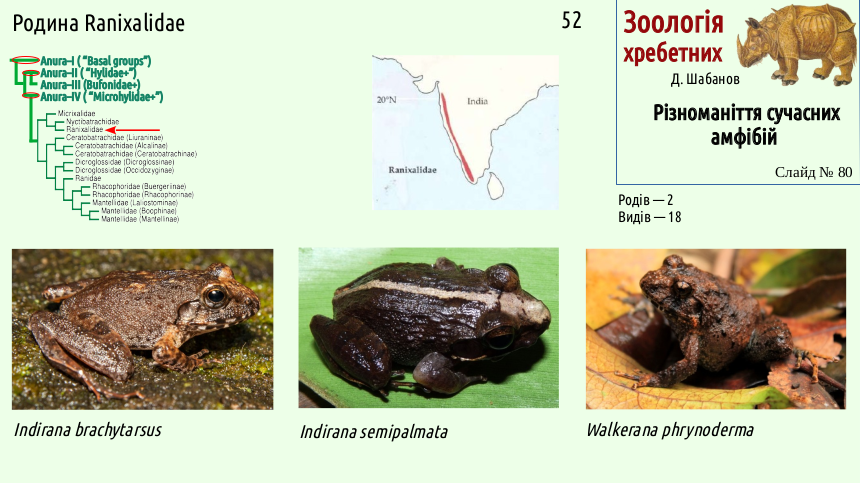
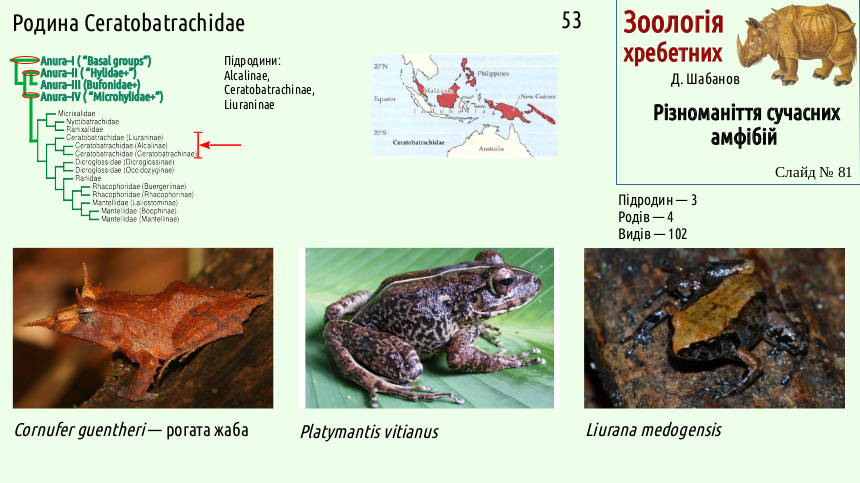
Your browser does not support the video tag.
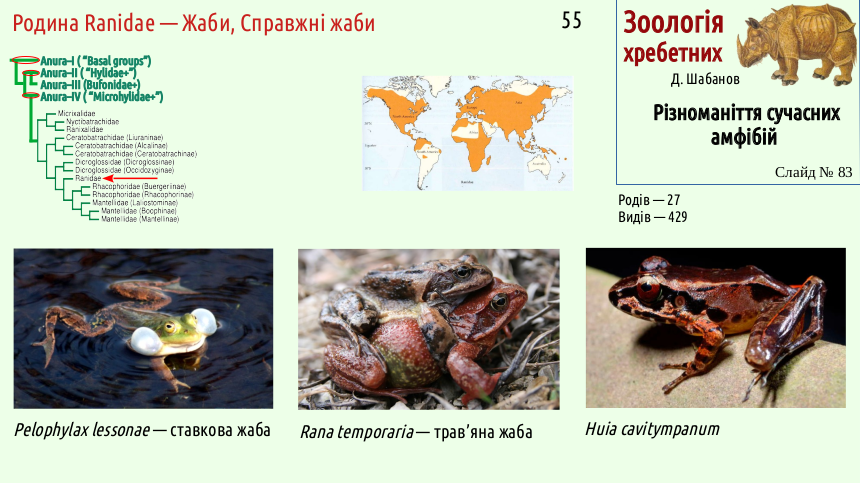
Green frogs are notable for their ability to hemiclonal hybridization. The following video shows a spawning aggregation of green frogs located right within the limits of Kharkiv (on the former Tymurtsiv Street, now — Vladyslav Zubenko Street). White vocal sacs — in the hybrids, edible frogs (Pelophylax esculentus), dark grey – in representatives of the parental species, lake frogs (Pelophylax ridibundus)
Your browser does not support the video tag.
The American wood frog, Lithobates sylvaticus, which belongs to the brown frogs, is known for its ability to easily survive freezing. However, the author of this lecture once became convinced that under certain conditions even our green frogs survive freezing. Let me describe this case in more detail. This was back in the previous millennium, when the author was not studying frogs but toads. At the time he occasionally allowed himself to eat frogs (once he began studying them — he stopped). He found himself in a place where there were many frogs; a couple of weeks later he was expecting guests, who it would have been nice to treat to something exotic. He caught a bagful of frogs and decided to use one of the relatively humane methods of killing them — simply to freeze them. For all reptiles death by freezing is relatively easy, since they simply enter a state of cold torpor, which is physiological for them. The author had at the time a refrigerator with a very powerful freezer compartment; he placed a cloth bag into this compartment.
To prepare anything from this compartment it had to be thawed, since everything in the compartment immediately froze into a solid block. A couple of days before the time when the frogs needed to be cooked, the author took out the frozen bag and transferred it to the regular section of the refrigerator, with a slightly positive temperature. When he took out the bag to cook the frogs, he was astonished. A certain number of frogs inside the bag were alive, while those on the periphery were dead! Given the power of the freezer compartment, there is no doubt that those inside also froze solid, but apparently the rate of their cooling and warming turned out to be more favorable for them.
For many years the author has thought that it would be useful to study this phenomenon in more detail, but does not do so because such research would be insufficiently ethical.
In the video below — a beautiful hunt by the pool frog, Pelophylax lessonae.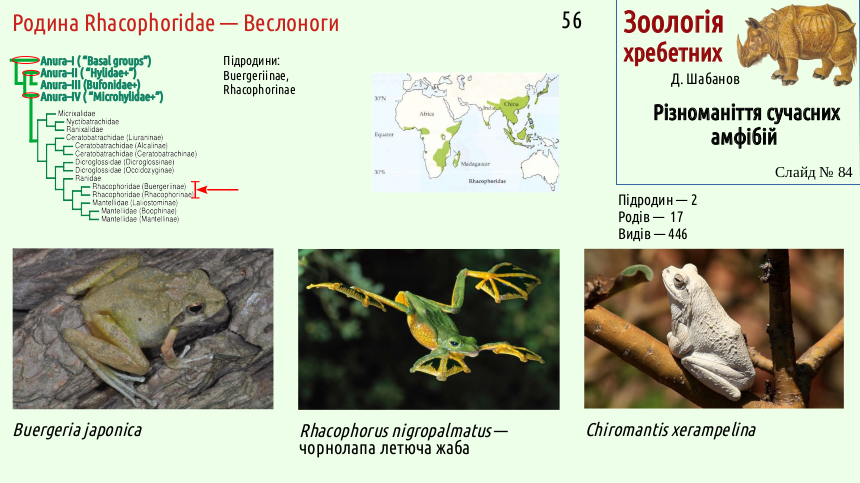
Wallace's flying frog in flight
Your browser does not support the video tag.
Tree frogs during spawning beat a nest of foamy skin mucus on branches above the water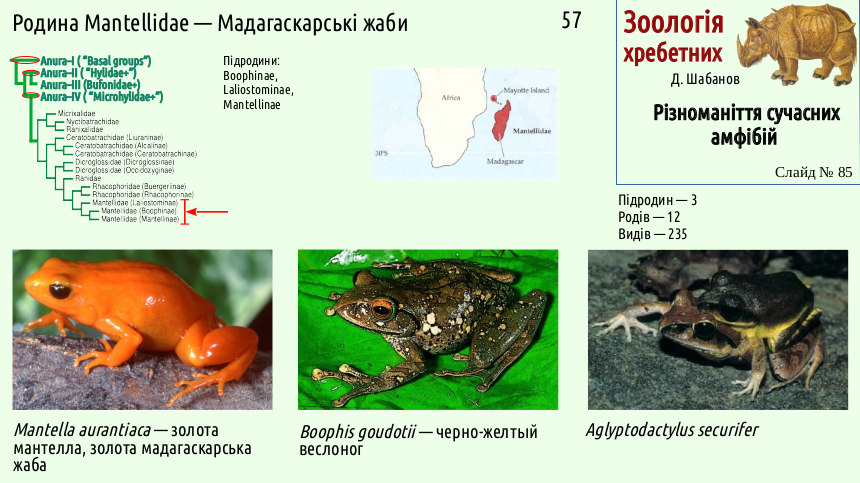
The previous video shows the reproduction of the fantastic Cape rain frog – Breviceps gibbosus. Narrow-mouthed frogs look quite awkward... ...but this does not prevent them from feeding successfully in favorable conditions. Pixicephalus frogs have strong jaws with teeth and tooth-like outgrowths on the jaws themselves. This allows them not only to bite through human skin (note the drop of blood in the video!)... ...but also to feed on quite large prey. Pixicephalus frogs demonstrate remarkable care for their offspring.
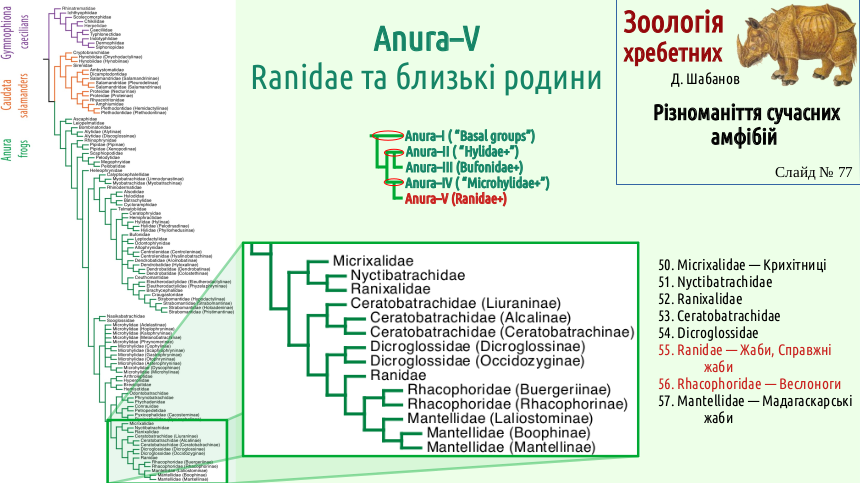
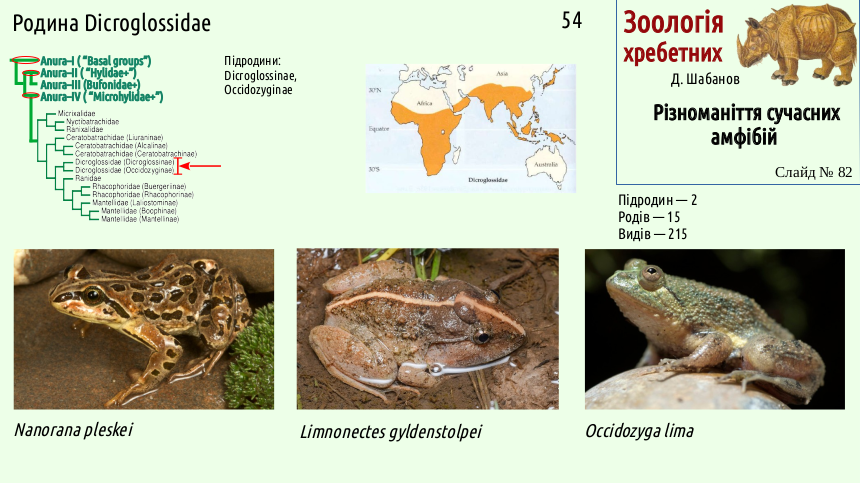
List of families in this, the final part: 50. Micrixalidae – Dwarf Frogs 51. Nyctibatrachidae 52. Ranixalidae 53. Ceratobatrachidae 54. Dicroglossidae 55. Ranidae – True Frogs 56. Rhacophoridae – Bush Frogs 57. Mantellidae – Malagasy Frogs The true frogs found in Ukraine were once classified under a single genus Rana, but are now divided into two groups. Rana – brown, relatively terrestrial frogs. Pelophylax – green frogs, which include the rather typical shore-dwelling frogs that jump into water.
Green frogs are notable for their ability to undergo hemiclonal hybridization. The next video shows a spawning pool of green frogs located within Kharkiv (on the former Timurivtsiv Street, now Vladyslav Zubenko Street). White resonators belong to hybrids, edible frogs (Pelophylax esculentus), and dark gray ones belong to representatives of the parent species, lake frogs (Pelophylax ridibundus).
The American wood frog, Lithobates sylvatica, belonging to the brown frogs, is known for its ability to withstand freezing. However, the author of this lecture once became convinced that under certain conditions, even our green frogs can withstand freezing. I will elaborate on this incident. It was in the last millennium when the author was not studying frogs but toads. At that time, he occasionally allowed himself to eat frogs (he stopped once he started studying them). He found himself in a place with many frogs; in a couple of weeks, he was expecting guests whom he would have liked to treat to something exotic. He caught a bag of frogs and decided to use one of the relatively humane methods of killing them – simply freezing them. For all reptiles, death by freezing is relatively easy, as they simply enter a state of cold torpor, which is physiological for them. The author then had a refrigerator with a very powerful freezer compartment; he placed a fabric bag in this compartment. To prepare anything from this compartment, it had to be thawed, as everything in this compartment immediately turned into a solid block. A couple of days before the frogs were to be cooked, the author took out the frozen bag and placed it in the regular refrigerator compartment, with a slightly positive temperature. When he took out the bag to prepare the frogs, he was astonished. A certain number of frogs inside the bag were alive, while those on the periphery were dead! Considering the power of the freezer, there is no doubt that those inside also froze, but the regime of their cooling and heating likely turned out to be more favorable for them. For many years, the author has thought that this phenomenon would be worth investigating in more detail, but he does not do so because such research would be insufficiently ethical. The video below shows the beautiful hunting of a pool frog, Pelophylax lessonae. Wallace's frog flight.
During the breeding season, bush frogs build a nest of foamy skin mucus on branches above the water.