
V. Reptilia sensu lato-13. Order Crocodilia — Crocodiles
Crocodiles. Large, archaic, relatively species-poor, but entirely successful (until the appearance of humans) reptiles.
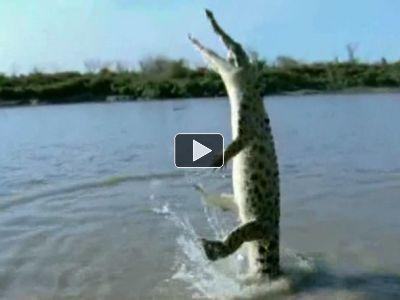
Your browser does not support the video tag.
Your browser does not support the video tag.
Your browser does not support the video tag.
At present three crocodilian families survive, each belonging to its “own” superfamily.
The first family in the order accepted here is the Gavialidae.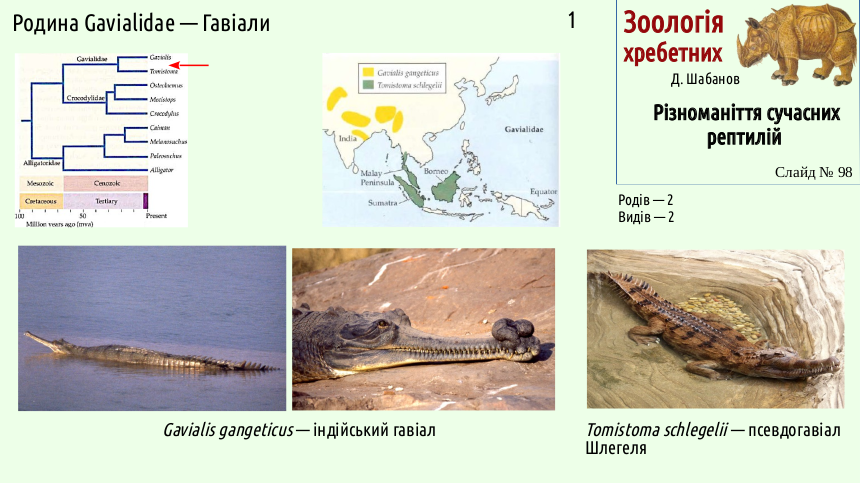
Its composition has recently undergone change. That the false gharial, Tomistoma schlegelii, resembles the Ganges gharial, Gavialis gangeticus, had long been known. However, as shown in the following scheme, on the basis of phylogenetic reconstructions from morphological data this species had been considered a gharial-like representative of the true crocodiles. Molecular phylogeny showed that it is, on the contrary, a crocodile-like representative of the gharials.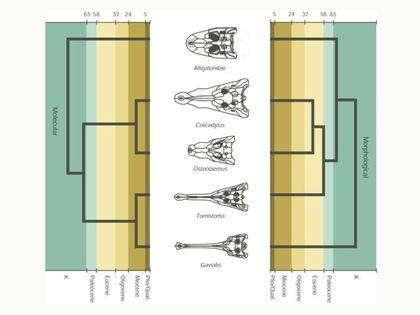
Gharials are specialized fish-eating crocodilians that catch fish with a sharp lateral movement of the head. The light elongated skull (below—the skull of a gharial) makes this movement as rapid as possible.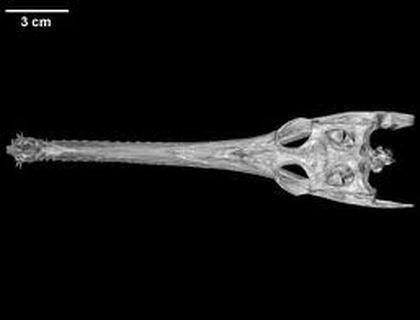
In mature males, a “bulb” develops at the end of the snout—a secondary sexual characteristic. Presumably this bulb should interfere with catching fish, and only a very successful male can afford to acquire it.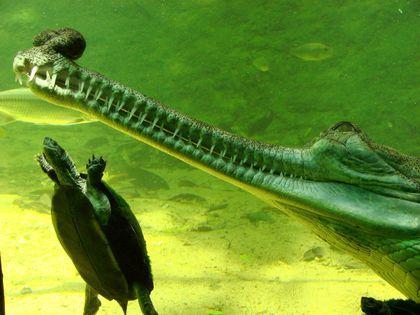
The gharial is one of the longest crocodilians; its length may probably exceed 6 m. It is not dangerous to living humans. To be eaten by a gharial after death is a great good fortune for a Hindu.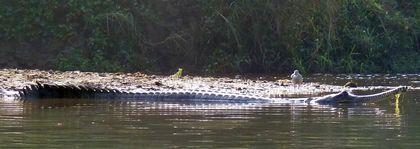
The largest family is the true crocodiles.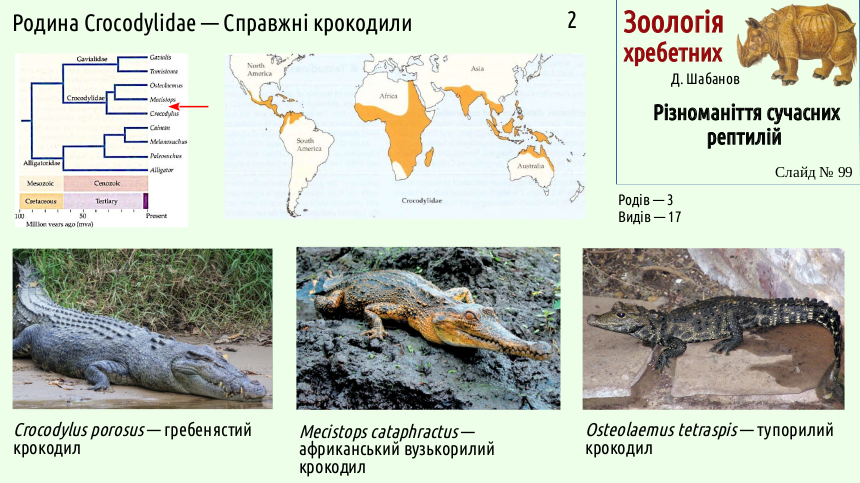
A characteristic feature of crocodiles is the “overlap” of their teeth, which probably facilitates firmer retention of prey.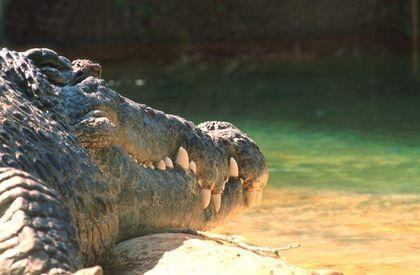
Here is an example of the typical tactics of the Nile crocodile, Crocodylus niloticus (although of course in this case it chose its victim very poorly). Although the Nile crocodile sometimes exceeds 6 m in length, an adult elephant is not prey for it.
A gazelle is more suitable prey.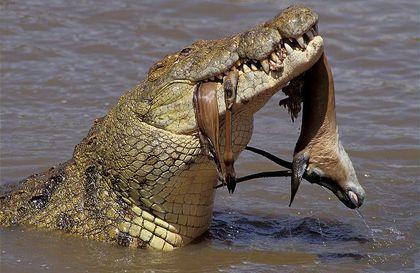
Crocodiles can be tamed; daredevils allow themselves actions that chill the blood of onlookers.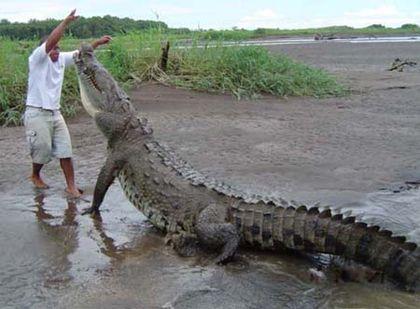
Note that the crocodile is ready to take food, but it will make do with a piece of meat rather than larger prey.
Another, even more spectacular example can be found here. There is no certainty that it is true, but it very well may be.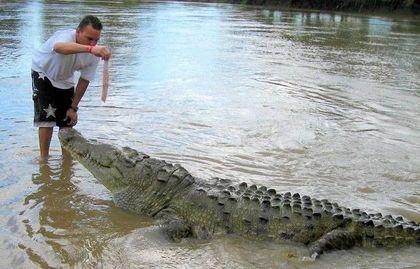
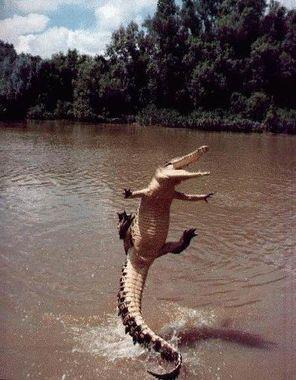
The point is not clumsiness; let me remind you once more of the capacity of the saltwater crocodile, Crocodylus porosus, for abrupt movements. This is the largest species of crocodile, reaching 6–7 m in length!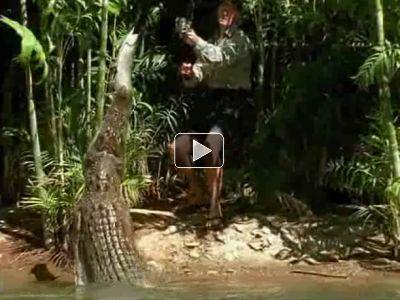
Female crocodiles take great care of their young, helping them hatch and carrying them to the water.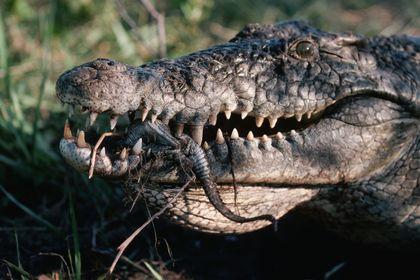
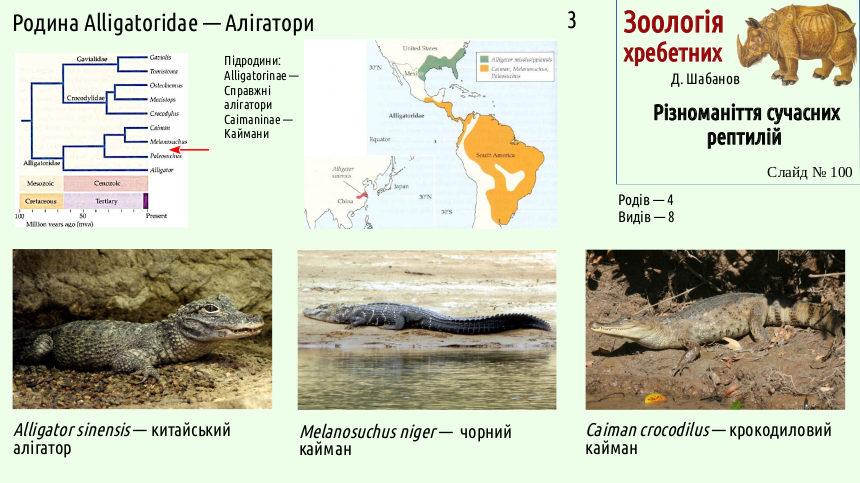
Alligators are characterized by relatively broad and powerful skulls. One genus with two species belongs to the subfamily Alligatorinae; the remaining representatives of the family belong to the subfamily Caimaninae.
The best-known alligator is the Mississippi alligator (Alligator mississippiensis). It is a large animal, sometimes exceeding 5 m in length and reaching a mass of a ton. The photograph shows the threat posture of an alligator. As in other crocodilians, the bony palate is covered by a fold of skin closing the esophagus.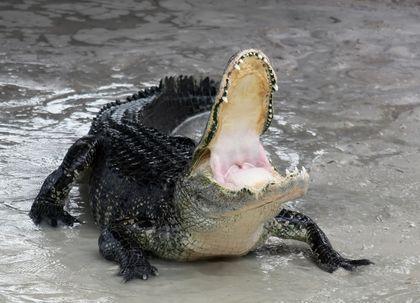
Clashes between alligators can be very aggressive.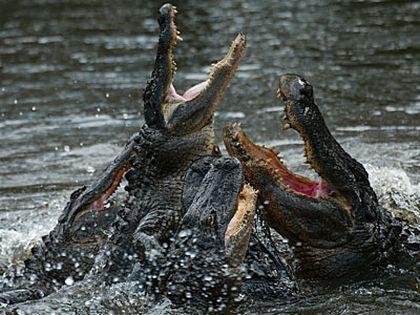
The cause may be competition for food, territorial struggle, or competition among males for a female.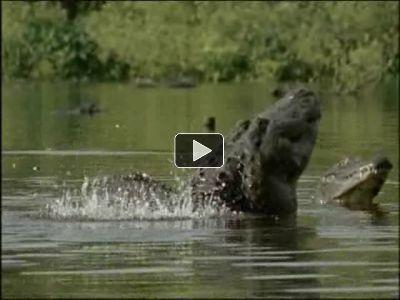
Alligators, like many other crocodilians, carefully care for their offspring. Here a female is shown near a nest made of rotting vegetation—warmed by bacterial activity, this heap of plant debris warms the eggs. Beginning from a certain age of the hatchlings, the female “talks” with them, because baby crocodiles can make quacking sounds even while still inside the egg. When hatching time comes, the hatchlings signal this to their mother, and she digs them out and helps free them from the egg membranes.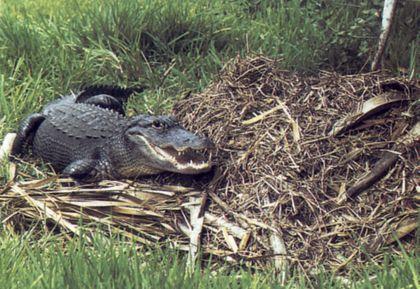
For the swampy landscapes of Florida, the environment-transforming activity of alligators is of major importance. By digging “alligator ponds,” they in effect separate water from land. These ponds have a specific flora and fauna whose existence is supported by alligators.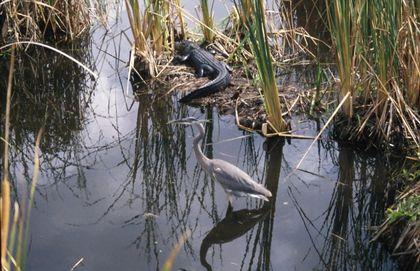
Chinese alligators are an extremely rare, almost exterminated, and much smaller species.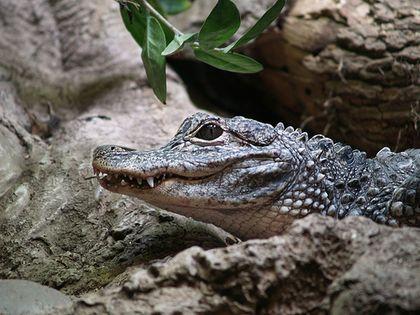
Caimans are represented by three genera and seven species. Among them are both relatively small animals (Cuvier’s smooth-fronted caiman, Paleosuchus palpebrosus, reaches about one and a half meters) and serious predators (the black caiman, Melanosuchus niger, reaches five meters in length).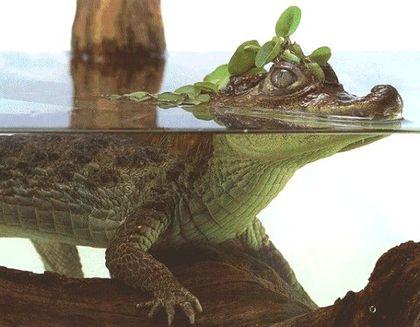
Many caimans look very attractive.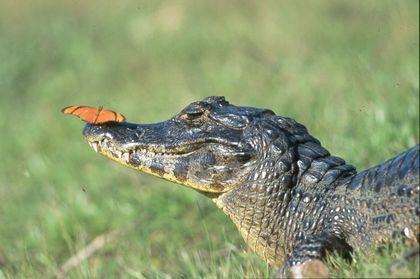
A hatchling is ready to stand up for itself as soon as it leaves the egg, although caimans too are characterized by developed parental care.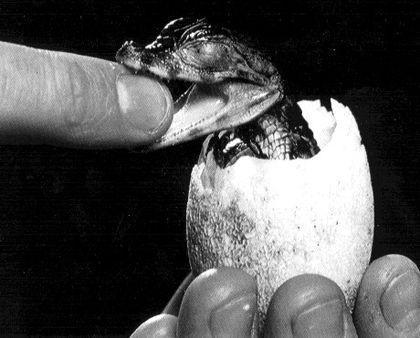
9
30
50
56
61
Your browser does not support the video tag.
Currently, three families of crocodiles have survived, each belonging to its 'own' superfamily. The first family in the order adopted here is the Gharials. Its composition has recently undergone changes. It has long been known that the False Gharial, Tomistoma schlegelii, resembled the Gharial, Gavialis gangeticus. However, as shown in the following diagram, based on phylogenetic reconstructions from morphological data, this species was considered a gharial-like representative of true crocodiles. Molecular phylogeny has shown that it is a crocodile-like representative of gharials. Gharials are specialized fish-eating crocodiles that catch fish with a sharp sideways movement of their head. The light, elongated skull (below is the skull of a gharial) allows this movement to be as sharp as possible. In mature males, a 'bulb' appears at the end of the snout — a secondary sexual characteristic. This bulb likely hinders fish catching, and only a very successful male can have it. The Gharial is one of the longest crocodiles; its length may likely exceed 6 m. It is not dangerous to living people. To be eaten by a gharial after death is great luck for a Hindu. The largest family is the True Crocodiles. A characteristic feature of crocodiles is the 'overlap' of their teeth, which likely aids in better prey retention. Here is an example of the typical tactics of the Nile crocodile, Crocodylus niloticus (although, of course, it chose its prey very unsuccessfully here). Although the Nile crocodile sometimes exceeds 6 m in length, an adult elephant is not prey for it. A gazelle is a more suitable victim. Crocodiles can be tamed; daredevils can afford actions that make spectators' blood run cold. Note: the crocodile is ready to eat, but it will settle for a piece of meat, not larger prey. It's not about clumsiness; let's recall again the ability of saltwater crocodiles (Crocodylus porosus) for sharp movements. This is the largest species of crocodile, reaching 6–7 m in length! Female crocodiles carefully care for their young, helping them hatch and taking them to the water. Alligators are characterized by relatively broad and powerful skulls. The subfamily Alligatorinae includes one genus with two species; the remaining representatives of the family belong to the subfamily Caimaninae. The most famous alligator is the American alligator (Alligator mississippiensis). This is a large animal that sometimes exceeds 5 m in length and weighs up to a ton. The photo shows the threat display of an alligator. Like other crocodiles, the bony palate is covered by a skin fold that closes the esophagus. Fights between alligators can be quite aggressive. The reason for a fight can be competition for food, territory, or males for a female. Alligators, like many other crocodiles, take great care of their offspring. Pictured here is a female near a nest made of decaying vegetation — heated by bacterial activity, this pile of plant debris warms the eggs. Starting from a certain age of the young, the female 'talks' to them, as the hatchlings can make croaking sounds while still in the egg. When it's time to hatch, the young signal this to their mother, who digs them out and helps them break free from the eggshells. The activity of alligators, which modifies the environment, is of significant importance for the swampy Florida. By digging 'gator holes,' they essentially separate water from land. These holes are characterized by specific flora and fauna, the existence of which is supported by alligators. Chinese alligators are an extremely rare, almost extinct, and much smaller species. Caimans are represented by three genera and seven species. Among them are both relatively small animals (the Cuvier's dwarf caiman, Paleosuchus palpebrosus, reaches about one and a half meters) and true predators (the black caiman, Melanosuchus niger, reaches five meters in length). Many caimans have a very attractive appearance. A hatchling is ready to defend itself as soon as it hatches from the egg, although parental care is also characteristic of caimans. 9 30 50 56 61