
Ecology: biology of interaction. I-10. (supplement) Dennett's creatures: modeling as the main function of the mind
The only gregorian beings known to us are representatives of Homo sapiens Linnaeus, 1758. When you interact with this text and diagrams, you implement exactly that method of model improvement that is characteristic of gregorian beings. By the way, it is clear to you why on fig. I-10.4 inside...
I-10. (supplementary) Dennett's creatures: modelling as the principal function of the mind
Let us consider an interesting example of classifying animals by the characteristics of the mechanisms that underlie their behaviour. This classification was proposed by the American evolutionist and philosopher Daniel Dennett (1942–2024).
The principal problem Dennett addresses is the comparison of mechanisms that ensure adaptive (i.e., environment-appropriate) behaviour in animals (and other organisms). Dennett identifies four levels of refinement of the mechanisms that govern behaviour. These levels are named after four outstanding scientists whose work enabled the understanding of the respective mechanisms.
Let us begin in order. The first level according to Dennett is that of Darwinian creatures, named, as you may guess, after Charles Darwin (1809–1882), the principal author of the concept of natural selection (Fig. I-10.1).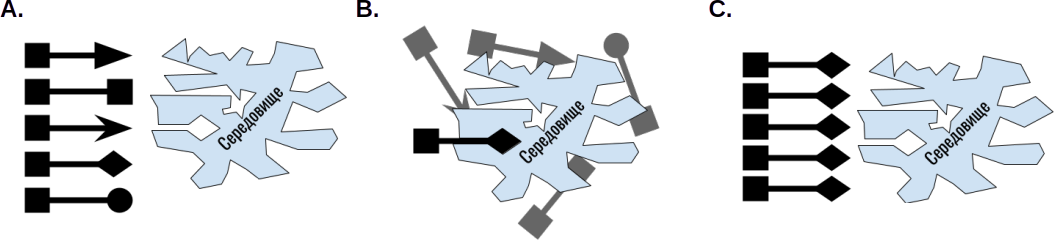
Fig. I-10.1. Darwinian creatures according to Dennett: explanation in the text
Let us explain the diagram presented. In Fig. I-10.1.A you see how five creatures with different behaviours encounter an unpredictable environment (the unpredictability of the environment is indicated by its unusual shape). The difference in behaviour is shown by the differently shaped protrusions of the figures representing these creatures. In Fig. I-10.1.B, it is schematically shown that only the fourth creature demonstrated behaviour that matched the demands of the environment (the protrusion indicating behaviour coincided in shape with a certain feature of the environment). The result is shown in Fig. I-10.1.C: only the successful creature survived and left offspring. All creatures of the next generation are its descendants. Now, thanks to natural selection, they immediately demonstrate readiness for the behaviour that turned out to be adaptive.
As can be understood, the mechanism of behavioural evolution in Darwinian creatures does not differ in principle from the mechanism of evolution of all other traits: from morphology to physiology.
The next step is Skinnerian creatures, named after B.F. Skinner (1904–1990), an American psychologist-behaviourist and the author of the concept of operant conditioning (Fig. I-10.2).
Fig. I-10.2. Skinnerian creature according to Dennett: explanation in the text
In Fig. I-10.2.A you can see that a single creature prepared for interaction with an unpredictable environment is capable of realizing different forms of behaviour (these forms of behaviour are shown as outgrowths of the same figure). In Fig. I-10.2.B, this individual tries different ways of interacting with the environment; it can be seen that only one proved successful. In Fig. I-10.2.C, it is shown that the Skinnerian creature has learned: now it is immediately ready to apply the course of action that led it to success. This is how what is called an association or a conditioned reflex is formed.
Do Skinnerian creatures employ the adaptation mechanism characteristic of Darwinian creatures? Certainly. The very ability to try different courses of action, take experience into account, and subsequently act in the way that previously led to success is an ability that evolved through the Darwinian mechanism. Anticipating ahead, we will say that humans (who belong to the last, Gregorian class of creatures) employ the Darwinian adaptation mechanism, the Skinnerian mechanism, and a third one — the Popperian one. According to Dennett, classification into a particular class is determined by the most complex mechanism used by a given creature; all simpler methods are also included in its arsenal.
Thus, the third stage of behavioural evolution is characteristic of Popperian creatures. They are named after Karl Popper (1902–1994), an Austrian and British philosopher and sociologist, the author of the concept of falsifiability in the philosophy of science (Fig. I-10.3).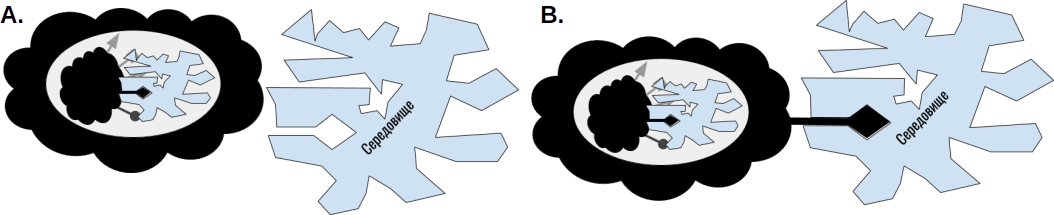
Fig. I-10.3. Popperian creature according to Dennett: explanation in the text
In Fig. I-10.3.A we see a creature that creates in its mind a model of the environment with which it will interact; this model is shown on a light background inside the outline symbolizing the creature. The selection of an adequate course of action takes place inside the mind of the Popperian animal, by using the model it has created — its notion of the environment. Successful and unsuccessful attempts occur not in reality but in the model. When the Popperian creature finds a successful course of action, it applies it in practice (Fig. I-10.3.B).
Which animals realize such an adaptation mechanism? Not only humans, but also many other animals with complex behaviour. Let us give just one classic example; stories similar to the one narrated below have been recorded many times by various observers. ...A crow obtained food from a stream and accidentally dropped a piece of bread into the water. The current carried this piece of bread under a bridge, under which the crow could not fly and could not even see the movement of the object of interest. The bird extrapolated (continued in its picture of the world) the trajectory of the lost piece of bread, flew to the other side of the bridge, waited for the current to carry the bread out, and snatched it from the water. How did the crow know how to act in order to seize this piece of bread? In the picture of the world (the model) that it creates in its mind, it selected the course of action adequate to its situation and successfully implemented it.
It is possible that the crow we described had previously found itself in a similar situation, and this time its actions were governed by the Skinnerian mechanism. However, at some point this bird had to move to a place where it needed to drop the piece of bread, without having the relevant experience.
The fourth and final level of behaviour control is named after Richard Gregory (1923–2010), a British psychologist and researcher of cognitive processes. A Gregorian creature does not merely build a model of the environment in its mind (Fig. I-10.4); it does so using cognitive (understanding-related) tools shared with other creatures. The principal among these tools is language.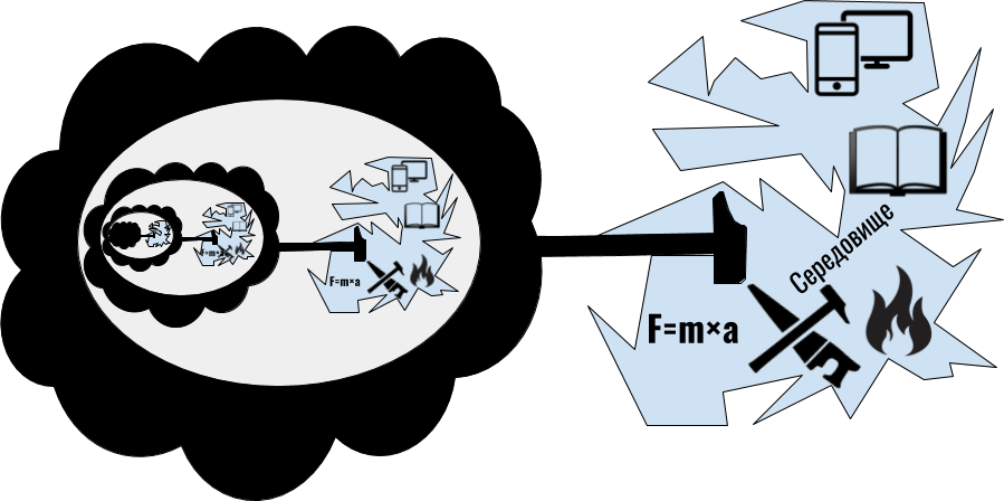
Fig. I-10.4. Gregorian creature according to Dennett: explanation in the text
The only Gregorian creatures known to us are representatives of Homo sapiens Linnaeus, 1758. When you interact with this text and the diagrams, you are implementing precisely the type of model refinement that is characteristic of Gregorian creatures. By the way, do you understand why in Fig. I-10.4 the model built by the creature depicted there shows both the creature itself and the model it has built? The ability to model oneself is called reflection and is an important mechanism in the formation of the concept of "self."
All the behavioural search mechanisms presented implement the trial-and-error approach. In Darwinian creatures, a "trial" is the emergence of an organism capable of ensuring a certain behaviour, whereas in Popperian and Gregorian creatures, attempts to solve the problems posed by the environment take place in their minds. Note: in the established name of the search algorithm, "trial and error," the third component is not mentioned: random luck. It would be more accurate to speak of a "trial, error, and luck" approach. It is precisely this algorithm that ensures both the action of natural selection, and the process of evolution, and the genius insights of the creative human mind.