
IV. Amphibia sensu lato-04. Practical #05. Comparative Anatomy of Amphibians
Materials on comparative anatomy of amphibians considered in practical classes.
Comparative anatomy of amphibians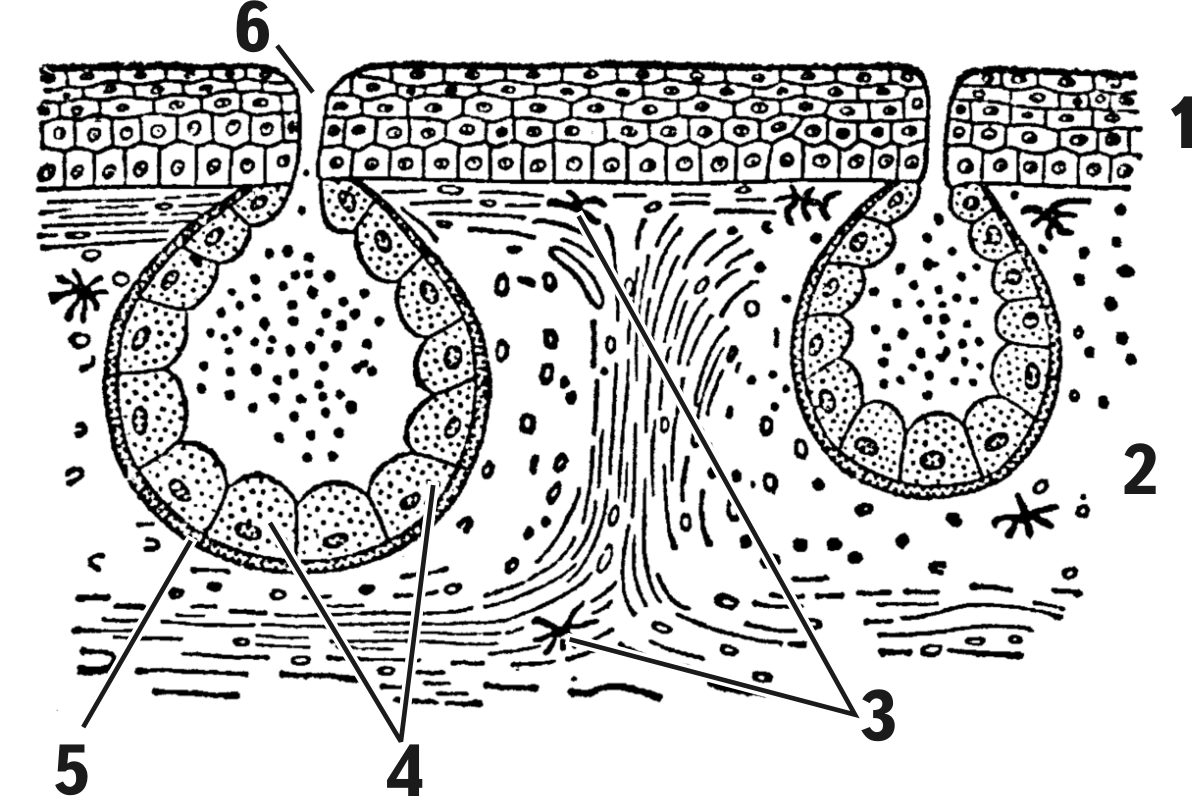
Scheme of a section through amphibian skin
1 — epidermis; 2 — corium; 3 — pigment cells; 4 — glandular cells; 5 — muscular sheath of skin gland; 6 — gland duct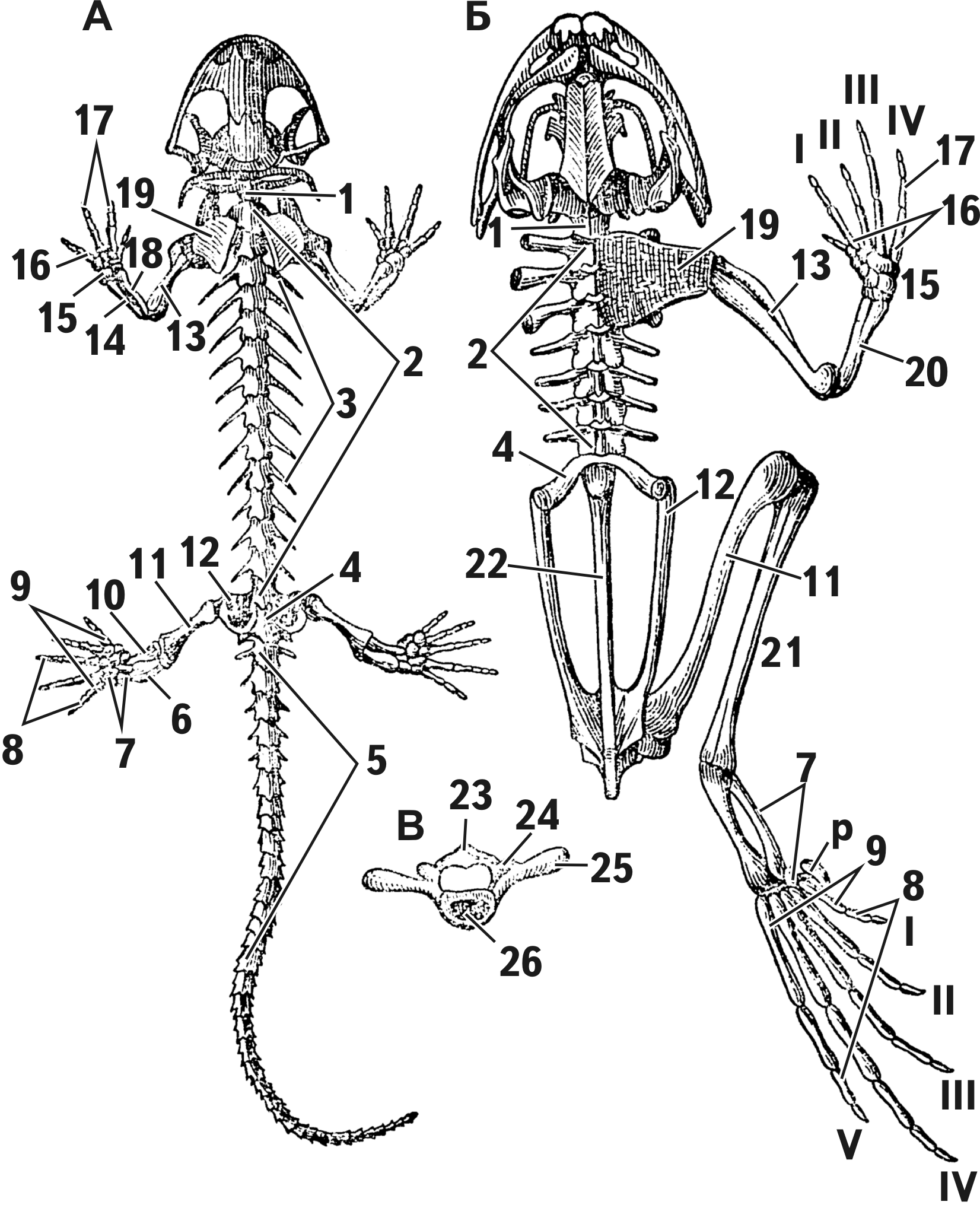
Skeleton structure: A — salamanders; B — frogs; C — frog trunk vertebra
1 — cervical vertebra; 2 — trunk vertebrae; 3 — ribs; 4 — sacral vertebra; 5 — caudal vertebrae; 6 — fibula; 7 — tarsus; 8 — phalanges; 9 — metatarsus; 10 — tibia; 11 — femur; 12 — ilia of pelvic girdle; 13 — humerus; 14 — ulna; 15 — carpus; 16 — metacarpus; 17 — phalanges; 18 — radius; 19 — pectoral girdle; 20 — fused radius and ulna; 21 — fused fibula and tibia; 22 — urostyle; 23 — neural arch with spinous process; 24 — articular process; 25 — transverse process; 26 — vertebral body; I–V — digits; p — rudiment of prepollex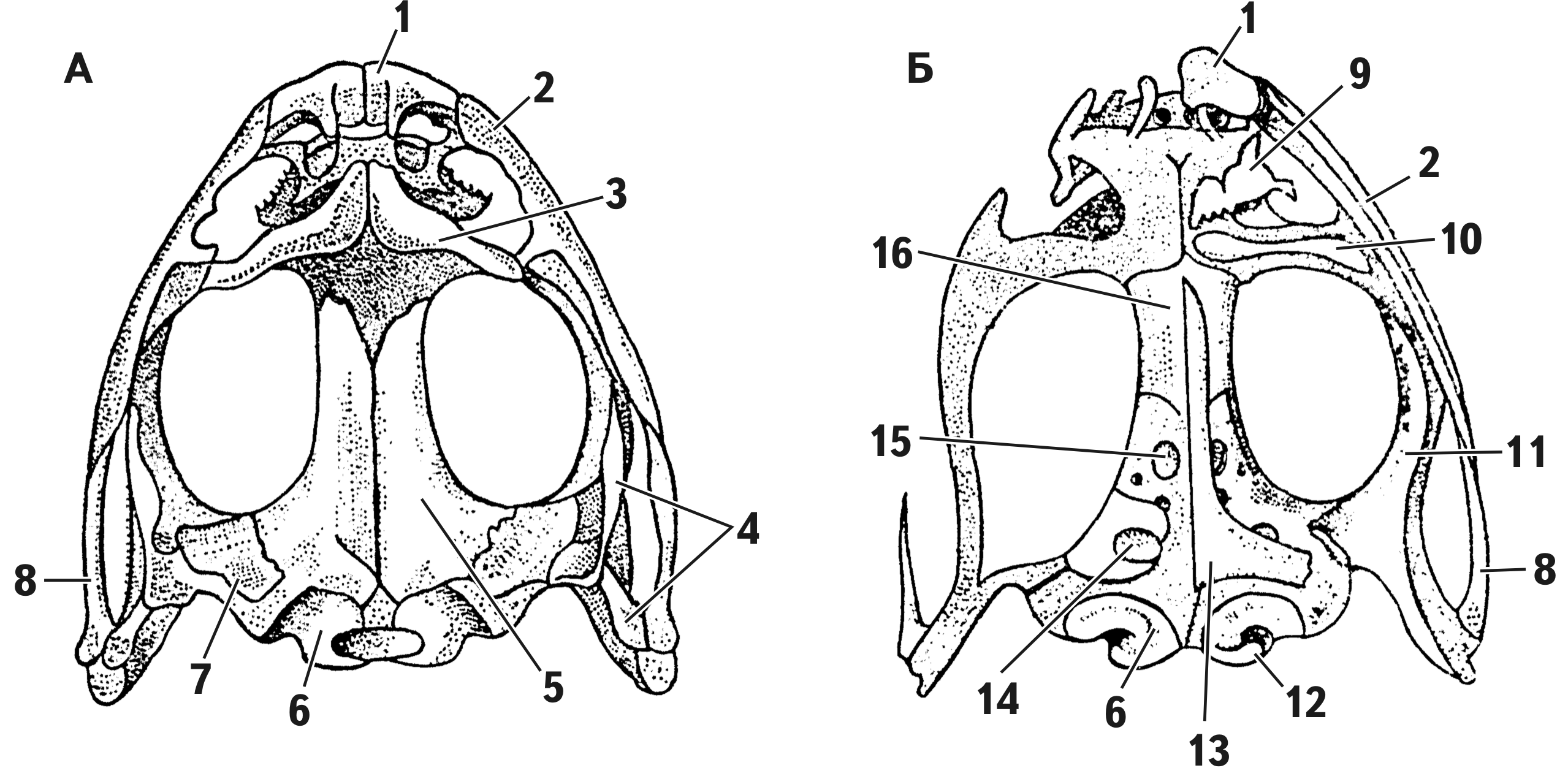
Frog skull: A — dorsal view; B — ventral view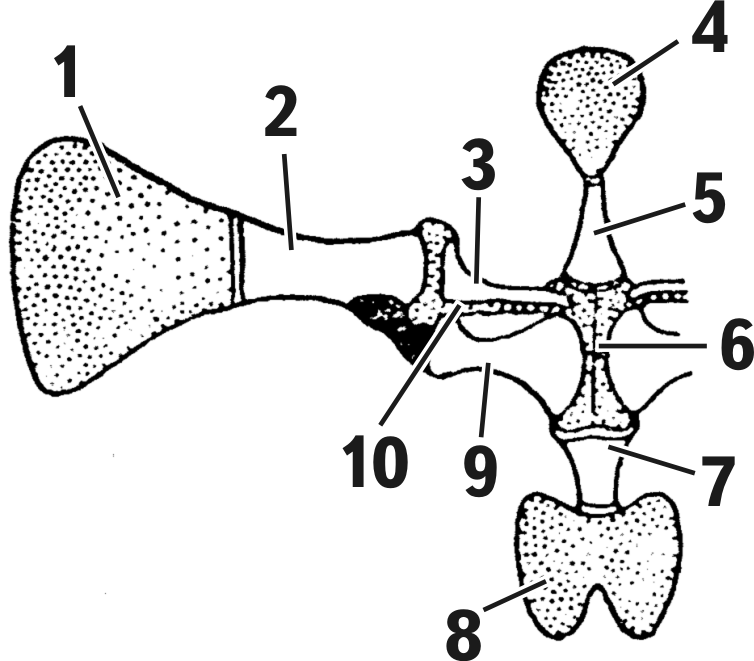
Frog pectoral girdle, ventral view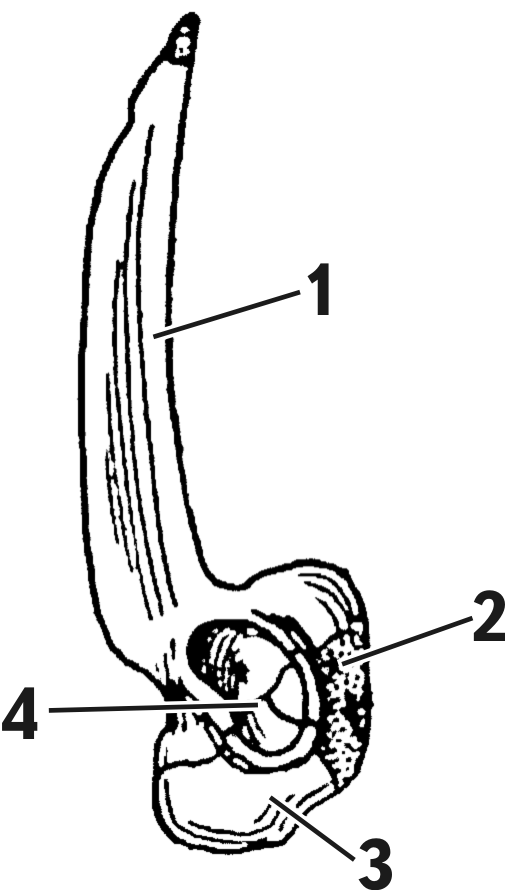
Frog pelvic girdle, lateral view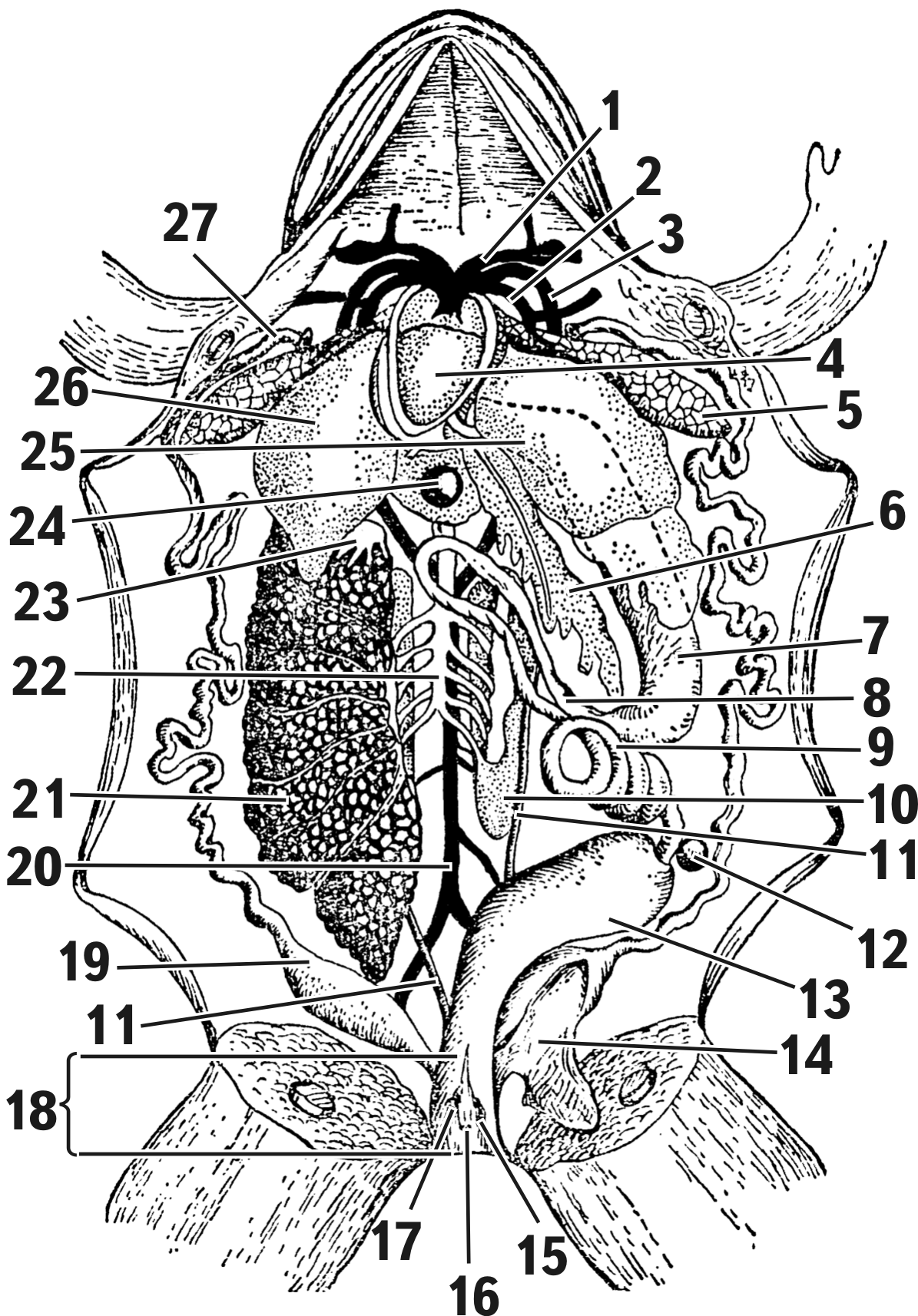
Dissected female grass frog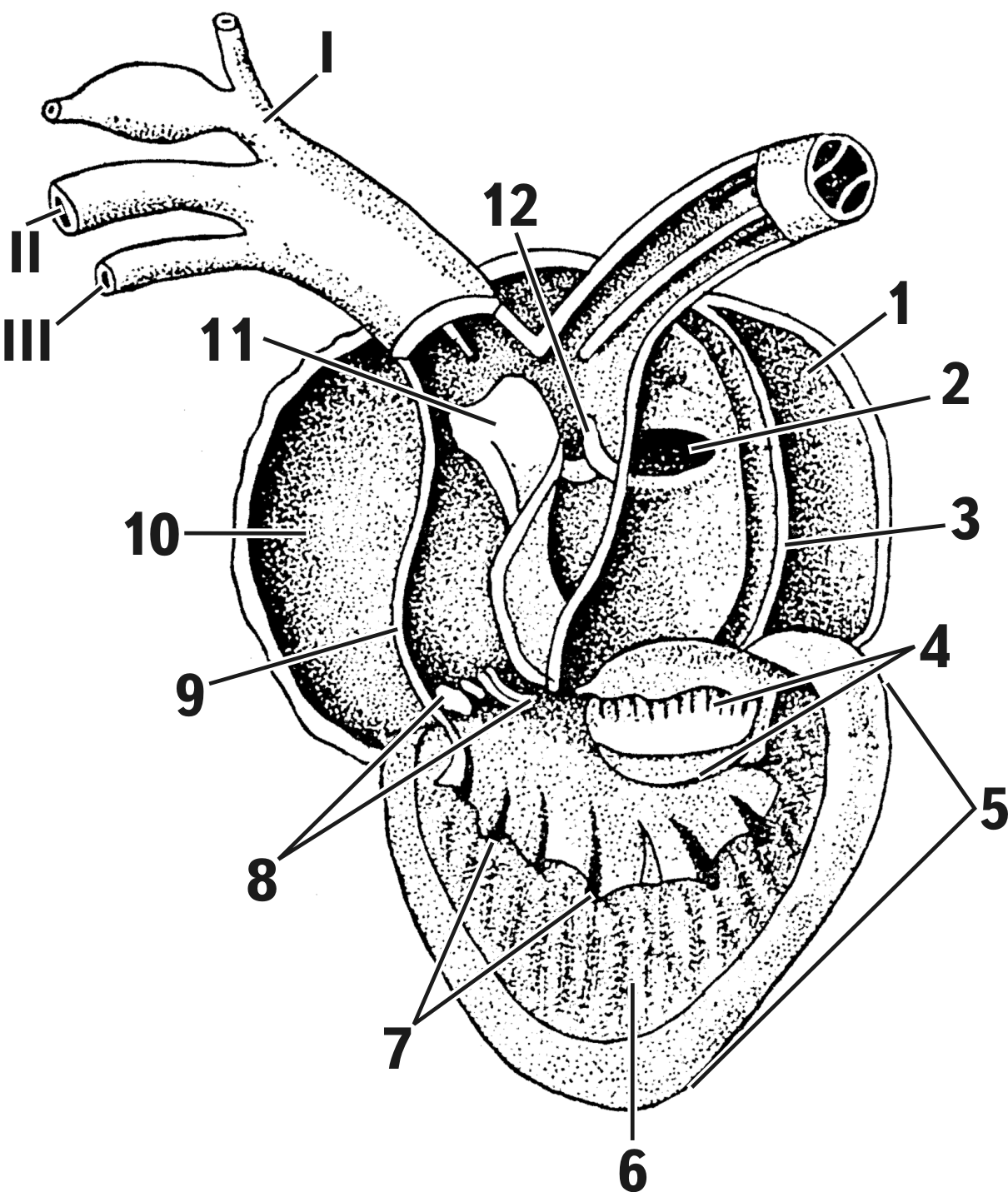
Dissected frog heart, ventral view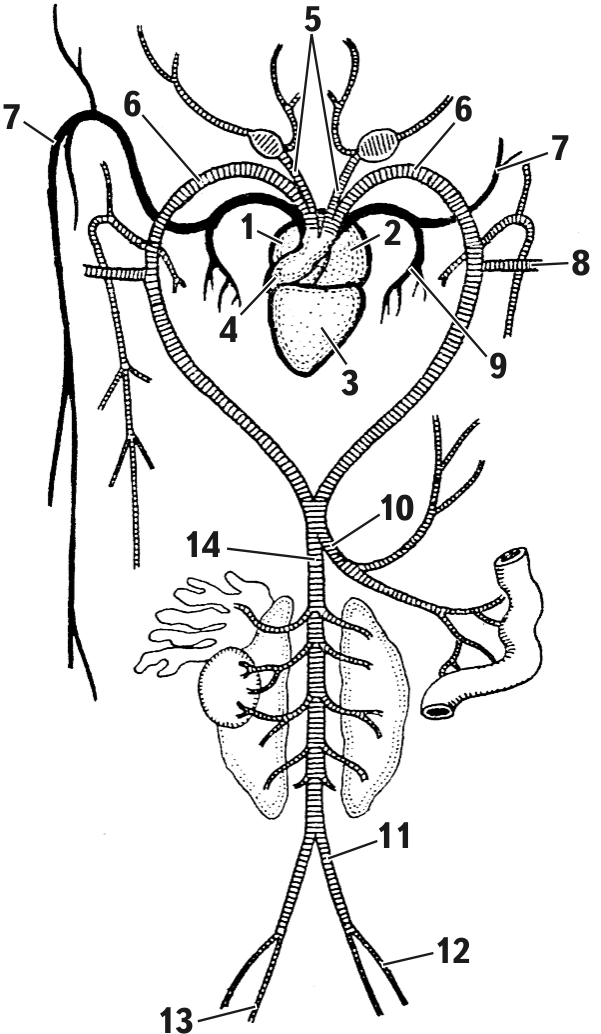
Arterial part of frog circulatory system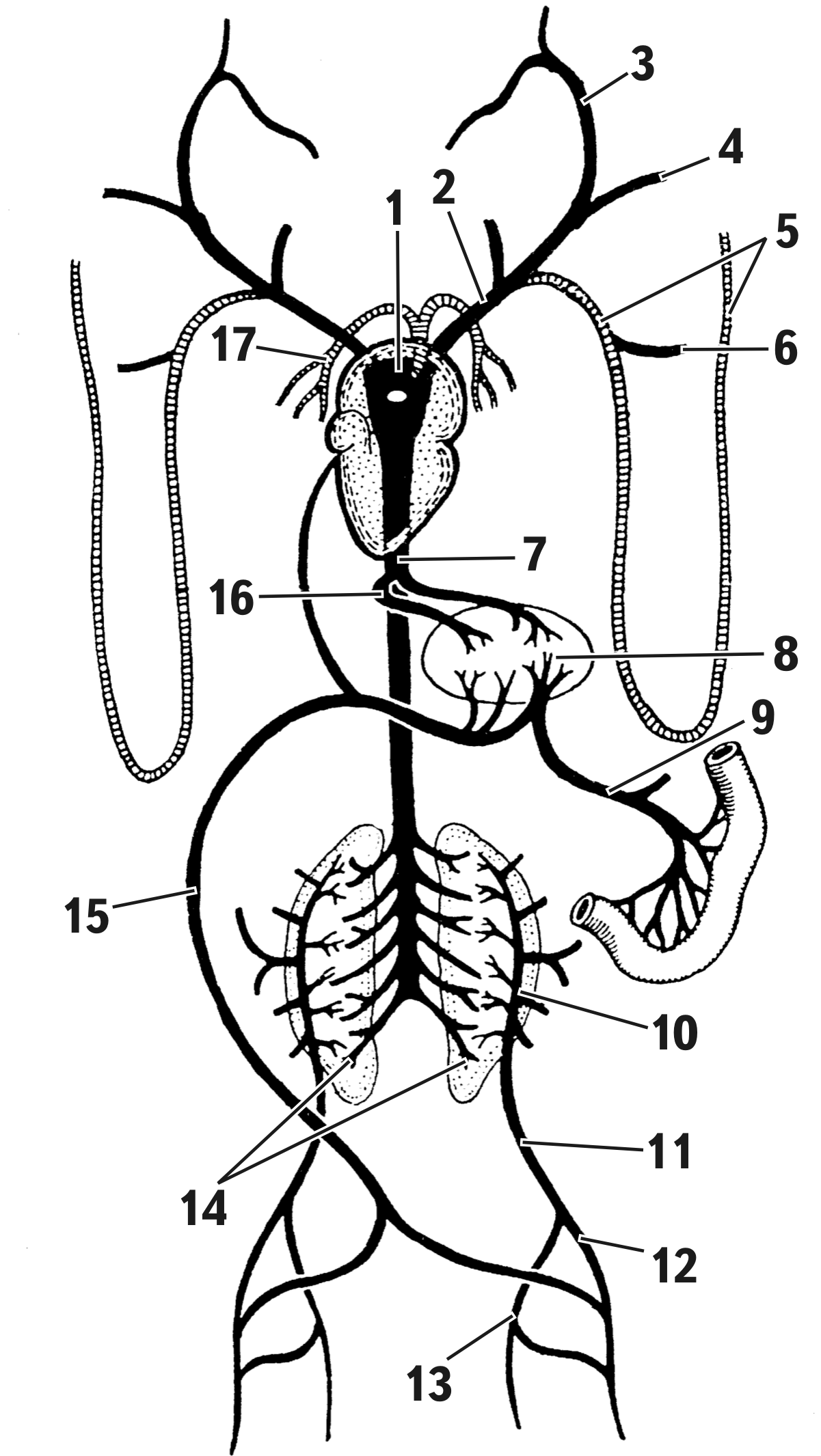
Venous part of frog circulatory system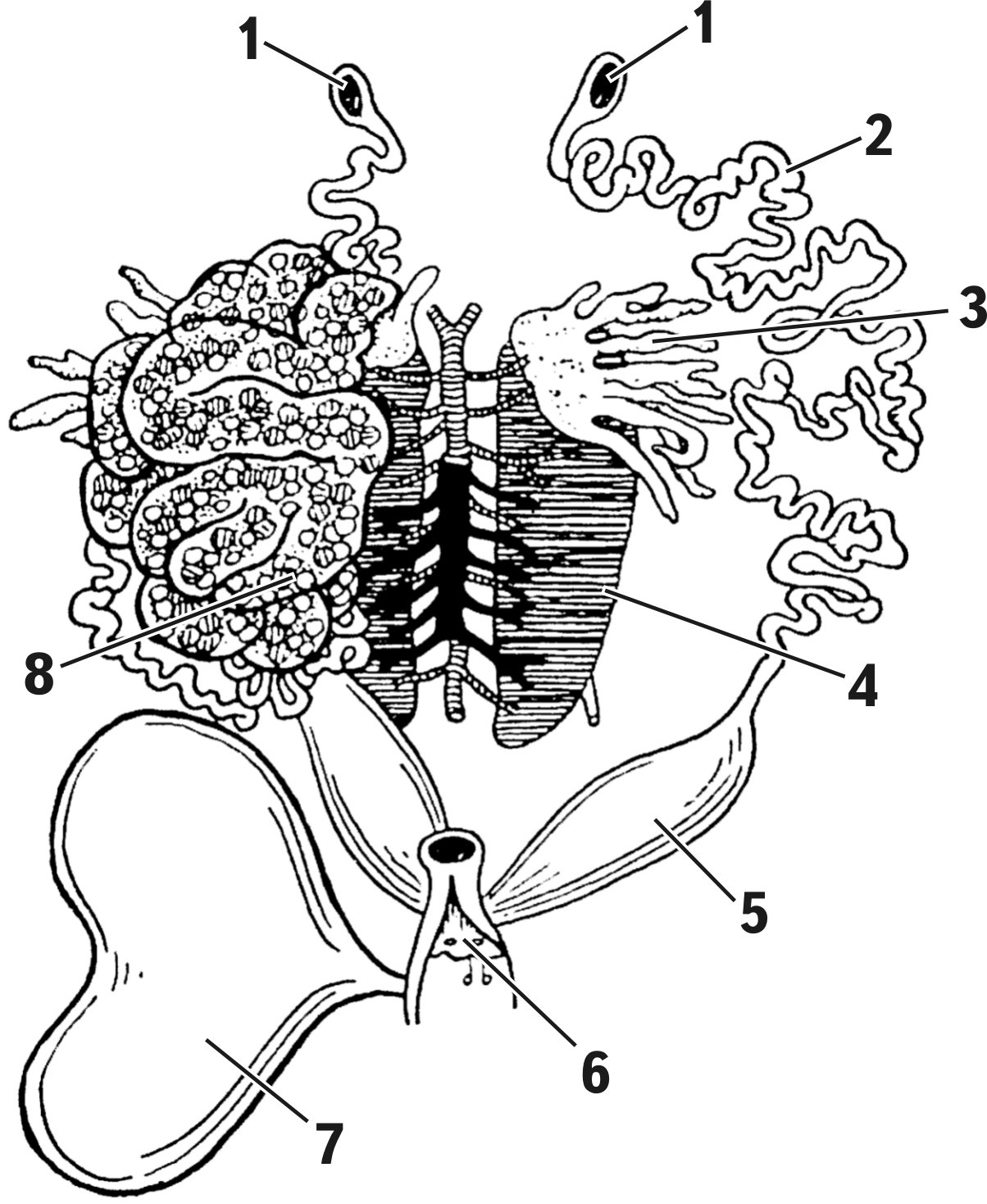
Female frog urogenital organs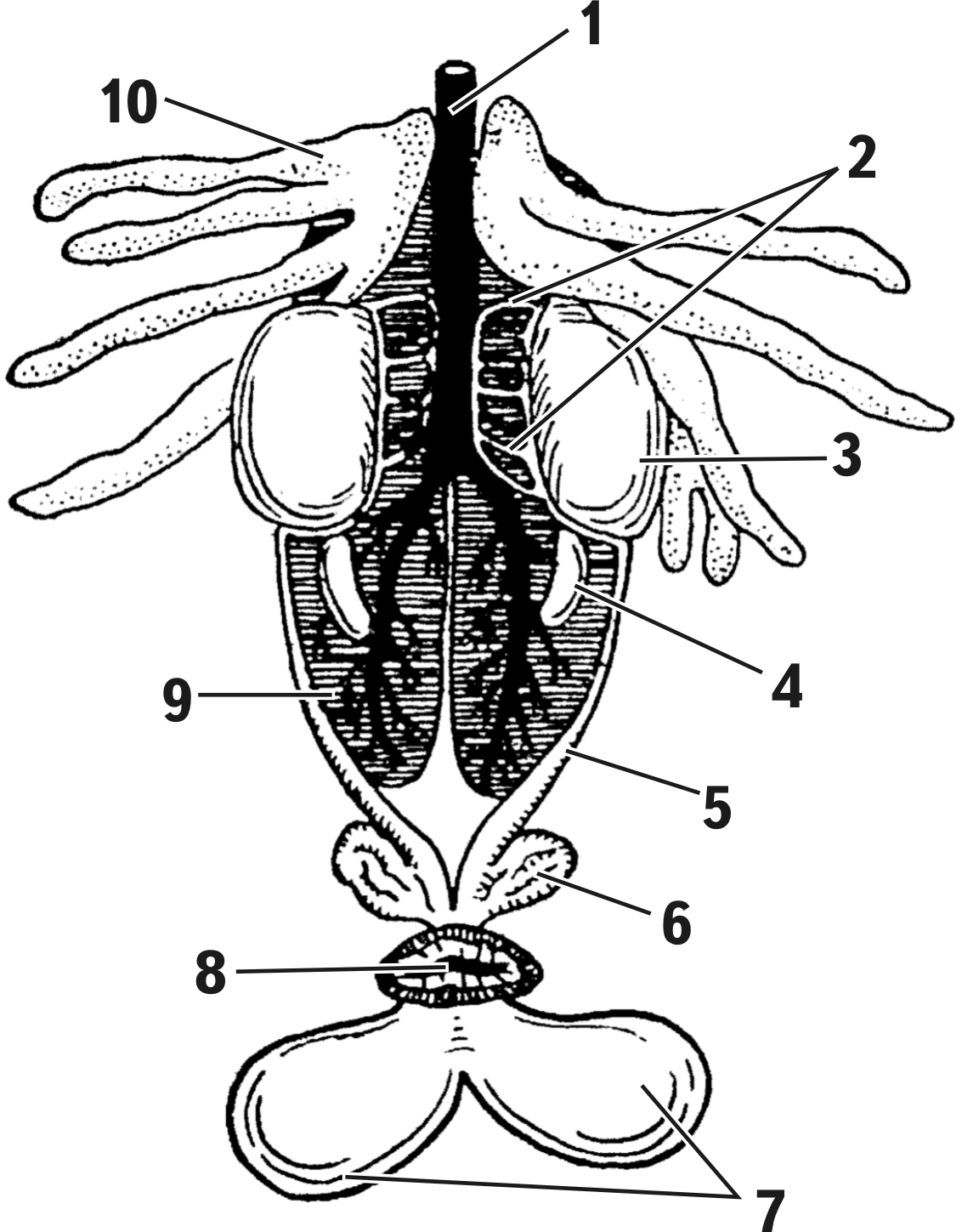
Male frog urogenital organs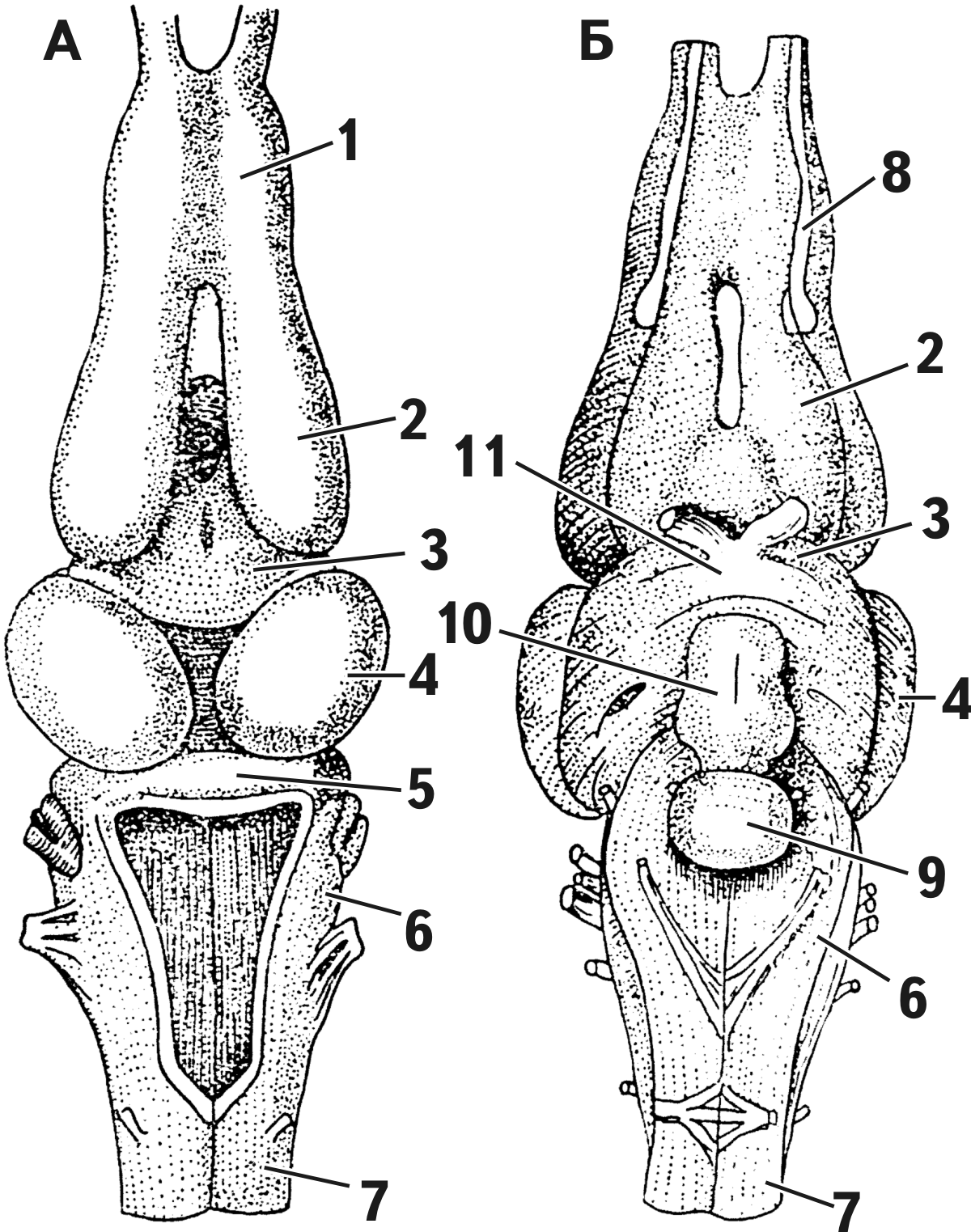
Frog brain: A — dorsal; B — ventral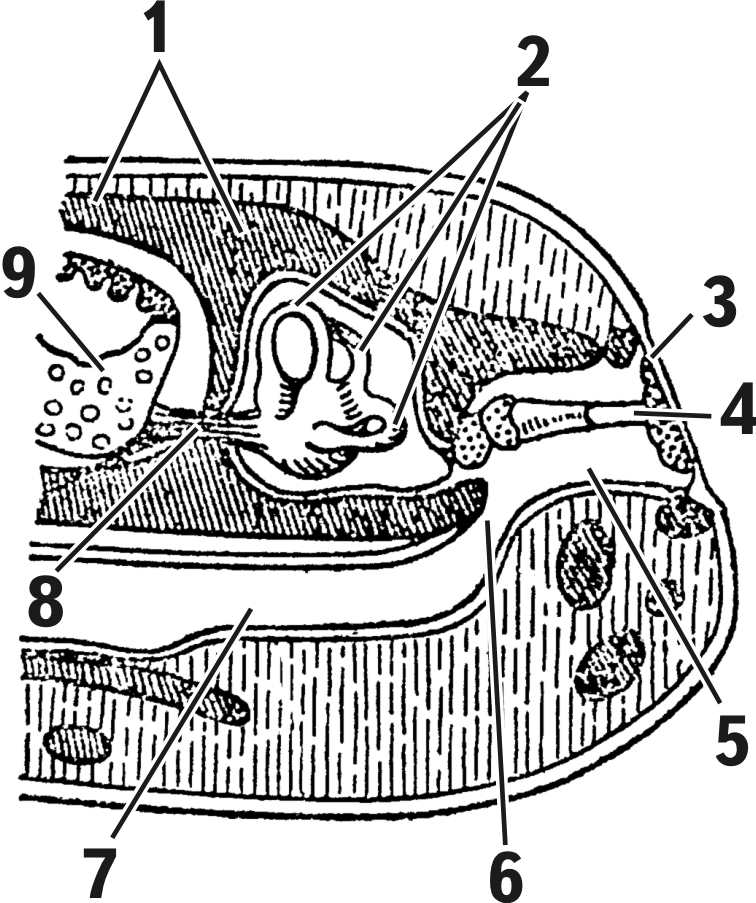
Scheme of transverse section of frog head in ear region