
Ecology: Biology of Interaction. I-15. (Supplement) Models as a Tool of (Self-)Deception
«The computer memory was loaded with a description of a chordate animal prototype analogous to the lancelet that has survived to the present day (A); the numbers at the bottom are the ‘genotype’ — a machine description of 24 traits of the ‘species’. This ancestral species could transform into others, with variation being indeterminate, in the Dar...
Appendices: Curriculum. Questions. References. Persons. Glossary. R Commands.
I-15. (Supplement) Models as a Tool of (Self-)Deception
Of course, we all know that urine is a mirror of the organism, but we must not forget that it is, after all, a distorting mirror.
Ye. E. Persky
We have discussed (I-09) that models are an effective tool for investigating reality. However, when using models, it is essential never to forget that they are approximations, valid only for estimating a certain range of phenomena. Let us divide the totality of states of the original system and the model describing it into two domains: the domain in which the original has been observed in reality, and the domain about which we judge only through the model. If the model does not correspond to the original in the studied domain, it must be abandoned or, at the very least, substantially revised. In the unstudied domain, however, it is impossible to demonstrate the model’s adequacy.
All the more valuable, therefore, are situations in which the domain of states of the original system where its behaviour has been studied is expanded. Let us consider an example concerning the response of organisms and ecosystems to changes in environmental factors. Relatively recently it was established that most climate models incorrectly predict the response of forests to moisture deficit.
Let us first consider the logic by which any sound model would be constructed. How does one determine a forest’s response to drought? One subjects experimental plants to water deficit in a climate chamber. The reasoning is straightforward: seeking to limit water evaporation, such plants will close their stomata, reduce gas exchange with the surrounding environment, and decrease the rate of photosynthesis. Consequently, a tropical rainforest accustomed to high humidity should respond in the same way…
In July–September 2005, an unprecedented drought was observed in the Amazon Basin. The region was monitored from space. Photosynthetic intensity was assessed by measuring the extent to which chlorophyll absorption frequencies were removed from the light reflected by the forests. Processing of the resulting data revealed a paradoxical phenomenon: over the vast majority of the territory, the drought caused an increase in photosynthetic activity; photosynthesis declined only in areas altered by human activity.
How could ecologists have failed to notice the mechanism that enhances photosynthesis during drought? Presumably because climate chambers used in experiments have no clouds. The decrease in atmospheric humidity over the forests led to reduced cloud cover, increased illumination of the leaves, and a rise in photosynthetic intensity. And the water? The trees obtained water from somewhere. The soil of a tropical rainforest is poor, yet, as it turns out, it retains some minimum moisture sufficient to sustain the forest through a drought. But what if the drought is prolonged? Unfortunately, the answer to this question lies in the domain of states of the original system for which we do not yet have sufficiently reliable experimental data.
Thus, models are an important research tool, but far from a panacea for all problems. Moreover, the use of models sometimes becomes a means of self-deception for researchers. To substantiate this claim, one could cite numerous examples; here, however, we shall examine one — one that paradoxically touched upon Charles Darwin himself. The case concerns an edition of Darwin’s “On the Origin of Species” published in 1987 with commentaries by two prominent Soviet and Russian evolutionists, A. V. Yablokov and B. M. Mednikov. Those passages in which Darwin expressed doubt or cautiously explored ideas were excised by the editors’ unfaltering hand. The remaining Darwinian text was substantially “improved” by the commentaries and insertions of the publishers.
“In order to demonstrate the connection between Darwin’s ideas and contemporary achievements in biology, we decided to supplement the text of ‘On the Origin of Species’ with modern illustrations that confirm or develop his ideas. <...> For the sake of greater accessibility in presenting Darwin’s work, we removed certain sections which, in our view, are secondary or excessively complex for a teacher” (A. V. Yablokov, B. M. Mednikov, 1987; in: Ch. Darwin. On the Origin of Species by Means of Natural Selection: A Book for the Teacher. — Moscow: Prosveshcheniye, 1987)
Among other additions, “On the Origin of Species” was supplemented with a description of a computer experiment conducted by V. V. Menshutkhin together with Mednikov himself (Fig. I-15.1).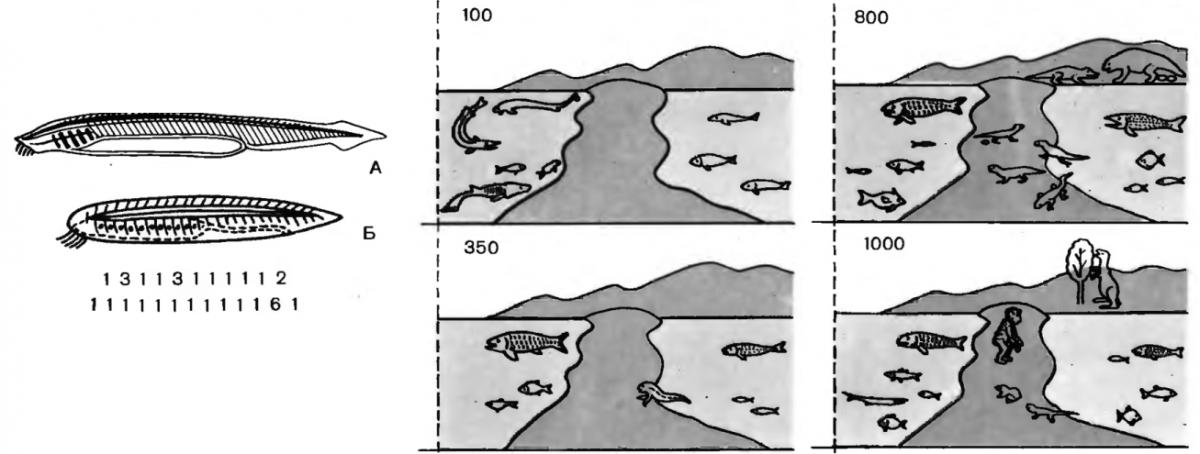
Fig. I-15.1. Illustrations explaining the Menshutkhin–Mednikov experiment (source: Darwin (!), 1987)
“The computer memory was loaded with a description of a chordate animal prototype analogous to the lancelet that has survived to the present day (A); the numbers at the bottom are the ‘genotype’ — a machine description of 24 traits of the ‘species’. This ancestral species could transform into others, with variation being indeterminate, in the Darwinian sense. Progressive (complexifying) and regressive (simplifying) changes were equally probable. Large saltations were excluded — for instance, the sudden emergence of a well-developed organ (such as the brain, etc.).
After each time step, approximately corresponding to 1 million years of the palaeontological record, the computer performed a selection among the resulting variants, evaluating them by degree of fitness. The least fit variants were erased from computer memory (‘went extinct’), and their memory cells were occupied by new, ‘adapted’ forms. In this way the struggle for existence and natural selection were modelled” (A. V. Yablokov, B. M. Mednikov, 1987)
This experiment purportedly ‘demonstrated’ that the course of evolution is predetermined and inevitably leads to the emergence of intelligence. In the Menshutkhin–Mednikov experiment, the ‘lancelets’ gave rise to diverse ‘fish’ possessing three pairs of paired fins, which subsequently colonised land in the form of six-limbed creatures. As a result of the evolution of terrestrial life, animals resembling centaurs arose — organisms that moved on four limbs and had their forelimbs freed for labour. They possessed a large brain and a social life conducive to the development of intelligence.
Having reached this stage, the experimenters ‘rewound’ the machine time and repopulated the land with four-limbed creatures. Remarkably, the intelligence that emerged in the course of evolution turned out to be bipedal. Thus it was supposedly ‘demonstrated’ that evolution has a certain degree of freedom, yet its general course is predetermined.
The authors of this textbook consider that evolution is to a significant degree directional, but they hold this view not thanks to the Menshutkhin–Mednikov experiment, but in spite of it. The issue is not whether vertebrates could have been six-limbed (see section I-15). The issue lies in how fitness of the ‘organisms’ was evaluated in this experiment.
The Nobel laureate Friedrich von Hayek’s book on attempts to manage an economy from a single centre is titled “The Fatal Conceit.” No plan, no genius human or artificial mind, can foresee what is determined by the multitude of individuals in their concrete market interactions. Even more pernicious is the presumptuous belief that one can know in advance what natural selection will favour and what it will discard. A model biosphere capable of making such predictions would have to be as complex as the real one. In the Menshutkhin–Mednikov model, there was only one way to separate successes from failures — to introduce an a priori evaluation in which fitness was assigned to whatever had prevailed in the course of actual terrestrial evolution. The program was given the specification that the most fit organism is an intelligent one. Intelligence requires free limbs, a large brain, and a social life. In other words, the model was given a terminal state and a means of reaching it (with the aid of random errors that bring it closer to the goal). Is it any wonder that the model arrived where it was directed from the outset?
It is noteworthy that the experimenters ‘switched off’ evolution once an intelligent creature had emerged. Did they understand that further development of the model would result in mere stagnation? The answer to this question would allow one to assess the proportion of deception versus self-deception in the motivation behind the experiment described. Perhaps Menshutkhin and Mednikov could have justified this decision by arguing that, following the emergence of intelligence, biological evolution is superseded by social evolution. But did they not wish to see what would happen next? Their decision not to do so permits the inference that a certain measure of deception was mixed in with the self-deception… In any event, this mixture proved sufficiently effective; many readers of “On the Origin of Species” were persuaded that the predetermination of evolution had been demonstrated.
Darwinism is accused of circular reasoning: fitness is explained as the capacity to survive, and survival is regarded as a consequence of fitness. One may nonetheless suppose that Darwin, who was inclined to careful and comprehensive reflection, would not have fallen into the trap into which Menshutkhin and Mednikov lured themselves and their readers. Incidentally, in the authors’ view, the cause of a certain crisis in evolutionary biology observable today is connected not with defects in Darwin’s works (which in any case belonged to their time, the century before last), but with the dogmatism of contemporary ‘Darwinists.’