
Ecology: the biology of interactions. I-18. (supplement) Levels of selection
Different levels of biological systems differ substantially in their properties. One of the common mistakes is the expectation that selection will operate identically at all levels. If at the individual level selection occurs through the death of some units and the reproduction of others, then some expect that at the bio...
I-18. (supplement) Levels of Selection
...There are two ways to describe natural selection. Both are correct; they simply view the process from different sides. Evolution is the external and visible manifestation of the differential survival of alternative replicators <...>. Genes are replicators, while organisms and groups of organisms are better understood not as replicators; they are vehicles in which replicators travel. <...>
One of the difficulties with the theory that groups of organisms can be effective vehicles is the very high probability of the emergence of defectors (from the group's perspective) and selection in their favor.
Richard Dawkins. The Extended Phenotype: The Long Reach of the Gene, 1999.
We have established that the architect of the Universe is natural selection in its broadest sense (paragraph 1.5). As a consequence of this principle, which is closely connected with the Second Law of Thermodynamics, more stable processes (those that with higher probability preserve, restore, or spread their state) displace unstable ones.
Biology became precisely the science in which the investigation of natural selection began. The first form of selection senso lato whose significance was recognized by science was Darwinian selection, or natural selection sensu stricto. However, for understanding the level of selection in biology, the discussion of its levels is important.
We have already noted that biosystems are characterized by hierarchical organization (paragraph 1.3). At what level of biosystems does the selection occur that determines their perfection? Considering this question, we can identify several stages in the development of views on levels of selection.
1. British classical evolutionism. The authors of the natural selection concept can be considered Thomas Malthus (1766–1834), Alfred Russel Wallace (1823–1913), Charles Darwin (1809–1882), and Herbert Spencer (1820–1903). All of them considered individual selection, that is, the survival or death, reproduction or exclusion from reproduction of individual organisms. While acknowledging the contributions of the other listed authors, one should, of course, emphasize the key role of Charles Darwin. Interestingly, Darwin was also the first to express the idea of group selection: he proposed it, explaining possible pathways for the emergence of altruistic behavior characteristic of humans. Darwin suggested that groups of humans consisting of individuals capable of self-sacrifice displaced more selfish groups.
2. German "neo-Darwinism." German scientists played a key role in the development of cell biology. What August Weismann (1834–1914) called neo-Darwinism can be viewed as a development of Rudolf Virchow's (1821–1902) principle "omnis cellula e cellula." Weismann added to evolutionary biology the concept that cells of multicellular organisms are divided into somatic cells and germ line cells (germ). Evolutionarily significant are changes in germ cells.
3. British concept of the "selfish gene." As a result of the work of brilliant English evolutionary biologists of the 20th century, John B.S. Haldane (1892–1964), William Hamilton (1936–2000), John Maynard Smith (1920–2004), and Richard Dawkins (b. 1941), the understanding emerged that the "true" level of selection is the gene level. Dawkins became the most vivid exponent of these views, managing to make them part of the science-pop mainstream. According to these views, the organism is an epiphenomenon, a secondary entity; evolution is a competition in the reproduction of individual genes, which pass through organisms as passengers through vehicles.
4. Discussion on levels of selection in the second half of the 20th century. The confrontation between supporters and opponents of the "selfish gene" led to the expansion of those levels of biosystems at which the action of natural selection was considered. It began with the English zoologist Vero Wynne-Edwards (1906–1997), who proposed the concept of group selection. For example, a huge number of animal behavior features were explained by actions directed toward the benefit of the population and species. Why in the case of overpopulation crisis in a vole population do females reduce their fertility? Wynne-Edwards' version—to stabilize the population's existence. American biologist George Williams (1926–2010) shattered these views. Williams showed that under any conditions when there are high chances of offspring survival, those females that produce it will increase their contribution to subsequent generations (i.e., will be supported by selection). Reduction in fertility will be supported by individual selection if the delay in producing offspring increases its chances of survival. However, Williams' criticism did not bury the idea of selection at high levels of biosystems. Thus, American paleontologist Stephen Stanley (b. 1941) proposed the idea of species selection, which became part of the concept of punctuated equilibrium of Stephen Jay Gould (1941–2002) and Niles Eldredge (b. 1941). It seemed that sociobiology (the concept of evolution of social behavior and other forms of behavior as a result of selection) created in the last quarter of the 20th century by Edward Osborne Wilson (1929–2021) could explain at the level of gene selection the most complex features of biosystems.
5. Multilevel selection and the views of Edward Wilson. The situation changed fundamentally at the beginning of the 21st century when Edward Wilson supported the concept of multilevel selection proposed in 1994 by David Sloan Wilson (b. 1949) and Elliott Sober (b. 1948). By the way, it should be noted that the idea of selection operating simultaneously at different levels did not appear in 1994; D.S. Wilson and E. Sober summarized ideas that had a long prehistory. The results of simulation modeling led Edward Wilson to recognize group selection as the leading factor in the evolution of eusociality and altruism. According to the views to which Edward Wilson came, individual and group selection act on humans simultaneously (which is an example of multilevel selection). Some human features (such as the capacity for self-sacrifice) are supported by group selection and eliminated by individual. The fact that these features spread among members of our species proves that group selection can win over individual. The change in Edward Wilson's views provoked a sharp discussion between him and Richard Dawkins.
The authors of this textbook are supporters of the multilevel selection concept and Edward Wilson's views. However, it should be recognized that the mechanisms of selection operating simultaneously at different levels remain insufficiently studied.
Different levels of biosystems differ substantially in their properties. One of the common mistakes is the expectation that selection will operate identically at all levels. If at the level of individuals selection operates through the death of some units and the reproduction of others, some expect that at the biosphere level selection will operate in the same way. In reality, this is not necessarily the case. Selection sensu lato at the level of the biosphere may not be Darwinian; it may appear as optimization.
.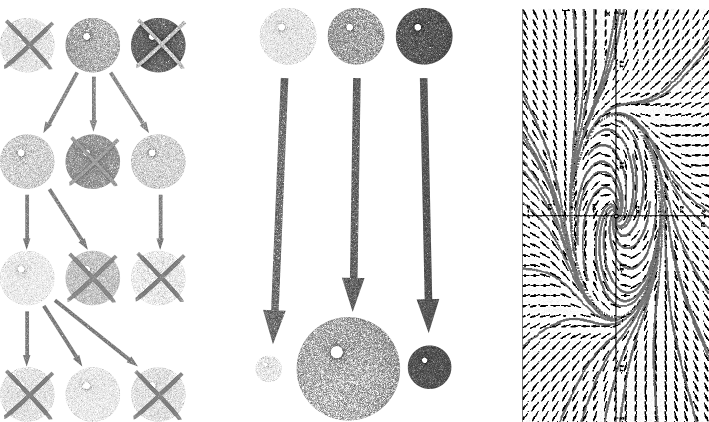
Fig. I-18.1. Three types of selection sensu lato