#Екологія: біологія взаємодії
138 materials
Екологія: біологія взаємодії. V-02. Класифікація факторів довкілля за їх походженням
Фактор довкілля — окрема характеристика довкілля (навколишнього середовища), певне явище, процес або властивість, що потенційно може впливати на біосистеми, які знаходяться в цьому довкіллі. Екологічний фактор — окрема характеристика екологічного середовища, певне явище, процес а...
Ecology: Biology of Interaction. V-01. Environment and Ecological Surroundings
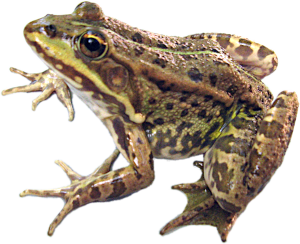
A frog sits on a riverbank. It is an open system continuously exchanging matter, energy, and information with its environment. Can we consider the frog separately from the environment? Only conditionally. Stopping this exchange would mean the frog’s rapid death.
Ecology: Biology of Interaction. IV-17. (Supplement) How Parasites “Set Up” Their Hosts
http://batrachos.com/Регуляція_чисельності A correlation was found between the degree of Toxoplasma infection in different peoples and cultural traits of those peoples. Available data suggest that the parasite increases anxiety, insecurity, depression, and guilt in humans. The specific manifestation of this effect …
Ecology: biology of interaction. IV-18. (supplement) Strategies of intraspecific interaction
Almost all offspring in a troop of baboons belongs to several dominant males (leaders) who, by combining their efforts, keep subdominant males in a subordinate state (in particular, thereby prohibiting them from mating with females). Periodically, as the leaders age, …
Ecology: Biology of Interaction. IV-16. Population Size Regulation
Population abundance can be regulated by abiotic factors, resource limitation, competitors, predators, parasites, and internal population mechanisms. Different regulatory mechanisms operate in different abundance ranges and determine the characteristic type of population dynamics.
Ecology: the biology of interactions. IV-15. Ecological strategies
Populations of certain species spend the majority of their time in the r‑phase. In such species, the highest reproductive value is possessed by individuals capable of rapid reproduction and colonizing unoccupied habitats with their offspring. In other words, during this …
Ecology: Biology of Interaction. IV-14. Amensalism and Neutralism
Neutralism is not the complete absence of effects between two populations, but a situation where this effect can be neglected. When will interaction between two populations within one ecosystem be minimal? When there are no direct links between them, and …
Ecology: Biology of Interaction. IV-12. Competition and Ecological Niches
In interspecific competition, two populations can negatively affect one another in two different ways. The first (indirect, or exploitative competition) is related to the use of the same resource by both populations. If the abundance of one population increases, its …
Ecology: Biology of Interaction. IV-11. Parasitism and Parasitoidism
For a parasite, the host is like an island. How to get from one island to another? One solution is to produce and release a multitude of offspring (eggs, larvae, etc.) into the environment, hoping that at least some of …
Ecology: The Biology of Interaction. IV-10. Predation
An important characteristic of a polyphagous predator capable of switching from one prey to another is its response to changes in relative prey density. A predator with a Type I response selectively consumes a particular prey species, even when they …
Ecology: Biology of Interaction. IV-09. Diversity of Forms of Exploitation
Holophages, true predators, kill prey immediately and consume many prey during their lifetime. Merophages, grazing predators, usually eat only parts of the prey, causing it certain but not necessarily fatal damage. Parasites are closely associated with their host,...
Ecology: Biology of Interaction. IV-08. Commensalism
Commensalism refers to direct or indirect (through the environment) relationships between two populations, from which one — the commensal population — benefits (increases its numbers in response to an increase in the partner's numbers), while the other — the host …
Ecology: Biology of Interaction. IV-07. Mutualism and Protocooperation
We noted that mutualism — is an obligate mutually beneficial relationship between populations. How can we establish that certain relationships are obligate? If organisms in mutually beneficial relationships are found in natural conditions only together, this indicates the inseparable nature …
Ecology: Biology of Interaction. IV-06. Classification of Relationships Between Populations
The well-known American ecologist Eugene Odum proposed classifying relations between species (or populations) by their effects on one another. He distinguished three types of effects: positive (+), negative (−), and neutral (0). However, correctly defining positive and negative effects is …
Ecology: Biology of Interaction. IV-05. The Lotka-Volterra Model
In 1925, the well-known Italian mathematician Vito Volterra, while speaking over lunch with his future son-in-law (an ichthyologist), became interested in fish population dynamics. In particular, he learned that reduced fishing during World War I increased the share of predatory …
Ecology: Biology of Interaction. IV-04. Exponential and Logistic Population Growth
In the logistic model, the variable K is introduced: environmental carrying capacity, the equilibrium population size at which all available resources are consumed. Growth in the logistic model is described by dN/dt = r × N × (K−N)/K. For historical …