VII. Class Mammalia-06. Mammal Fauna of Kharkiv Oblast
Overview of mammalian fauna of Kharkiv Oblast based on regional vertebrate zoology field-practice materials.
Ornithofauna of settlements Rural and urban settlements, large regional centers differ in the structure of potential bird habitats. Small villages contain a stable set of bird species associated with nesting on roofs, attics, and utility buildings. There is only one species exclusively associated with human structures – the Black Redstart, which can be found in both rural and urban development. Common Redstart
Primarily nest in human structures in small villages or garden plots: Little Owl (attics of rarely visited structures), two species of swallows, two species of sparrows, White Wagtail. Eurasian Scops Owl
The White Stork is a typical synanthrope in Northeastern Ukraine. In villages and settlements, the Barn Swallow nests on wooden and stone buildings, inside sheds, or on attic beams. The nest is open at the top, made of earth, straw, and grass, and attached to horizontal surfaces under overhangs. In mid-July, huge flocks of Barn Swallows can be seen in settlements – by this time, the young have learned to fly well and catch insects independently, and they gather in flocks with adults, preparing for migration. In small settlements, the House Martin (Common House Martin) has also begun to nest recently. Barn Swallow
Panurus biarmicus (Linnaeus, 1758)
The most common birds in any settlement are the House Sparrow and the Eurasian Tree Sparrow. Both species, in addition to buildings, readily inhabit tree hollows and nest boxes. However, the House Sparrow prefers cities or central areas of settlements, while the Eurasian Tree Sparrow settles on the outskirts and often nests far from settlements – in forests, shelterbelts, well walls, and old nests of magpies and birds of prey. In the forest-steppe zone, it nests in large colonies in the straw roofs of sheds and cattle barns. The nest structure in both species is characterized by a large amount of nesting material sticking out of the entrance. The nest is spherical, even if built in a hollow. House Sparrow
Eurasian Tree Sparrow
The White Wagtail nests in rural areas and cities in stone and wooden buildings, placing nests on beams under shed roofs, behind house siding, under porches on the ground, in woodpiles, or on crossbeams under bridges. White Wagtail
The Common Swift nests under the roofs of stone buildings, both in rural areas and in cities. Urban development as a new artificial biocenosis has high mosaicism – stone and concrete structures of various heights and designs are supplemented by elements of natural cenoses – riverbeds, green zones (forest remnants), artificial tree and shrub plantings. The latter are characterized by the absence of a shrub layer and mostly an artificial "sterile" grassy layer. The city, as a habitat, has specific features. It is attractive to a number of bird species that have high resistance to anthropogenic impact. Cities, which have existed as a phenomenon on the continents of our planet for at least the last 300 years, have become a new artificial cenosis. The development of electric lighting in cities makes them a sufficient landmark for birds migrating at night (photo – night San Francisco from an airplane). Urban development of various heights (1-2 story private sector, 5-story buildings, 9-story and modern high-rises) presents diverse conditions for bird nesting. Sclerophilic birds, which evolved in mountainous or similar conditions, prefer such stone dwelling places. A common inhabitant of cities is the pigeon, which has a rocky origin and readily nests in various microhabitats – from balconies to attics. The latter are quite warm (heating pipes run through them) and provide shelter, for example, to the Collared Dove, which spread in the 1970s and lives year-round exclusively in cities. It nests in parks, and spends winter nights in warm and cozy places. Falcons – Peregrine Falcon and Common Kestrel feed on passerines and pigeons and live on the roofs of houses. The Common Swift is characteristic mainly of high-rise buildings – here, between the walls in openings, it builds its nest, lining it with down. The swift's claws are long and sharp, and its leg bones are shortened and thickened. It is "designed" for clinging to the vertical surface of a solid wall. Common Swift
The Jackdaw, a sclerophilic bird, nests in cities and can even form colonies. It uses cavities in building walls and under roofs as nesting sites. Jackdaw
The Rook becomes noticeable in the city in autumn and winter when, along with jackdaws and hooded crows, it forms large flocks. In spring, "wintering" rooks migrate north, and rooks from the south arrive. Rooks also form colonies, building nests in trees. The nest has the shape of an inverted pyramid, is dense, and can be used for several years in a row. Rook
Unlike rooks and jackdaws, the Hooded Crow nests singly – in forest parks, parks, shelterbelts, and gardens. Hooded Crow
In recent years, the Common Raven, previously considered a strictly forest bird, has begun to nest in urban tree plantings. It builds nests in trees, preferring pines. Common Raven
The Magpie is predominantly a local resident. Nests built by magpies are quite heavy and durable. Even after the birds have finished nesting, the nest is used by Long-eared Owls or falcons (which explains the synanthropization of the Long-eared Owl). Flocks of magpies are well visible in winter when they gather for roosting near water bodies. Magpie
The Eurasian Jay is often noticeable in urban parks, mainly composed of oak and maple, as it picks up seeds from the ground and hides them among fallen leaves in autumn. Jay nests are also used by predators that do not build nests themselves. Eurasian Jay
Urban parks, squares, gardens, and forest parks contain a complex of birds characteristic of zonal forests – oak groves. Birds of prey – the Northern Goshawk and the Eurasian Sparrowhawk – build nests in the forest "islands" of the city. They feed on sparrows, collared doves, and pigeons that live here in large numbers. There is also a complex of birds tolerant to anthropogenic load (woodpeckers, tits – Great Tit and Blue Tit, Common Chaffinch, European Robin, Common Nightingale, European Pied Flycatcher, thrushes – Song Thrush and Blackbird; in forest parks, leaf warblers – Yellow-browed Warbler and Wood Warbler are found; in city parks – Eurasian Treecreeper, Eurasian Nuthatch), starlings nest in tree hollows. Song Thrush
Blackbird
Among the leaf warblers (Phylloscopus) in the oak woodland, the Common Chiffchaff (Phylloscopus collybita) and the Wood Warbler (Phylloscopus sibilatrix) are the most common. The song of the latter is a rich, prolonged trill that begins with separate ringing notes, the whole phrase sounding like "tsip-tsip-tsiptsiptsip-sirrrrr". The Wood Warbler frequently sings in flight, moving between trees at low altitude. In addition to its song, the male continuously utters a plaintive whistle: "tyu, tyu, tyu-tyu-tyutyutyu". The Common Chiffchaff continues to be heard in the oak woodland until autumn: "tyt-tiit-tyt-tiit-tin-ton...". In total, the song of this species encompasses up to 43 distinct elements. Both warblers nest on the ground; the nest is a side-entrance domed cup lined inside with down.
Rhizome
Nuthatch
Common Starling
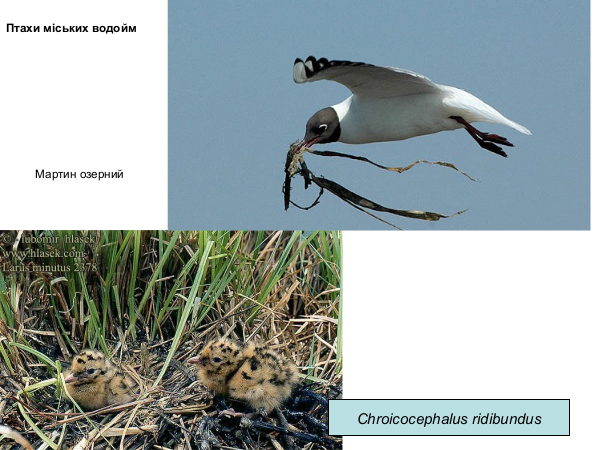
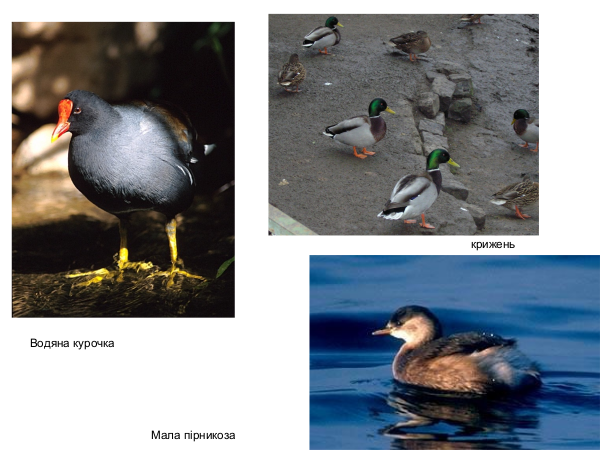
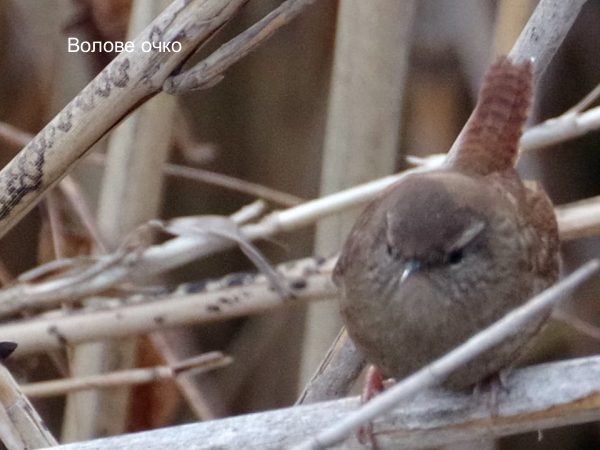
In winter, flocks of European Goldfinches, Eurasian Siskins, Common Reed Buntings, and Hawfinches fly through the city, especially over wastelands. Water bodies (riverbeds, lakes) in the city are associated with the Black-headed Gull, Common Moorhen, Little Grebe, and in large numbers – the Mallard, which forms large flocks in winter on rivers where warm water is discharged. Near water, on bushes and in brushwood piles, one can find the Eurasian Wren. Black-headed Gull