
Course
Усі курси
Перегляньте всі доступні курси та освітні матеріали нашого каталогу.
Found 539 materials
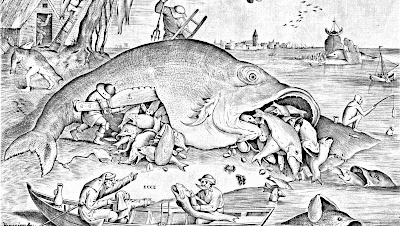
Ecology: The Biology of Interactions. III-14. (Supplement) School Problems on Ecological Pyramids
Did you know that hippopotamuses come ashore at night to graze? Apparently, in the imagination of the problem-book author and Wikipedia editors, frog tadpoles do something similar. Otherwise, these predominantly …
Ecology: Biology of Interactions. III-13. Ecological Pyramids
Charles Elton proposed a way of graphically expressing relationships between trophic levels, which has become almost a symbol of ecology as a science. This refers to ecological pyramids. When constructing …
Ecology: Biology of Interactions. III-15. (Supplement) Flora, Fauna, Consortia
Flora is the set of plant species associated with a given geographic space. Flora composition is determined both by present conditions and by geological history. Vegetation is the spatial organization …
Ecology: Biology of Interactions. III-16. (Supplement) Ecosystem Efficiency and Energy Subsidies
Ecosystems can be supported by energy expenditures from outside. To prevent weeds from outcompeting wheat in a wheat field, humans add external energy inputs.
Ecology: Biology of Interactions. III-17. (Supplement) Biomes and Human Culture
Humans evolved as a species with extraordinarily plastic behaviour, capable of occupying diverse ecological niches. In very broad terms, the following types of traditional human lifestyles can be distinguished. Appropriative …
Ecology: Biology of Interactions. III-10. Nature and Characteristics of Assemblages
{ "title": "", "summary": "", "body": "Probably, the group still represents a real ecological unit. The functioning of the group consists of the activity of its constituent individuals, but it …
Ecology: Biology of Interactions. III-09. Trends in Successions
In a typical succession sequence (e.g., in an artificial microcosm or during colonization of a new habitat in primary autotrophic succession), fast-growing species dominate first, then are replaced by slower …
Ecology: biology of interactions. III-08. Succession. Basic concepts
The main cause of successions is the absence of equilibrium between production and respiration in the ecosystem, that is, an imbalance of ecological balance. This leads to a change in …
Ecology: Biology of Interactions. III-07. Productivity of Different Biomes
Net primary production of land per year — 110–120 billion tons of dry organic matter, and of the ocean — 50–60 billion tons. Approximately, one can say that the ocean …
Ecology: Biology of Interactions. III-06. Ecosystem Production and Its Measurement
Biomass — the total mass of all organisms of the entire community or a separate population, measured in units of wet or dry mass per unit of area or volume …
Ecology: Biology of Interactions. III-05. Ecological Balance
Since autotrophs and heterotrophs are inextricably linked, the most important characteristic of the biosphere is the ratio between their main functions: the creation and destruction of organic matter. This ratio …
Ecology: Biology of Interactions. III-04. Classification of Biomes
A biome is a large type of biogeocenosis characterized by a similar nature of vegetation and occupying certain regions of the planet. Biomes are regulated by macroclimate and primarily by …