
Course
Усі курси
Перегляньте всі доступні курси та освітні матеріали нашого каталогу.
Found 539 materials
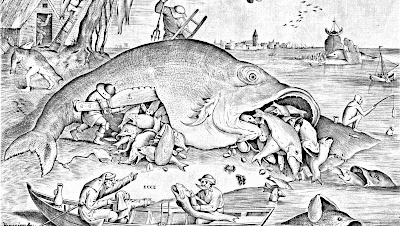
Ecology: The Biology of Interaction. IV-10. Predation
An important characteristic of a polyphagous predator capable of switching from one prey to another is its response to changes in relative prey density. A predator with a Type I …
Ecology: Biology of Interaction. IV-09. Diversity of Forms of Exploitation
Holophages, true predators, kill prey immediately and consume many prey during their lifetime. Merophages, grazing predators, usually eat only parts of the prey, causing it certain but not necessarily fatal …
Ecology: Biology of Interaction. IV-08. Commensalism
Commensalism refers to direct or indirect (through the environment) relationships between two populations, from which one — the commensal population — benefits (increases its numbers in response to an increase …
Ecology: Biology of Interaction. IV-07. Mutualism and Protocooperation
We noted that mutualism — is an obligate mutually beneficial relationship between populations. How can we establish that certain relationships are obligate? If organisms in mutually beneficial relationships are found …
Ecology: Biology of Interaction. IV-06. Classification of Relationships Between Populations
The well-known American ecologist Eugene Odum proposed classifying relations between species (or populations) by their effects on one another. He distinguished three types of effects: positive (+), negative (−), and …
Ecology: Biology of Interaction. IV-05. The Lotka-Volterra Model
In 1925, the well-known Italian mathematician Vito Volterra, while speaking over lunch with his future son-in-law (an ichthyologist), became interested in fish population dynamics. In particular, he learned that reduced …
Ecology: Biology of Interaction. IV-04. Exponential and Logistic Population Growth
In the logistic model, the variable K is introduced: environmental carrying capacity, the equilibrium population size at which all available resources are consumed. Growth in the logistic model is described …
Ecology: the Science of Interactions. IV-03. Demographic Tables, Pyramids, and Survival Curves
Demographic tables provide material for constructing survival curves. Such a method of graphical representation of the dependence of the proportion of individuals remaining alive on their age was proposed by …
Ecology: Biology of Interaction. IV-02. Population Characteristics
Demographic characteristics of populations can be divided into two groups: static and dynamic. Static population characteristics (note: static, not statistical!) can be determined for a specific moment in time; an …
Ecology: Biology of Interactions. IV-01. Populations and Their Properties
The concept of «population» — is one of the most important in biology. As is the case with key terms, it is frequently used with different meanings. According to Troyan, …
Ecology: Biology of Interactions. III-11. Trophic Links and Levels
Autotrophs obtain biogenic elements and the necessary energy from the environment and create organic substances. The organic substances of autotrophs are consumed by some heterotrophs, these heterotrophs -- by others, …
Ecology: Biology of Interactions. III-12. Ecological Efficiencies
The following measures of efficiency in energy consumption and processing can be distinguished: exploitation efficiency E1=Iexploiter/Pprey; assimilation efficiency E2=A/I; net production efficiency E3=P/A; gross production efficiency E4=P/I=E2×E3; ecological efficiency E5=Pexploiter/Ppre...